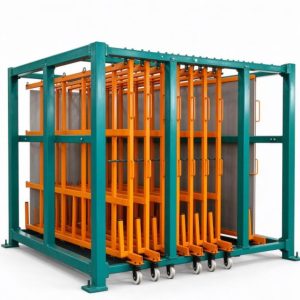
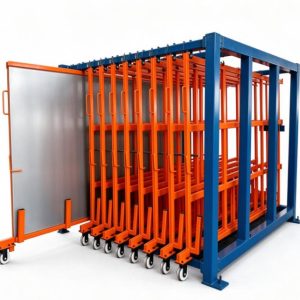
A fiber laser cutter is only as productive as the material flow around it. The cutting head can move at 100 m/min and accelerate at 1.0 G, but if the sheet arrives late, the machine waits. The industrial automatic sheet metal storage warehouse is the upstream asset that closes that gap. For fabricators running Herochu systems, the storage warehouse is not a separate department. It is the first station of the laser cell, and it is designed to keep the cutting head productive rather than waiting.
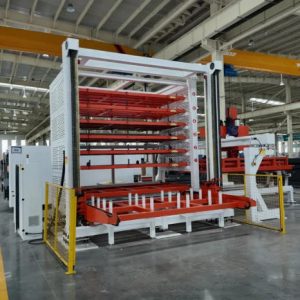
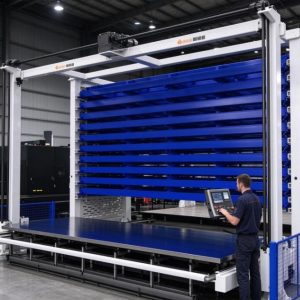
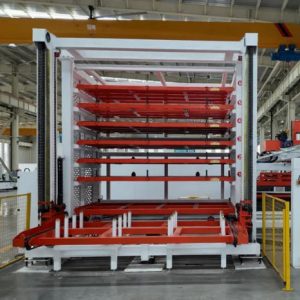
The integration case starts with the physical interface. Herochu’s storage and loading systems are configured for standard fiber laser working areas, including 3000×1500 mm, with loading and unloading capacity up to 800 kg. The storage tower feeds the laser through an automated loading assembly, and the finished parts return without manual lifting. The cell can run stable batch production with automatic material storage and exchange, which is the foundation for lights-out or lightly attended shifts. A single operator can supervise the storage, loading, and cutting cycle instead of moving between a rack and a control panel.
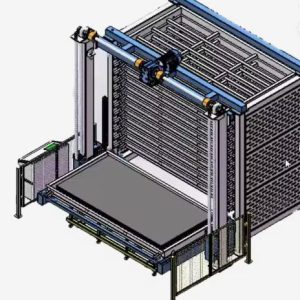
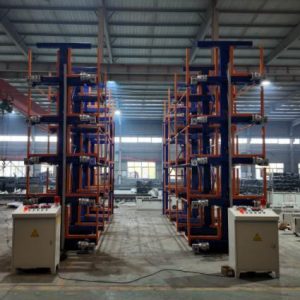
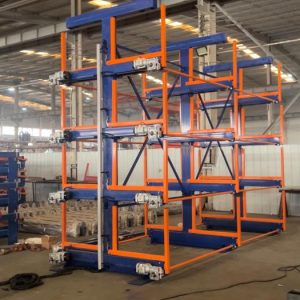
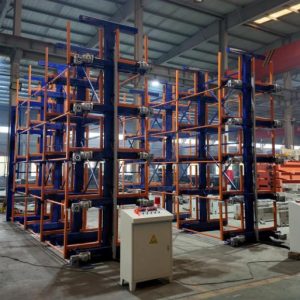
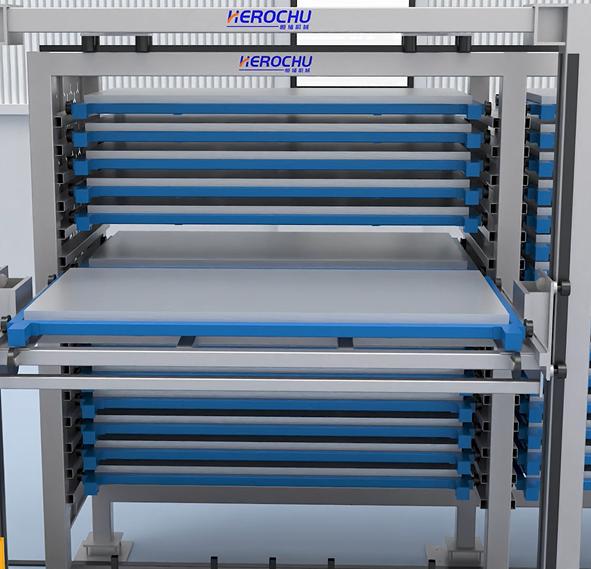
The automation inside the warehouse is what makes the integration reliable. Herochu’s 6-level storage tower supports a maximum load of 3,000 kg per level with a maximum sheet size of 3000×1500 mm. The servo-driven lifting and in-and-out movement system transfers material between storage positions without the shock loading that causes sheet shift. Each level has a 300 mm height, which is enough for typical sheet stacks while keeping the tower compact and the vertical space productive. The thickness measurement function identifies sheet gauge during handling, and pneumatic sheet separation nozzles help separate stacked sheets before loading, reducing the risk of multi-sheet pickup that can damage the laser head or scrap a nest.
The throughput math is straightforward. In a manual cell, the laser stops while the operator retrieves the next sheet. In an integrated Herochu cell, the storage system delivers the next sheet on command. The 60-second sheet-to-laser cycle is not a laboratory figure; it is the design target for the loading interface. When the cutting program finishes a nest, the next blank is already at the load station. The operator’s role shifts from material handler to process monitor. That shift is how one operator can supervise multiple lasers and how a shop recovers up to three FTEs per shift without hiring.
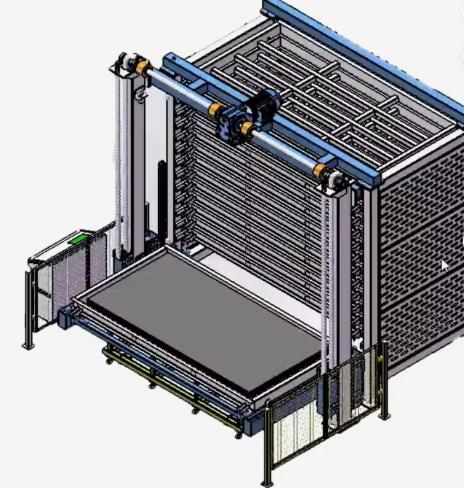
The warehouse also solves the floor-space problem that constrains most laser cells. A tower configuration with six levels and 300 mm level height uses vertical space that floor stacking cannot touch. A full sheet inventory that occupies hundreds of square meters in floor stacks can consolidate into roughly 25 square meters of tower footprint, a 60-to-80 percent reduction. That recovered floor area can hold a second laser, a press brake, or a staging area for finished parts. In a building where expansion is expensive or impossible, the storage warehouse becomes the capacity expansion.
Compatibility matters for existing equipment. Herochu designs the storage and loading system for plug-and-play integration with Trumpf, Bystronic, Amada, Mazak, and most fiber laser platforms. A shop does not need to replace its cutter to add automated storage. The warehouse sits alongside the machine, the loading interface connects, and the cell begins running with less manual intervention. CE and ISO 9001 certification across the range gives the reliability baseline that a 24/7 production asset requires.
The strategic argument is that the remaining bottleneck in fiber laser fabrication is not cutting speed but the integration of loading, cutting, unloading, and data flow into a single governed process. An industrial storage warehouse that sits disconnected from the laser is still a warehouse. One that feeds the laser, tracks the material, and removes the manual transitions becomes part of the production system. Herochu builds the latter, and that distinction is what separates a storage purchase from a throughput investment.
How does an ASRS warehouse integrate with a fiber laser cutting machine?
Integration happens at three levels: physical, control, and material flow. Physically, the Herochu storage tower is configured for the laser’s working area—typically 3000×1500 mm—and the loading assembly moves sheets from the tray to the cutting bed without manual lifting. At the control level, the storage system and the laser communicate so the next sheet is staged before the current nest finishes, supporting a 60-second sheet-to-laser cycle. At the material-flow level, thickness measurement and pneumatic sheet separation verify the sheet before it enters the laser, reducing multi-sheet pickup risk. The result is a cell where the cutting head stays productive rather than waiting on material.