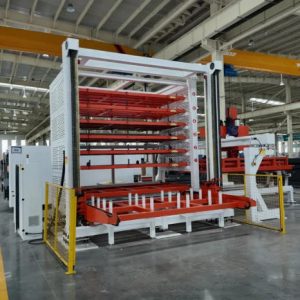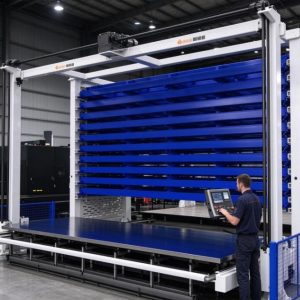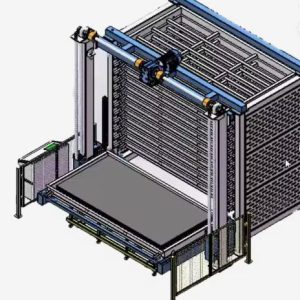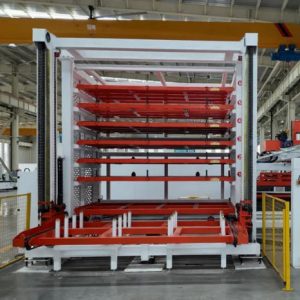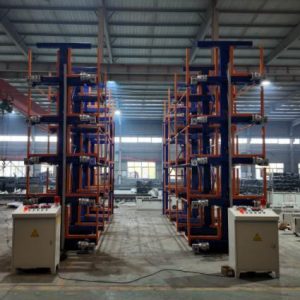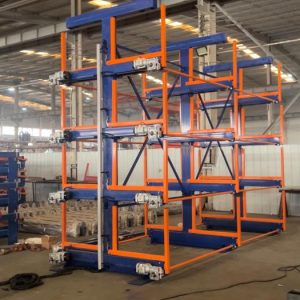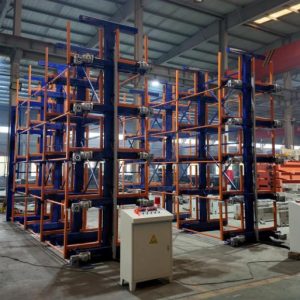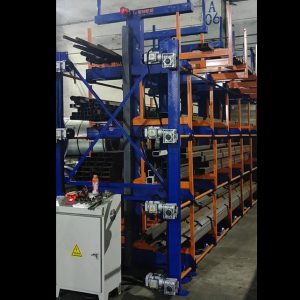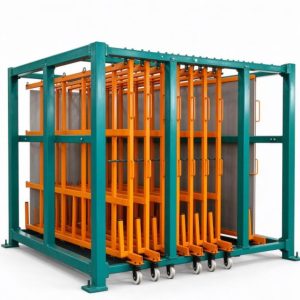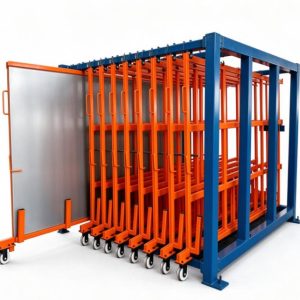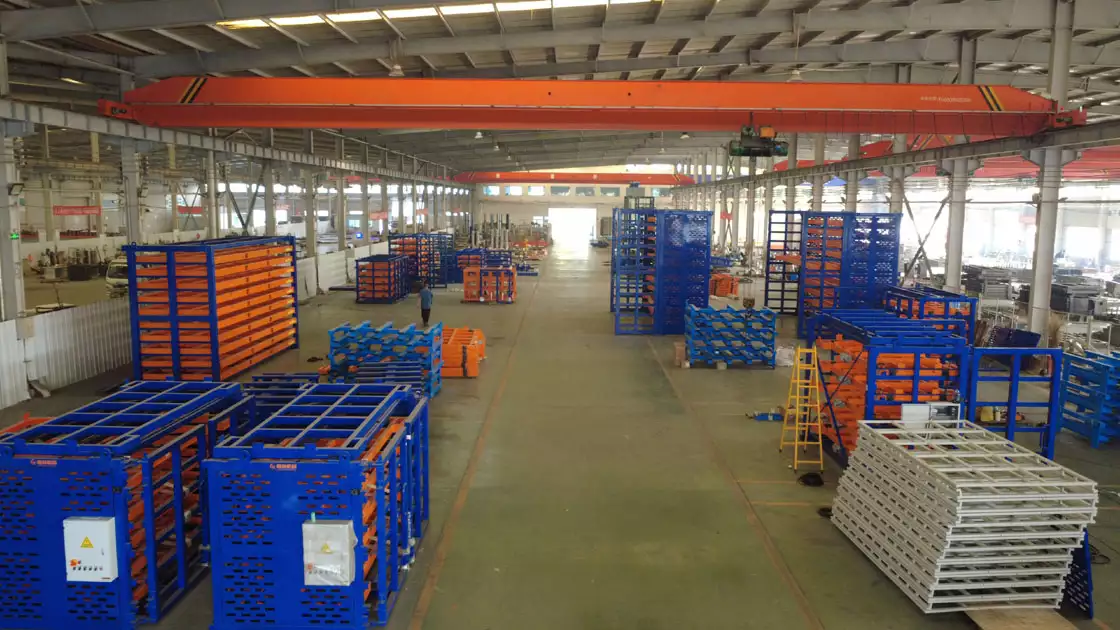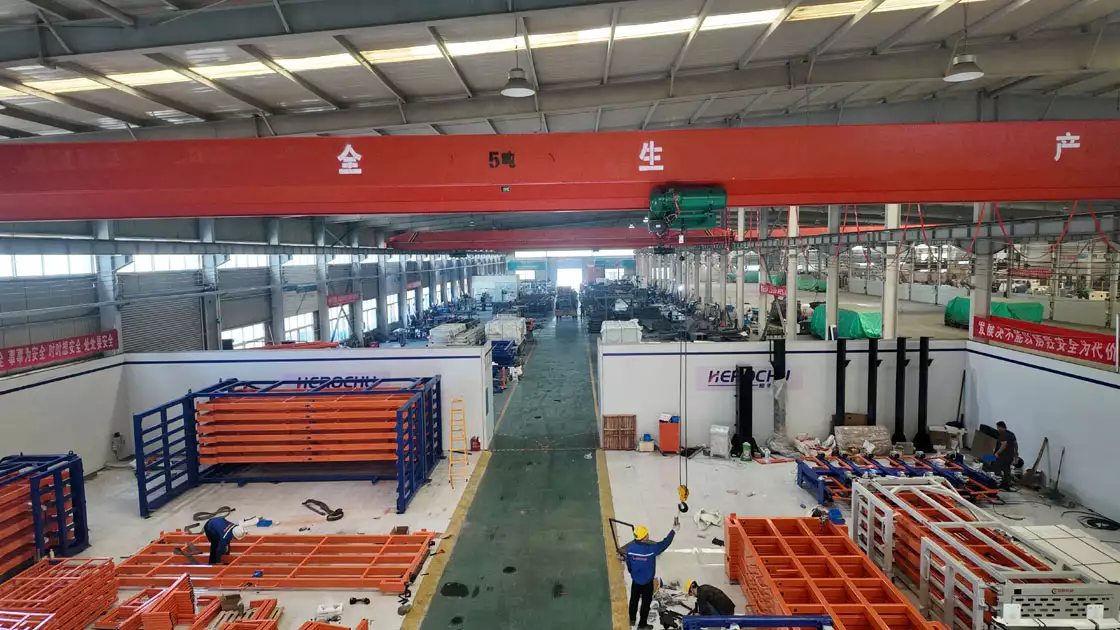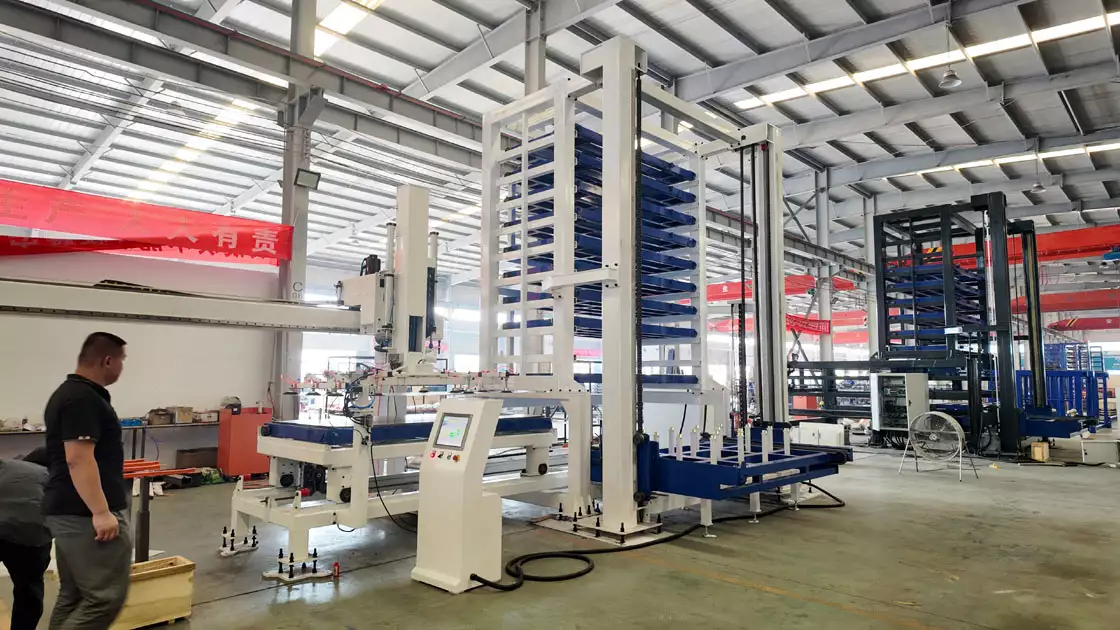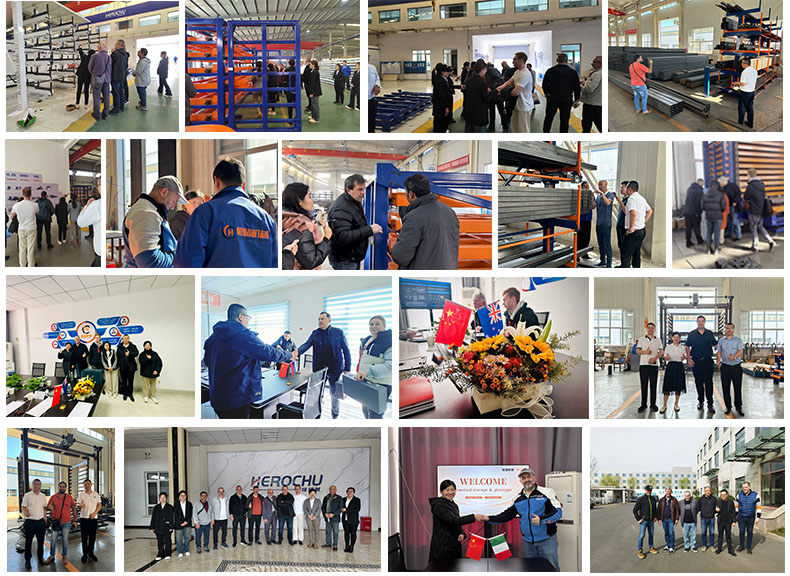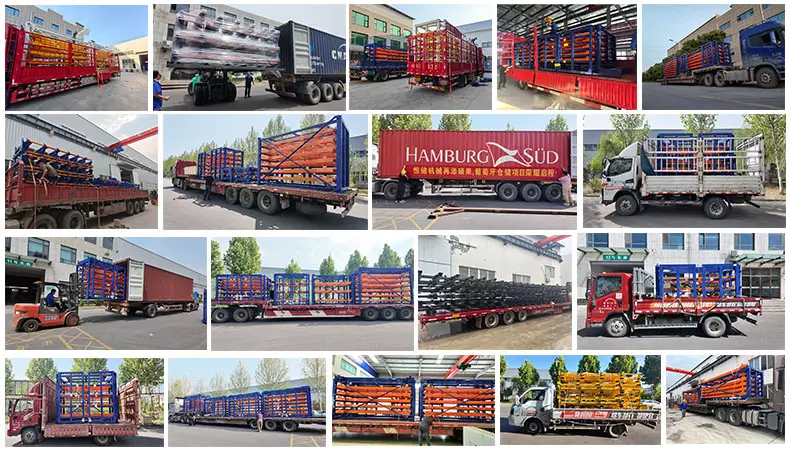
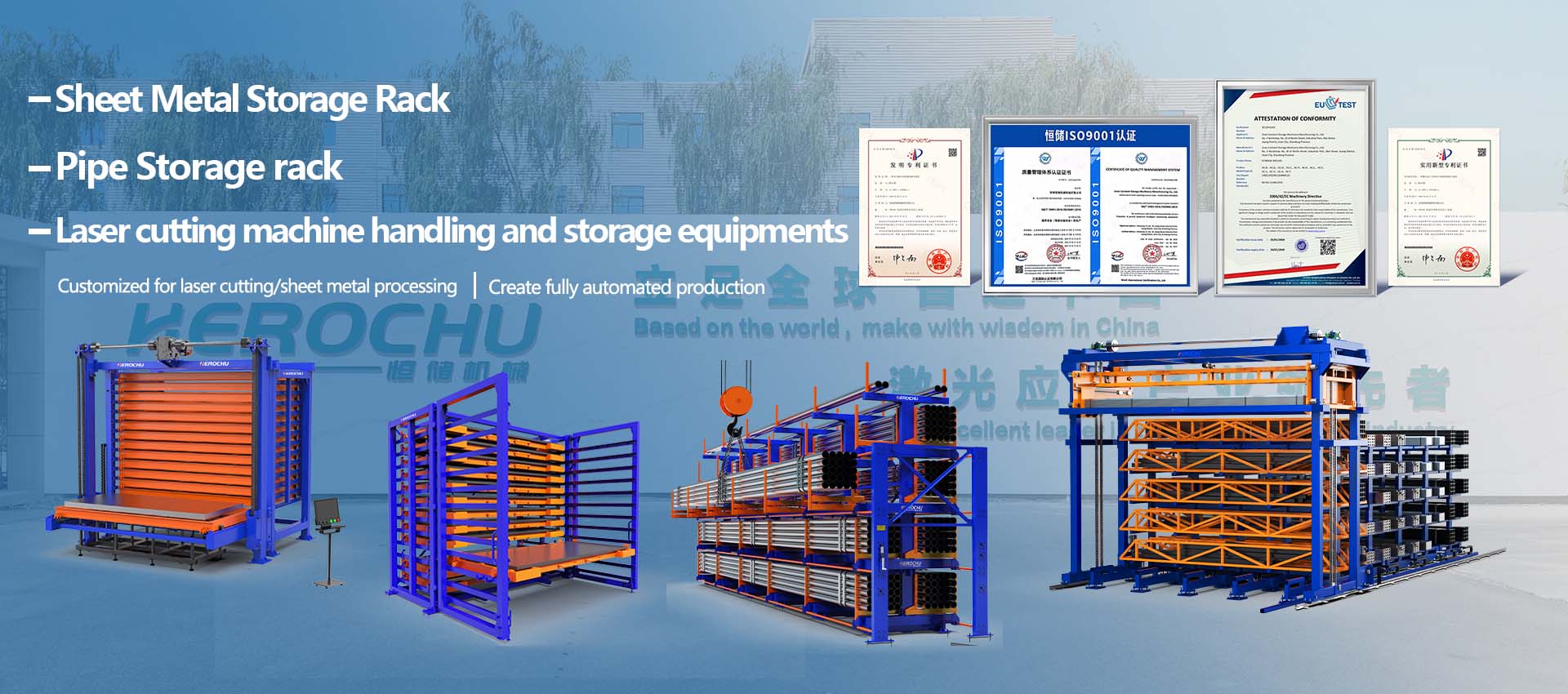
A goods-to-person sheet metal storage system brings the correct drawer to a fixed picking point instead of sending an operator into the rack. Herochu builds drawer-type automated plate storage that handles steel, aluminium, boards and flat workpieces, cutting walking time, forklift traffic and the scratch damage that comes with manual handling.
What does goods-to-person mean for sheet metal?
In a conventional sheet store, the person travels: down the aisle, between stacks, around a crane load, back to the machine. Travel is unpaid production and it is where most damage happens, because a sheet on a forklift is a sheet at risk.
Goods-to-person reverses the movement. The drawer comes to the operator, stops at a comfortable height, and the sheet is lifted from a known, lit position. The operator never enters the rack, never climbs, and never guesses which stack holds the 1.5 mm galvanised.
For flat material this matters more than it does for cartons. A 3000 x 1500 mm sheet is a sail on a forklift, and every manual transfer is a chance to bend an edge that later fails at the press brake.
How is the drawer system built?
The structure follows the load. Heavy-duty steel framing carries the drawer rails, and each drawer is sized for the sheet format and the weight it must hold. Standard configurations accommodate 3000 x 1500 mm sheets, with five to ten drawers per rack and multi-layer vertical arrangement above that.
| Element | Detail | | Sheet format | Up to 3000 x 1500 mm | | Drawers per rack | 5 to 10 | | Load capacity | Heavy-duty configurations up to 25 tons per layer | | Storage principle | Multi-layer vertical, drawer extraction | | Handling | Automated in-and-out, vacuum loading option | | Control | PLC with classification and retrieval logic | | Structure | Enclosed frame, safety fences, foldable variant | | Access | Forklift-friendly load side, fixed pick point |
The 25 ton figure describes the class of plate these systems handle: when one layer carries that much, the frame, rails and drive are designed around deflection rather than convenience.
Why does material protection justify the drawer?
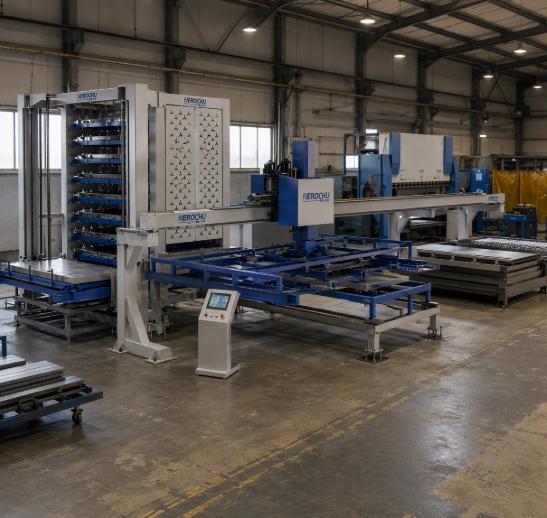
Sheet stock is damaged in three ways: crane slings that crush edges, forklift forks that scrape the bottom sheet, and stacks that slide against each other in transit. Drawers address all three. The sheet sits flat on a dedicated surface, separated from its neighbours, and moves as a unit.
For aluminium and pre-coated stock this is decisive: a scratched panel is scrap, while a scratched mild steel blank usually still cuts. Herochu therefore sizes drawer surfaces and separation to the most sensitive material in the mix, not the most common one.
How does the system change labour and safety?
Three changes show up quickly.
Walking and searching disappear from the pick, because the drawer arrives. Forklift movement drops, since replenishment happens at one face instead of across the store. And the safety case gets simpler: the operator stands at a guarded station rather than beside a swinging sheet.
The labour effect is usually described as headcount, but the more accurate description is assignment. The same people handle more material, and the skilled operator spends the shift at the machine instead of in a vehicle.
Can one system hold steel, aluminium and wood boards?
Yes, and that flexibility is where drawer storage separates from sheet racking. Aluminium plate, mild and stainless steel, composite panels, MDF and melamine boards can share a structure if the levels are classified and the control enforces the assignment.
Woodworking and furniture plants use the same principle: flat boards stored vertically, retrieved automatically, fed to a nesting cell or a panel saw. The requirements differ in surface protection and dust control, not in the storage logic.
Classification is the discipline that makes it work. One level, one material family, one thickness band. Mixed levels are where picking errors begin.
What does the installation look like on the floor?
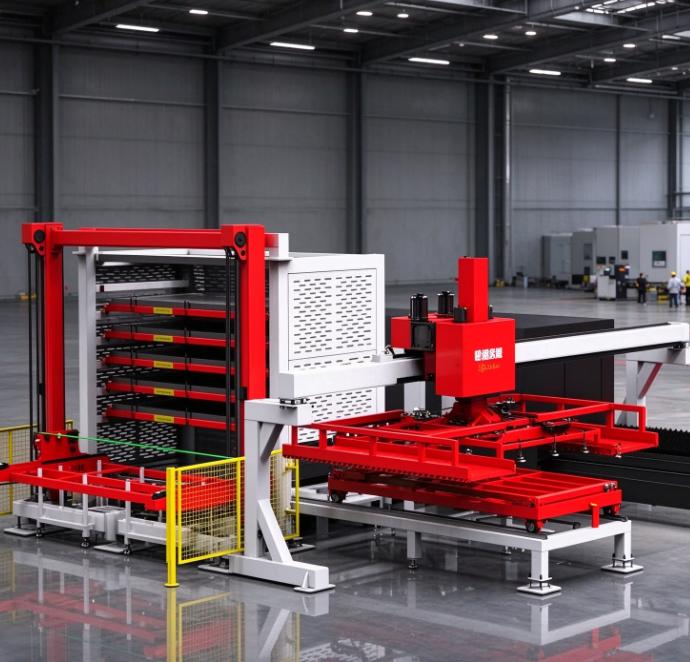
A typical cell occupies a compact footprint: the tower or rack against a wall or column line, a transfer aisle in front, a pick station at the end, and forklift access on the loading face. Because the structure can be supplied in a foldable or open configuration, it fits buildings where a fixed tower would not pass a door frame or a low beam.
The layout question worth settling early is the pick point. Put it where the next process needs it, not where the structure fits most easily. A drawer system that delivers to the wrong end of the shop has solved storage and created transport.
Questions shops ask before choosing drawer storage
How fast is retrieval? The drawer arrives in the time the drive needs to travel to the level and extract. For most cells this is a fraction of the time a forklift takes to reach a rack, but the real gain is that no one leaves the machine.
Do we need a WMS? No, but it helps. The tower can run from its own classification logic; a warehouse system adds job reservation and stock accuracy.
What about very thick plate? Thickness changes the drawer and drive specification. Herochu rates each configuration against the actual plate list rather than a single headline capacity.
Can it be extended later? Levels and racks can be added if the structure and the building allow it. Plan the height at the start, because that is the part that is hard to change.
Where the payback sits
Drawer storage pays back through three lines that finance teams accept: floor space released, handling hours removed, and material no longer scrapped from transit damage. The first is visible on the layout drawing, the second on the time study, and the third in the scrap report.
Herochu builds the system around the plate list and the pick point, then proves the cycle with the material that actually runs. That is a duller promise than “fully automated warehouse”, and it is the one that survives contact with a production schedule.