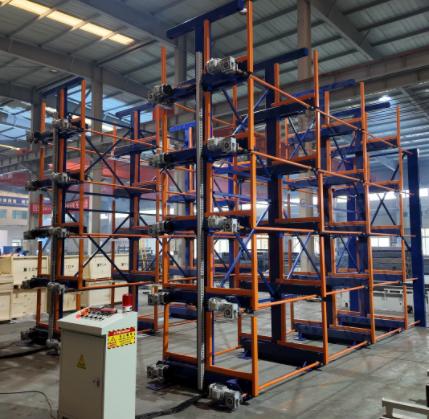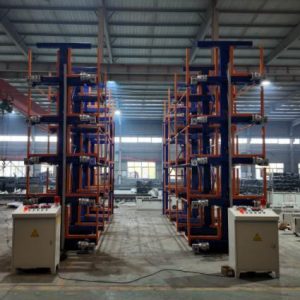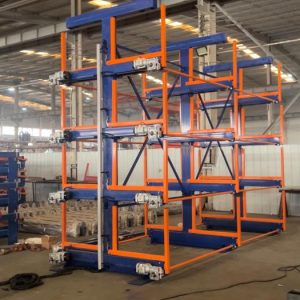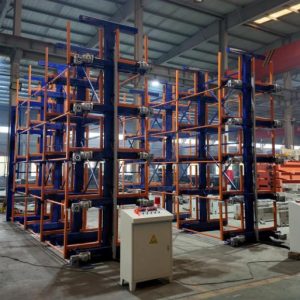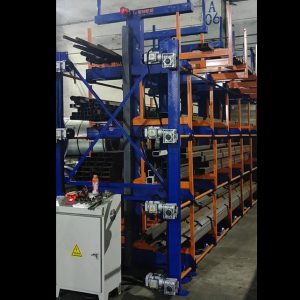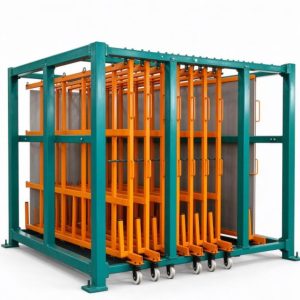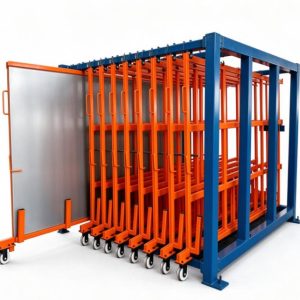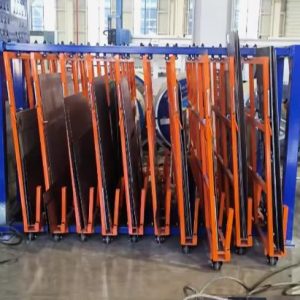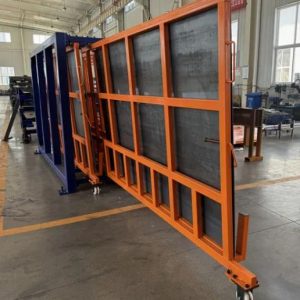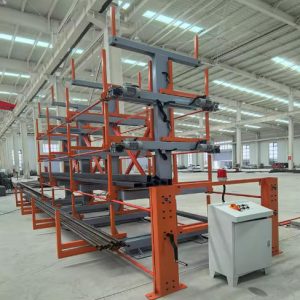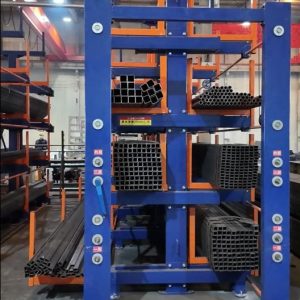
A customizable electric cantilever storage system is built around the customer’s pipe schedule rather than a fixed catalogue size. Herochu customises arm rating, extension length, layer count, tier clear space, column height and pipe length, then verifies the design against bundle weight, crane height and floor loading before manufacture.
What customization covers on this rack
“Customizable” is often a brochure word with nothing behind it. On a cantilever storage system there are seven variables that genuinely change the steel, and each one is set from data the customer already has.
| Variable | Standard setting | Range offered by Herochu | What drives the choice |
|---|---|---|---|
| Arm load rating | By model | 0.5 t / 1.0 t / 2.0 t / 3.0 t per arm (manual); up to 8 t per level (electric) | Heaviest bundle plus sling and spreader |
| Cantilever extension | 1.0–3.0 m | Up to 100% of stroke, fully extended | Bundle width and how far the crane hook must reach |
| Number of layers | 5 on 6 m models, 6 on 9 m and 12 m models | 2–6, or more on request | Number of material types in daily circulation |
| Tier clear space | 700 mm | Customised per tier | Tallest profile in the load, plus sling clearance |
| Pipe length | 6,000 / 9,000 / 12,000 mm | 3 m to 12 m and beyond | Longest stock, including 20 ft and 40 ft arrivals |
| Column height | 2.0–6.0 m | Customised | Crane hook height above the top tier |
| Operation | Electric drive | Electric, or hand crank on manual versions | Turnover rate and bundle weight |
Each row changes the column section, arm wall thickness or base plate, which is why the design conversation belongs before the purchase order.
The four inputs that set the design
1. The pipe schedule. A rack specified around a 6 m average will be asked to hold 9 m material within a year, at an angle, over the aisle. Give diameter, wall thickness, shape and maximum length.
2. Bundle weight with lifting gear. A tier rated 5,000 kg carries the bundle plus sling, spreader and end protection, and it carries them when the load lands slightly off-centre — which is normal in a real lift.
3. Throughput at each tier. A tier used twice a week can sit high and be reached with a long sling. One used twenty times a shift belongs at chest height, where the crane cycle is shortest.
4. The building. Hook height, column grid, obstructions, slab strength at the footplates and crane travel routes all constrain geometry. Herochu asks for this at quotation stage: a rack that fits the pipes but not the building is not a solution.
Where the frame earns its rating
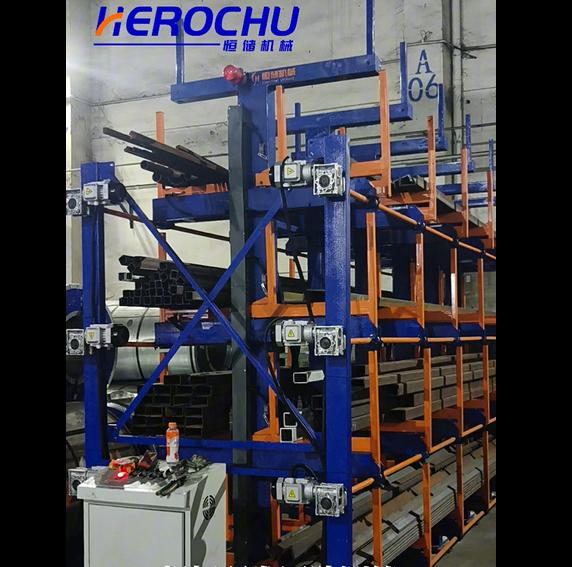
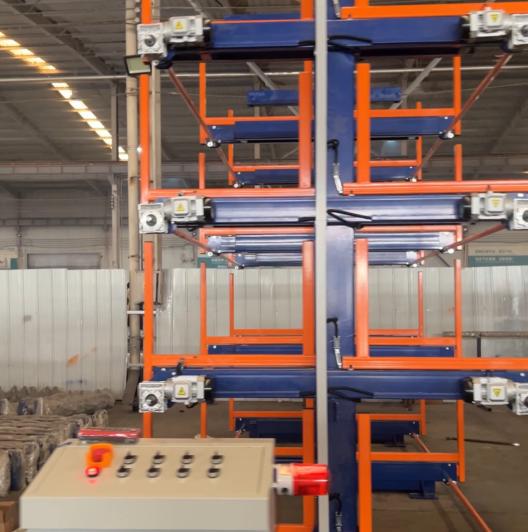
Columns are welded Q235B high-strength steel, with the base section sized for the bending moment of a fully loaded, fully extended arm — the worst case, not the average. A dual-beam crossbar ties the column faces so an off-centre set-down does not twist the arm assembly. Independent compartments on both sides of the column give classification storage without a second structure.
The carriage runs at 27 mm/s: a full extend-and-retract inside one crane cycle, with enough control at the end of travel to place a bundle without impact. Extension and height run from a pendant, so nobody stands inside the rack to position an arm.
Standard model or custom build?
The standard range covers most plants:
- HC-G6055SE / HC-G6055E — 6,000 mm stock, 5,000 kg per level, five tiers
- HC-G9068E — 9,000 mm stock, 8,000 kg per level, six tiers
- HC-G12068E — 12,000 mm stock, 8,000 kg per level, six tiers
A custom build wins in four cases: stock outside 6–12 m, a pipe mix needing more than six layers, a building that limits column height, or bundle weights close enough to the tier limit that arm spacing has to be calculated rather than assumed.
What the factory needs to be able to do
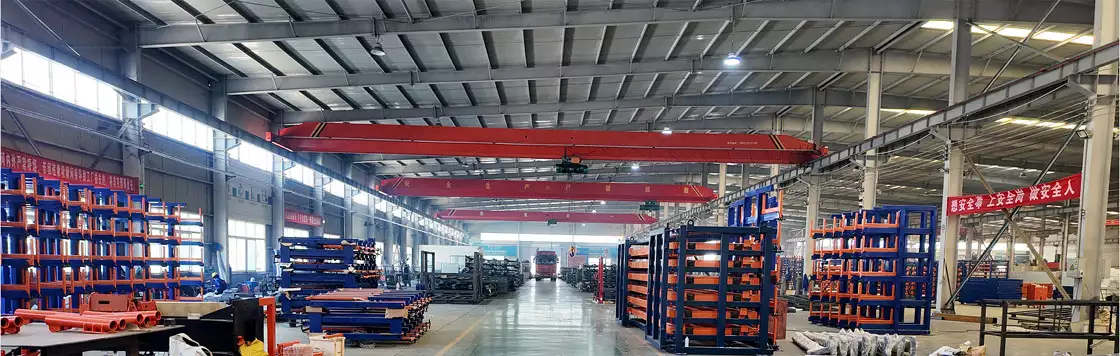
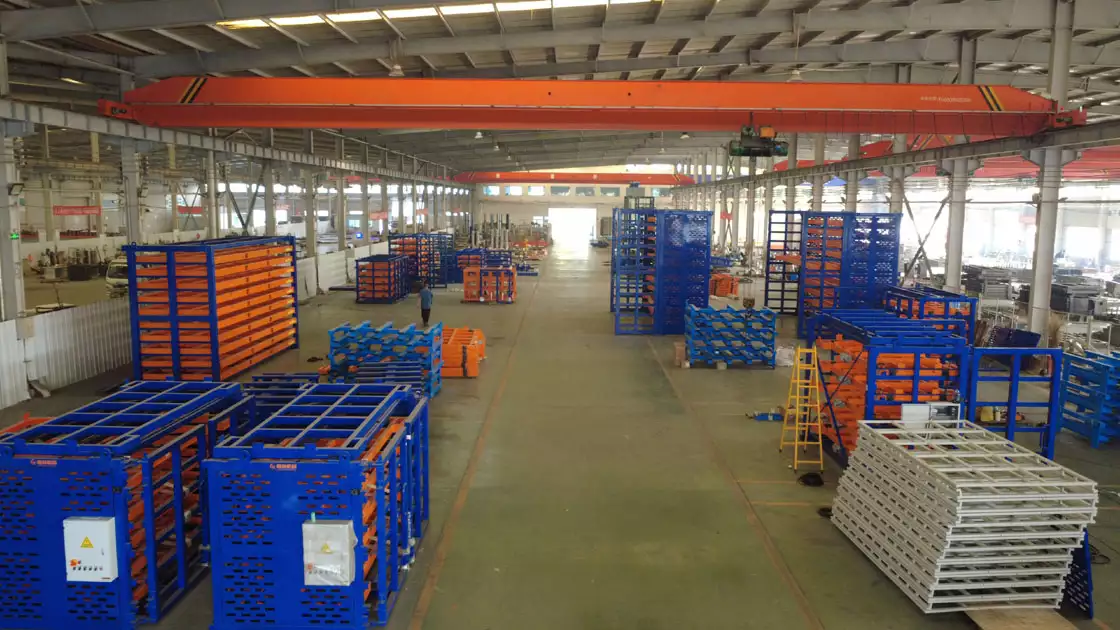
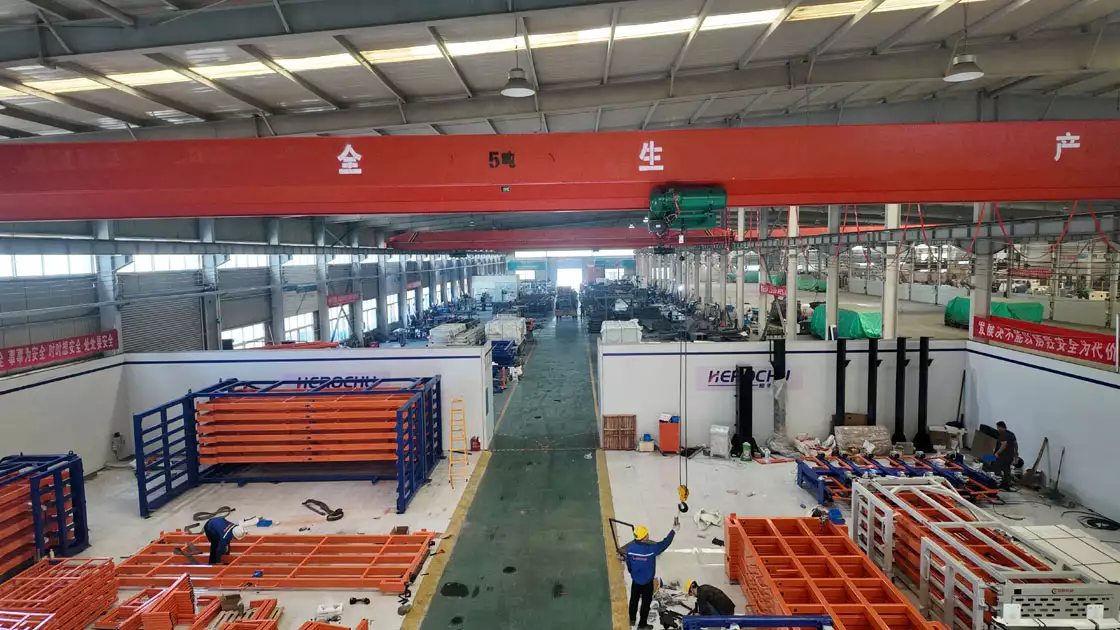
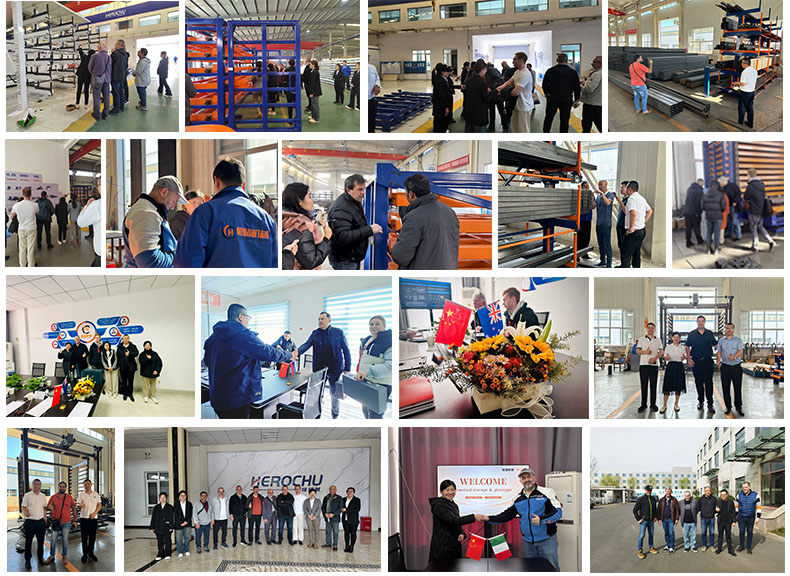
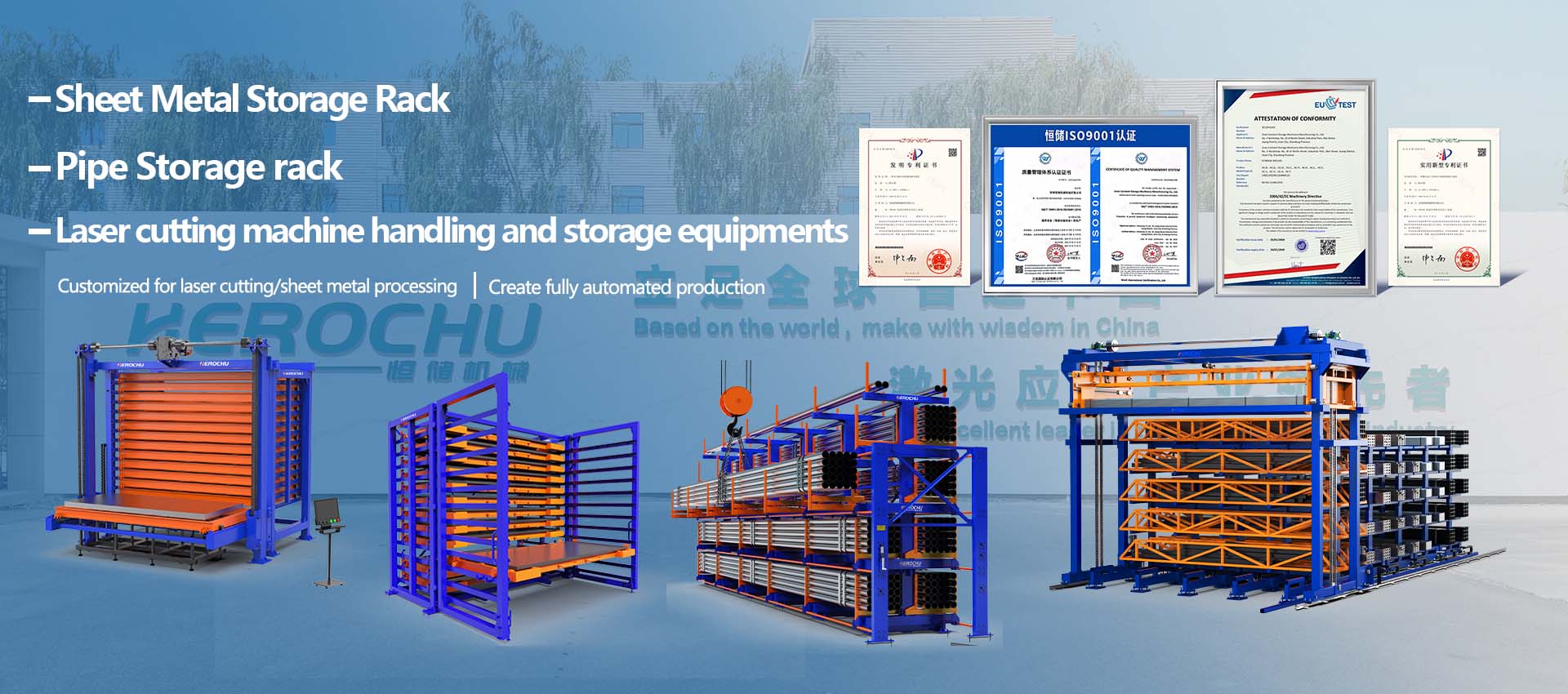
Custom geometry only works if the manufacturer can change it in-house. Herochu runs a 20,000 m² factory with a 300-person team, producing columns, arms, carriage and drive as one system to ISO 9001 with CE marking on the drives, so a change to tier clear space is a drawing revision in the same plant rather than a third-party renegotiation.
That gives buyers three checks: whether the rating is per level or per arm (they are not interchangeable), whether extension is stroke or maximum reach, and whether certification covers the drive as supplied.
Installation and commissioning
Footplates are levelled on the prepared slab, columns plumbed and tied, arms fitted and locked, then the drive commissioned with the pendant tested through a full stroke at rated load. At handover, confirm arm locks are engaged on every tier in use and that the crane operator has been shown the full-extension position — that is where the system’s advantage sits, and where an untrained operator will not think to work.
Cost drivers, without the guesswork
Four variables move the price: rated tonnage (arm rating multiplied by tiers and bays), extension length, column height and drive specification. Pipe length matters less than expected, because a 12 m rack is largely a 6 m rack with longer arms and a wider base.
The counterweight is floor area. Herochu’s comparison for 6 m pipe puts a vertical rack at roughly 20 m² of footprint against about 100 m² for floor stacking with an aisle, so the released space is usually the largest line in the business case.