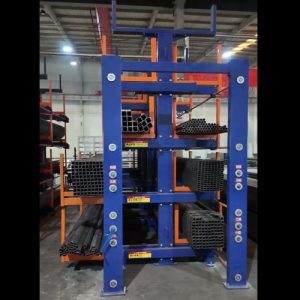
Laser cutting produces two streams of material. One is the finished part. The other is everything left on the table: skeletal webs, edge trims, rectangular drops, and partial sheets. Within that second stream, a useful distinction exists. Some pieces are true scrap—too small or too irregular to feed another nest. Others are recoverable remnants with real dimensions, known grade, and a place in future jobs. The problem is that both leave the machine together and enter the same pile.
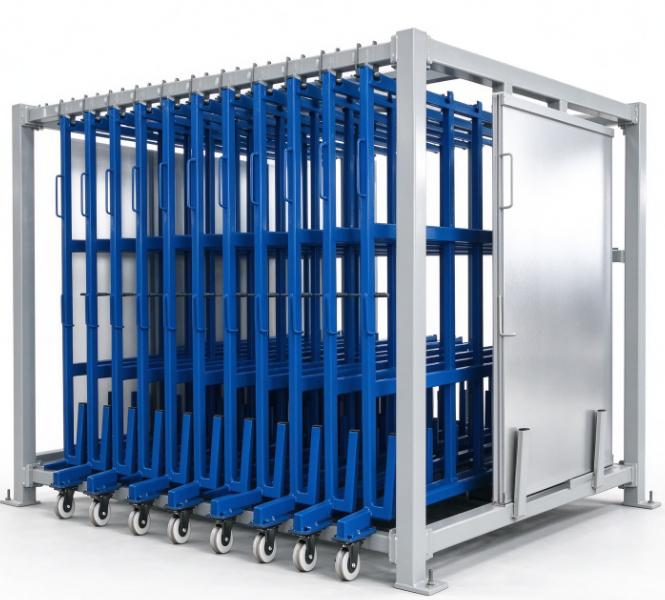
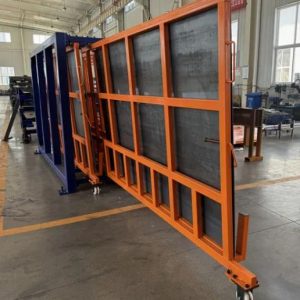
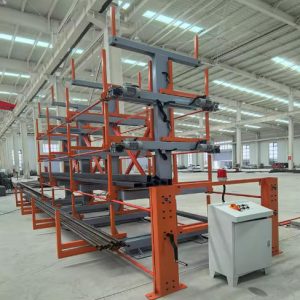
Herochu’s vertical roll-out sheet metal remnants rack is built around that distinction. The rack does not replace scrap bins or recycling contracts. It sits upstream of them, capturing recoverable material at the moment it is generated, before it becomes contaminated, buried, or forgotten.
Capture at the Point of Generation
The most effective moment to organize a remnant is when it leaves the cutting table. At that moment, its dimensions and grade are known. The operator knows which job produced it and what thickness it is. Once the piece enters a floor pile, that information begins to erode. A week later, nobody remembers whether the stainless drop on the bottom is 14-gauge or 16-gauge.
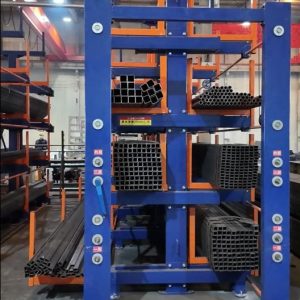
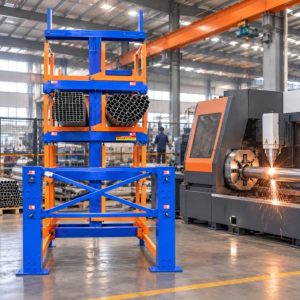
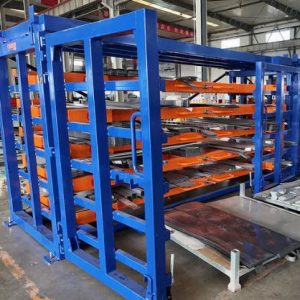
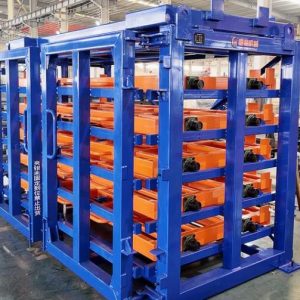
Herochu’s rack is positioned beside the cutting cell. The drawer opens, the usable remnant goes in, the drawer closes. The material enters organized storage at the point of generation, when the information needed to classify it is still available. Each tier can be assigned to a material category—16-gauge mild steel on one level, 14-gauge stainless on another, aluminum drops above a minimum usable size on a third. Physical separation reduces search time and prevents the cross-contamination that occurs when different metals share a single pile.
Drawer Visibility and Retrieval Speed
In a shop without a remnant system, retrieval is a search operation. An operator looking for a piece that fits a new nest must dig through a mixed pile, lifting sheets and leaning them aside, hoping to find a match before the cost of digging exceeds the cost of pulling a new sheet. The search usually fails, not because the right piece is absent, but because it is not visible.
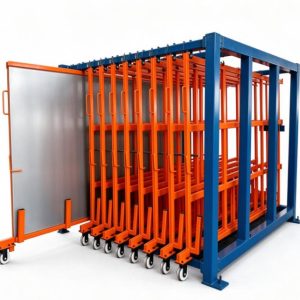
The roll-out drawer converts retrieval from a search into a scan. The drawer extends fully, presenting the entire sheet surface. The operator sees every remnant on that tier without touching any other layer. If the piece fits, it comes out. If it does not, the drawer closes and the next tier opens. The access time drops from minutes to seconds, and the reuse decision becomes the default rather than the exception.
For shops cutting multiple gauges and alloys, the tier count is customized to the material mix. Clear space between levels adjusts at the specification stage—thin remnants require minimal clearance, while stacked pieces or thicker sections need greater opening height. The rack is configured to the shop’s actual waste profile, not a generic standard.
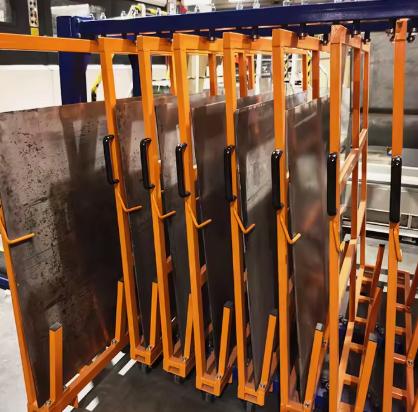
Protecting Remnant Value Through Storage
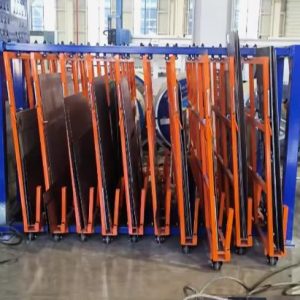
A remnant that survives cutting but arrives at storage with bent edges, scratches, and surface damage has lost much of its value. The handling between machine and storage determines whether the piece remains usable. Herochu’s drawers minimize handling damage because the remnant stays on the drawer surface. It is placed once and retrieved when needed. There is no pile-to-pile transfer, no leaning against walls, no stacking under heavier pieces. Non-skid liners hold the material in place during drawer movement, and the steel frame contains the remnant within a defined space.
For shops cutting coated, polished, or surface-critical materials, this protection extends the usable life of every remnant. The drawer presents the material at a consistent height, allowing a vacuum lifter or crane to attach without dragging the sheet across adjacent pieces.
Space Compression Without Material Loss
Remnants are small, numerous, and irregular. Horizontal storage spreads them across floor area in a way that consumes space disproportionate to their value. Vertical storage compresses that footprint. A rack holding dozens of remnant pieces occupies the floor area of a single pallet. Floor space reduction approaches 50% compared to equivalent horizontal storage, and in some configurations reaches 70% to 80%.
The compression matters because floor space is often the binding constraint in a laser cutting shop. A shop that scraps remnants because it has nowhere to put them is discarding material value. A shop that stores them in a compact vertical rack preserves that value for the jobs that can use it.