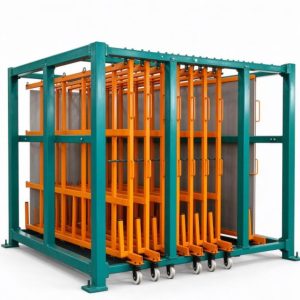
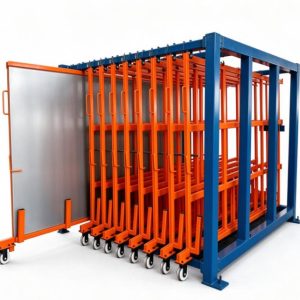
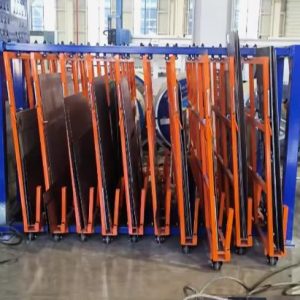
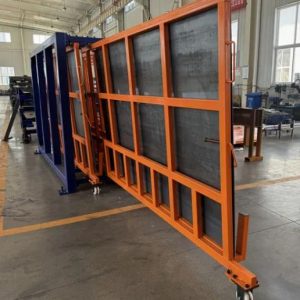
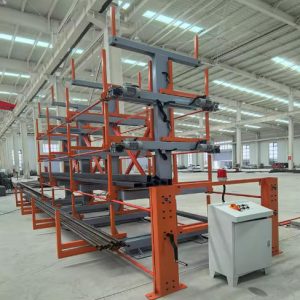
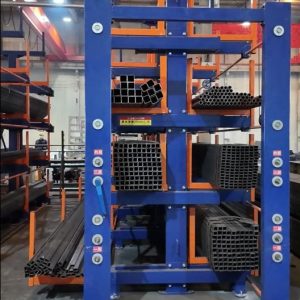
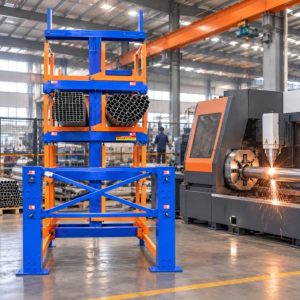
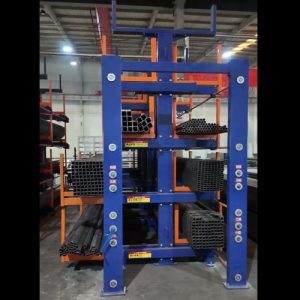
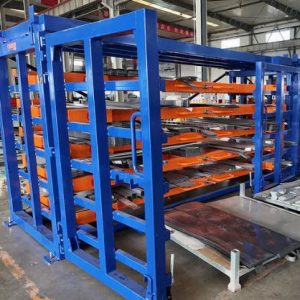
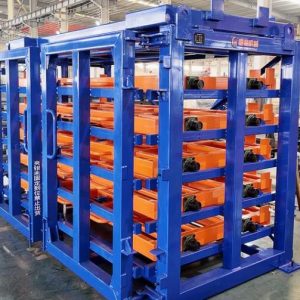
Can one rack hold both full sheets and offcuts? It can, if the tray size and rating suit the full sheet. Many shops keep full sheets in a separate rack or tower and use the roll-out unit for remnants, which keeps high-turnover material in one place.
How long does a customized rack take to build? Lead time depends on tier count, load rating and finish, so confirm it at quotation against the specification sheet rather than assuming a catalogue figure.
Does the rack work on an uneven floor? The frame needs a level base to keep drawers tracking square. Adjustable feet and shims handle minor variation; significant slope should be corrected first.
Can the rack be extended later? Tier count and outer size are fixed per unit, so expansion usually means a second rack alongside.
Can a 1,000 kg per-layer rack store a full 3,000 × 1,500 mm sheet at 30 mm? No. That sheet weighs roughly 1,060 kg. Specify a heavier drawer build, quoted up to 2,000 kg, or keep the tray for drops rather than full sheets.
Is a roll-out rack safer than a flat plate stack? Generally yes, because material is restrained on a tray instead of leaning in a pile, and retrieval does not require lifting other sheets. Safety still depends on load discipline and floor condition.
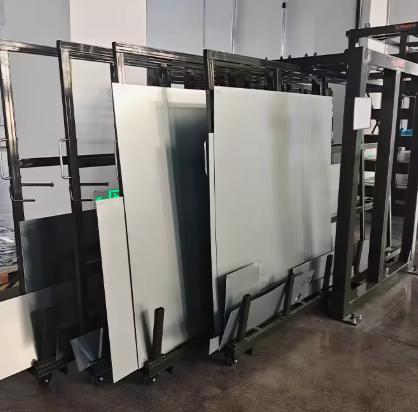
Does mechanical assistance mean the drawer is powered? No. Operation stays manual with mechanical assistance, so there is no motor, no air line and no dependence on power during a shift.
How much clear space is needed between layers? 60 mm is standard, customized to the material. Thick plate with burred edges, or bundles of several pieces, need more so the drawer does not drag on the layer above.