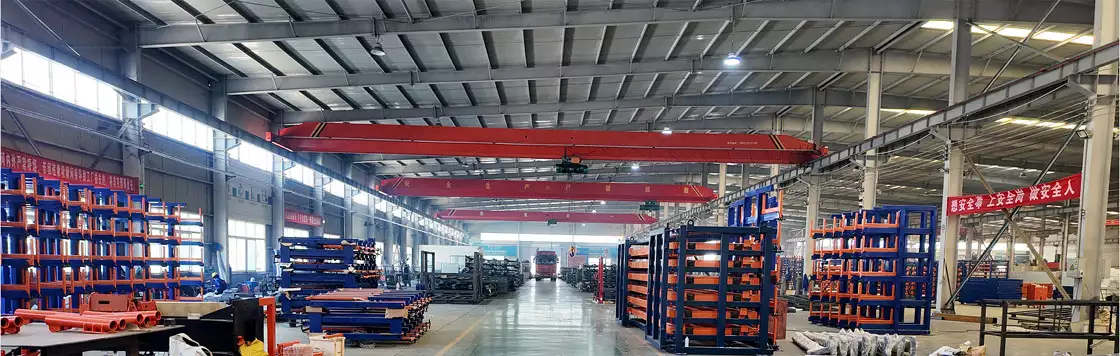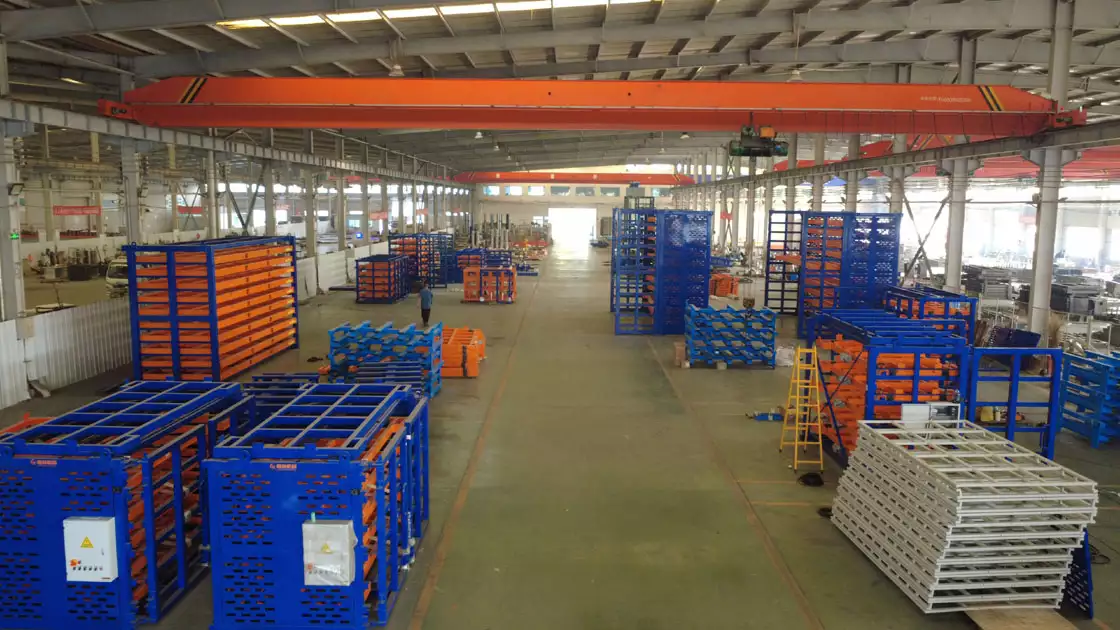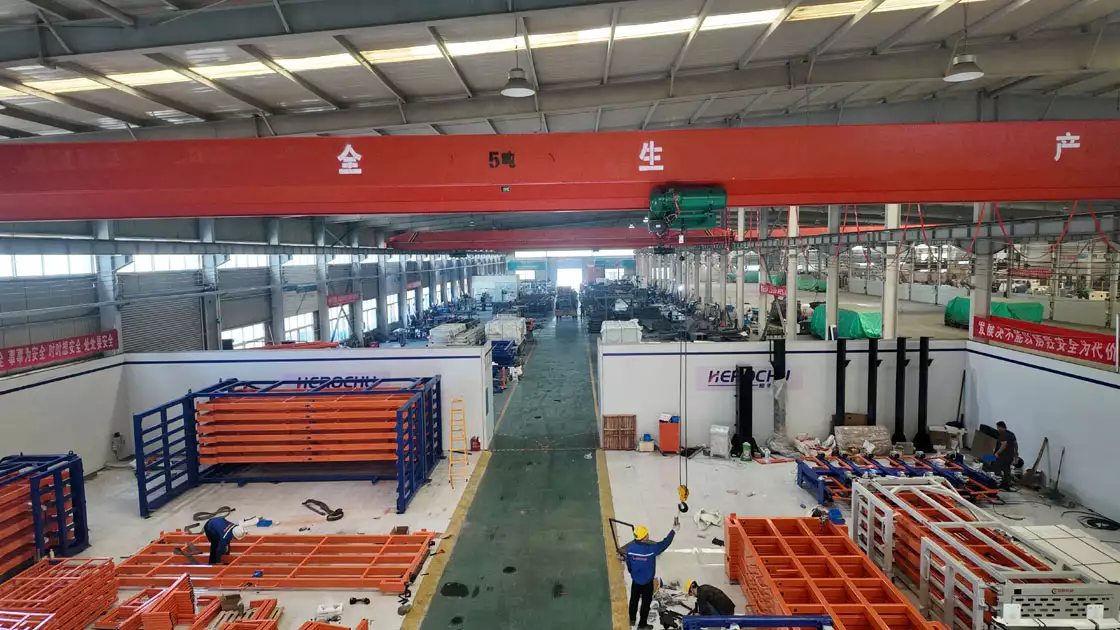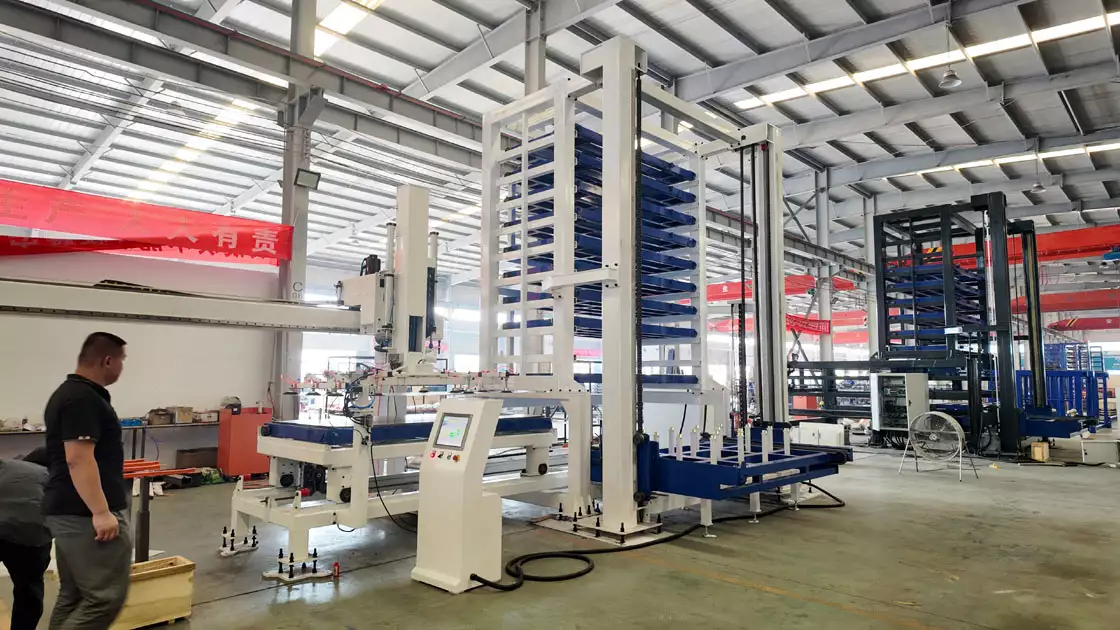
Workshop layouts change. A press brake moves to make room for a new fiber laser. A welding bay expands into what was once remnant storage. A job requiring frequent access to aluminum drops runs for three weeks, then shifts to stainless. In a fabrication shop, storage that cannot move with the work becomes a bottleneck the moment the floor plan evolves.
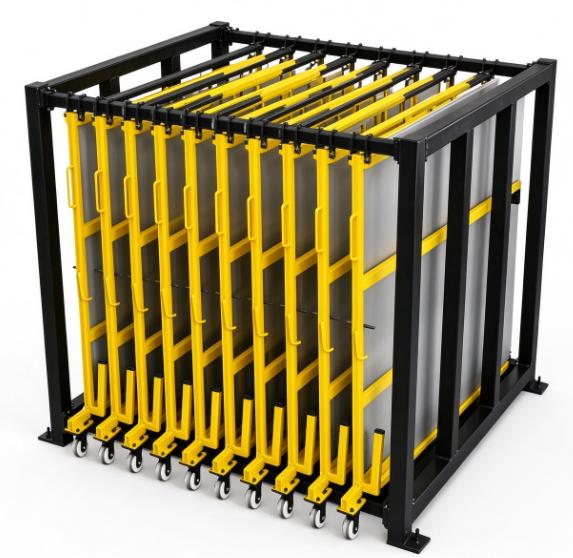
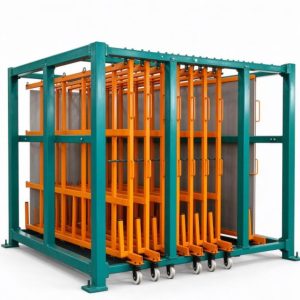
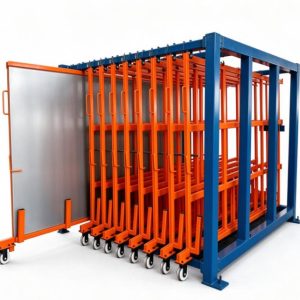
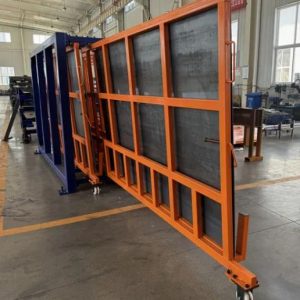
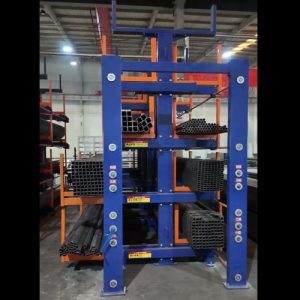
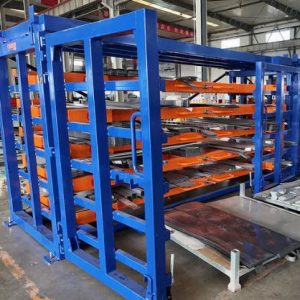
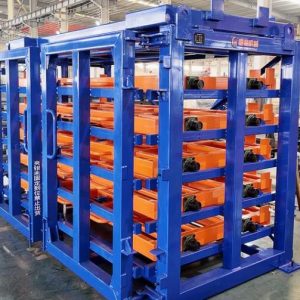
Herochu’s mobile vertical remnant rack addresses this with a wheel base integrated into the same heavy-duty steel frame used in its stationary units. The rack organizes offcuts, partial sheets, and semi-finished blanks in vertical pull-out drawers, but adds the ability to reposition the entire storage unit as production needs shift. The result is a remnant system that follows the work rather than forcing the work to follow the rack.
The Problem with Fixed Remnant Storage
Most shops treat remnant storage as a fixed asset. A rack gets bolted into a corner, and remnants accumulate there regardless of where the cutting or bending happens. When the laser cell moves to the other side of the building, the remnant pile stays behind. Operators either walk further to retrieve offcuts or stop retrieving them altogether. The material stays in storage, but the behavior changes: new sheets get pulled instead of remnants.
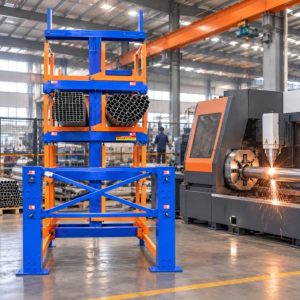
A mobile rack breaks that pattern. The wheel base allows the unit to be repositioned near the equipment generating the remnants—beside the laser, adjacent to the press brake, or in a temporary staging area for a high-mix job. The drawers remain the organizing mechanism; the mobility is what keeps the organizing mechanism relevant as the shop changes.
Drawer Architecture for Irregular Material
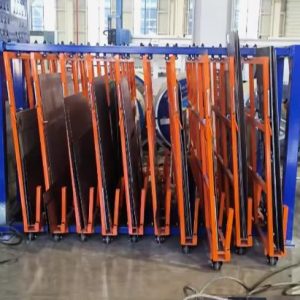
Remnants do not conform to standard formats. They come in rectangular drops, angular cutouts, perimeter strips, and semi-finished blanks that may be heavier or lighter than a full sheet. Herochu’s drawers accommodate this irregularity naturally. The remnant sits flat on the drawer surface, supported along its length, with non-skid strips preventing movement during drawer travel. There is no requirement for the material to be stacked in an orderly pile or lifted over other pieces.
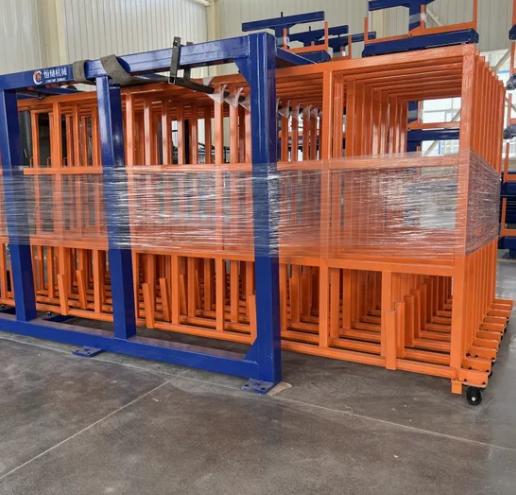
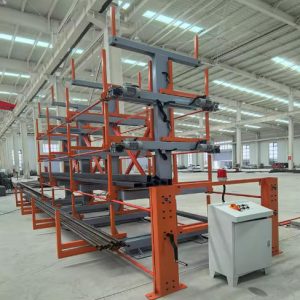
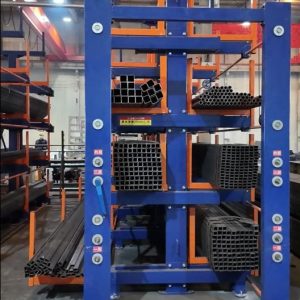
Multi-tier configurations allow each level to serve a specific material category. One tier for carbon steel drops, another for stainless, a third for aluminum remnants above a usable size threshold. Because the tier count is customizable, the rack can be configured to the shop’s actual remnant profile rather than a generic standard. Clear space between drawers adjusts at the specification stage: thin-gauge offcuts can maximize tier density, while thicker plate sections maintain adequate clearance without wasting vertical height.
Load Capacity and Mobility Without Compromise
Mobility does not mean light duty. Herochu’s mobile remnant rack uses the same reinforced carbon steel frame and powder-coated anti-rust finish as the stationary models. Per-layer load capacity reaches 1000 kg, and the drawer mechanism is calibrated to move smoothly across the load range. A drawer holding a heavy partial sheet receives mechanical assistance to reduce pull force; a drawer holding light aluminum drops moves with minimal effort. The operator experience stays consistent even as the material weight varies.
The wheel base is designed for repositioning within the workshop, not for long-distance transport. The rack moves across flat concrete or sealed industrial flooring when the layout demands it, then settles into position beside the relevant process. Forklift-compatible options are available for shops that need to relocate storage between buildings or load bays.
Space Efficiency and Material Visibility
Horizontal remnant storage spreads irregular pieces across floor area in a way that consumes space disproportionate to their value. Vertical storage compresses that footprint. A mobile Herochu rack holding dozens of remnant pieces occupies roughly the floor area of a single pallet, and the vertical orientation keeps every drawer face accessible without disturbing adjacent tiers.
The visibility benefit is equally practical. When remnants have designated drawers, the shop can see how much reusable material is actually available. That visibility changes purchasing behavior. A shop that can see its remnant stock orders less new material because the remnants become a known quantity rather than a vague hope that something suitable might be found.