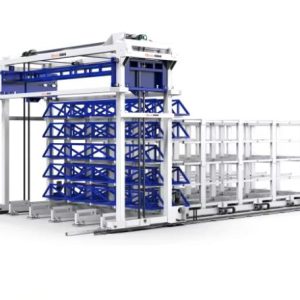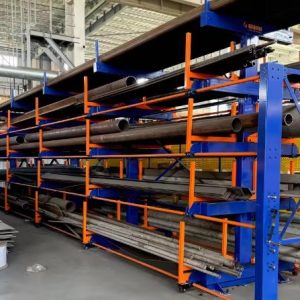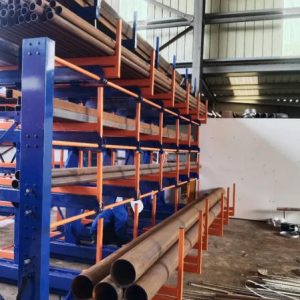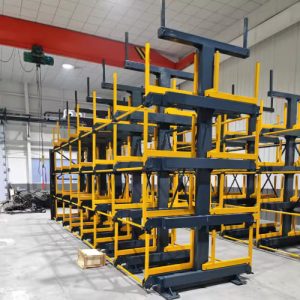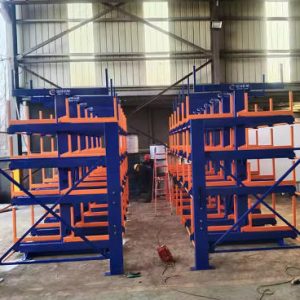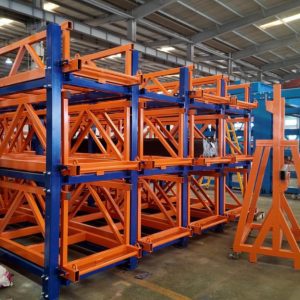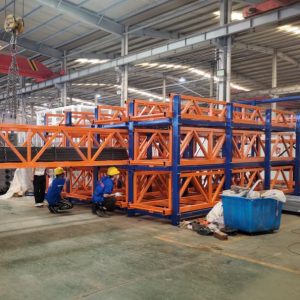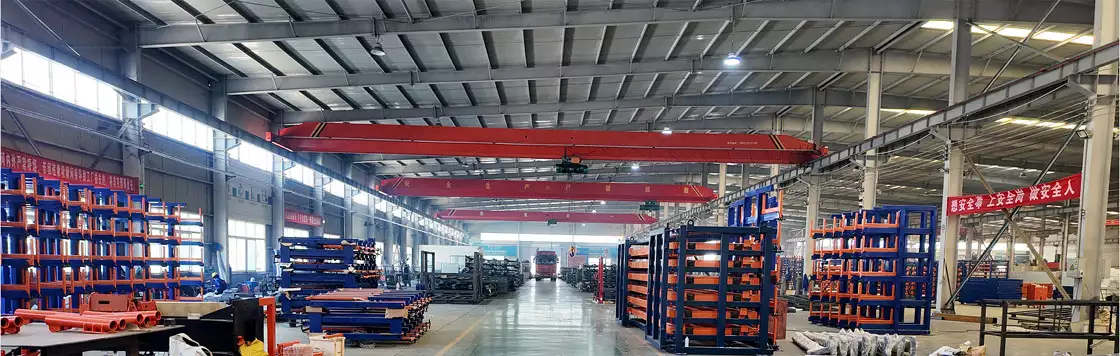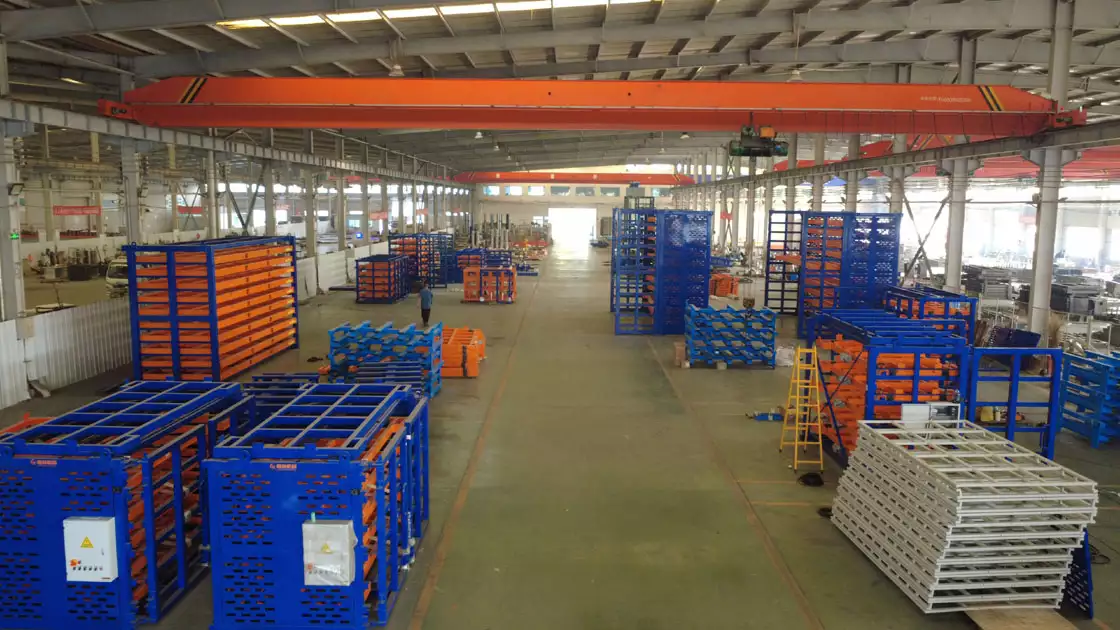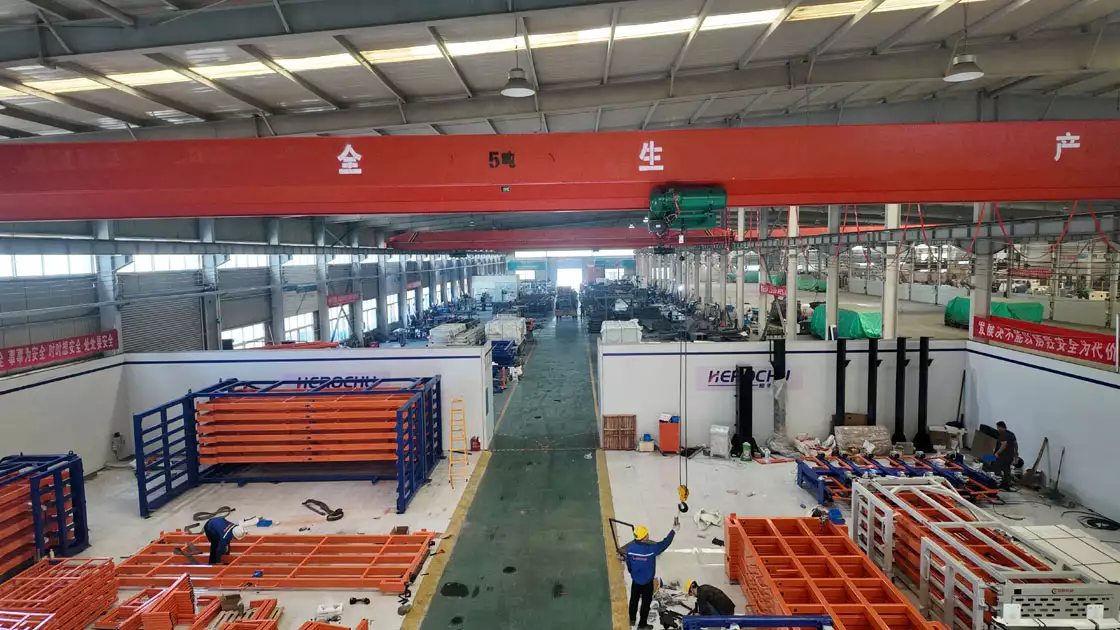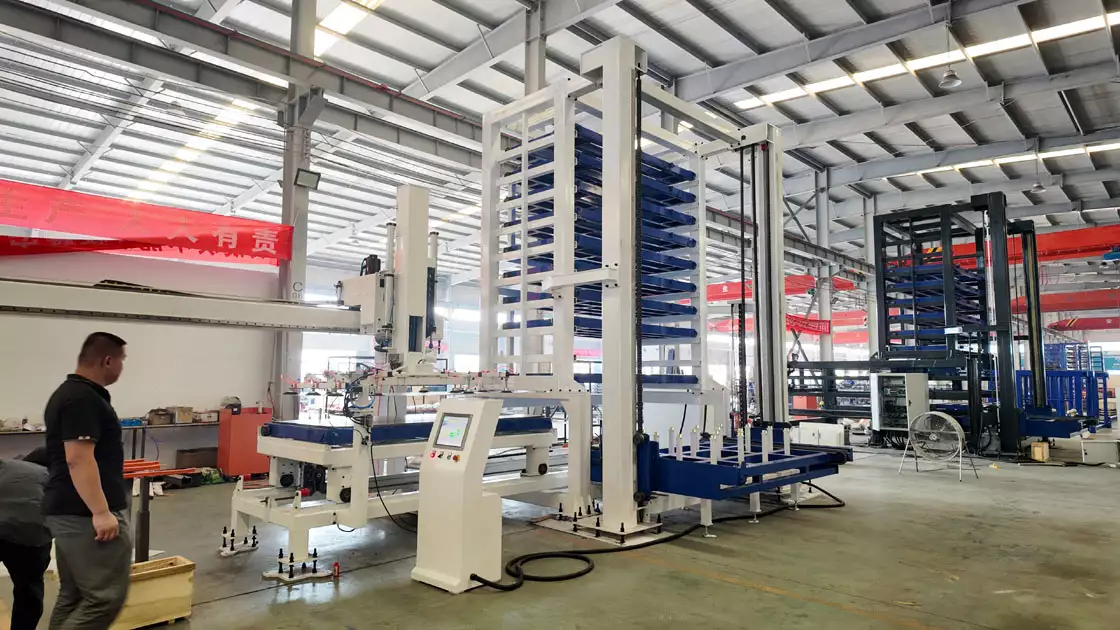
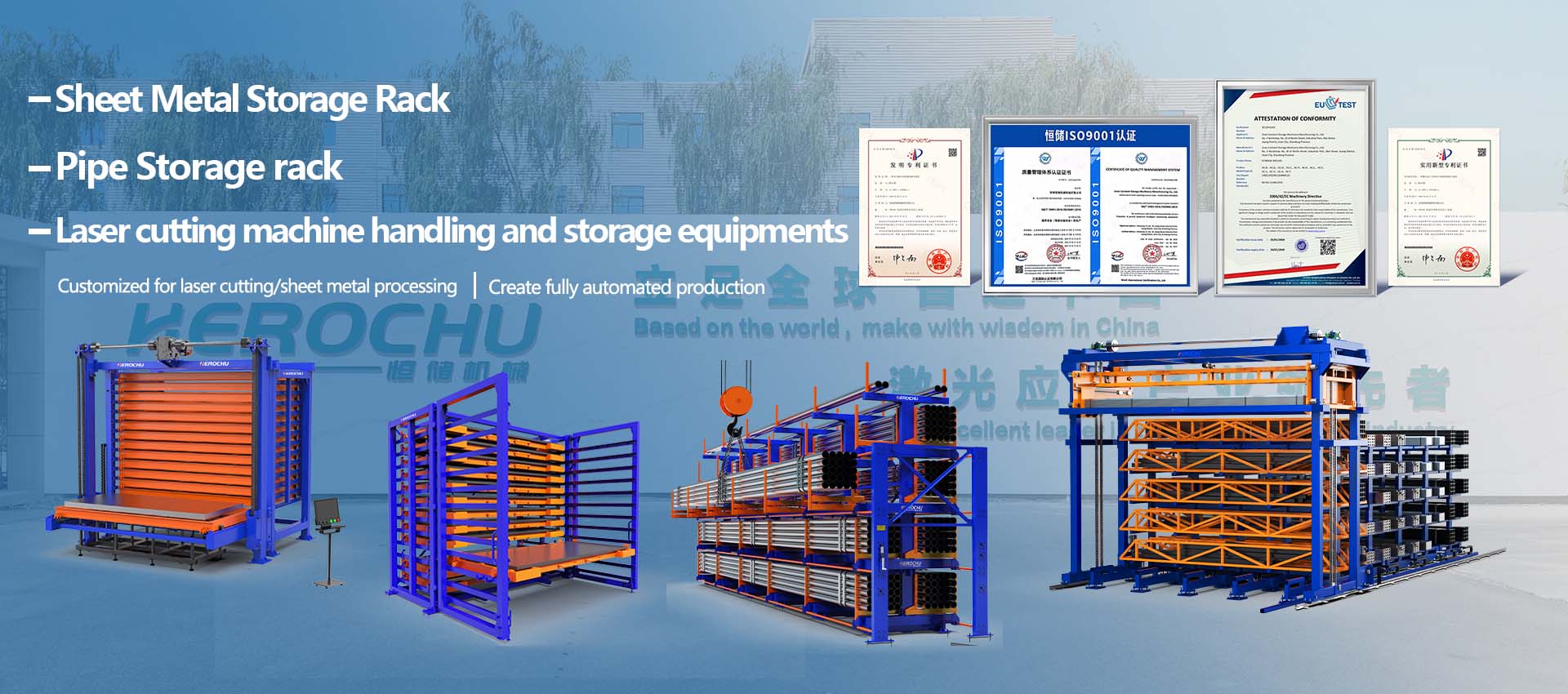
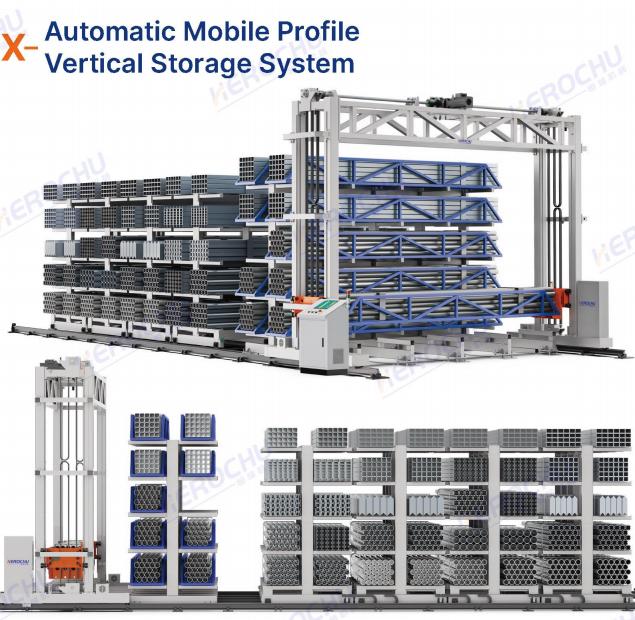
Customized automated storage for long materials is a rack-and-machine combination dimensioned around the lengths, weights and bundle shapes a plant actually handles — usually 6 m to 8 m profiles, pipes and beams stored in vertical layers and moved by an automated gantry. Nothing is standard, because a 3 t bundle of 8 m beams and a 400 kg stack of extrusions place different demands on the same footprint.
Herochu builds these systems to order for metal fabrication, laser cutting and profile processing plants. What follows is the specification logic that separates a storage system that pays for itself from one that becomes an expensive obstacle.
Why standard pallet racking fails with long loads
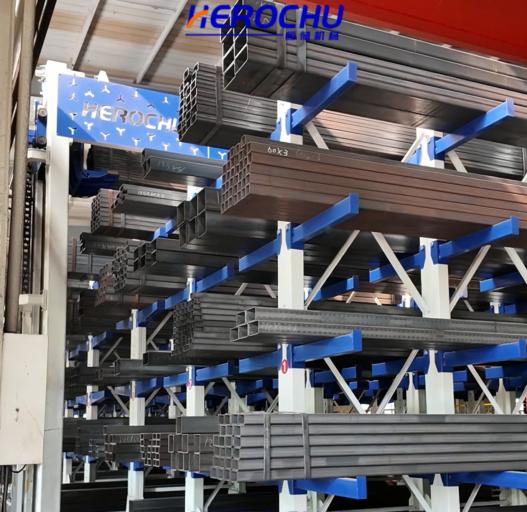
Put a 6 m steel pipe on two pallet supports and it behaves like a spring. The middle sags, the ends whip, and the load creeps along the beam whenever a forklift reverses nearby. Cantilever racks fix the support problem but add a space problem: every picking face needs a forklift aisle of roughly 3.5 m to 4 m, plus a turning circle wide enough for a 7 m load. That aisle becomes the largest single item in the layout.
Then comes retrieval. A bundle three rows back and four layers up takes two people, a spotter and a 15 to 20 minute shuffle of neighboring stock. Repeat that twenty times a shift and the storage area becomes the constraint on the whole line.
The five variables that define a custom system
Every long-material project reduces to five numbers. Get them right at quotation stage and the design follows.
- Material length. Use the maximum, plus allowance for overlength mill bundles. A tower rated for 6,000 mm bays cannot take a 6,300 mm bundle without overhang, and overhang is where inspections begin.
- Load per level. Capacity applies per level, not per tower. A 3,000 kg level holds one 3,000 kg bundle, not three of 1,200 kg, unless the level is designed for those point loads.
- Layer count. Layers create the density. Five to eight works for profile towers; beyond that, the lifting mechanism and building height become the limit.
- Rack columns. This sets horizontal capacity and how many positions the gantry reaches. Eight to ten suits most mid-size plants.
- Aisle strategy. A shared corridor along one rack face is how rail-mounted systems gain density without duplicating access space.
Herochu sizes each order from these inputs: one structural concept serves a 6 m pipe store and a 7 m beam store, while fork geometry, layer spacing and drive sizing change with the load.
How automatic handling works
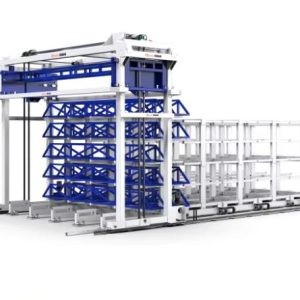
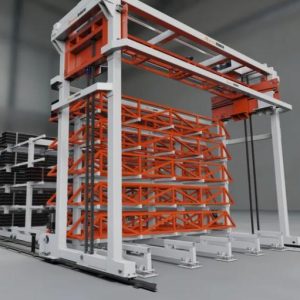
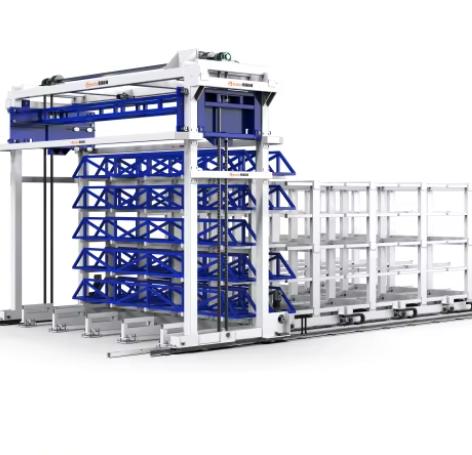
The handling layer is a gantry on floor-mounted rails carrying a lifting mast and customized forks. The forks slide under the bundle, lift it clear of the rack arms, and transfer it to the outfeed or a saw conveyor.
Three motions matter. Travel runs 5 to 30 m/min, crossing a row in under a minute. Lifting runs 5 to 15 m/min, slower by design because vertical acceleration stresses load and frame. Repeatability is ±2 mm at the pick position, the figure that lets forks enter a pocket without an operator nudging the machine.
The fork is the most underestimated part. Long bundles deflect, so spacing, thickness and tip profile must match the material. A set built for banded square tube will not handle loose pipes that roll, so Herochu specifies fork geometry per material family rather than per machine.
Density, measured against the alternative
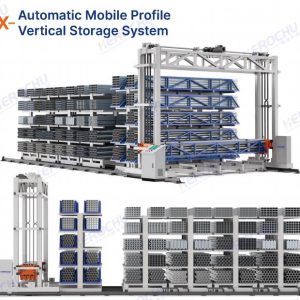
A worked example beats a percentage claim. Take the Herochu HC-X6053-8 configuration: 6,000 mm material, 5 layers, 3,000 kg per level, 8 rack columns. Position capacity is 8 × 5 × 3 t = 120 t inside a footprint of eight bays plus one shared corridor.
The same 120 t on cantilever racks needs an aisle at every face and a two-person retrieval per pick. Density is why automation pays back on labor and on recovered floor.
Smart management: WMS, WCS and the ERP link
Automation without inventory software is a fast crane that still loses material. The WMS holds the logical map: bundle, alloy, heat number, pocket, project. The WCS turns a request into motion: gantry path, fork sequence, interlocks, collision avoidance. ERP or MES integration ties storage to production orders, so a released cutting list becomes a retrieval request without anyone typing a location.
For plants running stainless, aluminum or specialty tube, that accuracy is worth more than the labor saving. A mis-identified heat number is a rework event, not a paperwork error.
Specification checklist
| Item | What to provide | Why it matters |
|---|---|---|
| Length range | Min, max, tolerance | Bay length, clearance |
| Bundle weight | Typical and maximum | Fork and level sizing |
| Material family | Profiles, pipes, beams | Fork type, arm spacing |
| Throughput | Picks per shift | Gantry speed, buffer points |
| Interface | ERP, MES or standalone | Software scope |
Frequently asked questions
How much floor space does an automated long-material store need? Less than an equivalent cantilever layout, because one corridor serves the row instead of an aisle at every face.
Can one system handle pipes, profiles and beams together? Yes, if fork set and arm spacing are specified for the mixed load. Most plants dedicate columns by material family and share the machine.
What happens during a power failure? The gantry brakes with the load in its pocket and the WMS keeps the last transaction. Recovery is a controlled re-home, not a manual unload.
The bottom line
Customized automated storage for long materials comes down to five numbers, one machine and one database. Plants that define their material mix precisely get a dense, fast, auditable store. Plants that buy on price and describe their stock loosely get a tower that fits most of it — which is another way of saying it fits none of it comfortably.