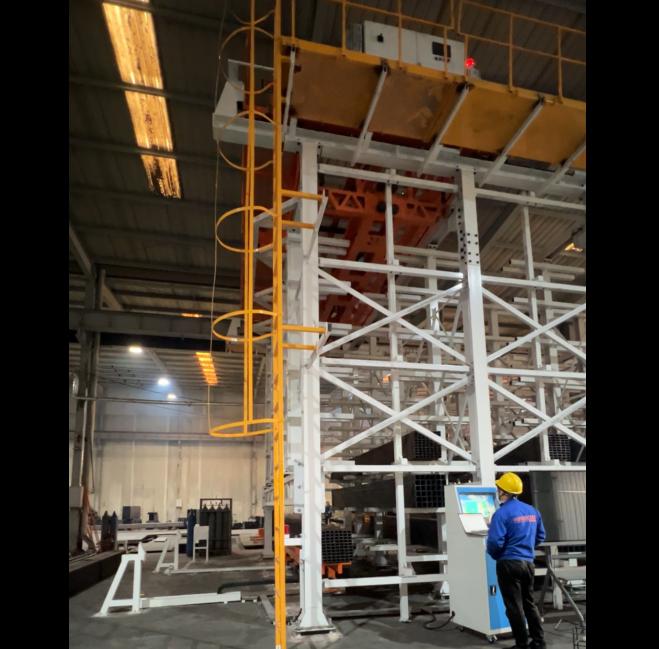
Most fabrication shops and steel service centers face the same quiet crisis: long pipes, tubes, and structural profiles consume floor space at an alarming rate. A single bundle of 12-meter pipe can occupy dozens of square feet of aisle, and when you stack bundles three or four high on traditional cantilever racks, retrieving the bottom layer becomes a fifteen-to-twenty-minute ordeal involving forklifts, overhead cranes, and more than a little risk.
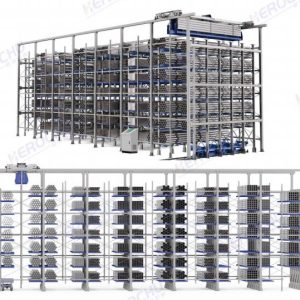
The Automatic Overhead Tube Vertical Storage Solutions for Long Materials category exists to solve precisely this problem. Instead of spreading inventory horizontally, these systems lift material into a vertical matrix where every storage position is tracked, accessible, and delivered on demand.
What “Overhead” Actually Means in Practice
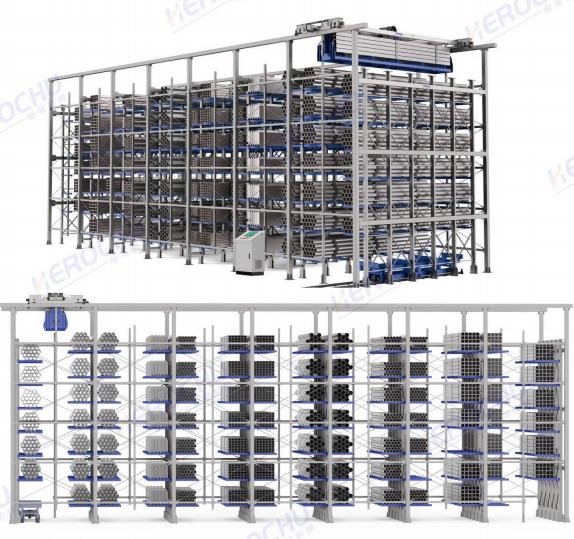
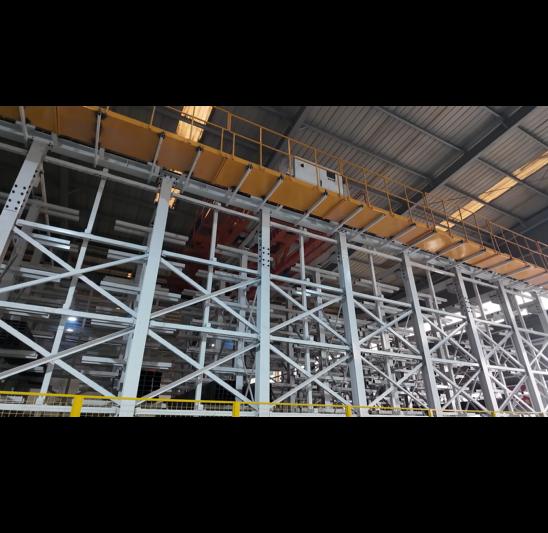
An overhead tube storage system operates on a fundamentally different geometry than floor-level racking. The core mechanism is a traveling carriage that runs on elevated runways, carrying a suspended lifting platform that moves independently in the vertical direction . Horizontal travel and vertical lift are driven by separate servo axes.
This separation matters more than it might appear. Horizontal positioning is unaffected by floor unevenness or debris. Vertical lift travel is not constrained by building floor conditions. Each axis carries a simpler motion profile and a more direct fault-diagnosis path .
Herochu engineers its overhead systems around the specific structural conditions of each facility. For steel-frame buildings, runways suspend from roof beams or dedicated support structures. For concrete buildings, chemical anchors or embedments transfer runway loads to structural members. The company performs structural load calculations for every project and coordinates with the customer’s structural engineer .
Why Tube Handling Demands Specialized Design
Tubes behave differently under dynamic loads than solid bars. Round pipe tends to roll during acceleration and deceleration. Thin-wall tube can ovalize under point-load support. Square and rectangular hollow sections require lateral restraint to maintain alignment.
Herochu addresses these behaviors through customized support configurations. V-cradles provide self-centering restraint for round pipe. Flat supports with lateral stops maintain alignment for square and rectangular tube. For thin-wall material, support spacing is calculated based on tube diameter, wall thickness, and material yield strength to prevent ovalization .
Open-bottom drawers are another practical detail. Cut and machined tubes carry chips and coolant residue. Open bottoms allow debris to fall through during storage rather than accumulating in the drawer, reducing cleaning downtime and lowering the risk of debris falling onto the aisle below during gantry movement .
Digital Inventory: From Searching to Calling
Manual warehousing accuracy depends on tags, chalk marks, and spreadsheets. Once a night-shift operator moves a bundle without logging it, the data is wrong. Herochu binds inventory management directly to the PLC. Siemens S7-1200 controllers communicate over PROFINET, and a 12-inch HMI provides real-time stock display with one-key bundle calls. Closed-loop logging automatically tracks SKU locations, storage duration, and production orders .
When integrated with ERP or WMS platforms, inventory data flows bi-directionally. Production scheduling can see what tube is physically on site. Purchasing can see when replenishment is needed. The transaction log provides an auditable path for every bundle from receiving to consumption .
The Speed Numbers That Matter
Herochu’s overhead tube systems achieve lift speeds of 40 m/min and carriage traverse speeds of 100 m/min. Gantry handler exchange and lift speeds run 5–15 m/min. Retrieval cycles complete in under 90 seconds .
Speed adjustability is an operational feature worth noting. Operators can adjust speed profiles through the touchscreen to match material type and downstream urgency. A bundle of thin-wall tube headed to a just-in-time cutting line can move at full speed. Precision-ground bar for finishing may receive a gentler profile, reducing inertial effects on surface quality .
Safety Architecture Above Ground
A structural advantage of overhead systems is that the danger zone sits above personnel traffic. Suspended loads travel above walkways, eliminating the pedestrian collision risk common in forklift handling. Herochu adds multiple protection layers: laser distance sensors scan ahead and behind the travel path, overload sensors prevent exceeding rated load, and emergency stop circuits provide redundant protection .
Frequently Asked Questions
What material lengths can Herochu overhead tube systems handle?
Standard configurations support 6,000 mm to 8,000 mm tube. Custom configurations extend to 12,000 mm .
How much floor space does an overhead system actually free up?
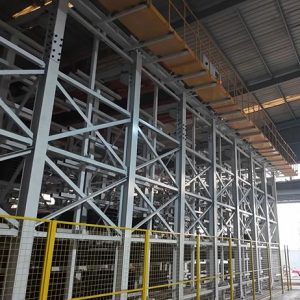
Because storage moves vertically, the ground-level footprint is limited to the gantry envelope and picking aisle. Herochu reports floor space reductions exceeding 80 percent compared with conventional floor storage layouts requiring 1,500 square feet or more .
Can the system store different tube specifications simultaneously?
Yes. Multiple profile specifications—round, square, rectangular, and structural sections—can be stored together with customized support cradles for each type .