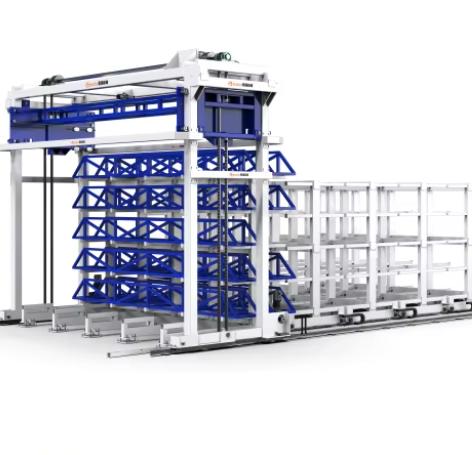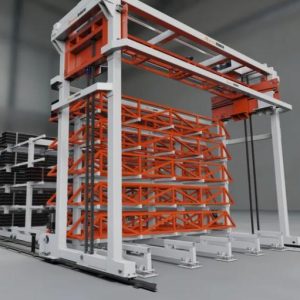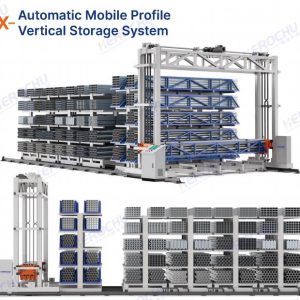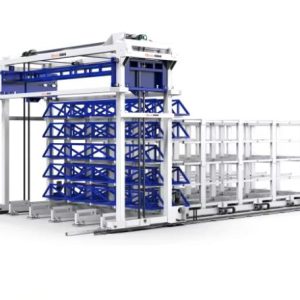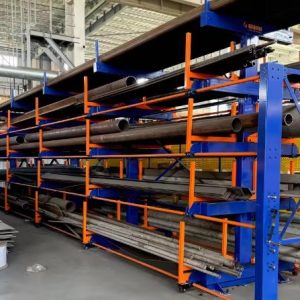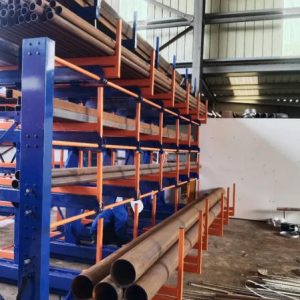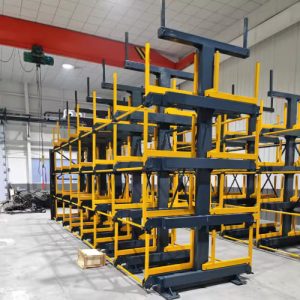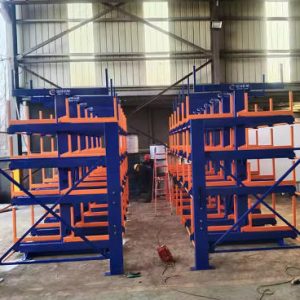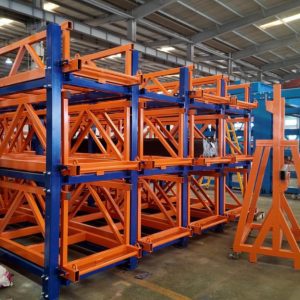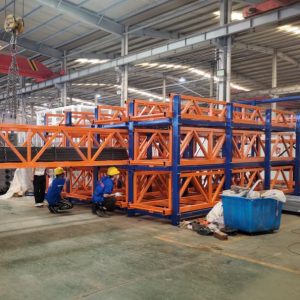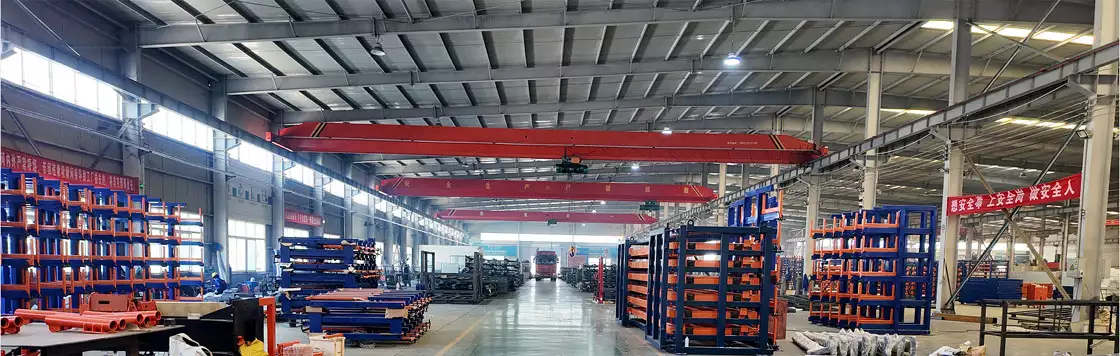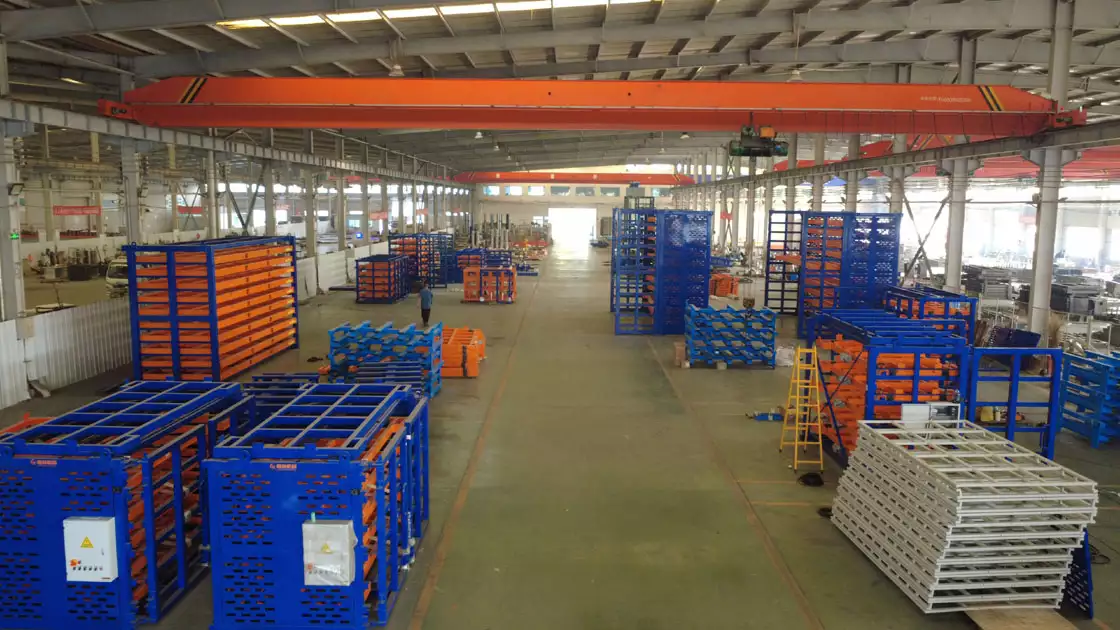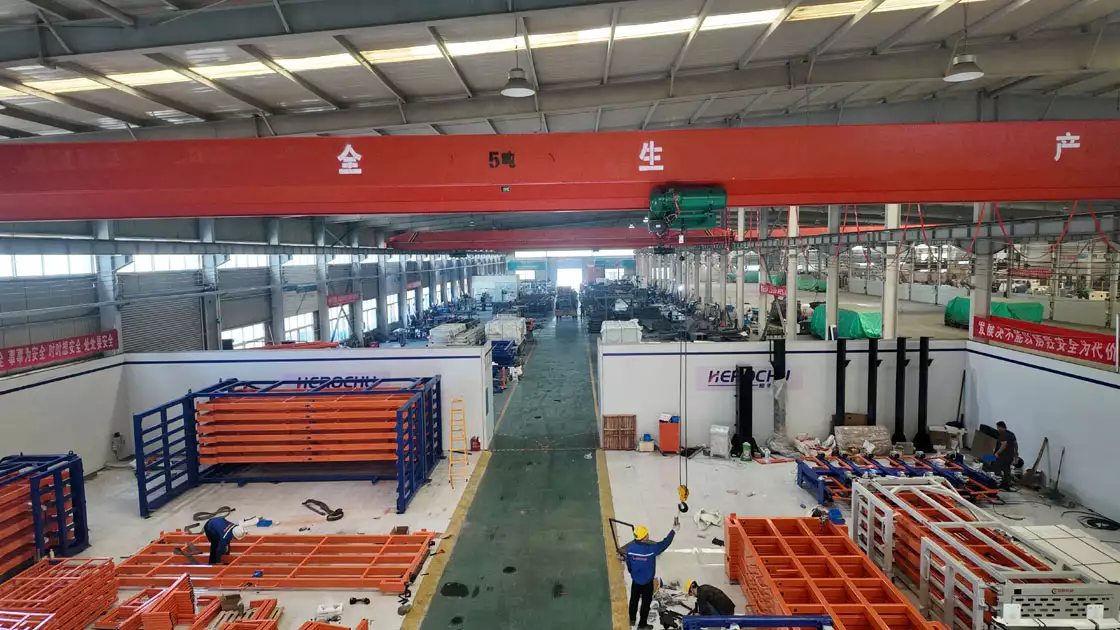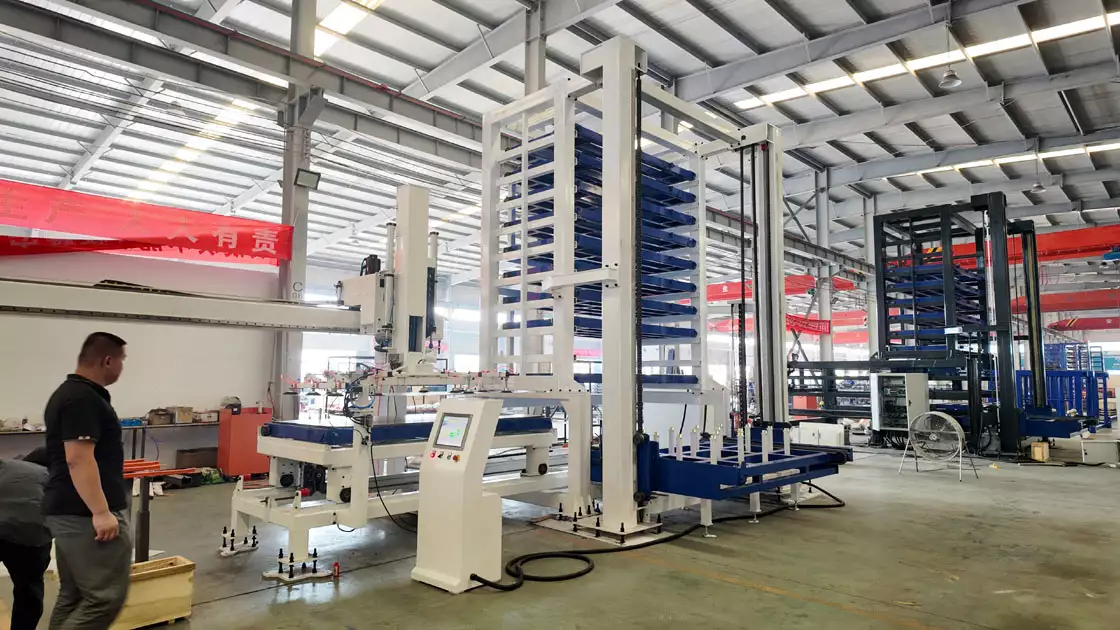
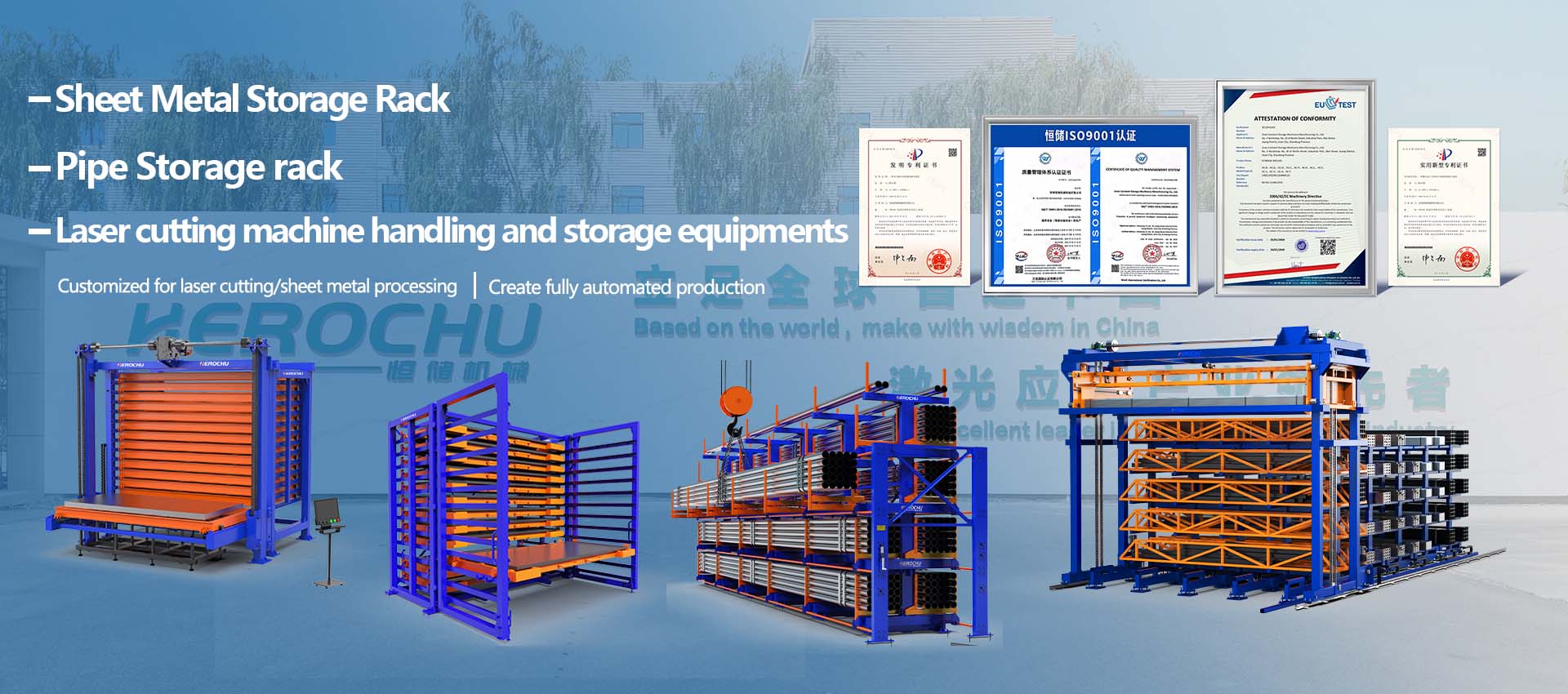
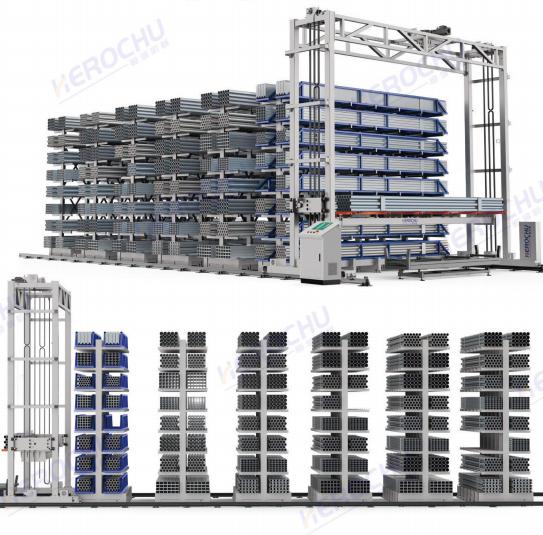
A smart vertical pipe storage system holds long steel and aluminum profiles in stacked horizontal layers inside a compact tower, then moves them in and out with an automated lifting and transfer mechanism. Instead of spreading 6 m to 8 m extrusions across the floor, the tower builds the store upward, keeps every bundle in a known pocket, and reports that position through a WMS.
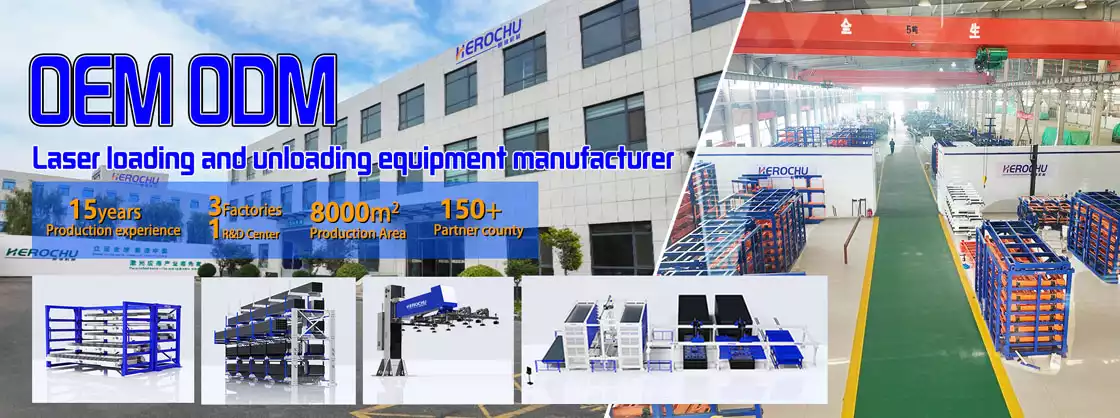
Herochu configures these towers per plant, because a tower storing 3,000 kg bundles of structural steel and a tower storing light aluminum extrusions share a concept but not a structure.
Why vertical storage suits long profiles
Horizontal storage creates two costs that rarely appear on a quotation. The first is floor: a 6 m extrusion needs 6 m of clear length plus the aisle to reach it, and that aisle repeats for every row. The second is damage. Profiles stored in ground stacks get walked on, leaned against, and lifted from the middle, which is exactly where a thin-wall extrusion deforms.
Layer storage fixes both. Material rests on rack arms at multiple support points, so deflection is controlled. Layers stack five, six or eight tiers, so the same floor area holds several times the length of stock. And because the transfer unit enters from a fixed side, nothing gets dragged across a neighboring bundle.
The four parts of a working tower
A tower is four subsystems designed together.
Frame and racks. High-strength steel columns carry the arms and the load; arm spacing follows bundle width, frame height follows layer count plus fork clearance.
Lifting and transfer. The lift rises to the target layer and a transfer device slides the bundle onto or off the arms. Smooth vertical motion is what stops the bundle rocking into the frame.
Track system. Industrial-grade track keeps the transfer unit aligned along the row, so positioning stays stable over years.
Control system. A PLC with touchscreen runs the cycle, and a digital inventory layer records every movement. Without it, the tower is a tall shelf with a lift.
Herochu builds all four as one assembly, which is why ±2 mm accuracy holds at the fork tip, not just at the drive encoder.
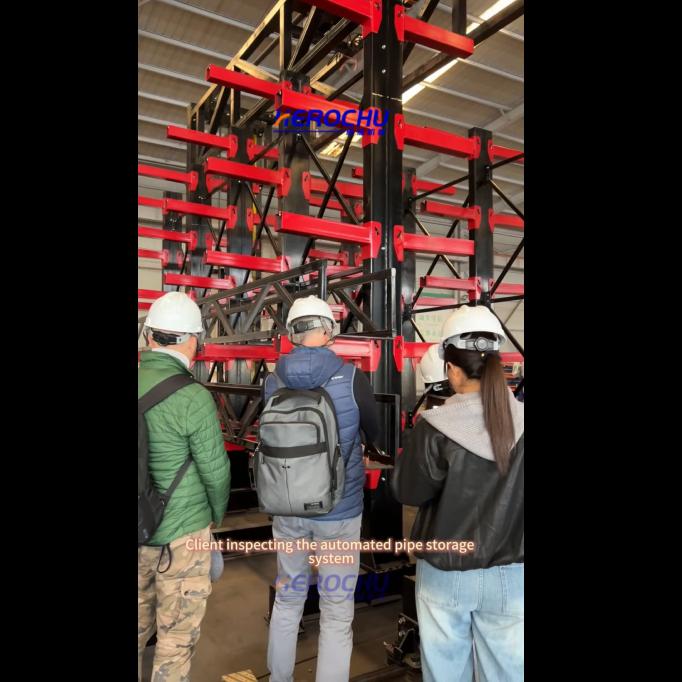
Steel and aluminum behave differently in the same tower
The concept is shared. The details are not.
| Consideration | Steel profiles and beams | Aluminum extrusions |
|---|---|---|
| Load per level | 3,000–5,000 kg typical | Lighter but longer, more flexible |
| Main risk | Frame and arm loading | Surface marking, bending |
| Fork design | Wide, heavy duty | Padded contact faces |
| Inventory driver | Heat number, project | Alloy, temper, finish, code |
A plant storing both should not plan one generic pocket. The practical answer is dedicating columns by material family while sharing the handling machine, which keeps the tower dense without forcing one fork set to do two incompatible jobs.
Serving PV component and solar frame production
Aluminum frame profiles for photovoltaic modules deserve their own plan. A module frame line runs several profile codes in long lengths, at high volume, with tight finish requirements and short changeovers. Storage errors appear as scratches on anodized surfaces, or as a stoppage when the wrong code is pulled.
A tower set up for this duty protects the finish by storing bundles on arms with non-marking contact faces, separates codes so a 35 mm frame profile never sits where a 30 mm pick error is easy, reaches any layer for fast inbound and outbound, and reports stock by code so purchasing sees consumption before the line runs dry.
The same logic covers solar mounting rails, where a mis-pick stops an assembly line rather than scrapping one part.
How much can a tower hold?
Capacity is arithmetic once the frame is chosen: columns × layers × load per level. Herochu’s three base frames cover the common range.
| Model | Profile length | Layers | Load per level | Columns | Capacity |
|---|---|---|---|---|---|
| HC-X6053-8 | 6,000 mm | 5 | 3,000 kg | 8 | 120 t |
| HC-X7065-10 | 7,000 mm | 6 | 5,000 kg | 10 | 300 t |
| HC-X8085-10 | 8,000 mm | 8 | 5,000 kg | 10 | 400 t |
Those figures are planning numbers. A tower handling loose pipes fills differently from one handling banded bundles, and layer clearance reduces usable height in both cases.
What changes on the shop floor
Floor space is the visible change. The operational one is that location stops being someone’s memory: every bundle carries a record of position, content, arrival and reservation. That is what lets a planner release a job knowing the stock exists and is reachable.
Frequently asked questions
How tall does a vertical tower need to be? Height follows layer count and material depth. A five-layer tower for 6 m profiles is much shorter than an eight-layer tower for 8 m beams, and both must clear the building structure by a working margin.
Can a tower store short offcuts? Yes. Some pockets can accept short and loose material alongside full-length bays, which suits the remnants a cutting line produces.
Is an automated tower justified for a small plant? It depends on pick frequency and material value. A plant retrieving stock several times a shift, or storing alloys that must be traceable, recovers the cost faster than one with a weekly delivery.
What about surface protection for coated aluminum? Contact faces, fork profiles and arm covers are specified for the finish; handling discipline at the infeed matters more than the tower itself.
Does the tower need a dedicated operator? No. The cycle runs from a WMS request or the touchscreen, and the operator supervises rather than drives.
The storage decision
A smart vertical tower fits when floor space is the binding constraint, when inventory accuracy carries a direct cost, and when material is long enough that horizontal handling damages it. Herochu builds tower, transfer mechanism and inventory layer as one design.