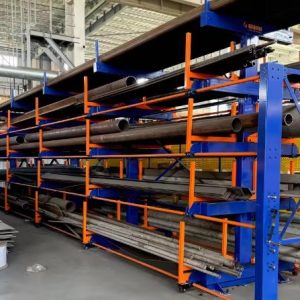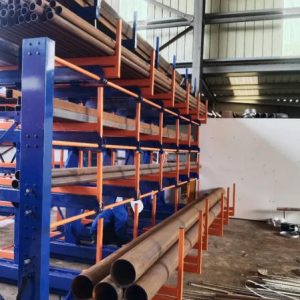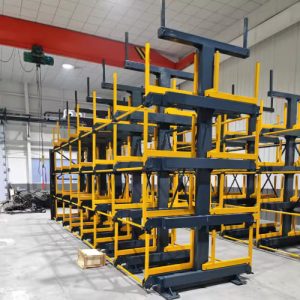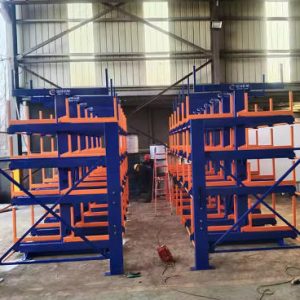
What is a manual crank rack for metal tubing and pipe storage?
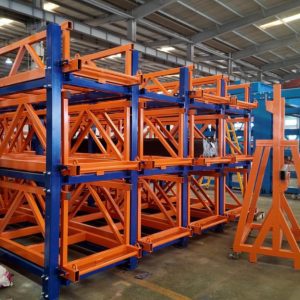
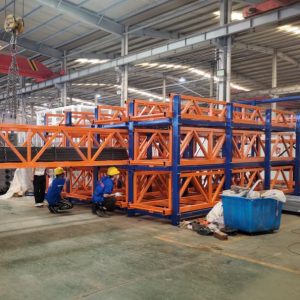
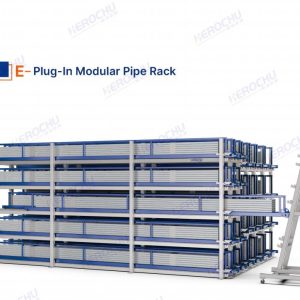
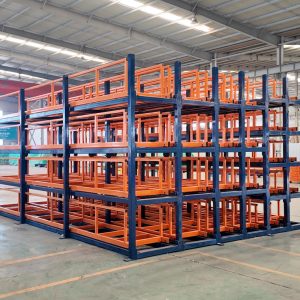
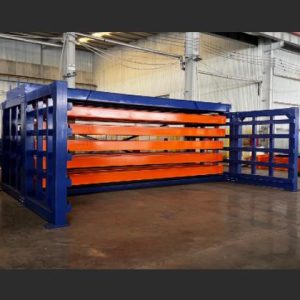
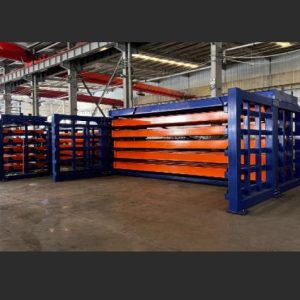
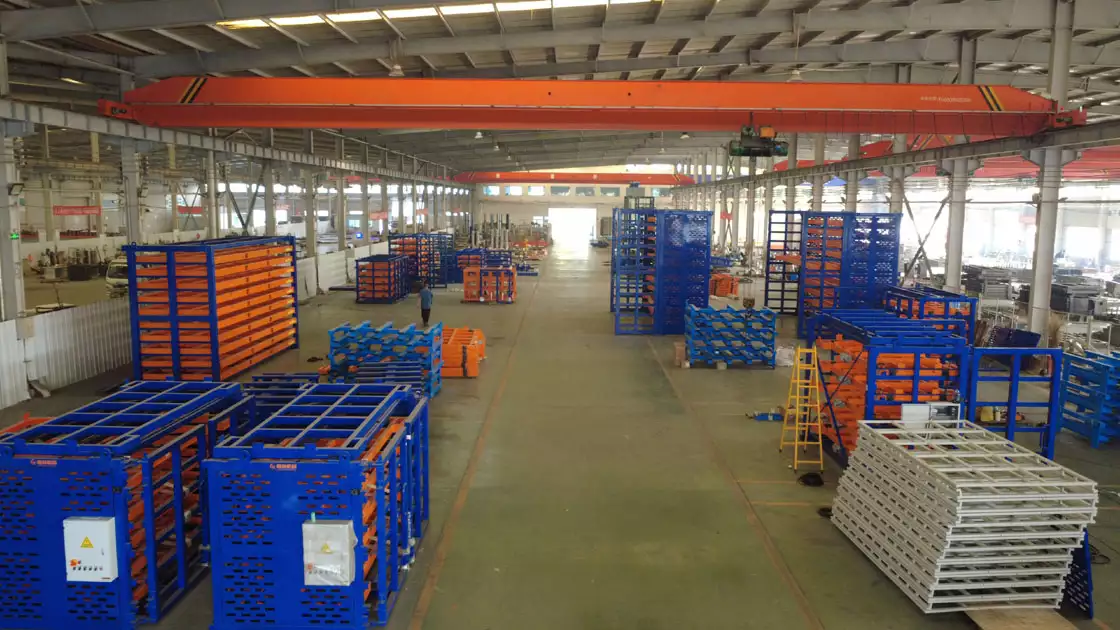
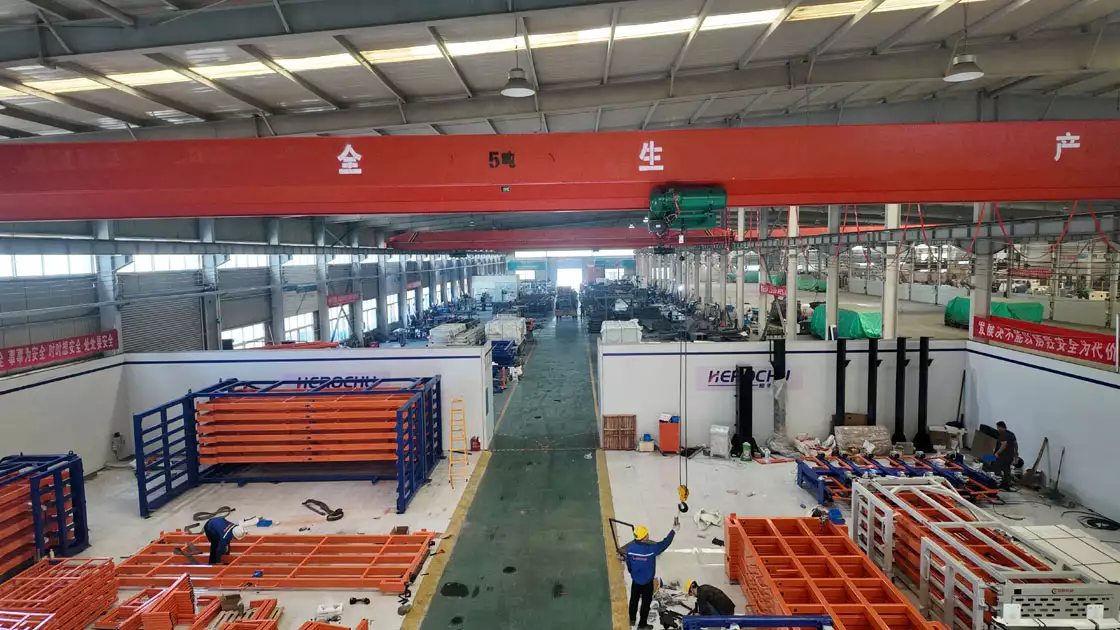
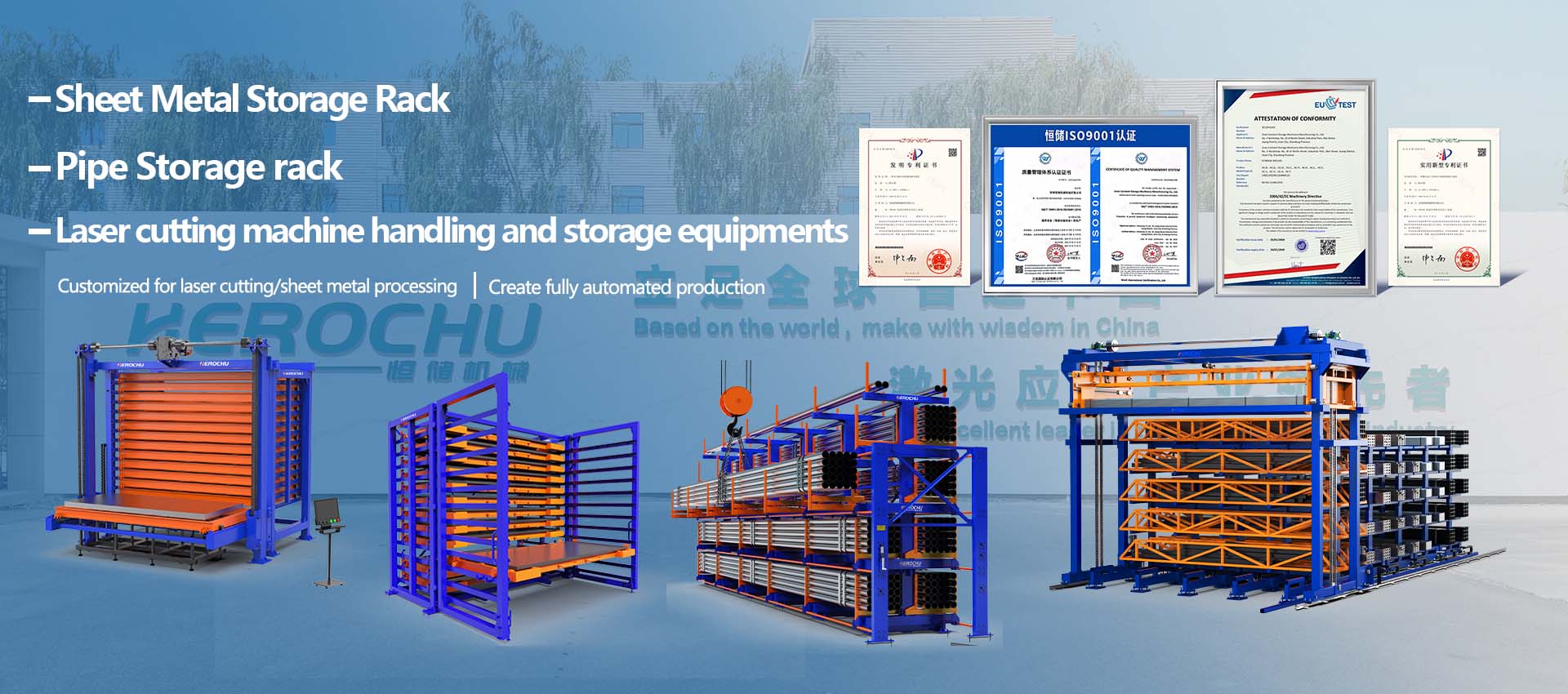
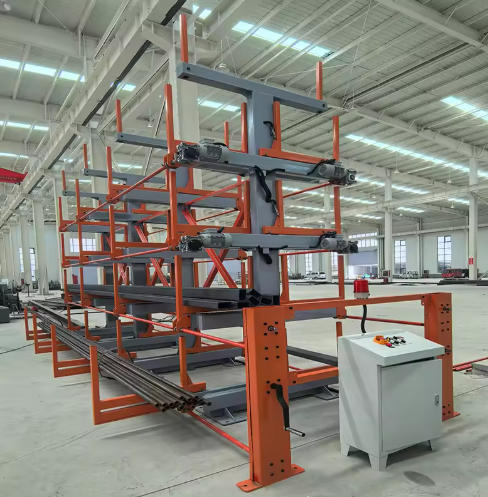
A manual crank rack is a cantilever storage system whose arms extend outward when an operator turns a hand crank. The loaded tier rolls clear of the rack frame so an overhead crane or forklift can pick a bundle vertically. Herochu builds these racks with Q235B steel, 5 adjustable layers, and per-tier load ratings of 3,000–5,000 kg.
How much load can one person move with a hand crank?
The crank’s mechanical advantage allows a single operator to extend arms carrying up to about 3 tons of steel bars without powered assistance. Actual effort depends on arm length, load distribution, and carriage bearing condition. Herochu recommends routine lubrication of the gear-and-rack train to keep crank effort low across the rack’s service life.
Do crank-out racks require electricity or compressed air?
No. The standard Herochu manual crank design is purely mechanical: gear, rack, carriage, and bearings. It runs without power in any bay, including areas where running electrical service to a rack would be costly or hazardous. This also removes motor maintenance and control-panel troubleshooting from the operator’s workload.
What pipe lengths can a Herochu crank rack store?
Herochu’s standard models cover 6,000 mm, 9,000 mm, and 12,000 mm pipe lengths. The open-front cantilever design avoids column interference, so long shafts and profiles can overhang without colliding with the frame. Arm spacing and layer count are customizable to match the actual bundle envelope rather than forcing material into a fixed slot.
Is a manual crank rack slower than a motorized roll-out rack?
For most tubing and pipe operations, the bottleneck is access, not arm speed. A crank extends in seconds and eliminates the repeated bundle shuffling that consumes minutes per pick. Published deployments of roll-out cantilever racks report average pick times around five minutes. Motorized versions make sense for very high transaction counts, but manual crank racks often deliver the same access benefit with lower maintenance exposure.
What is a manual pipe telescopic cantilever racking rack?
It is a cantilever storage rack whose arms extend outward on a carriage driven by a hand crank. The operator cranks the tier out, the pipe bundle moves clear of the rack frame, and a crane or forklift picks vertically. Herochu’s version uses Q235B steel, independent per-tier carriages, and 3–5 ton compartment ratings without electrical components.
How does a telescopic cantilever rack reduce picking time?
The rack eliminates the “digging” step. Instead of extracting a bundle from inside a static rack, the operator extends the entire tier into the aisle and picks from open air. Published roll-out cantilever deployments report average pick times around five minutes once this step is removed. The savings compound across every shift and every bundle.
Can the crank handle a full 5-ton compartment?
The crank is matched to the carriage and load path of the specific configuration. Herochu rates compartments at 3–5 tons depending on model and arm geometry. A single operator can extend several tons of steel bars with normal effort because the gear-and-rack train multiplies torque. Load distribution within the compartment affects effort, so bundles should be placed symmetrically on the arms.
Does a telescopic rack need a wider aisle than a fixed cantilever rack?
Usually no. The telescopic mechanism allows picks at full extension rather than requiring the crane or forklift to reach deep into a fixed frame. That can reduce the functional aisle width needed for safe retrieval and supports top-loading layouts. The compact retracted footprint further improves storage density compared with static racks that demand permanent clearance.
What pipe lengths and materials can Herochu racks handle?
Herochu’s standard configurations cover 6 m, 9 m, and 12 m pipes. The open-front design accommodates long shafts and profiles without column interference. Beyond steel pipe, the same platform stores aluminum extrusions, PVC pipe, timber, and heavy molds. Arm spacing and layer count are customizable to the actual material envelope.