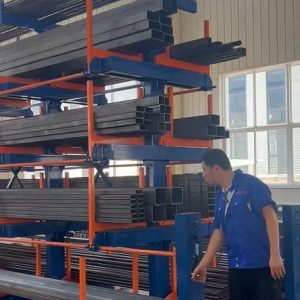
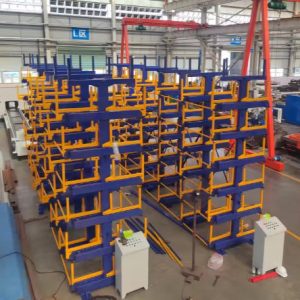
A 6,000 × 2,500 mm plate is not simply a larger version of a 3,000 × 1,500 mm sheet. It is a different handling problem. Two workers cannot safely manage it without mechanical assistance. A single plate can approach or exceed the rated capacity of a standard forklift depending on thickness and material. And storing it horizontally on a conventional cantilever rack can consume roughly 15 square meters of floor space per plate once forklift clearance is included. A plate storage system for 6m x 2.5m plate has to be designed around those realities from the first structural calculation, not adapted from a smaller format rack.
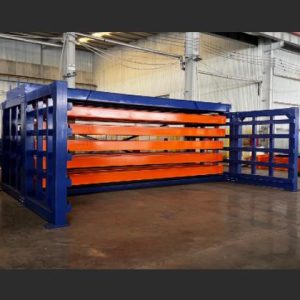
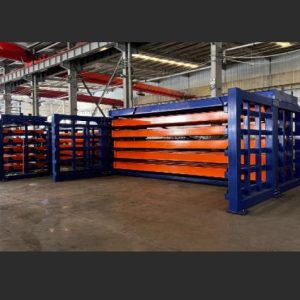
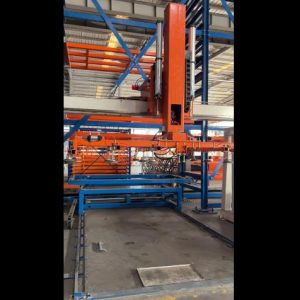
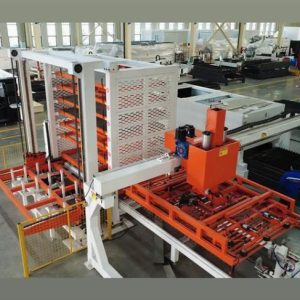
Herochu’s 6000 × 2500 mm storage system is built as a first-class material handler for this format. The system accommodates plates up to 6,000 mm in length and 2,500 mm in width, with per-layer load ratings reaching 5,000 kg. The structural frame, lift mechanism, and tray carriers are specified to these figures as working loads, not as theoretical maximums requiring derating in practice.
The Floor Space Equation for Large Plates
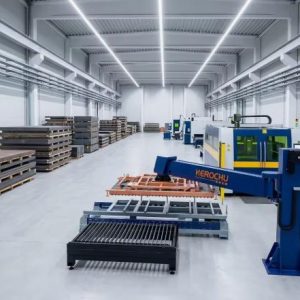
Forty 6,000 × 2,500 mm plates in floor storage can consume nearly 600 square meters of production floor—close to 6,500 square feet—when each plate occupies its own footprint with clearance for forklift access. For shipbuilding, structural steel fabrication, and heavy equipment manufacturing, that floor area is often the constraint that limits throughput. A vertical or drawer-based storage system changes the equation by converting horizontal floor consumption into vertical storage density.
The geometry is straightforward: the same plate count that requires a 600-square-meter floor layout can be held in a multi-layer rack system with a footprint measured in tens of square meters. The access aisle is fixed by the drawer or tray extension rather than by the unpredictable clearance needs of a floor stack. For operations where large-format plate is a primary input, the storage system becomes a space-recovery investment rather than a storage cost.
Load Path and Structural Stiffness
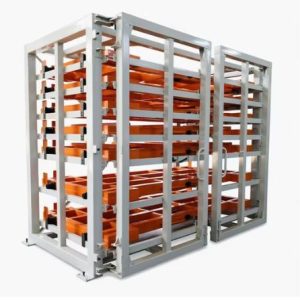
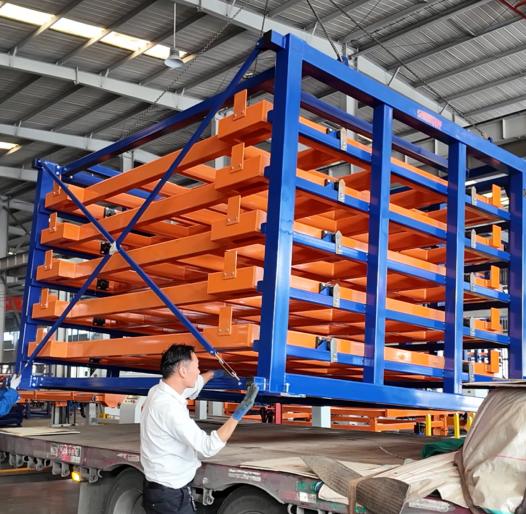
The load path for a 6,000 mm plate is longer and less forgiving than for a shorter sheet. A shelf that deflects under a 5,000 kg load at 3,000 mm will deflect more at 6,000 mm unless the structural section is increased. Herochu’s system addresses this through the dual-beam main frame and a tray carrier design that distributes load across the full plate length rather than concentrating it at the edges.
The floor anchors also carry a different responsibility at this scale. OSHA requires storage racks to be secured against sliding, falling, or collapse, and the anchor loads for a rack holding multiple 5,000 kg layers are substantially higher than for a smaller format system. Herochu provides anchor fixing details and the floor flatness assumptions the design requires, so the installation is specified as a system rather than assembled on an assumed slab.
Handling Equipment Integration
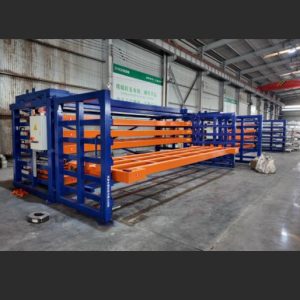
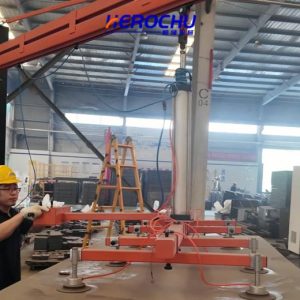
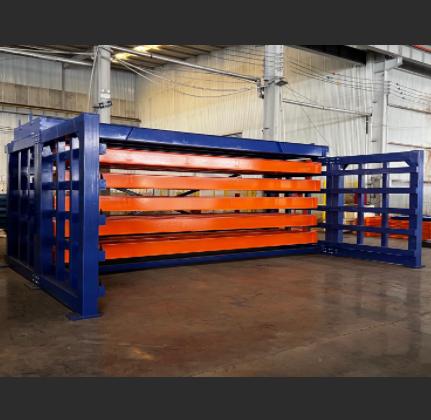
A 6,000 × 2,500 mm plate is almost always moved with overhead lifting equipment—a crane with a vacuum lifter, a magnet, or a sheet lift. The storage system has to present the plate to that equipment in a controlled, predictable position. A drawer or tray that extends fully at a consistent height gives the crane a repeatable pick point. The alternative—a floor stack with variable stack height and edge conditions—forces the crane operator to adjust to the material rather than the material being presented to the crane.
Herochu configures the 6000 × 2500 mm system around the user’s lifting method. The tray extension, the clear height between levels, and the access envelope are matched to the crane’s reach and the lifter’s engagement geometry. For shops where the crane is the primary handling asset, this integration is what separates a storage rack from a storage system.
Customization at the Large-Format Scale
The HC-B6020-65 model covers the 6,000 × 2,000 mm format with 5,000 kg per level. For 6,000 × 2,500 mm plates, Herochu customizes the tray dimensions and the structural specification to the additional width. The layer count remains configurable, and the clear space per level is set to the plate stack height rather than a fixed nominal value.
The practical takeaway for buyers evaluating a 6m x 2.5m plate storage system is that the specification should start with the plate geometry and the handling equipment, not with a standard rack size. Herochu’s engineering process begins with the material format, the stack weight, the crane interface, and the floor conditions—then specifies the frame and the tray mechanism to those inputs. At this scale, that order of decisions is not a refinement. It is the difference between a rack that fits the building and a rack that the building has to be rearranged to accommodate.
FAQ
Q: What is the load capacity of a storage system for 6000 × 2500 mm plates?
A: Herochu’s 6000 × 2500 mm system reaches 5,000 kg per layer as a working load, with the structural frame and tray carriers specified to that figure without practical derating.
Q: How much floor space does a 6m x 2.5m plate storage system save compared to floor stacking?
A: Floor storage for forty 6,000 × 2,500 mm plates can consume nearly 600 square meters. A multi-layer rack system converts that horizontal consumption into vertical density, recovering floor area for production equipment and walkways.