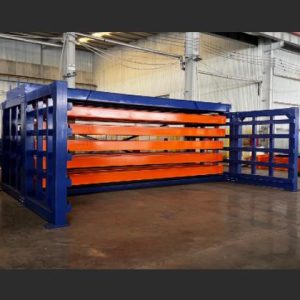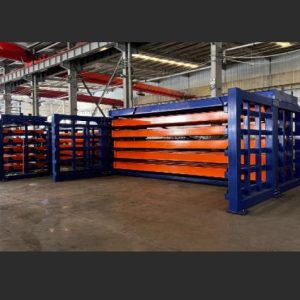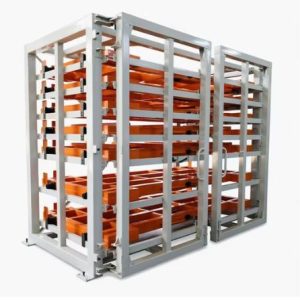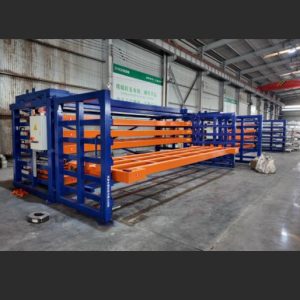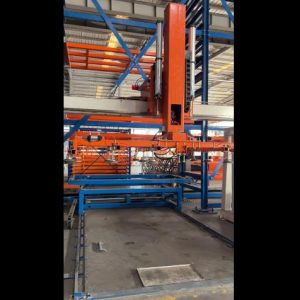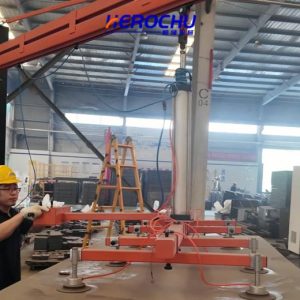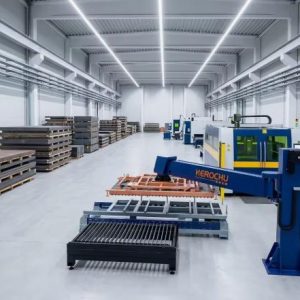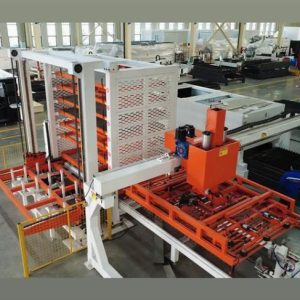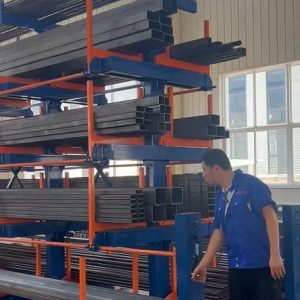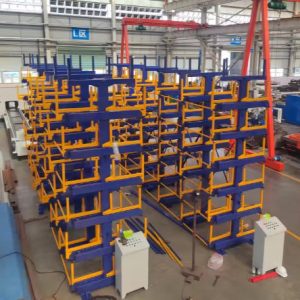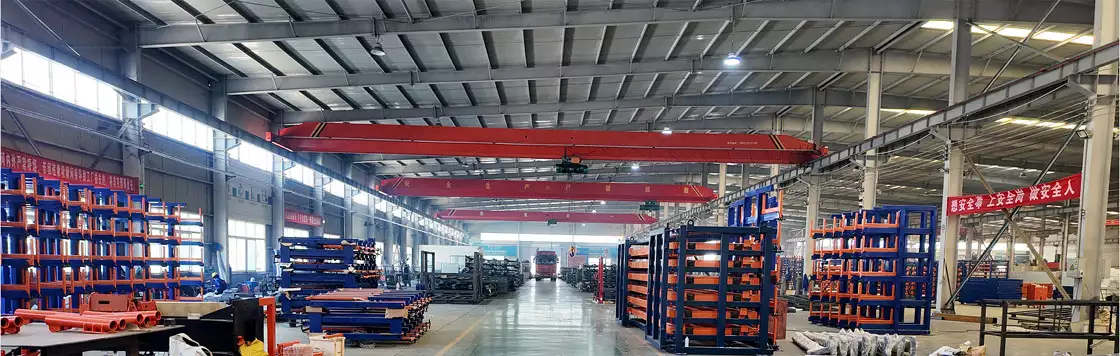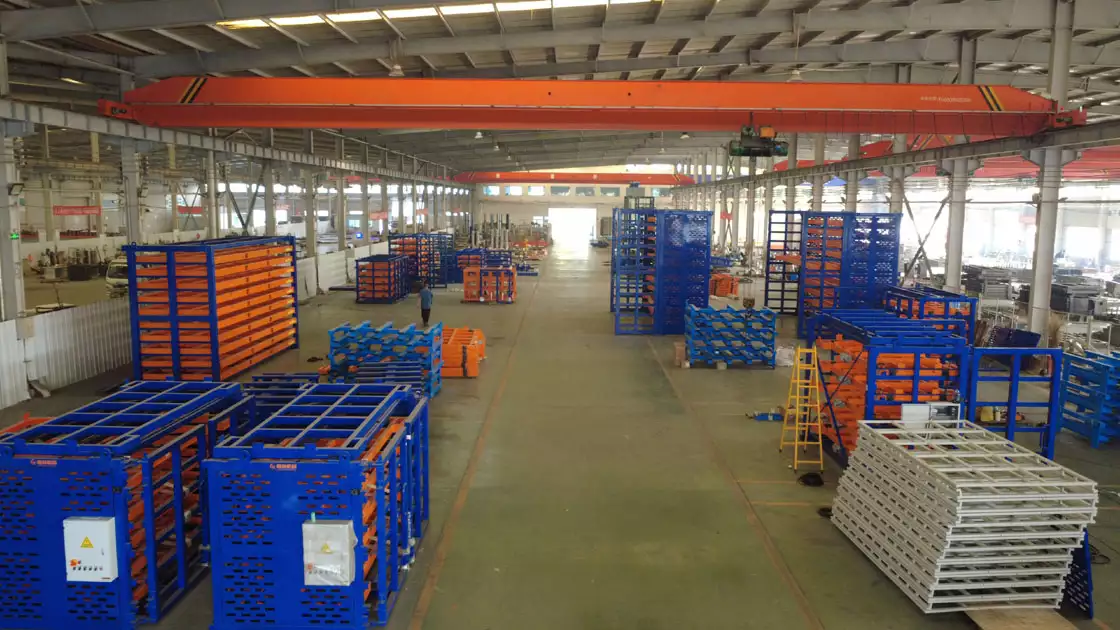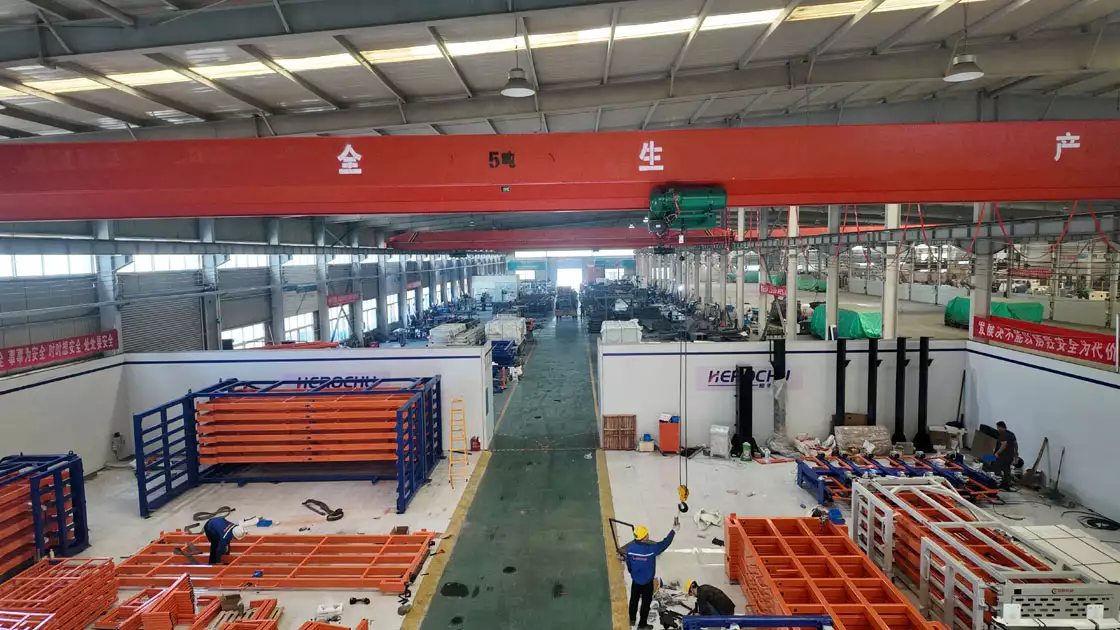
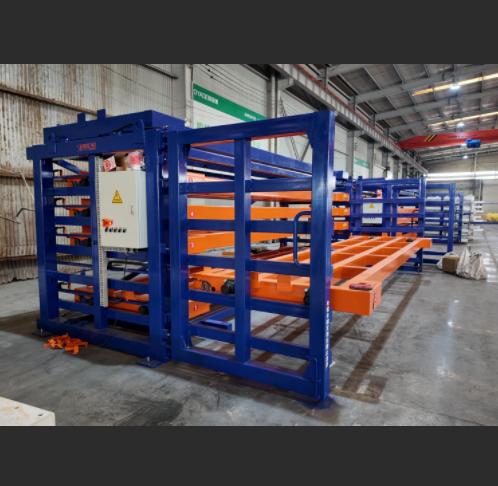
A heavy duty roll-out sheet metal storage rack for 3000 × 1500 mm sheet is a six-tier frame with full-extension drawers that each carry 3,000 kg. Herochu builds this format as the HC-B3015-63, with a Q235B high-strength main frame, dual-beam arms and a drawer that opens far enough for a crane or forklift to lift the top sheet without touching the one below. For a shop running 3 m sheet through a fibre laser or a plasma table, it replaces the floor stack that eats aisle space and buries the next job.
Why 3000 × 1500 mm is the awkward size
Three metres by one and a half is a common mill format, and it is a hard one to store well. The sheet is long enough that a cantilever arm sags when it is loaded at the tip, and wide enough that a standard pallet rack deck cannot support it without a timber pallet underneath. Stack it on the floor and the pile grows into a low wall that blocks the aisle and collects dust on every exposed surface.
The rack answers both problems. Dual-beam arms carry the load across two members instead of one, which keeps the drawer flat when a 3,000 kg bundle sits on it. Horizontal storage keeps the sheet supported over its whole area, so a 1.5 mm blank does not bow in the middle the way it does in a vertical rack.
What the 3000 kg drawer changes
Drawer rating is the specification that decides everything else: roller size, base frame depth, drive type and how the operator is allowed to load it.
At 3,000 kg per level, a six-tier bay holds 18 tonnes of sheet. That is a full delivery of 1.5 mm mild steel, or a mixed load of 2 mm, 3 mm and 5 mm in separate drawers. The rating is per level and applies to a uniformly distributed load, which is how sheet actually sits: the drawer carries the whole surface, not a point load in the middle.
Above 3,000 kg the same footprint moves to the 5,000 kg frame, and Herochu normally pairs that with a crank-out drive. Between the two, the honest answer depends on how the shop loads the rack. A crane that sets the bundle down gently is easier on the drawer than a forklift that pushes it in.
Full extension, and what it is worth
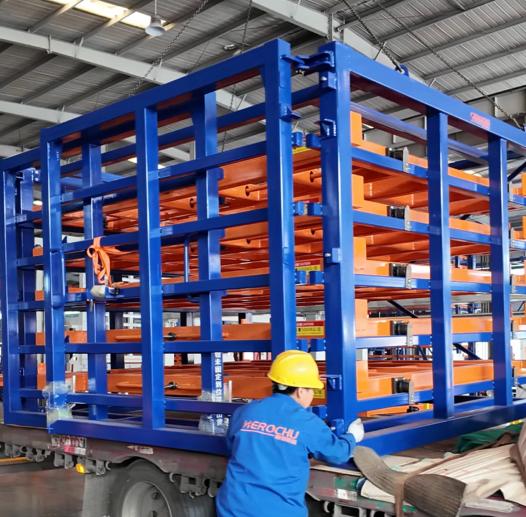
A drawer that opens 70 percent of the way still leaves the back third of the plate under the tier above. Lifting from there means angling the sheet, dragging the edge on the deck, and hoping the vacuum cups hold. Full extension puts the plate edge outside the frame line, so the lift is vertical and the plate comes out clean.
Clear space between levels is 120 mm as standard, adjustable to the material mix. Mixed-thickness storage is where this matters: a bay holding 1.5 mm blanks next to 12 mm plate needs a different tier pitch on each level, and Herochu sets that at order stage rather than on site.
Fitting the rack into a production cell
The most common layout is a rack beside the laser, one aisle wide, with the drawer facing the load point. The operator pulls the drawer, the crane or vacuum lifter lifts one sheet, and the drawer closes. Travel distance from rack to table is under ten metres in most cells, and the sheet arrives flat because it never left horizontal storage.
Three layout numbers drive the drawing. Crane hook height sets the maximum tier count that can be served. Forklift turning radius sets the aisle. And the drawer pull-out dimension, which is the sheet length plus clearance, sets how far the access lane has to run. A 3000 mm sheet on full extension needs roughly 3.2 m of clear floor in front of the rack, and that figure is easy to forget when the bay is squeezed between two machines.
Configurations in this format
| Model | Sheet size (mm) | Levels | Load per level | Typical use |
|---|---|---|---|---|
| HC-B2513-63 | 2500 × 1300 | 6 | 3,000 kg | 8 ft sheet, compact bays |
| HC-B3015-63 | 3000 × 1500 | 6 | 3,000 kg | Standard 3 m laser sheet |
| HC-B4015-63 | 4000 × 1500 | 6 | 3,000 kg | Long blank, laser or plasma |
| HC-B4020-65 | 4000 × 2000 | 6 | 5,000 kg | Heavy plate, press brake feed |
| HC-B6020-65 | 6000 × 2000 | 6 | 5,000 kg | Full mill plate, crane served |
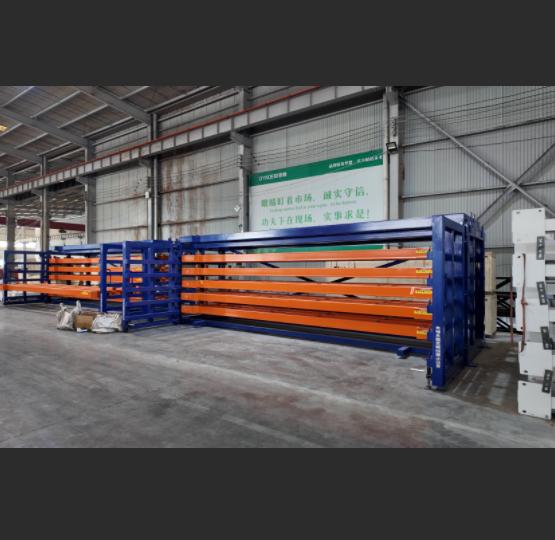
Access can be single-sided against a wall or double-sided in a free-standing island, where one aisle serves two drawer faces. Drive options are manual glide-out for light pulls and crank-out for the heavy drawers. Forklift-loading variants leave the drawer face clear so a truck can place a bundle without a crane in the bay.
What goes wrong without one
The cost of floor storage is not the floor space, it is the handling. Sheets at the bottom of a pile get dragged out from under four others, edges bend, and the film on a finished surface is scraped off before the job starts. With drawers the retrieval is one action: read the tier label, pull the drawer, lift one sheet, close it. A delivery goes away the same way.
Questions buyers ask about 3000 × 1500 sheet racks
How many sheets does a 3000 × 1500 mm rack hold? A six-tier HC-B3015-63 holds about 18 tonnes in total at 3,000 kg per level. In 2 mm mild steel that is roughly 250 sheets; in 10 mm plate it is about 48. The rack is rated by weight, and sheet count follows thickness.
Can one person pull a 3,000 kg drawer? Not by hand on a full load. Herochu fits a crank-out drive with a pinion and rack mechanism for heavy drawers, and pairs the rack with a crane, vacuum lifter or forklift for the plate itself. Manual glide-out is intended for lighter, part-loaded drawers.
Does it work with a fibre laser or plasma table? Yes, and that is the usual layout. Horizontal storage keeps the sheet flat, so it sits on the table without a twist, and full extension means the crane lift is vertical with no edge contact on the tier above.
What floor space does the rack need? A single-sided HC-B3015-63 needs roughly 3.2 m × 4 m of floor plus the access lane in front. A double-sided island serves two rack faces from one aisle, which is usually the denser option once a bay holds more than six tiers of material.
Can it be extended later? Tier count is set at build, and the frame is designed around the final height. Adding levels to an installed rack is possible only when the columns and base were engineered for it, so it is worth quoting the future height on the first order.
Next step
Send Herochu the sheet sizes, the heaviest bundle weight and a sketch of the bay. The engineering team returns a layout with tier count, drawer rating and access direction, plus the crane and forklift figures the installation will need.