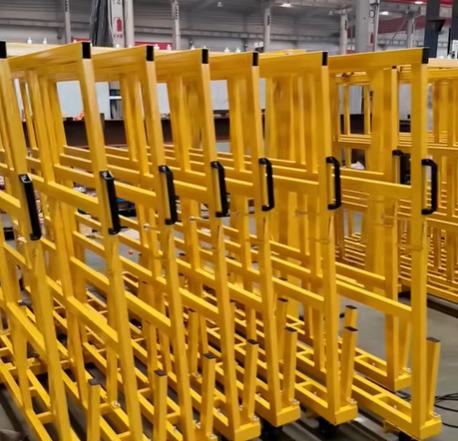
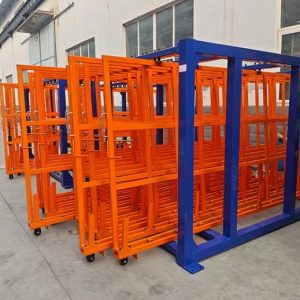
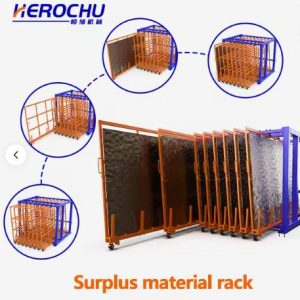
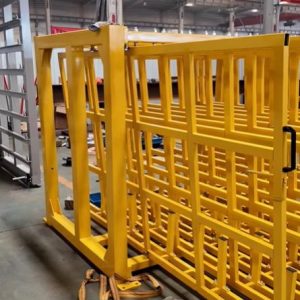
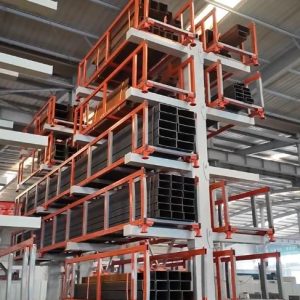
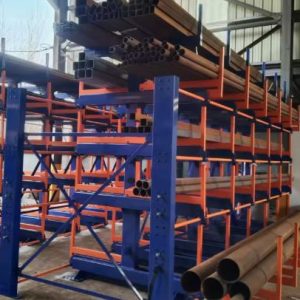
Every fabrication shop generates remnants. The difference between a profitable operation and one that bleeds material cost lies in whether those remnants are treated as waste or as accessible inventory. Herochu manufactures vertical roll-out sheet metal remnants racks that convert irregular offcuts from floor clutter into organized, retrievable stock. The core mechanism is straightforward: each tier functions as an independent drawer that stores sheet material vertically and extends fully beyond the rack frame, bringing the remnant directly to the operator.
The operational logic behind this design addresses a persistent inefficiency in metal workshops. Horizontal stacking of remnants—whether on pallets, against walls, or in corner piles—creates what amounts to an excavation problem. Retrieving a specific piece requires moving everything above it, a process that consumes labor time and frequently results in usable material being abandoned simply because finding it costs more than cutting a new sheet. Herochu’s drawer-based architecture eliminates this constraint entirely. An operator pulls the relevant tier, inspects the full face of the stored remnant without obstruction, and either retrieves the piece or closes the drawer and checks another. The entire interaction takes seconds rather than minutes.
Material compatibility is broad by design. The Herochu vertical roll-out rack accommodates small sheets, scattered offcuts, large scrap sections, leftovers from nesting operations, semi-finished blanks awaiting downstream processing, and sheets with special handling requirements. Standard configurations include the HC-V2513-8, sized for 2500 × 1000 mm sheets across eight customizable tiers, and the HC-V3015-8, which scales to 3000 × 1500 mm stock—the format common on mid-sized fiber laser tables. Both models carry a 1000 kg load rating per level, with clear space between tiers adjustable at the specification stage to match actual material thickness profiles.
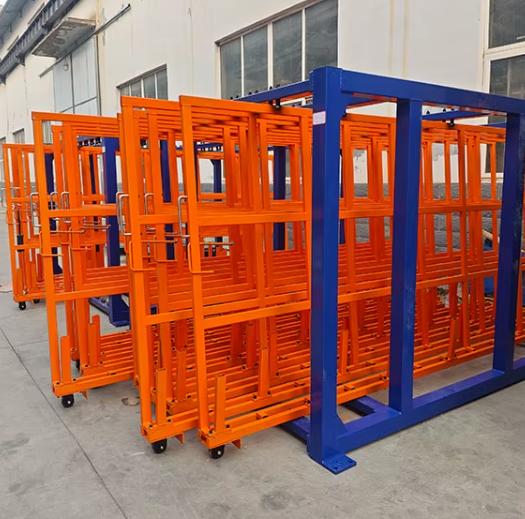
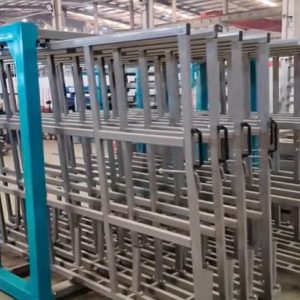
The structural engineering reflects the realities of daily workshop use. Drawers ride on guided track systems that permit 100 percent extension, meaning the rear edge of the sheet reaches the front edge of the rack. Non-skid strips on the drawer surface prevent material from shifting during extension and retraction, a detail that matters considerably when handling heavy plate. Mechanical assistance reduces the pull force required, allowing a single operator to retrieve a loaded drawer without waiting for a second person or a forklift. The frame is fabricated from high-strength carbon steel with CNC-machined components and an electrostatic powder coating that resists corrosion and wear in environments where cutting dust and coolant aerosol are constant presences.
For shops managing hundreds of remnants across multiple material grades, the tier structure itself becomes a sorting framework. One level can be dedicated to stainless offcuts, another to aluminum, a third to carbon steel pieces too small for the primary rack but too valuable for the scrap bin. This physical organization creates inventory visibility that horizontal storage cannot match. When remnants have designated locations, the shop knows what material is actually available for reuse. That knowledge changes purchasing behavior: a facility that can see its remnant stock orders less new material because the remnants become a known quantity rather than a vague hope.
Herochu produces these racks in an ISO9001-compliant facility with CE certification, and each unit undergoes pre-shipment load testing. The vertical roll-out sheet metal remnants rack is not a generic shelving product adapted for industrial use. It is equipment engineered around a specific operational problem: making the reuse of offcuts economically rational by reducing the labor cost of retrieval to near zero.