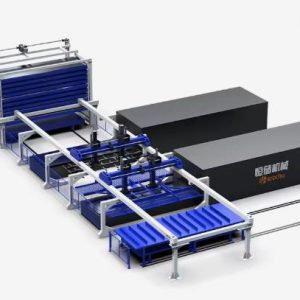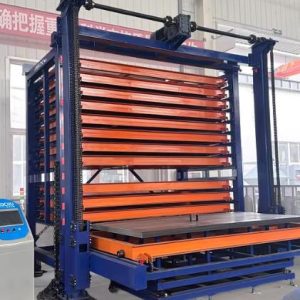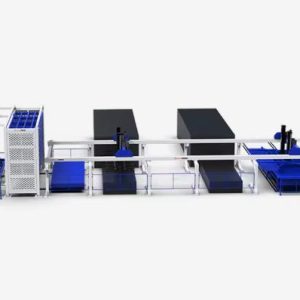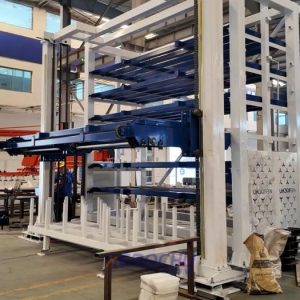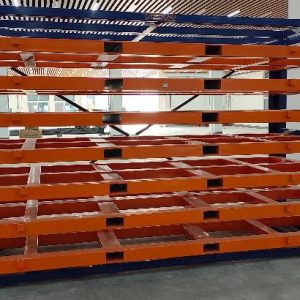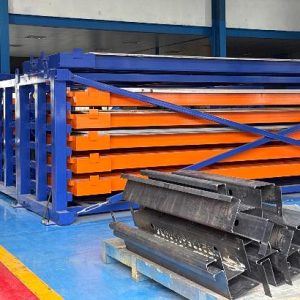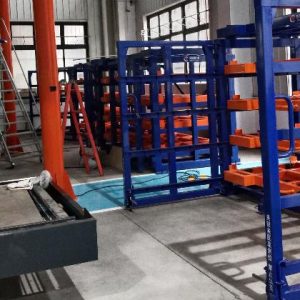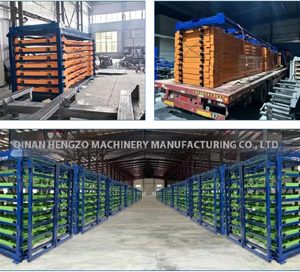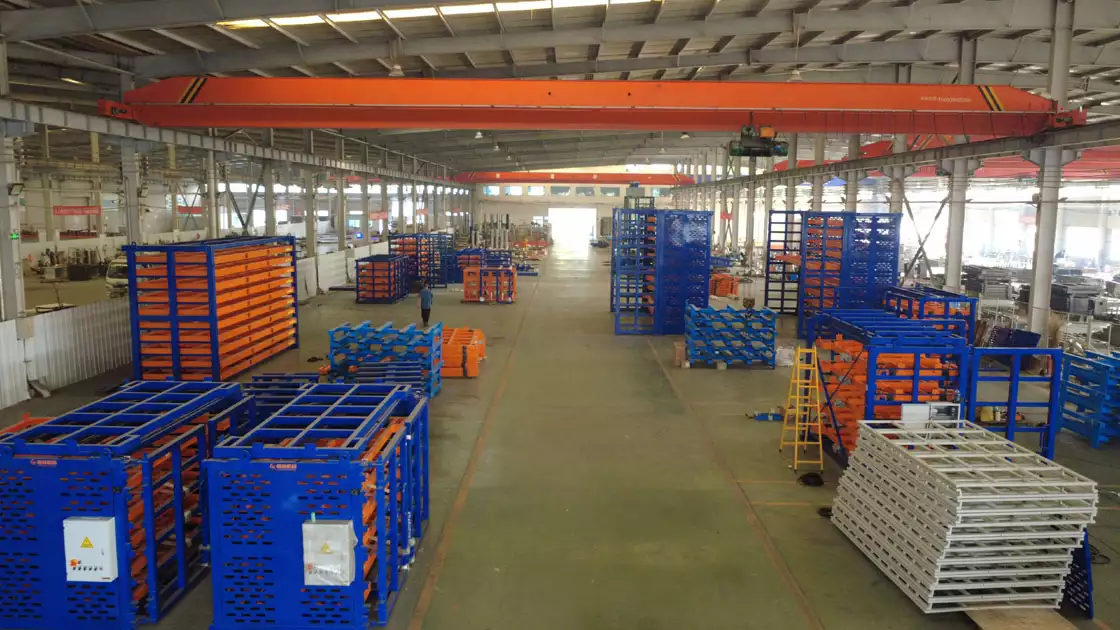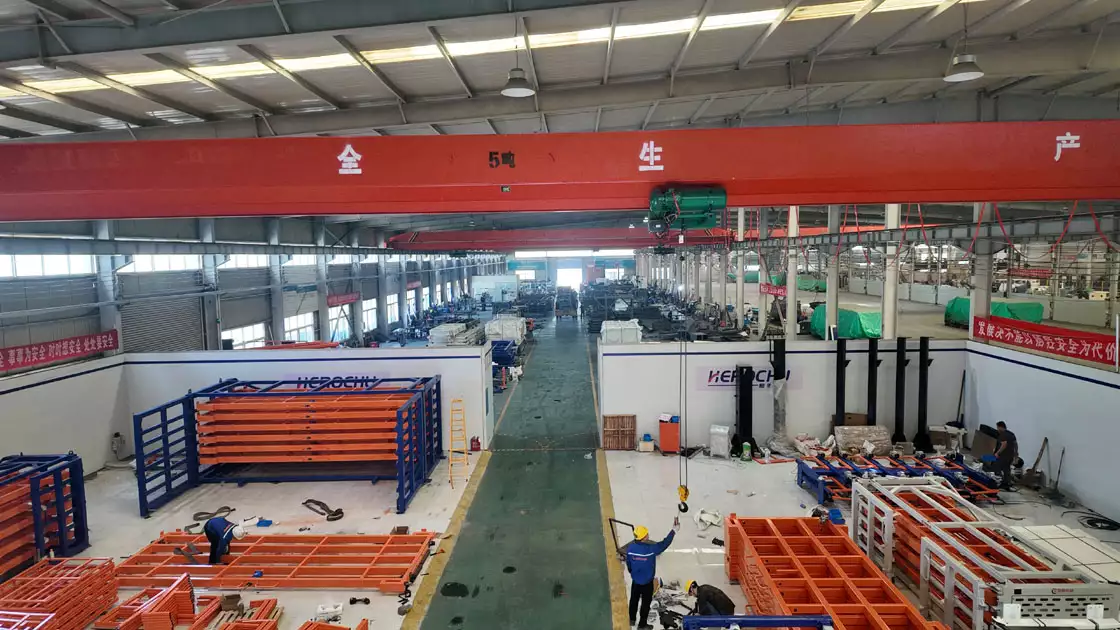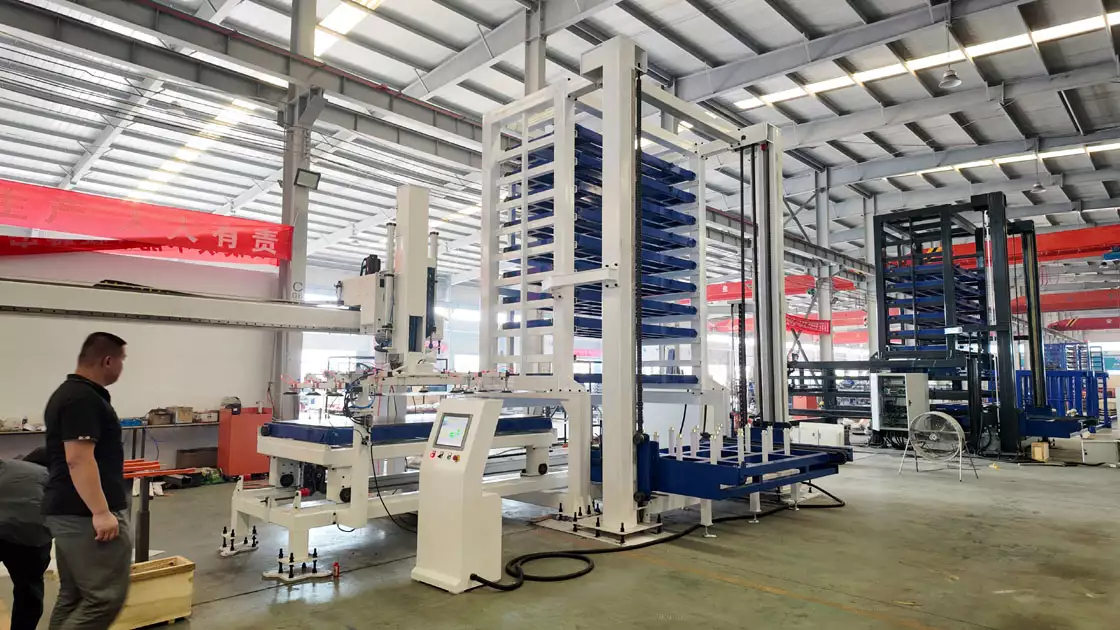
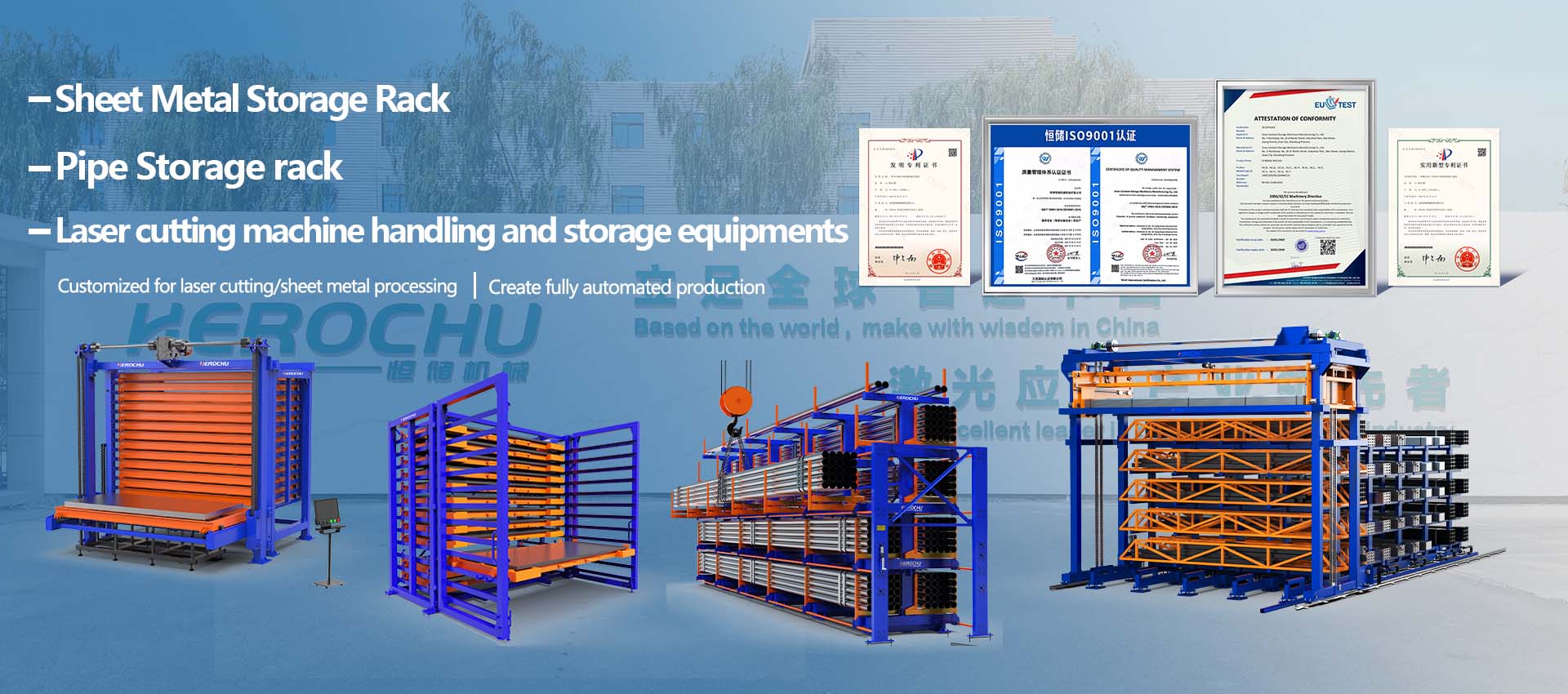
Material handling automation in sheet metal fabrication typically focuses on the cutting and forming equipment — CNC loading systems, robotic bending cells, automated sorting conveyors. The storage side of the workflow often lags behind, remaining a manual operation even as the production machinery runs at fully automated speed. Herochu electric telescopic drawer systems close this gap by providing motorized, CE-certified sheet metal storage that integrates with overhead cranes, forklifts, and automated guided vehicles in a single material handling sequence.
Bridging Storage and Production Automation
A fabrication cell with a 6-kilowatt fiber laser cutting machine can process a full sheet of 6-millimeter steel in under three minutes. If the operator spends five minutes retrieving the next sheet from a flat-stack storage area across the warehouse, the machine sits idle for more than half the working cycle. Multiply that across a shift and the lost cutting capacity adds up to hours of non-productive machine time.
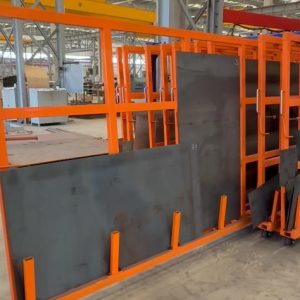
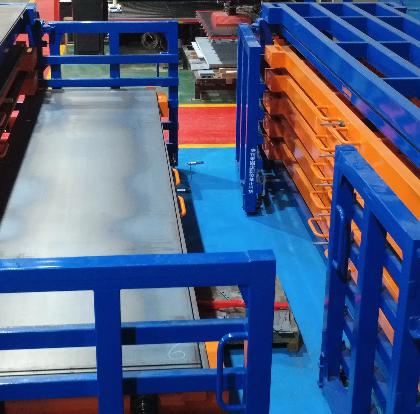
The Herochu electric telescopic drawer system shortens sheet retrieval to a remote-control command. The operator calls the required drawer from the cutting station, the drawer extends automatically, and by the time the operator reaches the rack with the overhead crane, the sheet is already presented at the access plane. The retrieval step no longer determines the production pace — the machine’s cutting speed does.
CE Certification and What It Covers
CE marking on a motorized storage system goes beyond the electrical safety of the motor and controller. For Herochu telescopic drawer systems, the certification scope covers three European directives:
The Machinery Directive (2006/42/EC) governs the mechanical safety of the moving drawer assembly. It requires documented risk assessment of pinch points, crush zones, and falling-load hazards, with corresponding protective measures designed into the system. The emergency stop circuit, the dead-man switch configuration on the remote control, and the overload-sensing current limiter all trace back to Machinery Directive compliance requirements.
The Low Voltage Directive (2014/35/EU) covers the electrical system from the incoming power connection through the motor controller and to the drive motor itself. It mandates insulation ratings, ground fault protection, and component-level certifications for every element in the power path.
The Electromagnetic Compatibility Directive (2014/30/EU) limits the electrical noise the motor controller can emit and defines the immunity the control system must have against external interference. In a workshop where plasma cutters, welding inverters, and variable-frequency drives all generate electromagnetic noise, this immunity is a practical reliability factor, not just a regulatory checkbox.
Every Herochu unit ships with a technical file containing the Declaration of Conformity, wiring diagrams, risk assessment documentation, and component certifications. For facilities that undergo ISO 9001 or ISO 45001 audits, having this documentation organized and traceable eliminates hours of audit preparation.
How Electric Drawer Extension Automates the Retrieval Workflow
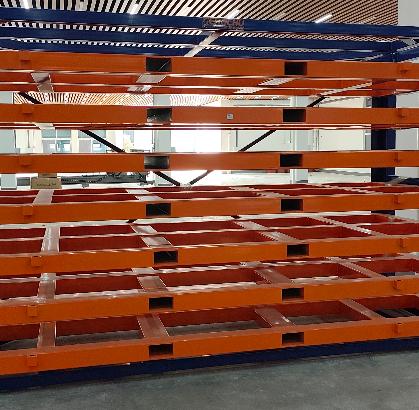
The retrieval sequence on a Herochu electric telescopic drawer system unfolds in four steps, only one of which requires operator presence:
First, the operator identifies the required sheet from the shop’s material tracking system — a cutting program sheet list, an ERP work order, or a paper pick ticket. Second, the operator selects the corresponding drawer on the tower’s control panel rotary switch. Third, the operator presses the extend button on the wireless remote. The drawer extends under servo control at a constant rate until it reaches the fully deployed limit switch position. Fourth, the operator approaches with the crane or forklift and lifts the sheet from the extended drawer.
The retraction sequence is equally direct: lift the sheet, press the retract button, and the empty drawer returns to its parked position inside the frame. The operator never handles the drawer manually, never walks into the drawer’s travel path while it is in motion, and never exerts physical effort beyond operating the lifting equipment.
Material Protection During Automated Handling
A less obvious benefit of motorized drawer storage is the reduction in material handling damage that comes from eliminating intermediate movement steps. In a flat-stack storage layout, retrieving a sheet from the middle or bottom of a stack requires moving every sheet above it — typically by crane onto a temporary staging area, then back onto the stack after the target sheet is removed. Each transfer creates an opportunity for edge damage, surface scratching, and dropped-sheet incidents.
With Herochu drawer storage, the target sheet is the only sheet that moves during retrieval. The drawers above and below remain in their parked positions. The sheet lifts directly from the drawer deck to the crane magnet or fork arms without intermediate staging. For shops that work with pre-finished, polished, or coated sheet stock, this single-transfer workflow preserves the material’s as-received surface quality through to the cutting table.
Technical Specifications Across the Model Range
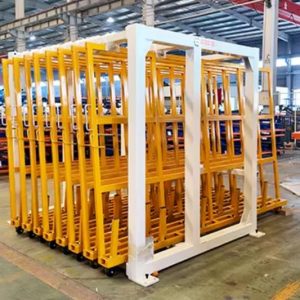
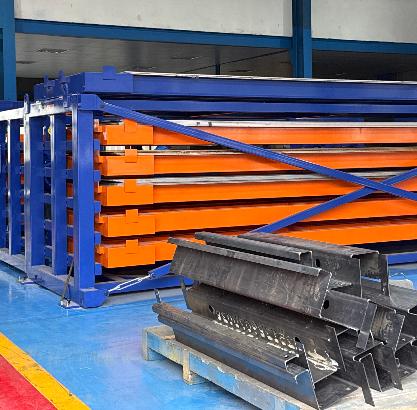
Herochu electric telescopic drawer systems cover six standard model configurations, each named for its sheet dimension capacity:
The HC-B3015E-63 handles sheets up to 3,000 by 1,500 millimeters across six drawers, each rated for 3,000 kilograms. Drawer travel speed is 2.97 meters per minute, completing a full extension stroke in approximately 30 seconds. This is the entry model suitable for shops processing standard sheet sizes in moderate daily volumes.
The HC-B4015E-63 and HC-B4020E-63 extend the sheet length capacity to 4,000 millimeters, with the B4020 variant accommodating 2,000-millimeter sheet widths. Drawer count and per-tier capacity remain at six drawers and 3,000 kilograms, respectively. The B4020E-63 model’s drawer travel speed drops slightly to 2.28 meters per minute to account for the wider, higher-inertia drawer assembly.
The HC-B6015E-65 moves to 6,000-millimeter sheet length with an upgraded 5,000-kilogram per-drawer rating. The frame design incorporates deeper column sections and heavier crossbeam profiles to handle the increased bending moment from longer drawers under load. Drawer travel speed remains at 2.28 meters per minute.
At the top of the range, the HC-B12025E-520 supports 12,000 by 2,500-millimeter sheets across five drawers, each rated for 20,000 kilograms. This model uses a higher-power drive motor and a reinforced rack-and-pinion transmission that pushes the travel speed to 5.27 meters per minute — faster than the smaller models despite moving substantially more mass. The frame stands on a reinforced base with anchor points sized for the overturning moment a fully loaded extended drawer generates at this scale.
All models share the same Q235B structural steel frame material, the same powder-coat finish process, and the same CE certification documentation package.
The Rack-and-Pinion Advantage
The choice of rack-and-pinion drive across the Herochu product line is an engineering decision, not a cost decision. Rack-and-pinion costs more to manufacture than chain or cable drives — the toothed rack requires precision machining, and the pinion gear requires hardened steel and accurate tooth profiling. The justification is operational.
Chain drives stretch under sustained tension, and the stretch accumulates over months of use. As a chain elongates, drawer positioning becomes inconsistent — the drawer may stop short of full extension or overshoot slightly, requiring the operator to make manual adjustments. Cable drives share the stretch problem and add the failure mode of individual wire strand breakage from repeated bending around pulleys.
Rack-and-pinion drive eliminates both problems. Steel teeth do not stretch. Engagement between pinion and rack remains constant across the full stroke length. Drawer positioning is deterministic — the pinion rotates a fixed number of turns per meter of linear travel, and the limit switch triggers at the same physical position on cycle one as on cycle one hundred thousand.
Integration with Automated Guided Vehicles
As material handling automation advances, facilities increasingly deploy automated guided vehicles to shuttle material between storage, cutting, and forming stations. Herochu electric drawer systems are designed to present sheets at floor-level drawer heights that AGVs with lifting platforms can access directly. The drawer extends, the AGV positions under or alongside the extended sheet, lifts the material, and departs — all without a human operator in the loop.
The integration path is straightforward: the drawer control system uses standard industrial I/O signals that any AGV fleet management system can interface with. Extend and retract commands, drawer position feedback, and safety interlock status are all available as dry-contact relay outputs and 24-volt DC inputs. No proprietary communication protocol is required.
Safety Architecture
Safety in a motorized drawer system relies on multiple independent layers rather than a single protective measure. Herochu implements a three-layer architecture:
Layer one is the control system’s inherent safe state. Releasing the remote control button removes drive power and engages the motor’s electromagnetic brake. The drawer stops within its designed stopping distance regardless of load.
Layer two is the overload protection circuit. A current sensor in the motor controller monitors drive torque and trips at a threshold set below the motor’s stall current. If the drawer contacts an obstruction — a misplaced pallet, a person in the travel path, a foreign object on the rail — the drive cuts out before generating enough force to cause damage or injury.
Layer three is the mechanical bearing system’s internal friction. Even with the brake released and the motor unpowered, the sealed roller bearings provide enough rotational resistance that a loaded drawer will not drift under gravity if the tower is installed within the specified levelness tolerance.
Summary
Herochu electric telescopic drawer systems bring automated material retrieval to sheet metal storage, eliminating the manual handling steps that create production bottlenecks between the rack and the machine tool. CE certification provides documented compliance with European safety and electromagnetic compatibility standards, and the rack-and-pinion drive train delivers consistent positioning across the system’s service life. For fabrication shops investing in production automation, motorized storage is the logical next link in the material flow chain.