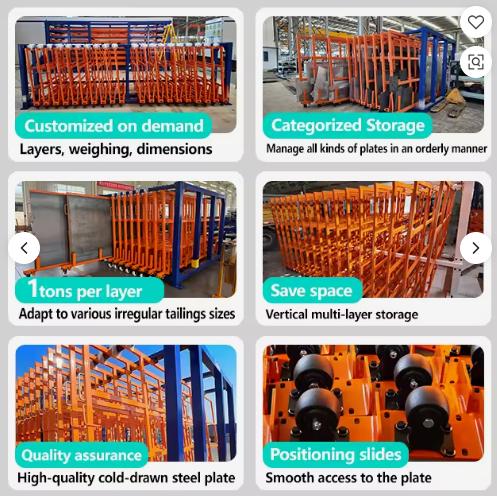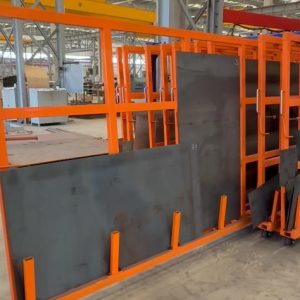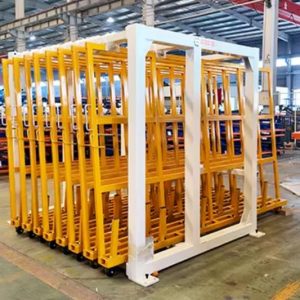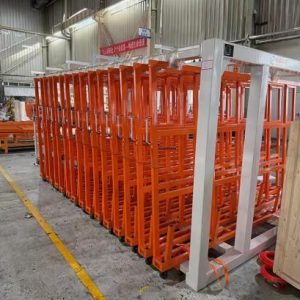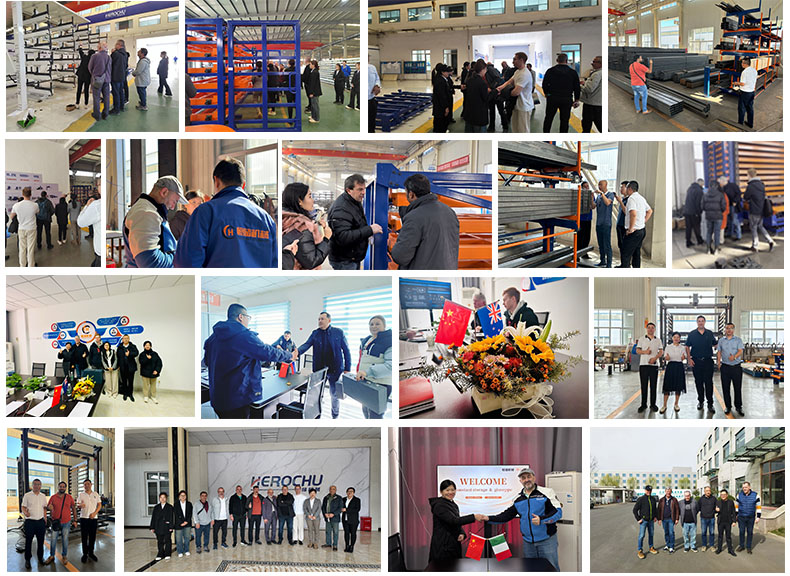
Fixed storage infrastructure works against shops that need to reconfigure floor layouts as order mix, machine utilization, and staffing levels shift. Installing a 3,000-kilogram rack in one corner of the building on Monday becomes a poor decision by Wednesday when a new press brake arrives and the ideal loading zone moves to the opposite bay. Unbolting, crane-lifting, and repositioning a stationary rack costs hours of downtime and often requires external rigging support.
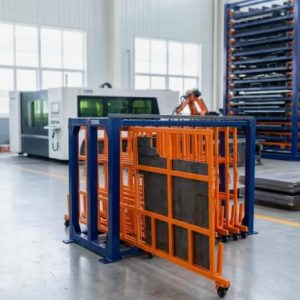
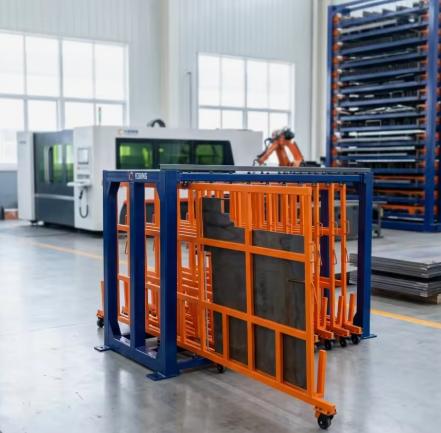
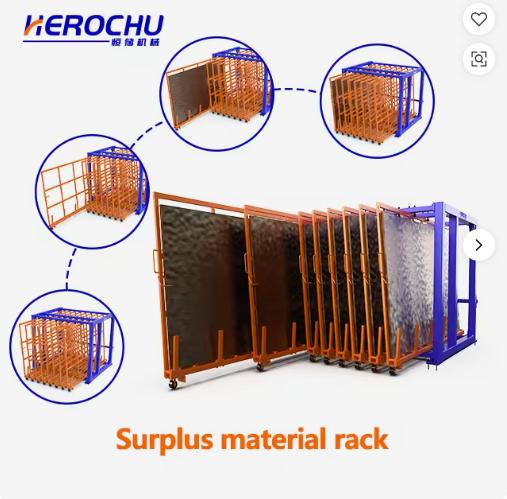
Herochu addresses this rigidity with mobile industrial storage racks built on heavy-duty locking caster assemblies. The rack moves between work cells under manual push force — no forklift, no removal of stored inventory, no disassembly of the frame. The wheels lock into place once the rack reaches its target position, providing the same stability as a bolted-down unit during loading and retrieval operations.
When Mobility Outperforms Fixed Mounting
The economic case for wheeled storage depends on how frequently a shop reconfigures its floor. In a job-shop fabrication environment running variable part mixes across laser, punch, brake, and welding cells, material staging points change weekly if not daily. A fixed rack demands that operators transport remnants from the cutting cell to the rack location, then back again when those remnants are needed at a different machine. The forklift trips multiply, bottlenecking the aisle network during peak production hours.
A mobile Herochu rack eliminates the transport leg. The rack itself moves to the cutting cell on Monday when high-volume laser work dominates the schedule. On Thursday, when welding and assembly take priority, the same rack rolls to the fabrication bay with all its drawers still loaded and organized. Material stays inside the rack throughout the move; operators do not need to unload and reload drawers to reposition the unit.
The casters used in Herochu wheeled racks are purpose-specified for industrial floor loading. Each caster pair carries a dynamic load rating that exceeds the full-weight capacity of the rack plus contents, ensuring safe movement across concrete floors with standard expansion joints and minor surface irregularities. The locking mechanism engages both wheel rotation and swivel, so the rack cannot roll or pivot once locked.
Vertical Pull-Out Access in a Mobile Format
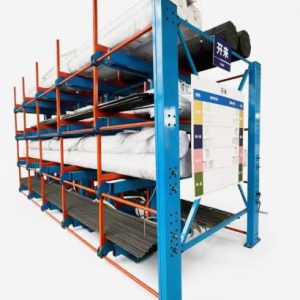
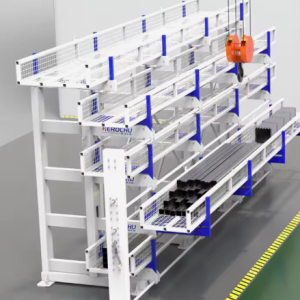
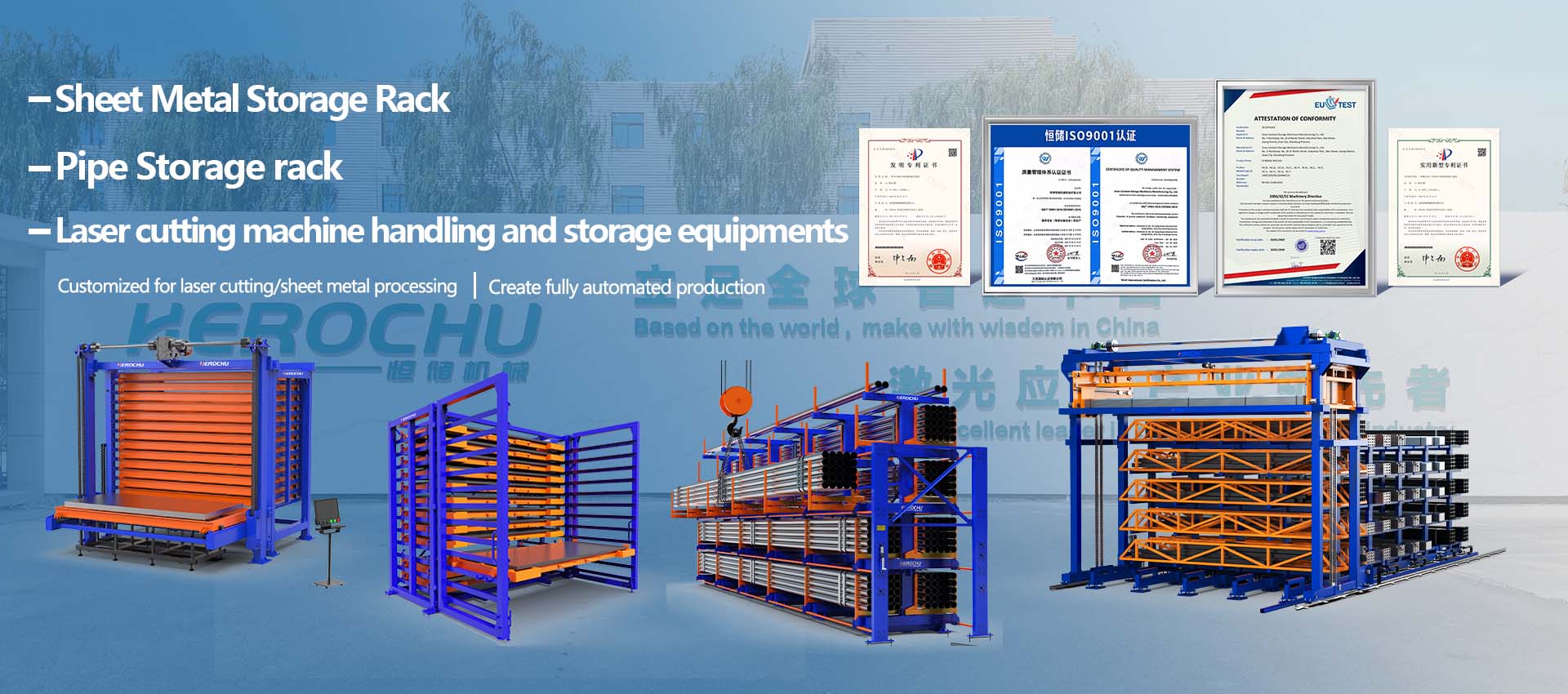
The mobile racks share the same core drawer architecture as Herochu fixed vertical pull-out systems. Each tier slides on hardened steel ball bearings to 100 percent extension, exposing the complete drawer surface for visual inspection and retrieval. An operator rolls the rack to the desired workstation, locks the casters, and pulls out the target drawer just as they would with a stationary unit.
This combination — mobility plus full drawer access — is particularly valuable for shops that keep remnant inventory near the point of use rather than in a centralized storage room. A rack dedicated to stainless steel remnants moves between the stainless cutting cell, the stainless welding bay, and the stainless finishing station without any material ever leaving its assigned drawer. The operator who welded the parts on Tuesday is the same operator who retrieves matching remnants from the same rack on Wednesday, maintaining material traceability without administrative overhead.
Load Capacity and Drawer Configuration
Herochu mobile racks carry the same per-drawer and total-unit load ratings as their fixed counterparts. Standard drawers handle up to 1,000 kg per tier, while heavy-duty configurations support 3 to 10 tons per shelf for shops processing thick plate — boiler fabrication, shipbuilding subcontractors, and heavy equipment manufacturers. The vertical frame accommodates 2 to 15 tiers depending on sheet dimensions and shop ceiling height, with overall unit heights ranging from 2,455 mm to 4,455 mm.
Sheet size compatibility spans 2,000 by 1,000 mm through 3,000 by 1,500 mm as standard, with custom drawer dimensions available for shops running oversized formats. Clear vertical spacing between drawers adjusts from 50 mm to 200 mm, set at order specification to match the thickest remnant the shop plans to store in each slot.
The frame material is structural carbon steel with a powder-coated finish rated for indoor industrial exposure. The coating provides a barrier against the fine metallic dust that accumulates in laser cutting and grinding environments — dust that, on uncoated steel, accelerates surface corrosion and eventually pits the drawer rails.
Workshop Flow and Lean Layout Principles
Lean manufacturing principles emphasize minimizing transport waste: the non-value-added movement of material between processing steps. A wheeled Herochu rack supports this by letting the storage follow the work rather than forcing the work to travel to the storage. When a production planner maps the value stream for a part family, the remnant rack becomes a movable kanban point — positioned at the cell where offcuts are generated, and repositioned to the cell where those offcuts are consumed.
For shops with seasonal production swings — agricultural equipment manufacturers that build in winter for spring delivery, for example — mobile racks let the factory expand and contract work zones without permanent infrastructure changes. When a secondary assembly line spins up for peak season, the racks roll into position. When the line disassembles, the racks roll back to long-term storage areas or consolidate into a smaller footprint for the off-season.
Safety During Movement and Operation
Moving a loaded industrial rack creates safety risks that Herochu addresses through mechanical design rather than operator training alone. The caster locking pedals are positioned at floor level on each corner of the frame and require deliberate foot pressure to engage or release — an operator cannot accidentally unlock a caster by brushing against a lever. When all four casters are locked, the rack meets the same tip-over stability criteria as a bolted-down unit with identical load distribution.
Drawers incorporate a gravity lock that prevents extension while the rack is in motion. This passive safety feature requires no operator action: the drawer simply cannot be pulled open unless the casters are in locked position, verified by a mechanical interlock at each drawer rail set. For shops with documented safety management systems, this interlocks with lockout-tagout procedures for material handling equipment operating in the same aisle.
Space Reclamation Through Mobile Consolidation
A single mobile rack stores the equivalent of 8 to 15 pallet positions of sheet remnants in roughly 3 to 4 square meters of floor space when parked. Because the rack moves, that 4-square-meter footprint can shift to different locations throughout the day — occupying the loading zone only during receiving hours, then moving to the cutting cell during production, then tucking into a corner during the night shift for floor cleaning access.
This temporal sharing of floor area — the same square meter serving different functions at different times — is what makes mobile storage economically compelling in constrained facilities. The rack cost amortizes against the avoided cost of expanding the building or renting external storage. For a shop operating at 85 percent floor utilization, adding a fixed rack would require removing something else. Adding a mobile rack requires only that the rack have somewhere to park during each phase of the shift rotation.