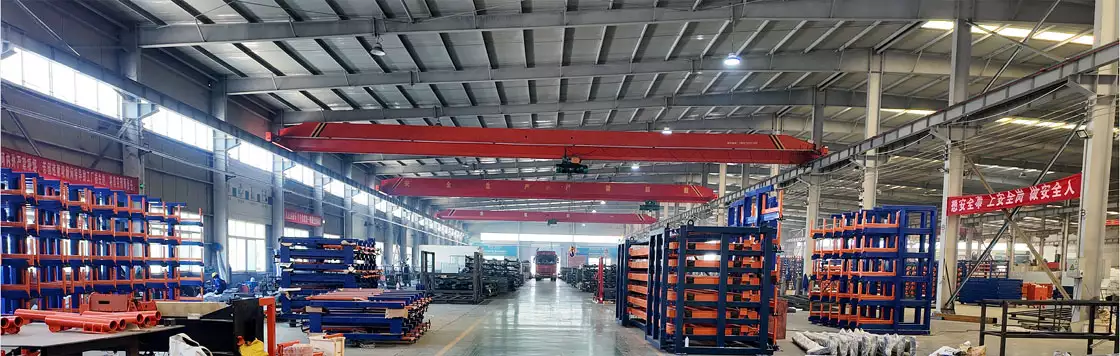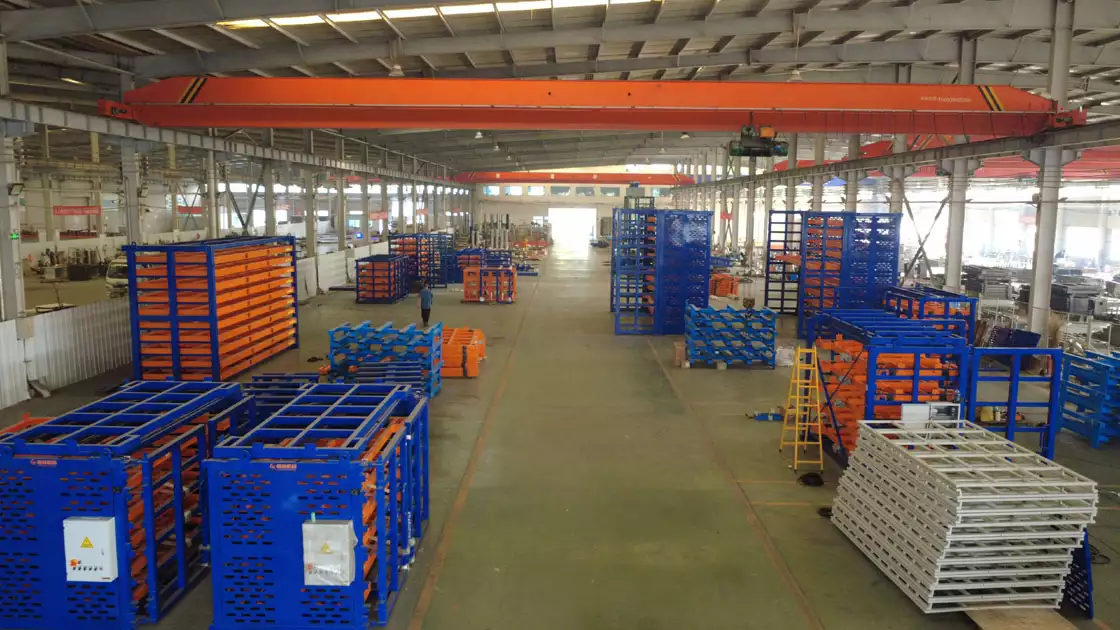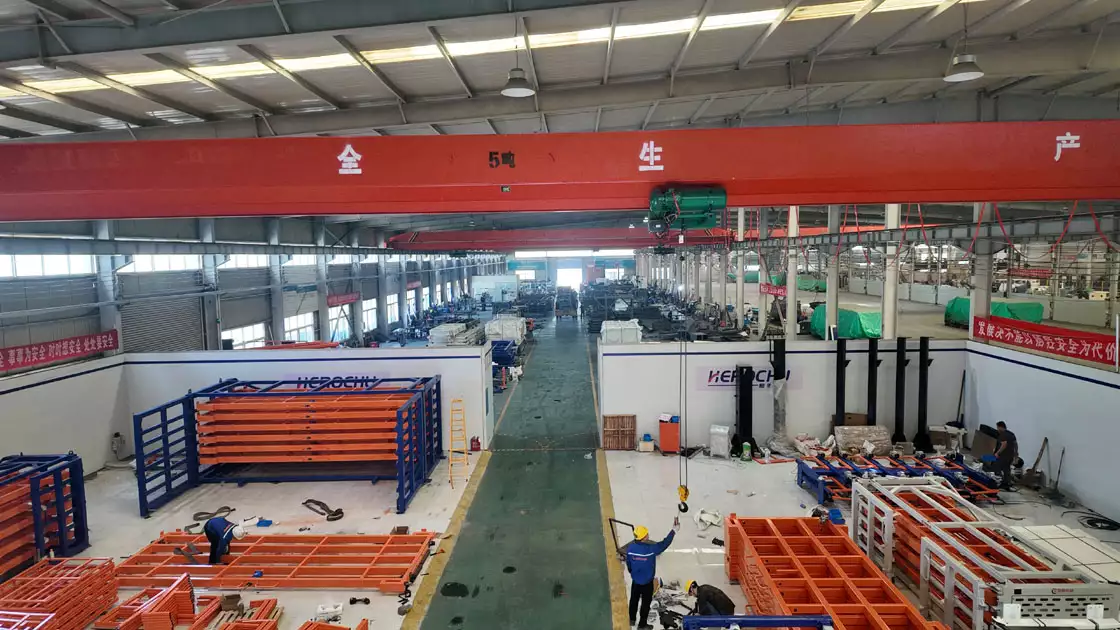
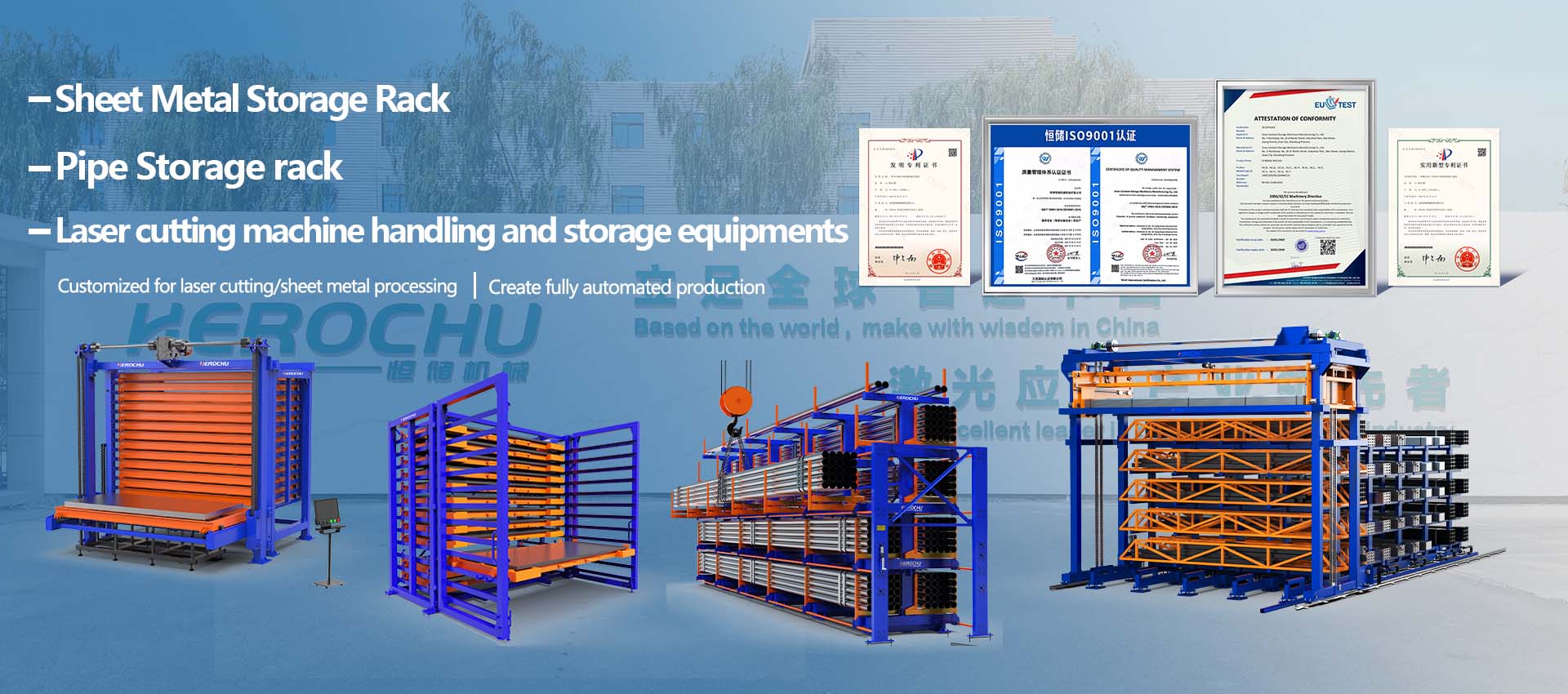
The transition from manual to automated material handling has transformed many areas of manufacturing, but profile storage has historically lagged behind. Long materials—steel bars, tubes, angles, and channels—present unique challenges for automation due to their length, weight, and tendency to sway during movement. Herochu addresses these challenges with the AI-Powered Intelligent Materials Library, a fully automated storage and retrieval system that integrates artificial intelligence with heavy-duty material handling to create a truly intelligent storage ecosystem.
Defining the AI-Powered Intelligent Materials Library
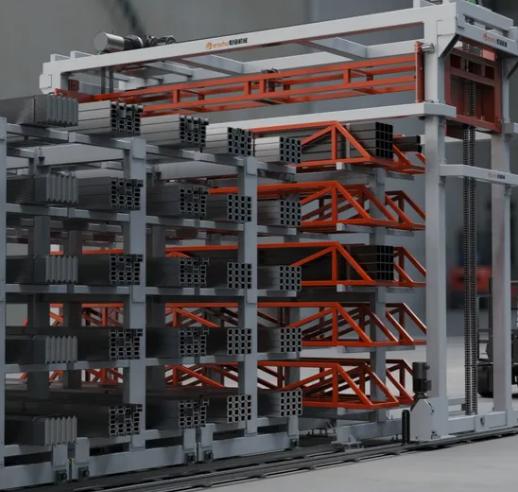
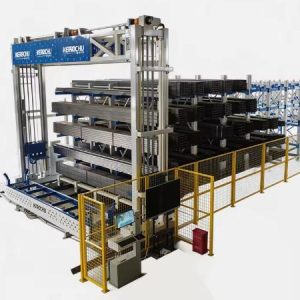
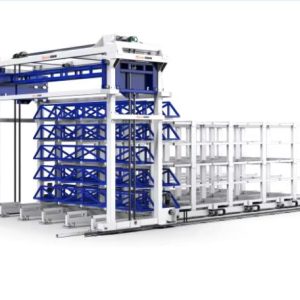
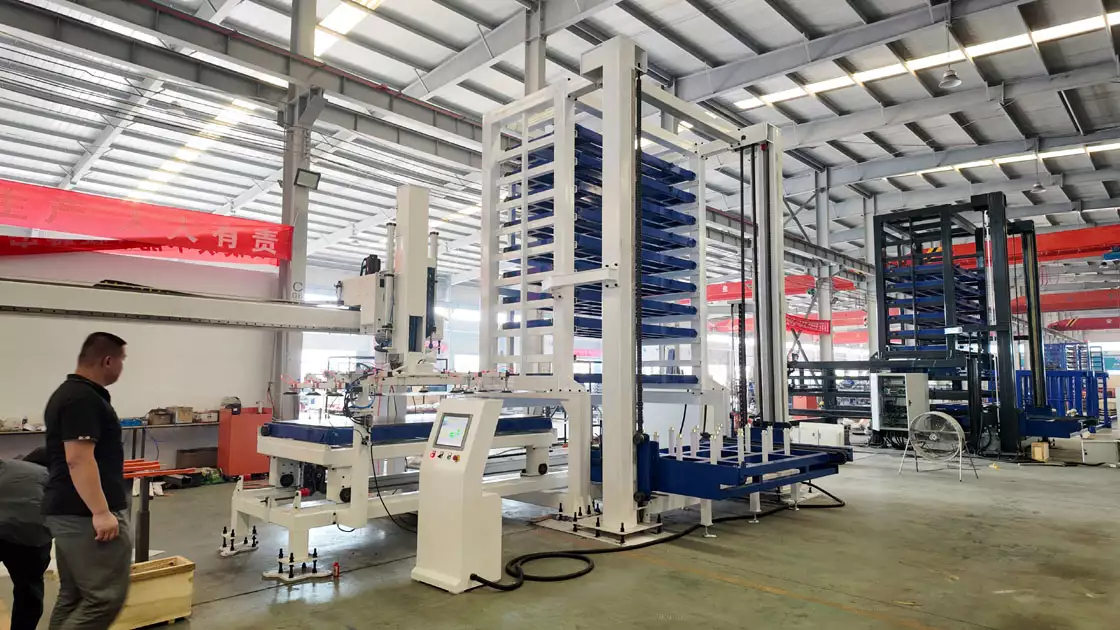
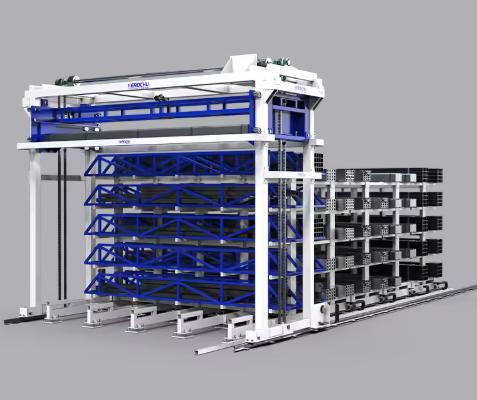
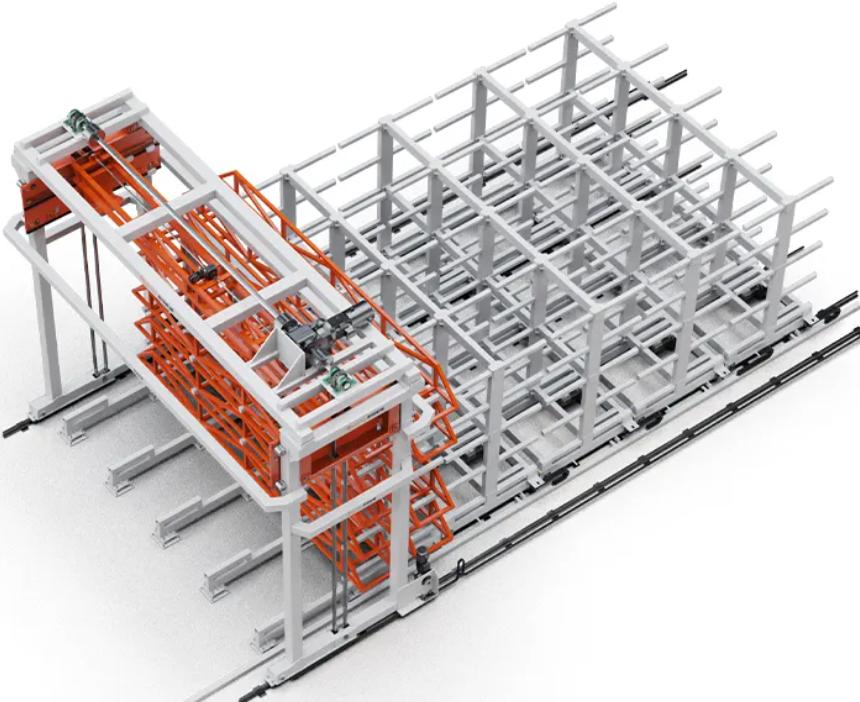
An AI-Powered Intelligent Materials Library is more than a set of racks. It is an integrated system comprising a loading and unloading gantry system, profile material racks, material frames, and guide rails, all controlled by AI-driven logic that manages inventory locations, retrieval sequences, and predictive operations.
The system automates the entire cycle of loading, storing, and retrieving profile materials without manual intervention. Where traditional systems require operators to locate, select, and retrieve materials, the AI-powered library performs these operations autonomously, with intelligence that improves over time through machine learning and data analysis.
AI-Driven Operational Intelligence
The intelligence of the AI-Powered Intelligent Materials Library manifests across multiple operational dimensions:
Predictive Retrieval Optimization: The system analyzes historical retrieval patterns to predict which materials will be needed and when. This predictive capability enables pre-positioning of frequently accessed materials, reducing retrieval times and improving throughput.
Dynamic Storage Allocation: Rather than assigning fixed storage positions, the AI system dynamically allocates storage locations based on material characteristics, retrieval frequency, and available space. This optimization maximizes storage density while minimizing retrieval distances.
Real-Time Inventory Intelligence: The system maintains a continuously updated digital twin of the physical inventory, providing instant visibility into stock levels, locations, and movements. This intelligence extends to material tracking, enabling precise location of any SKU without physical searching.
Anomaly Detection: Machine learning algorithms monitor system operations for anomalies, detecting potential issues before they escalate into failures. This predictive maintenance capability reduces downtime and extends equipment life.
System Architecture
The AI-Powered Intelligent Materials Library comprises four integrated subsystems:
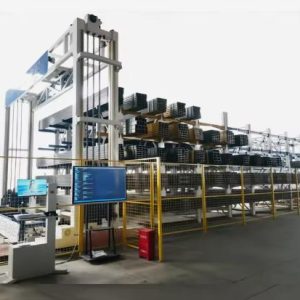
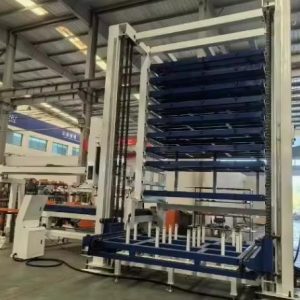
Loading and Unloading Gantry System: A robust Cartesian crane with chain-drive transmission and linear guide rails, engineered for precise positioning under heavy loads.
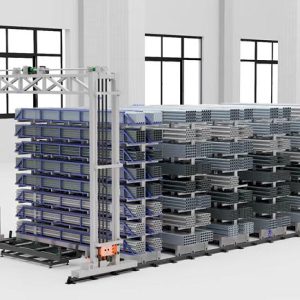
Profile Material Racks: High-tensile steel rack structures arranged in vertical towers, with each tower containing multiple storage levels.
Material Frames: Specialized carriers that secure profiles during storage, preventing rolling, shifting, or deflection.
Precision Guide Rails: Floor-mounted rails that guide gantry movement while maintaining positioning accuracy of ±2 mm.
Technical Specifications
| Parameter | Specification |
|---|---|
| Material Length | Up to 8,000 mm (standard) |
| Storage Levels | 5 to 8 per tower (customizable) |
| Load per Level | 3,000 to 5,000 kg |
| Gantry Travel Speed | 5 to 30 m/min |
| Gantry Lifting Speed | 5 to 15 m/min |
| Positioning Repeatability | ±2 mm |
| Control System | Siemens PLC-based with AI integration |
The system supports standard dual frequency configurations (50Hz/60Hz) alongside multi-regional input voltages (220V/380V), ensuring global compatibility.
AI Integration and Data Management
The AI-Powered Intelligent Materials Library leverages artificial intelligence across its entire operational spectrum:
Data Collection: Sensors throughout the system collect real-time data on material movements, storage conditions, and system performance. This data provides the foundation for AI-driven optimization.
Machine Learning: Algorithms analyze historical data to identify patterns, optimize retrieval sequences, and predict future requirements. The system continuously improves its performance through ongoing learning.
Digital Twin: A virtual representation of the physical system enables simulation of operations, testing of optimization strategies, and predictive maintenance planning.
Integration: The system interfaces with Warehouse Management Systems (WMS), Enterprise Resource Planning (ERP), and Manufacturing Execution Systems (MES), creating a unified data ecosystem.
Operational Benefits
The AI-Powered Intelligent Materials Library delivers measurable operational improvements:
Throughput Enhancement: AI-optimized retrieval sequences reduce cycle times, enabling faster material flow to production.
Storage Density: Dynamic allocation maximizes the use of available storage space, increasing capacity within the same footprint.
Labor Reduction: Automated operations eliminate the need for dedicated material handlers, reducing labor costs and improving productivity.
Accuracy Improvement: Digital tracking eliminates the inventory discrepancies common in manual systems, ensuring accurate stock counts and locations.
Damage Reduction: Precision handling and controlled retrieval reduce material damage, protecting high-value inventory.
Safety and Ergonomics
Manual handling of long, heavy profiles ranks among the most hazardous activities in industrial environments. The AI-Powered Intelligent Materials Library addresses these safety concerns through:
Automation of High-Risk Activities: The system eliminates manual lifting, carrying, and positioning of heavy materials, removing personnel from hazardous operations.
Controlled Movements: Precision gantry operations eliminate the risk of materials falling or shifting during retrieval.
Remote Monitoring: Operators monitor system operations from safe locations, reducing exposure to moving equipment and heavy loads.
Economic Impact
The AI-Powered Intelligent Materials Library delivers compelling economics:
Space Savings: Vertical storage multiplies storage density within the existing footprint, eliminating the need for warehouse expansion.
Labor Cost Reduction: Automated operations reduce or eliminate dedicated material handling positions.
Inventory Optimization: Real-time visibility and predictive analytics reduce overstocking and stockouts, optimizing working capital.
Productivity Improvement: Faster retrieval times and reduced travel distances increase overall operational efficiency.
Future-Proof Architecture
The AI-Powered Intelligent Materials Library is designed for evolution. The AI system can be updated with new algorithms and capabilities as technology advances. Storage capacity can be expanded through additional tower modules. Integration capabilities can be extended to new systems and platforms. This future-proof architecture ensures that the system remains relevant and valuable as operational requirements evolve.
Conclusion
The AI-Powered Intelligent Materials Library from Herochu represents the convergence of artificial intelligence and industrial material handling. By integrating AI-driven optimization with heavy-duty storage and retrieval capabilities, the system transforms profile storage from a manual, labor-intensive operation into an intelligent, automated ecosystem. For facilities seeking to leverage AI for operational improvement, this system delivers measurable results across space utilization, labor productivity, inventory accuracy, and operational safety.