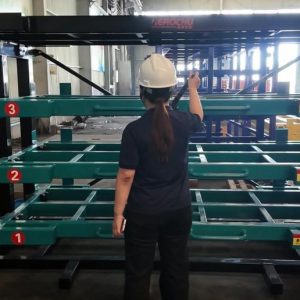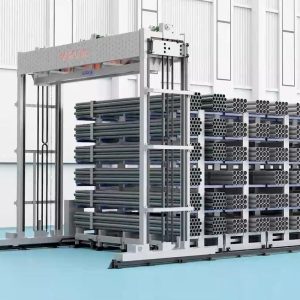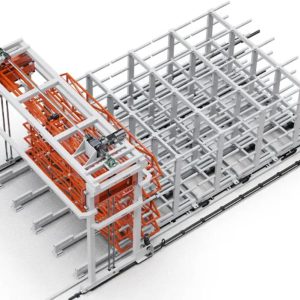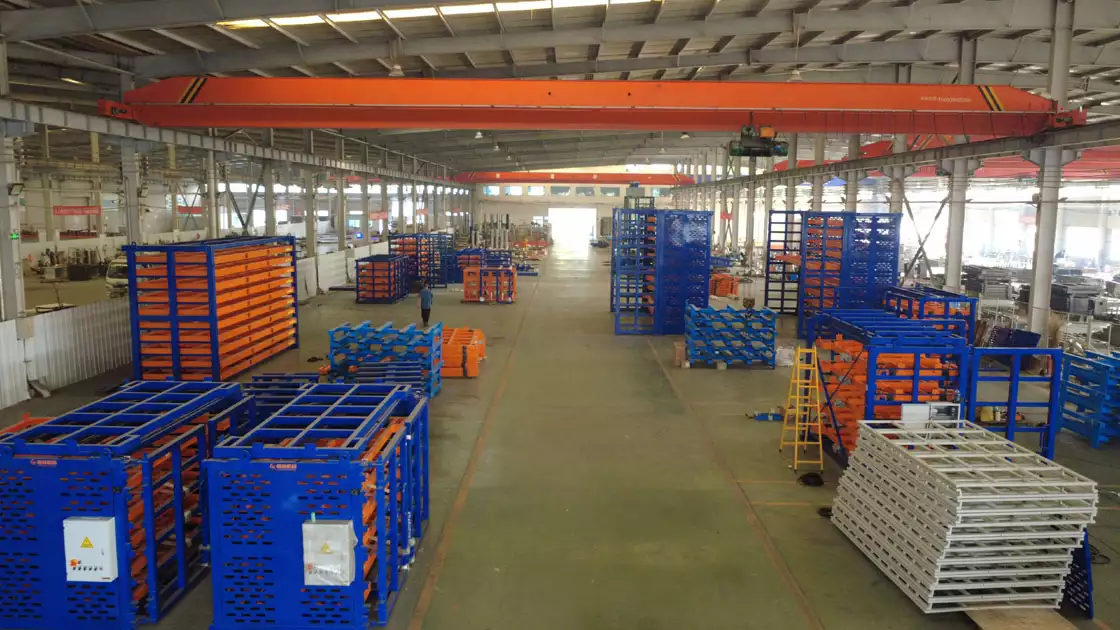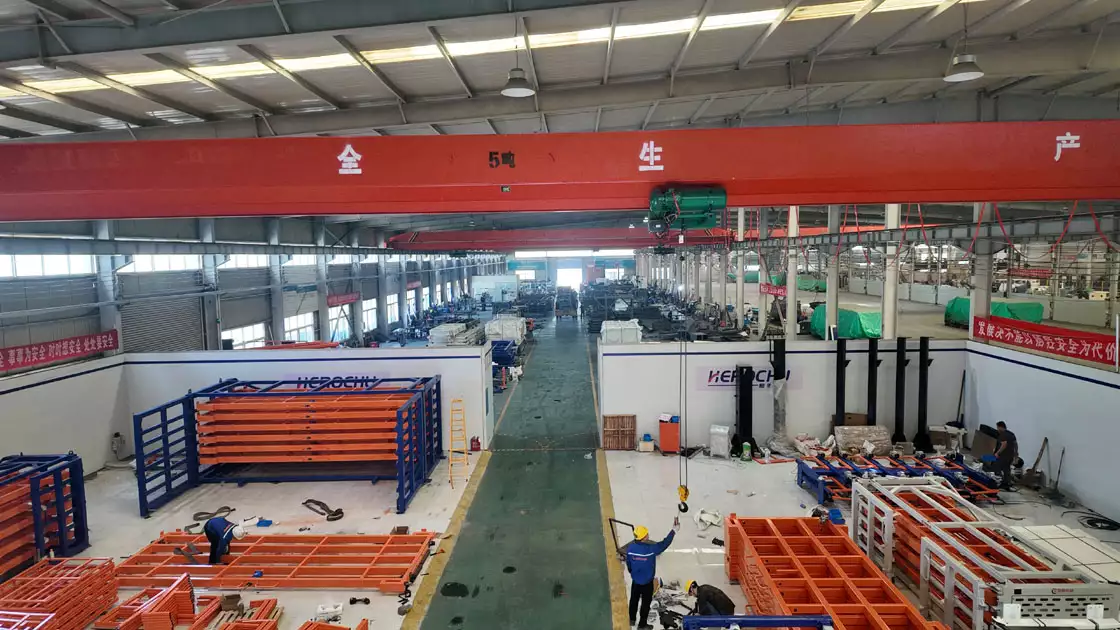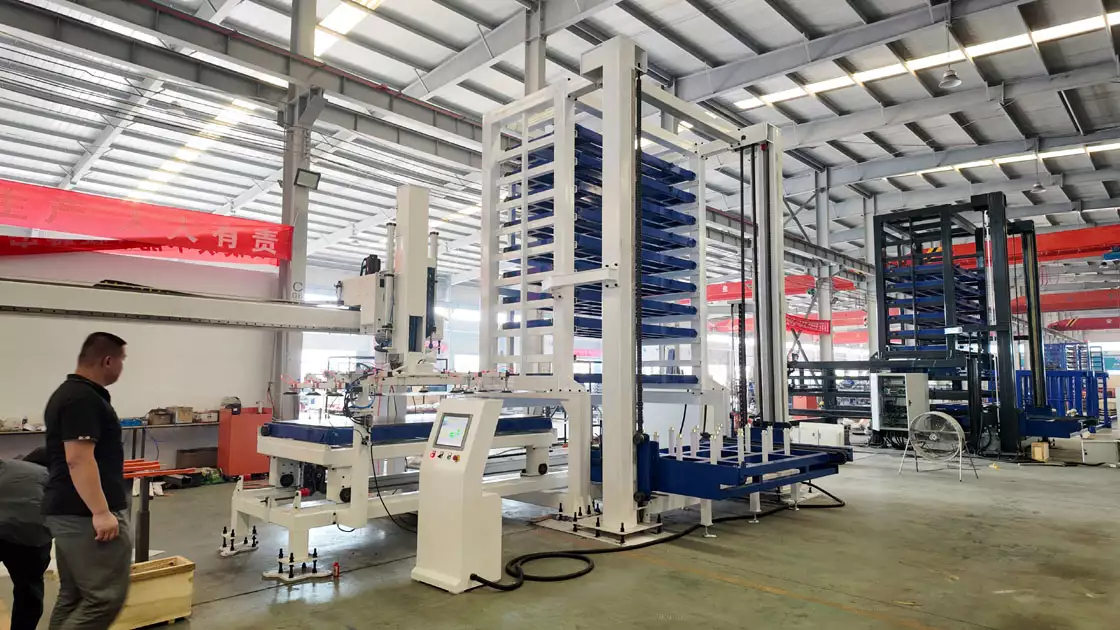
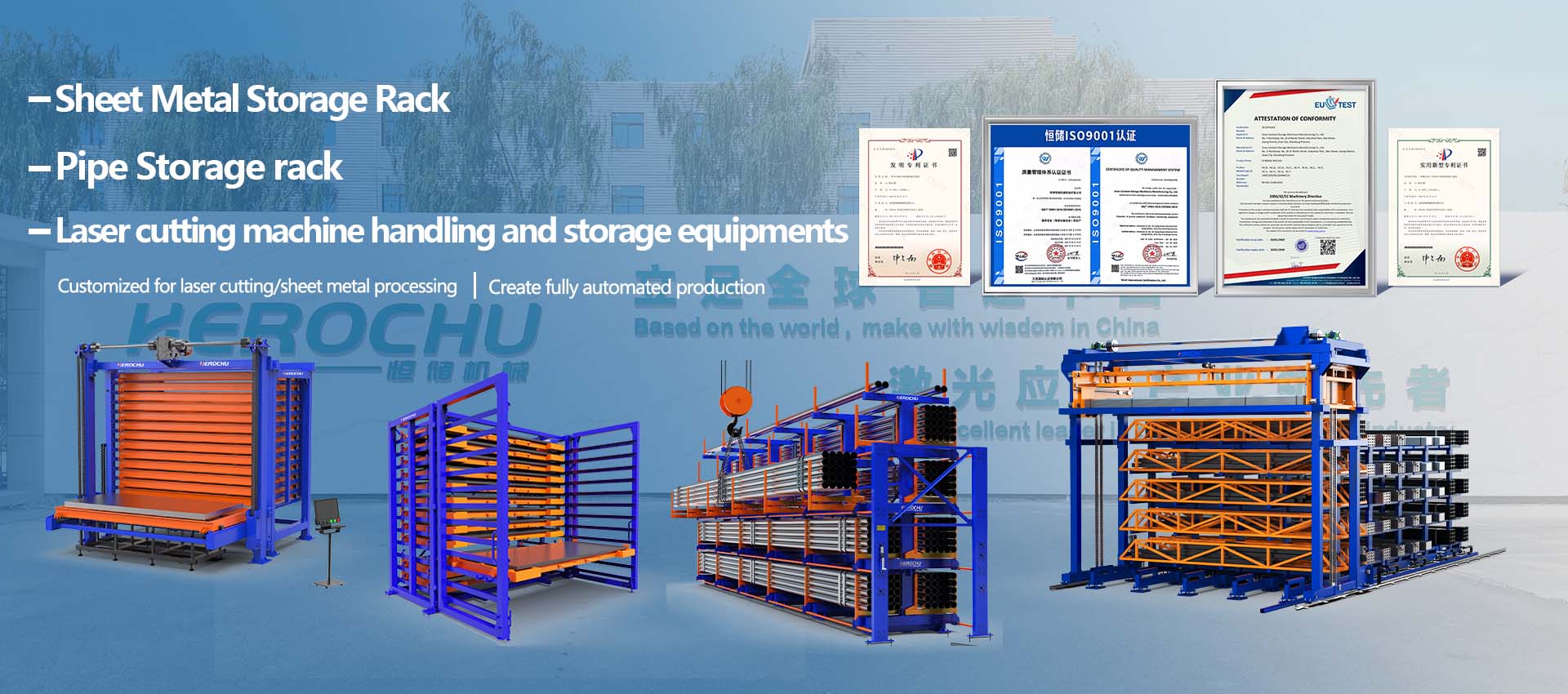
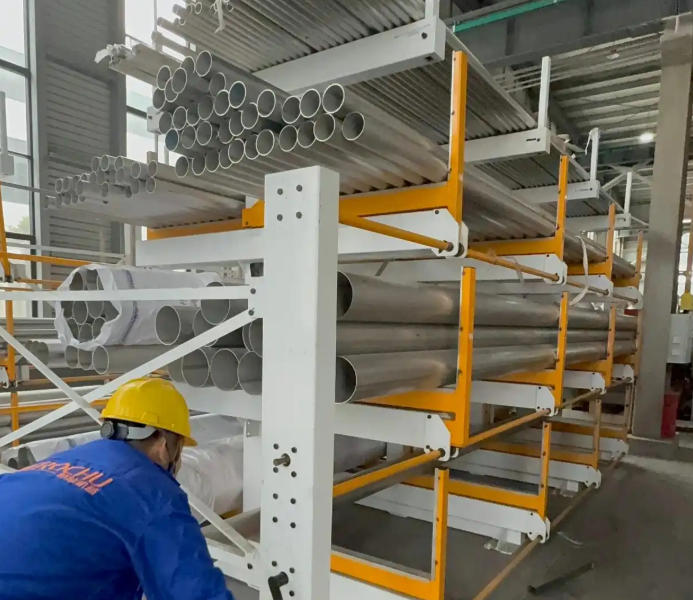
In tube manufacturing environments, the gap between raw material inventory and production output is often a narrow corridor of organized chaos. Steel pipes and profiles arrive in bundles, get staged, and frequently wait for processing in conditions that undermine both product integrity and operational tempo. The Herochu steel pipe storage rack for tube manufacturing lines is engineered to close that gap.
This isn’t a generic shelving upgrade. It’s a storage architecture designed around the specific constraints of tube mills, extrusion lines, and metal fabrication shops where long goods dominate the floor plan.
The Problem with Conventional Storage in Tube Production
Walk through most tube manufacturing facilities and you’ll find the same pattern. Pipes stacked on timber dunnage. Bundles leaning against walls. Forklifts navigating around temporary floor storage that became permanent. The costs accumulate quietly: search time for specific diameters and lengths, surface damage from metal-on-metal contact, and safety hazards that emerge when stacks shift.
The Herochu approach addresses each of these failure points through deliberate design choices.
Independent Compartment Architecture
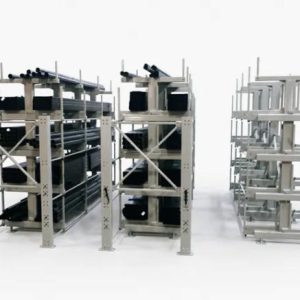
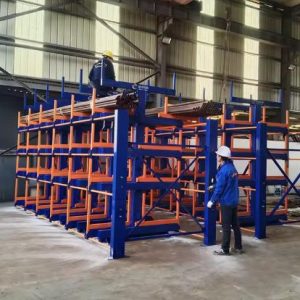
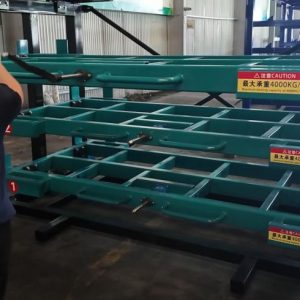
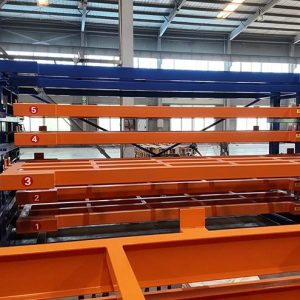
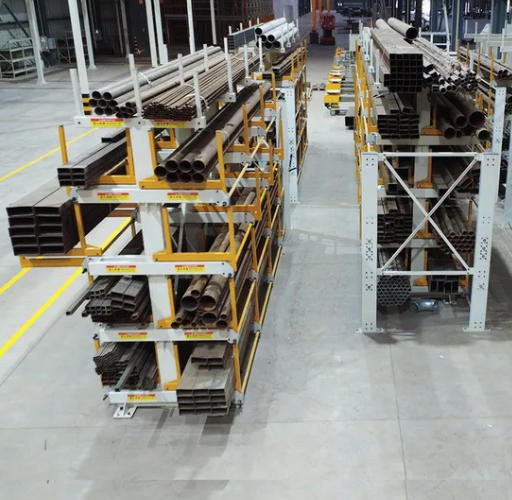
The defining feature of Herochu’s steel pipe storage rack is its independent compartment system. Each tier provides dedicated storage on both sides of the upright structure. This means a 6-meter tube bundle and a 9-meter profile section can occupy the same vertical footprint without compromising each other’s accessibility.
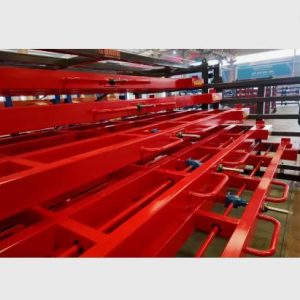
The compartments aren’t just dividers. They represent a classification philosophy. When pipes are stored by type, diameter, or downstream destination, retrieval becomes a directed operation rather than a search expedition. The dual-beam crossbar design reinforces each compartment, distributing load forces across the upright frame and preventing the beam deflection that plagues lighter-duty alternatives.
Manual Crank Mechanism: Mechanical Advantage in Practice
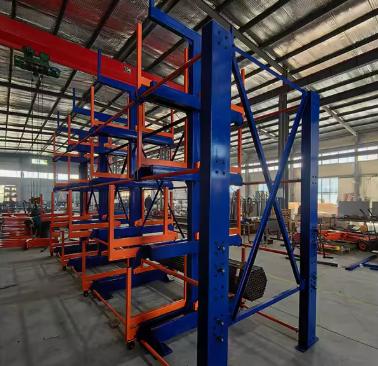
The manual crank system integrated into Herochu’s pipe storage rack represents a pragmatic solution to a persistent problem: accessing heavy bundles stored at height or depth.
Traditional cantilever racks require the operator to work around stored material, often using pry bars or improvised leverage to shift bundles for crane access. The Herochu crank mechanism, driven by a gear-and-pinion system with reduced torque ratios, allows a single operator to move multi-ton loads with controlled precision. The space-saving loading and unloading capability transforms what was a two-person, fifteen-minute operation into a one-person task measured in seconds.
For tube manufacturing lines where crane availability is the binding constraint, this mechanical assistance directly increases throughput. The crane doesn’t wait for manual repositioning. The rack does the positioning.
Load Capacity Without Compromise
Herochu specifies 3 to 5 tons per compartment, depending on model configuration. This isn’t a theoretical maximum calculated under ideal conditions. It’s a working capacity that accounts for the dynamic loads, asymmetric distribution, and impact forces that occur in real production environments.
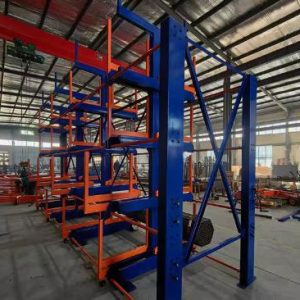
The Q235B high-strength steel frame provides the foundation for this capacity. Combined with heavy-duty load rollers and anti-tip guide wheels, the structure maintains stability even when loads are concentrated on one side of the rack or positioned unevenly within a compartment.
Model configurations span the range of tube manufacturing requirements. The HC-G6053S and HC-G6053 handle 6000mm pipe lengths at 3000kg per level. The HC-G9065 extends to 9000mm with 5000kg per level capacity. The HC-G12065 accommodates 12000mm stock at the same 5000kg rating. Each model supports five or six layers, with customization available for facilities that need non-standard configurations.
Damage Reduction as Operational Priority
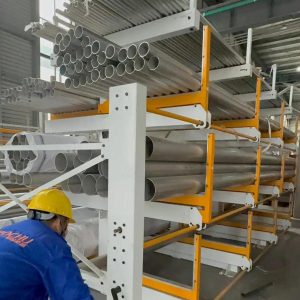
In tube manufacturing, surface quality matters. A scratched or dented pipe becomes scrap, rework, or a customer complaint. Herochu’s compartment design includes internal retention dividers and non-slip liners that prevent the rolling and metal-to-metal contact responsible for most storage-related damage.
The material discharge method—dual-side mechanical assistance—further reduces handling damage. Pipes are guided out of storage rather than dragged or pried, preserving the surface finish of high-value stock.
Customization to Material Profile
No two tube manufacturing operations store identical material. Herochu addresses this through customizable classification storage. Clear space between compartments can be specified to match the diameter of stored pipes or the profile dimensions of structural tubing. Tier heights and the number of layers are configurable. The system adapts to the material, not the reverse.
For facilities handling a mix of bundled and loose materials, the Herochu rack accommodates both. The compartment architecture prevents loose pipes from migrating between storage zones, while bundled materials benefit from the structural rigidity of the dual-beam crossbar.
Reducing Search Time and Inventory Chaos
The most understated benefit of organized pipe storage is the time saved not searching. In facilities where pipes are floor-stacked, retrieving a specific size and grade often requires moving multiple bundles, inspecting labels, and repositioning material for crane access. The Herochu system eliminates this by making every compartment a known quantity.
Inventory visibility improves. Operators can see what’s stored, where it’s stored, and how much remains without climbing over or around stored material. This visibility supports FIFO practices and reduces the accumulation of obsolete or forgotten stock.
Integration with Tube Manufacturing Workflow
Herochu’s steel pipe storage rack is designed to integrate with existing material handling systems. The telescopic cantilever capability allows tiers to extend outward, presenting material directly to overhead cranes without requiring the crane to reach into a static rack structure. Forklift access remains viable for shorter stock or when crane availability is constrained.
The vertical orientation of the storage system reclaims floor space that would otherwise be consumed by wide aisles or ground-level staging. In tube manufacturing environments where every square meter of production floor contributes to output, this density improvement translates directly to capacity.
Conclusion
The Herochu steel pipe storage rack for tube manufacturing lines is not a commodity product. It is a specified solution for the unique challenges of long goods storage in production environments. The combination of independent compartment classification, mechanical assist loading and unloading, and heavy-duty construction makes it a tool for improving both material flow and product integrity.
For operations where pipe storage is currently a bottleneck rather than an asset, Herochu offers a structured path forward.