A warehouse that stores only one profile in one length can get away with a simple racking layout. Most real operations are not that tidy. A single bay may need to hold solid round bar in 20-foot lengths, bundles of angle iron, square tube, and a few runs of pipe that arrived on the same inbound truck. The moment the inventory becomes mixed, the storage system has to answer a harder question: can an operator reach the specific item needed for the next job without unloading three layers of unrelated stock?
The Problem With Treating Long Stock as Bulk Inventory
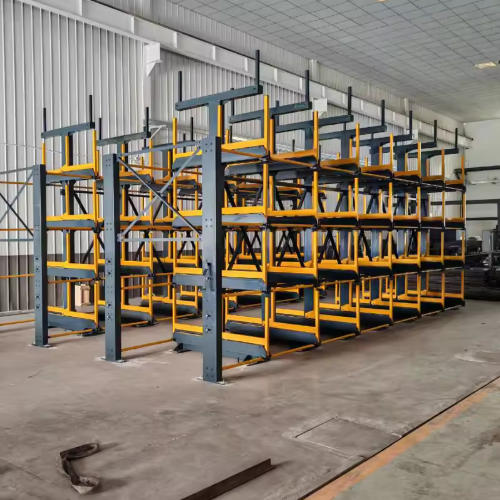
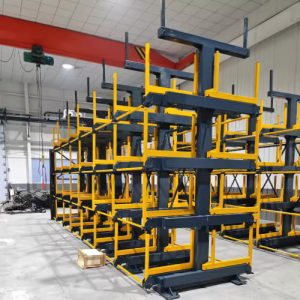
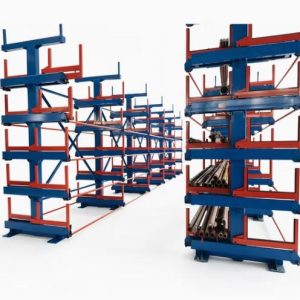
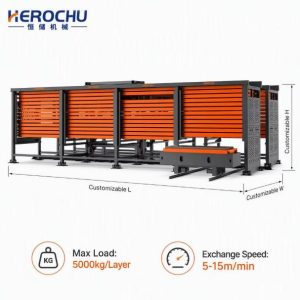
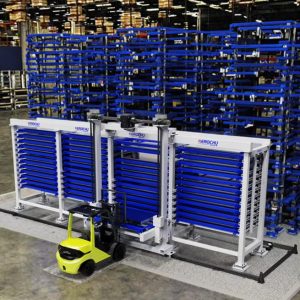
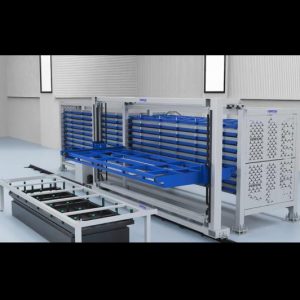
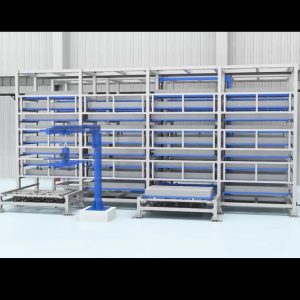
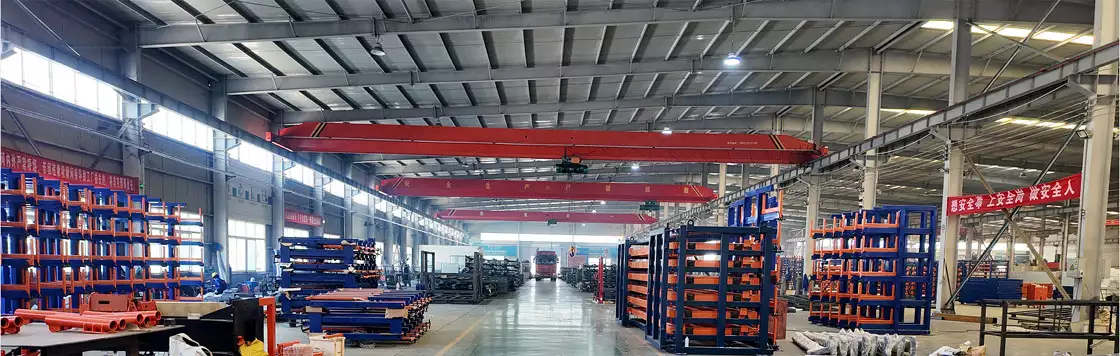
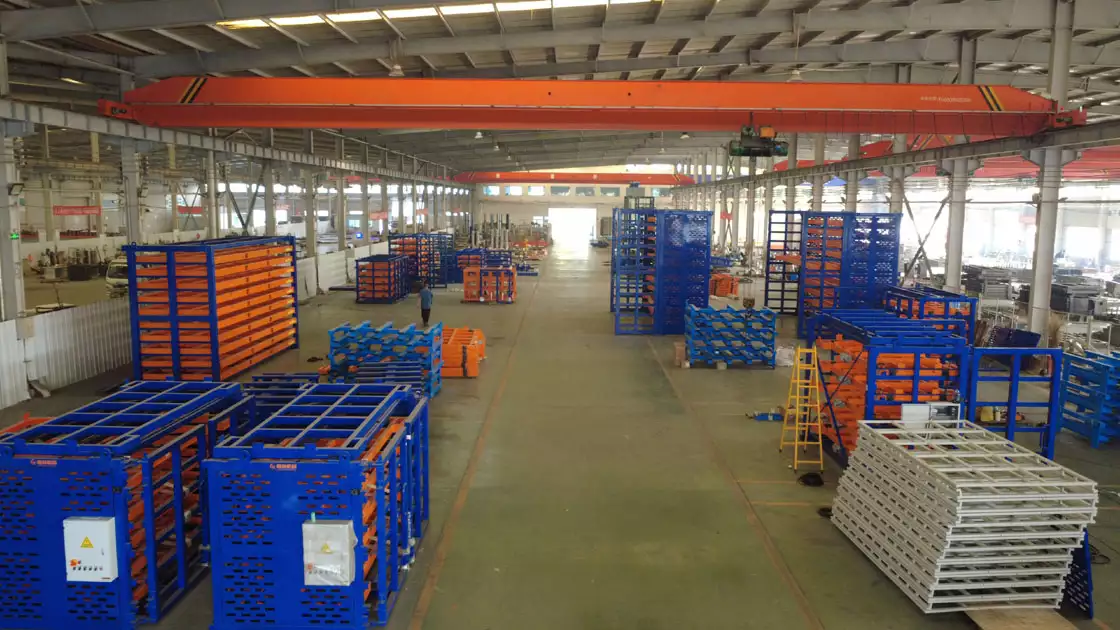
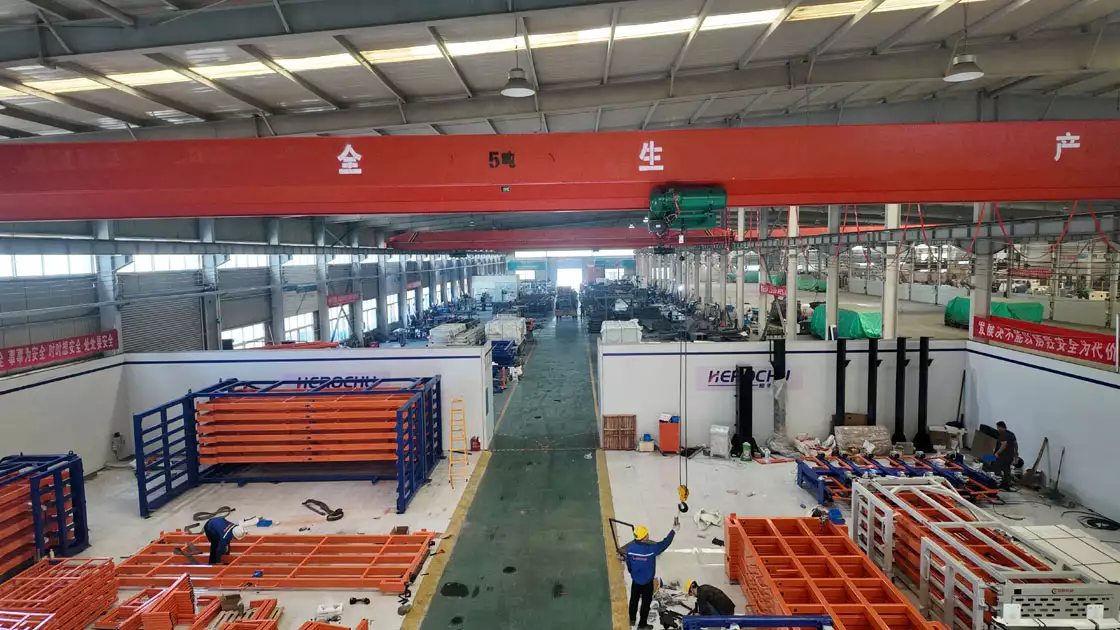
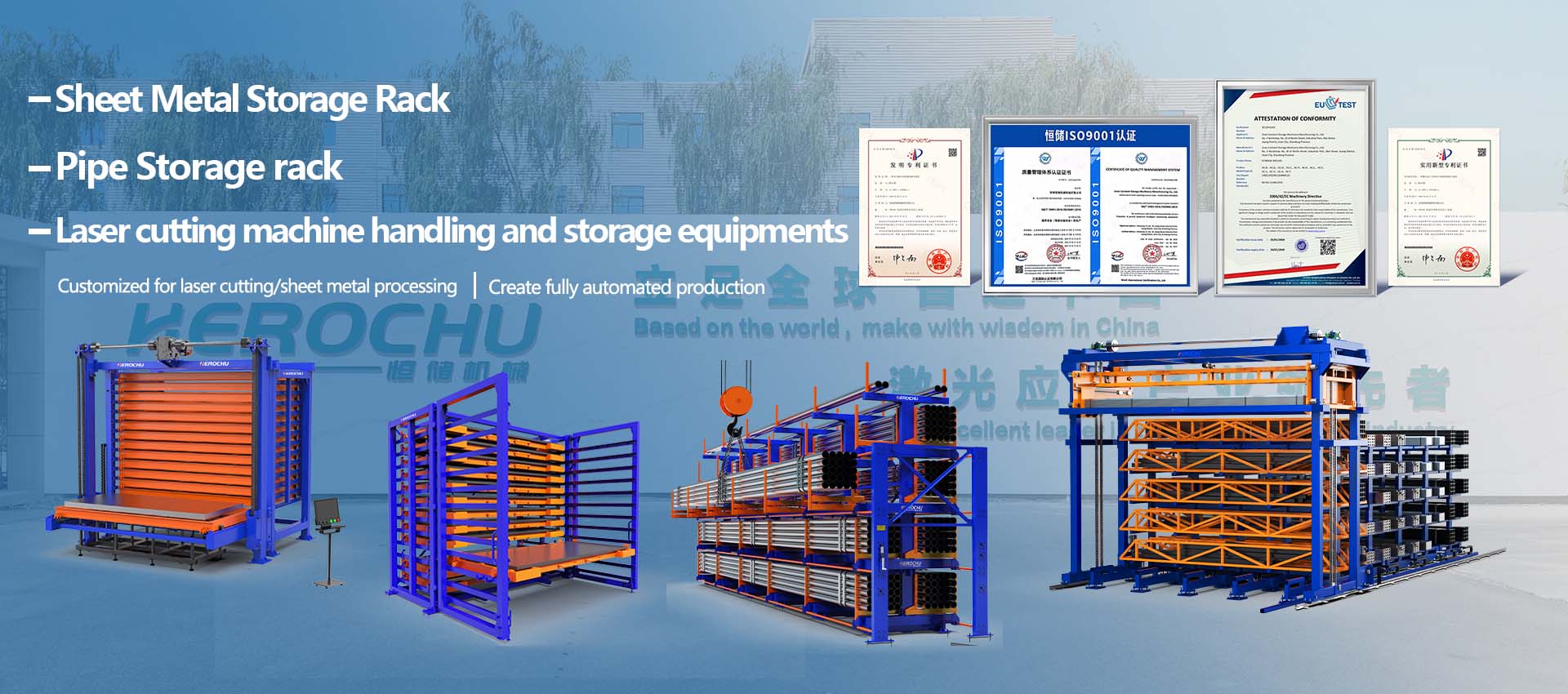
Floor stacking and conventional cantilever racks both treat long material as a bundle-level problem. A forklift deposits a full lift on an arm or a floor bay, and retrieval means taking the whole bundle out, or digging through a pile to find the right size. For a service centre shipping full bundles, that workflow is acceptable. For a fabrication shop where the saw or laser is waiting on a specific angle iron, it is a direct hit on throughput. Every minute spent rehandling unrelated stock is a minute the cutting cell is not producing. Herochu’s roll-out cantilever racking addresses this by placing each storage level on a drawer system that extends fully outward, exposing the entire tier to the crane or hoist above.
What the Rack Has to Handle: Bar, Angle, Tube, Pipe, Rollers
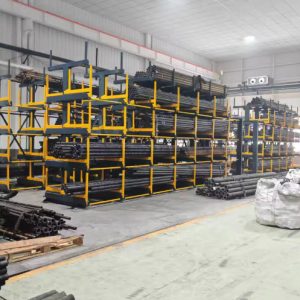
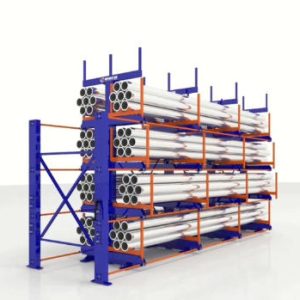
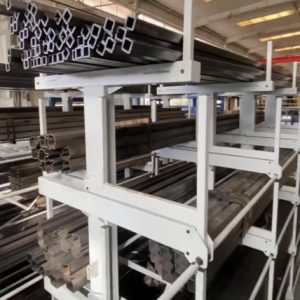
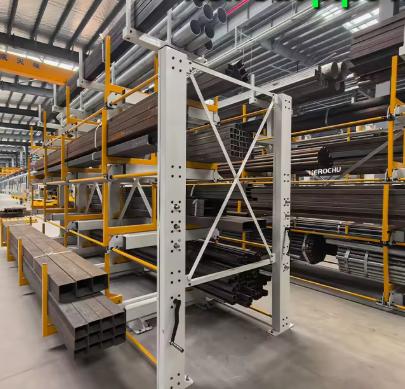
The material list is broader than many buyers initially account for. Solid bar behaves differently under load than thin-wall tube. Angle iron presents a different footprint on the arm than a round pipe. Rollers and mandrels add concentrated point loads. A rack specified only around one profile may perform acceptably for that profile and poorly for everything else. Herochu sets arm section and support spacing from the actual stock list, because a 6-metre thin-wall tube bundle and a 6-metre solid square bar bundle do not deflect in the same way under the same span. Drawer dividers and full-width drawers allow short or flexible material to be stored in the same bay structure without migrating across the tier during extension.
Why 6-Metre Stock Changes the Engineering
Six metres is the length where casual storage arrangements begin to fail visibly. A bundle stacked three high on the floor needs a bay roughly 7 metres long and 1.5 metres wide, and the bottom bundle is unreachable until everything above it moves. A roll-out cantilever rack built for 6-metre stock uses paired crank-out tiers travelling on a guided carriage, so the crane can lift a full bundle straight up without contacting the level above. The frame is typically 6.3 to 6.5 metres long for 6-metre material, giving the crane room to land a bundle without threading it between columns and preventing pipe ends from cantilevering past the outermost arm. End stops are not optional at this length: a 6-metre bundle that shifts during a lift can move its centre of gravity outside the arm base.
Configuring for Mixed Inventory Without Overbuilding
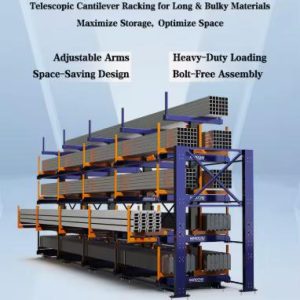
The instinct when storing mixed profiles is to specify the heaviest possible arms everywhere. That is rarely the most cost-effective route. Herochu’s drawer heights adjust in increments, and arm count per tier is set from the material mix rather than a standard drawing. A bay that predominantly holds angle iron and tube may not need the same arm section as a bay dedicated to solid bar. Manual hand-crank extension serves lower-frequency picking; electric telescopic tiers are available where the crane and operator are moving between levels frequently and speed matters. The frame geometry is designed to minimise deflection under load while keeping the powder-coated finish resistant to coolant splashes, humidity, and workshop grime.
FAQ
Q: Can one roll-out cantilever rack store bar, angle iron, tube, and pipe together?
A: Yes, provided the arm capacity and support spacing are specified around the heaviest and most flexible items in the mix. Drawer dividers help segregate short or flexible material.
Q: How does a roll-out rack prevent damage to finished bar or tube surfaces?
A: Herochu offers non-marring polymer inserts on the arms, and the full-extension drawer allows vertical lifting rather than dragging material across the arm surface.
Q: Is a roll-out rack suitable for a warehouse without a crane?
A: The roll-out mechanism is built around overhead lifting. Without a crane or hoist, a standard stationary cantilever rack is the practical choice.
Q: What aisle width should be planned for mixed long stock?
A: A roll-out system can operate in roughly 1.4 metres of aisle because the crane lifts vertically. A standard forklift-loaded cantilever rack typically needs 3.5 to 5 metres.