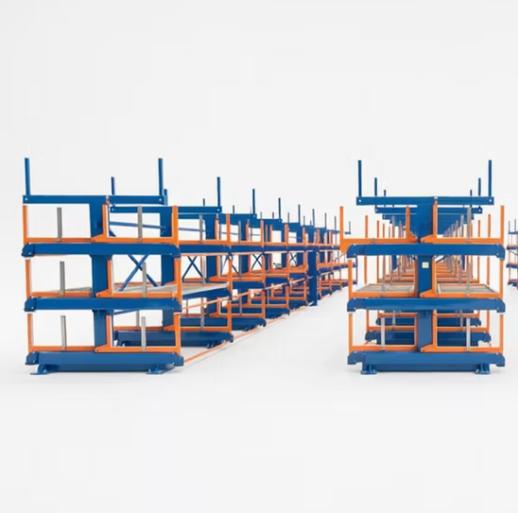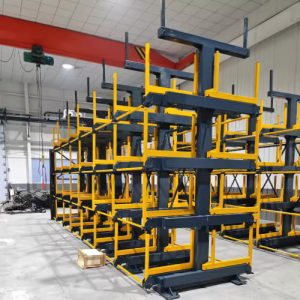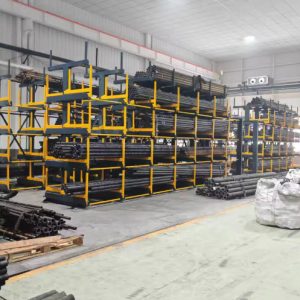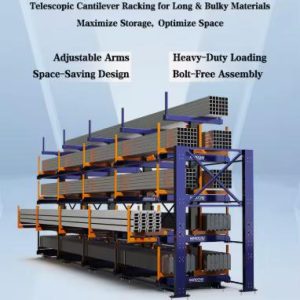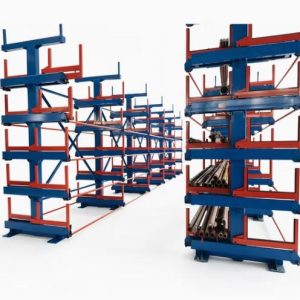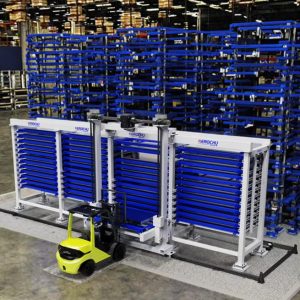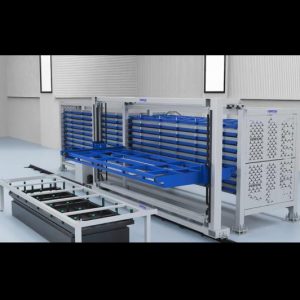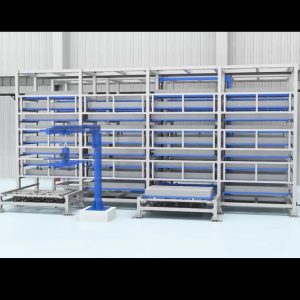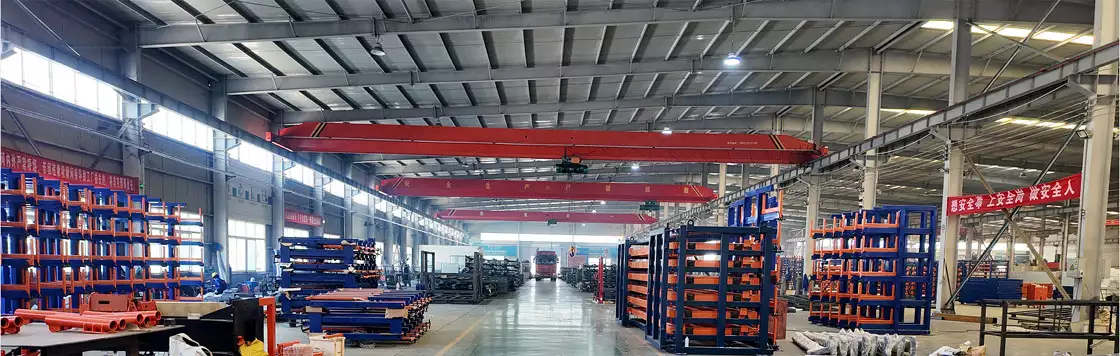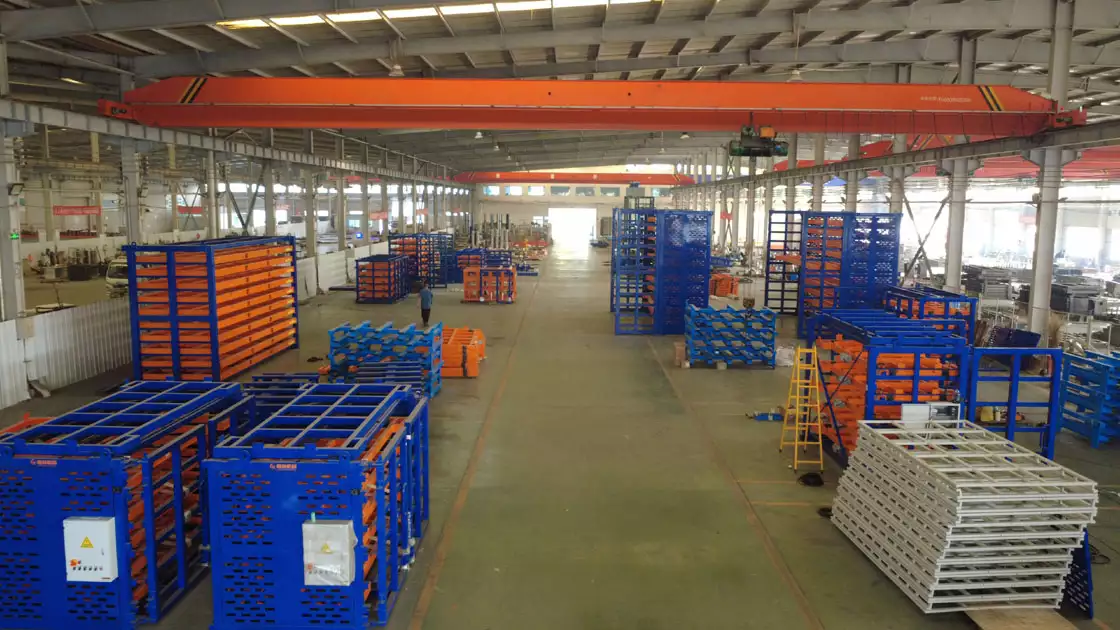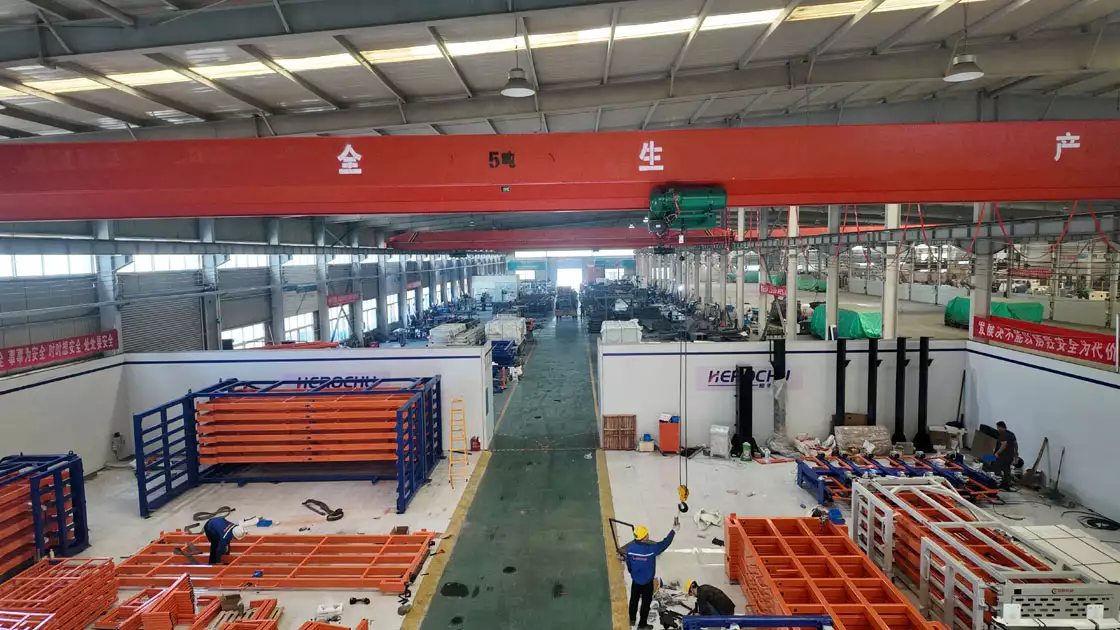
A fabrication shop with an overhead crane and a rack full of long stock sounds efficient on paper. In practice, the bottleneck is rarely the crane itself. It is the rack underneath it. Standard cantilever racks force operators to drag material out from beneath upper tiers, or to thread forklift forks into tight slots while balancing a six-metre bundle. A roll-out cantilever rack changes that sequence: the storage level extends fully into the aisle, the crane lifts vertically from an unobstructed position, and the level rolls back in. The concept is straightforward, but the specification work behind a functional installation is not.
The Drawer Mechanism Is the First Thing to Understand
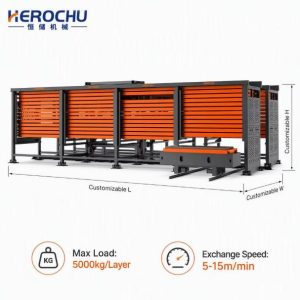
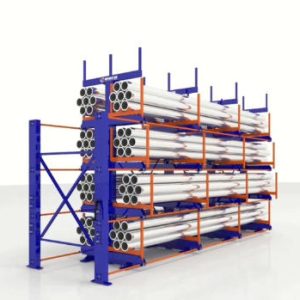
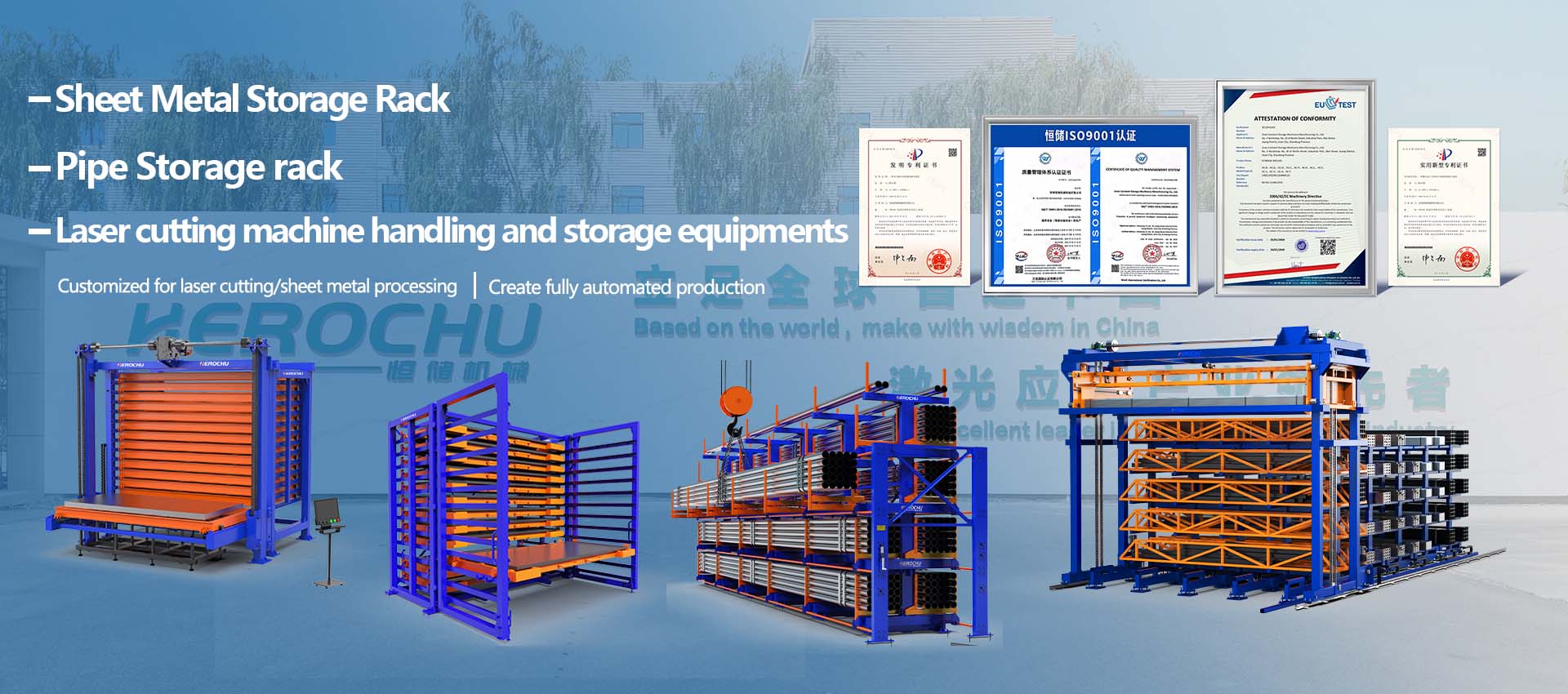
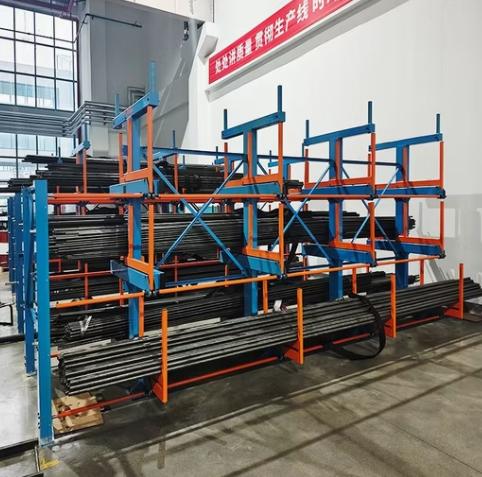
A roll-out cantilever rack, sometimes called a bar rack or pipe rack, places each storage level on a guided carriage. Manual crank-out tiers operate through a geared handle with a positive stop at full extension; electric telescopic variants use a motor per tier with limit switches at both ends. Herochu builds both configurations, with each layer rated to support up to 5–6 metric tons depending on model and arm profile. The mechanism is not a cosmetic add-on. It determines how the crane interacts with the load, how much aisle space the building actually needs, and whether an operator can reach a single bar without disturbing the bundle above it.
Aisle Width: The Number That Reshapes the Floor Plan
A standard cantilever rack loaded by forklift typically requires a working aisle of 3.5 to 5 metres. A roll-out cantilever rack, because the crane lifts vertically rather than the forklift travelling horizontally, can operate in an aisle as narrow as approximately 1.4 metres. On a busy fabrication floor where every metre of clear space competes with cutting tables, welding bays, and material staging, that difference is often the reason a roll-out system pays for itself before the first year is out. Herochu’s crank-out and electric telescopic tiers are engineered around this vertical-lift logic, with synchronised carriage travel on both columns to keep long tiers square through the full stroke.
The Three Checks That Prevent a Costly Mismatch
Before requesting a quote, verify lifting method, material dimensions, and overhead clearance. Roll-out drawers and crank systems are built for overhead cranes and hoists. If the building has no crane and no plan to install one, a standard stationary cantilever rack is the more appropriate investment. Match arm length, drawer width, and per-arm and per-column load ratings to the longest and heaviest stock in the inventory, not to the average bundle. Then confirm how far the extended tier travels into the aisle and whether the crane hook has clear vertical space above the top tier; a rack that is one tier too tall forces operators to drag the top bundle sideways because the hook will not clear it.
What Herochu Configures Around the Buyer’s Stock List
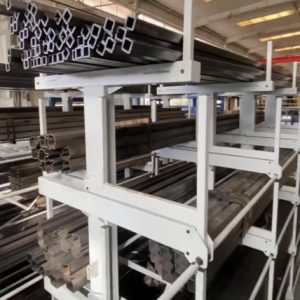
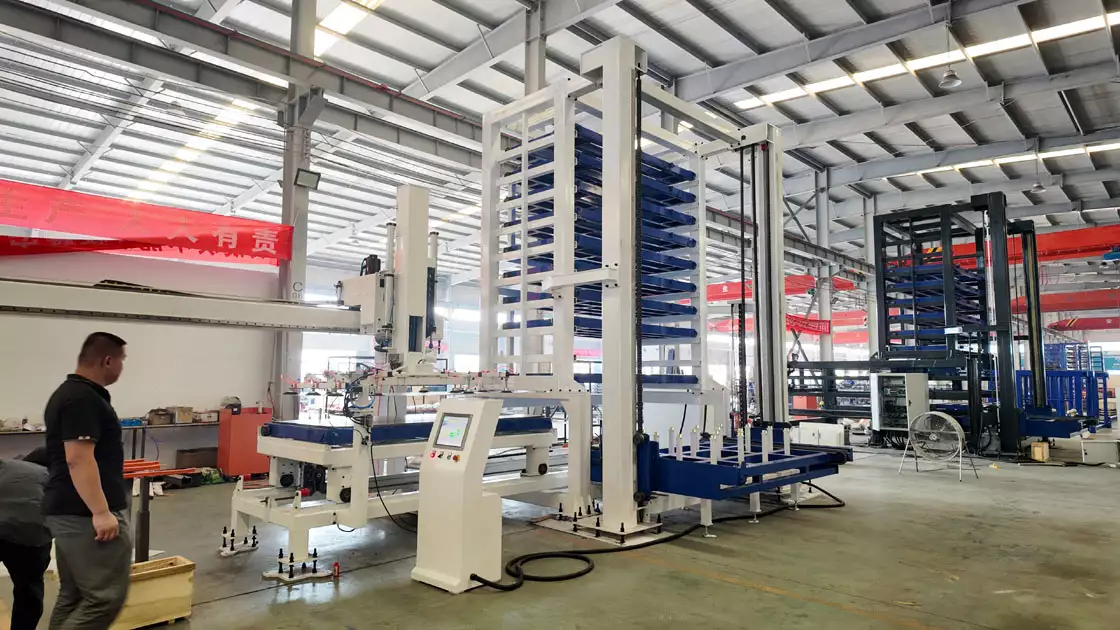
Herochu sets arm count per tier from the material being stored rather than from a standard drawing. A 6-metre pipe or bar needs three support points, not two, to keep sag within tolerance for precision cutting. Drawer height adjusts in increments to suit varying cross-sections, from slender channels to structural I-beams, and arms can be lined with non-marring polymer inserts to protect finished surfaces during repeated handling. Manual hand-crank models serve cost-sensitive setups; electric telescopic variants integrate low-voltage motors with emergency-stop functions and overload sensors for high-throughput environments. Single-sided and double-sided upright configurations allow the system to work against a wall or as a free-standing island, and modular upright extensions mean a fifth tier can be added later without replacing the frame.
FAQ
Q: Does a roll-out cantilever rack work without an overhead crane?
A: The roll-out function is designed around vertical lifting. Without a crane or hoist, the system loses its core advantage, and a standard cantilever rack is the better fit.
Q: How much floor space can a roll-out cantilever rack free up?
A: Because the aisle only needs to accommodate the operator and the extended tier rather than a forklift turning circle, savings of up to 50% of floor space are realistic compared with floor stacking or wide-aisle static racking.
Q: Can the drawers handle individual piece picking as well as full bundles?
A: Yes. Once a level is fully extended, the crane or operator has direct top-down access to every piece on that level, whether the job calls for one bar or the entire bundle.
Q: What information should a buyer send before requesting a Herochu layout?
A: The material types (steel bar, pipe, tube, angle iron, profiles), maximum length and weight per bundle, lifting method (overhead crane, hoist, or forklift), and whether the preferred setup is single- or double-sided. That is enough to begin a serious specification review.