Customizable Roll-Out Cantilever Racking System for Steel Bar Stock and Pipe Storage
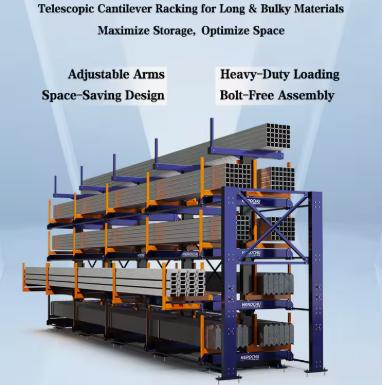
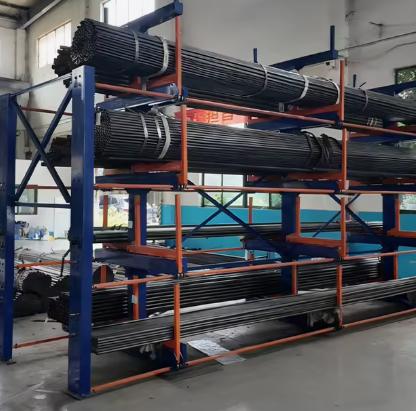
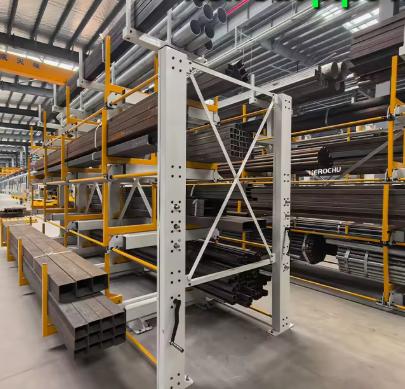
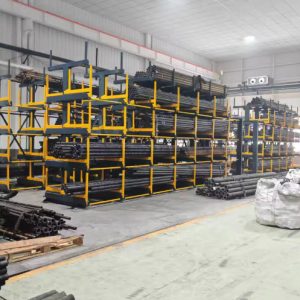
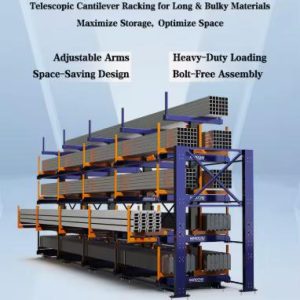
A roll-out cantilever racking system holds steel bar, pipe and tube on drawers that slide out of the rack, so the load arrives at the aisle face instead of behind a fixed arm. The drawer opens completely, a hoist lifts straight up, and the drawer is pushed back. Herochu builds these racks with drawer levels adjustable every 3 inches.
Customizable Roll-Out Cantilever Racking System for Steel Bar Stock and Pipe Storage
What a roll-out cantilever does that fixed arms cannot
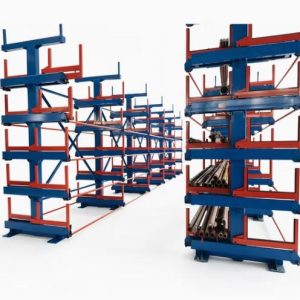
A standard cantilever rack leaves the load on arms that project into the aisle. Reaching the third bundle back means driving a forklift along the arm, or climbing a ladder with a sling while a crane waits. The rack is not badly designed; the access model is wrong for stock picked in small quantities.
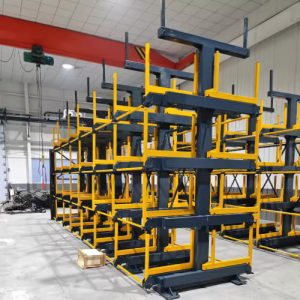
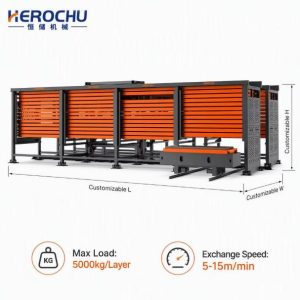
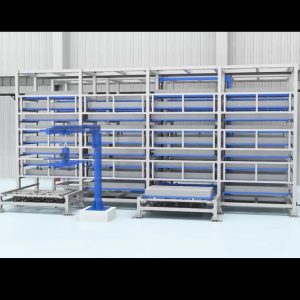
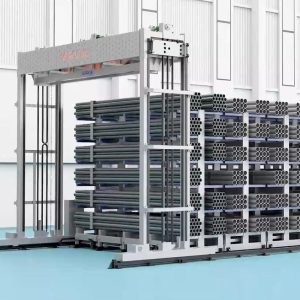
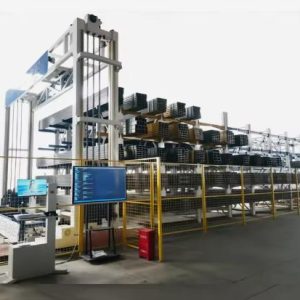
A roll-out cantilever racking system moves the access point. Each level is a drawer running on rails inside the frame. Pull it and every bar is exposed along its full length, so nothing is buried and the hook travels a short vertical path instead of a long horizontal one.
How the drawer system works in daily use
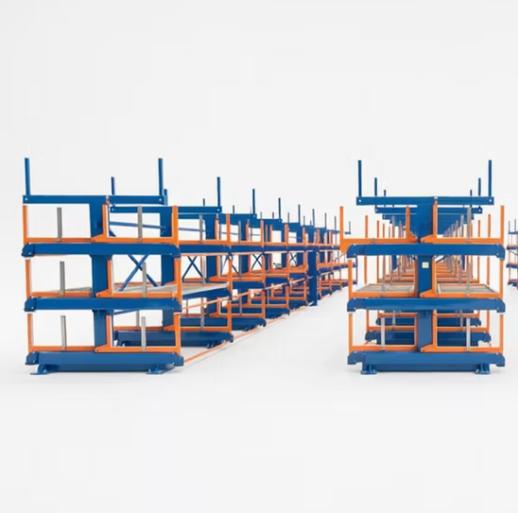
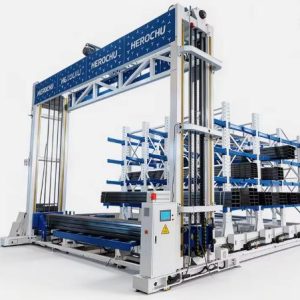
The frame is a conventional cantilever structure: uprights on a base, arms cantilevered forward, bracing tying the columns together. What changes is the level itself. Instead of a bare arm, each level carries a drawer with a deck, side retainers and a front handle or crane lug.
The drawer pulls out on its rails until it is clear of the frame, so the load line is unobstructed from above.
A hoist or overhead crane lifts the bundle or the individual bars vertically out of the drawer.
The drawer rolls back in and stops at its closed position, keeping the aisle clear.
Dividers or a full deck hold short and mixed stock so it cannot roll or walk out of the drawer.
Because the drawer comes to the operator, the working height stays the same on every level, which is the practical difference from a fixed-arm rack where the top tier is a crane job and the bottom tier is a bending job.
How customizable the system really is
Four variables drive the design, and all four are fixed at the engineering stage rather than bolted on later.
Drawer level spacing. Levels adjust every 3 inches, so a bay can be re-pitched when stock sizes change instead of being replaced.
Drawer width and depth. The deck is sized to the longest bar or pipe in the bay, with a margin so the load does not overhang the rails.
Arm and column capacity. Ratings are set per arm and per column from the actual load case, not from a catalogue average.
Configuration. Single-sided racks sit against a wall; double-sided racks serve two picking aisles from one column line.
Dividers are the cheapest upgrade and the one buyers skip. Full-width drawers suit uniform bundles; divided drawers suit a mixed bay holding 20, 25 and 32 mm bar in one level, picked by size rather than by bundle.
What to check before you order
Three checks decide whether the design works in your building, not just on the drawing.
Lifting method. A drawer system is built for overhead cranes, hoists and jib cranes. If your only handling equipment is a forklift, a standard cantilever rack loaded from the aisle is usually the better and cheaper answer. Herochu asks this question first because it changes the whole structure.
Material length and weight. Match the arm length, the drawer width and the per-arm and per-column ratings to your longest and heaviest stock, then add the weight of the dividers and the deck. A rack sized to the average bar will be overloaded by the one bar that matters.
Aisle and ceiling clearance. Measure how far a loaded drawer extends into the aisle, confirm nothing else uses that floor, then measure hook height above the top tier. A drawer that cannot be lifted out gets loaded by hand.
Where does a roll-out rack earn its cost?
The applications follow one pattern: long material, small picks, expensive floor.
Storage case
Fixed-arm cantilever
Roll-out drawer
Full bundles, shipped whole
Good fit
Unnecessary
Cut-to-length bar picking
Slow, blocked access
Direct access to every piece
Mixed diameters in one bay
Sorting by hand
Dividers keep sizes apart
Pipe with fragile coating
Risk of dragging
Lifted vertically, no abrasion
Non-palletized plate and profile
Workable
Safer for long, heavy sections
Floor space is the number most buyers underestimate. A drawer system can release up to 50% of the floor area the same stock occupies in ground piles, because storage grows upward in indexed levels instead of outward in heaps.
FAQ
Can a roll-out cantilever rack be loaded by forklift? The drawer is designed for vertical lift, so forklift loading is limited to the lowest level and is not recommended. If forklift handling is the requirement, choose a stationary cantilever rack instead.
How much weight can one drawer hold? Capacity is calculated per project from drawer width, arm length and load distribution. No single figure applies across a product line, so Herochu issues a load plate with each bay.
Can the rack be extended later? Yes, provided the base and anchors were sized for the final bay count. Adding a bay to a frame designed as a single bay is where most retrofits fail.
What do you need to specify a roll-out rack?
Start with the stock list: longest bar, heaviest bundle, picks per shift and handling equipment. Those four numbers set drawer width, level count and rail size, and they settle most of the roll-out versus stationary argument before price enters.
Herochu builds roll-out cantilever racking per bay, so a workstation that stores twelve bar sizes can be specified without buying capacity it will never use. Send the material list and the crane data, and the layout comes back with drawer extension, hook clearance and anchor loads marked on the drawing.
FAQ
Here are some frequently asked questions about our sheet metal racks and pipe storage solutions. We hope you find them helpful!
Q1: Can I request a custom size or color? Absolutely. We offer complimentary design services and deliver efficient, tailored solutions to meet your specific requirements.
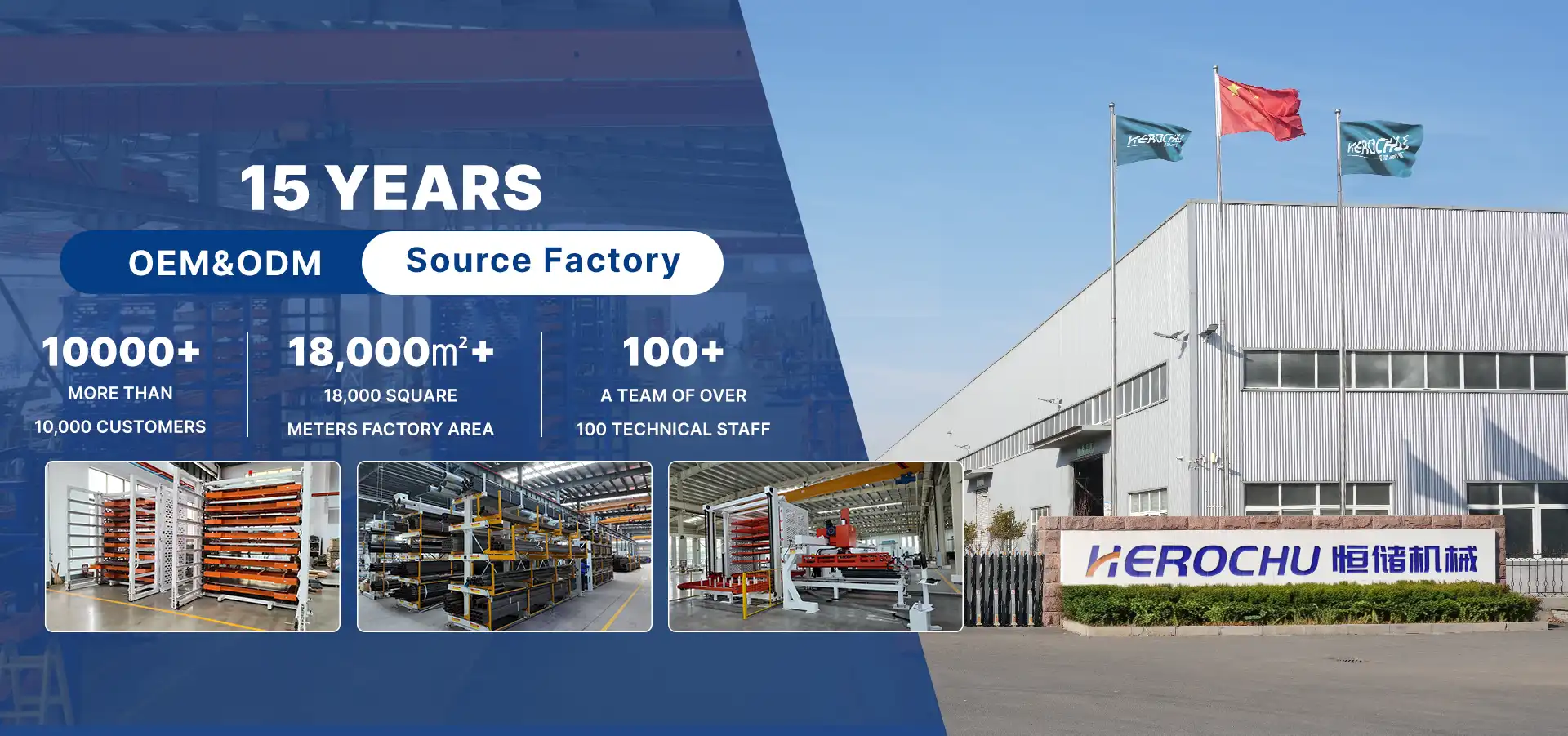
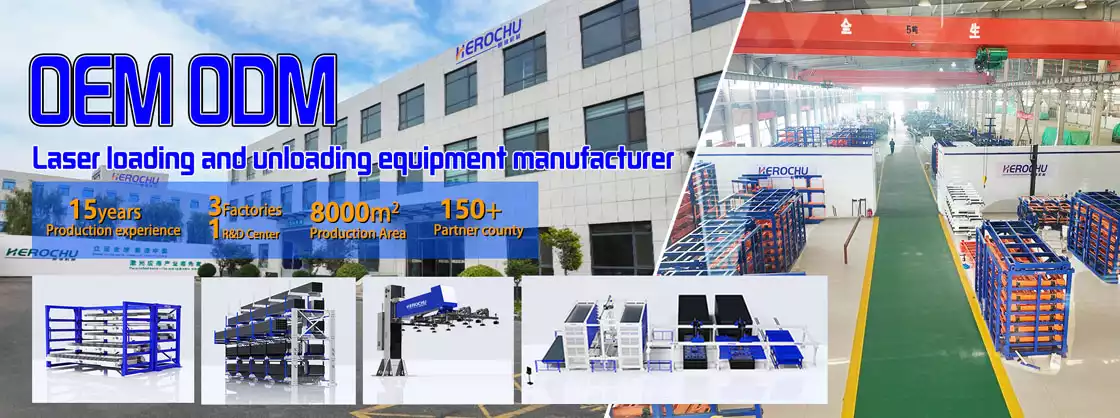
Q2: Are you a manufacturer or a distributor? We are a direct manufacturer with over 15 years of industry experience and expertise.
Q3: Is there a minimum order quantity? No. We welcome orders of any size, starting from a single unit.
Q4: How can I get detailed product information? Click the “Get a Quote” button to receive product images, detailed specifications, and videos. Our team is always ready to assist.
Q5: How do I provide my storage rack requirements? Simply share the type, dimensions, and quantity of materials you plan to store, along with any other specific needs. We will develop a professional storage solution for you. Alternatively, leave your contact details for a personalized consultation.
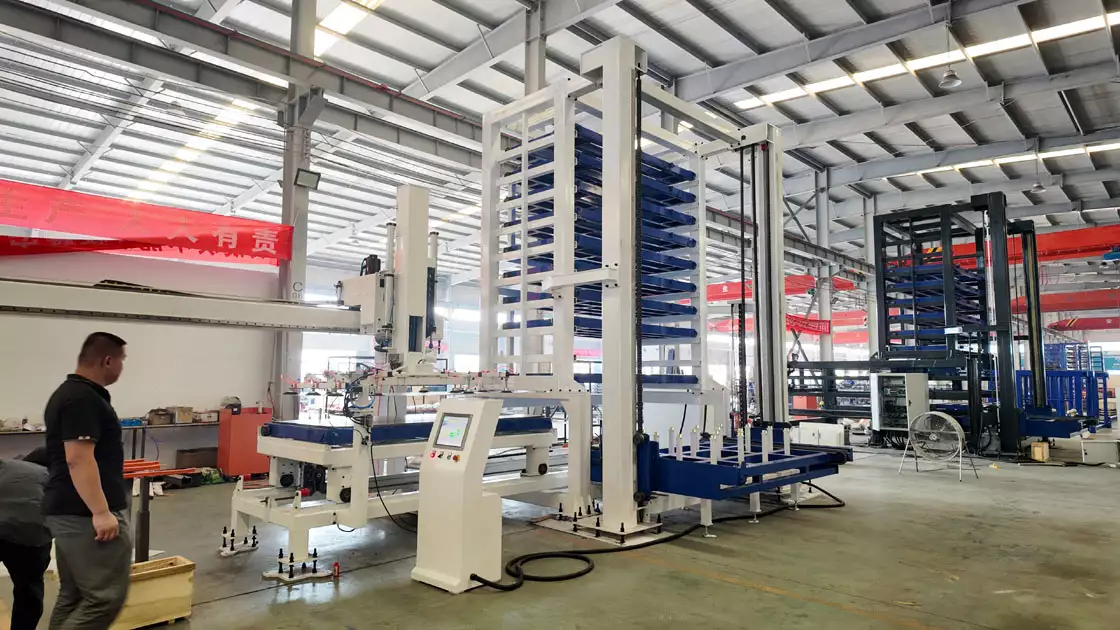
Q6: Do you offer automated loading systems or robotic arms? Yes. We provide loading robotic arms and integrated loading/unloading systems tailored to your laser cutting machine’s table size and material handling method (e.g., board rack, exchange platform, or material warehouse). Contact us with your details for a customized proposal.
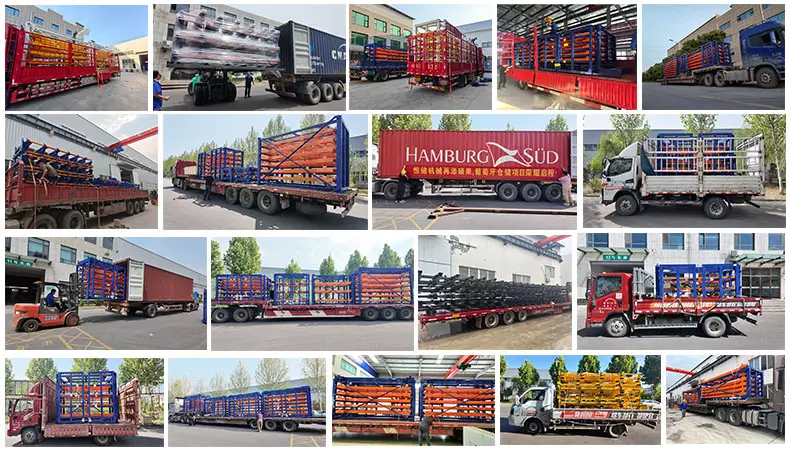
Q7: Do you provide on-site installation and debugging? Yes. Our technicians can travel to your facility for installation and debugging, ensuring successful operation. We have served clients globally, including in the USA, South Korea, Russia, Qatar, Mexico, South Africa, Egypt, and Lebanon.
Q8: How do you ensure product quality? Our quality assurance includes:
A team of over 40 technical engineers for professional debugging and support.
A dedicated quality control department compliant with ISO9001 standards.
CE certification for all exports.
Rigorous load testing before shipment to ensure structural safety and reliability.
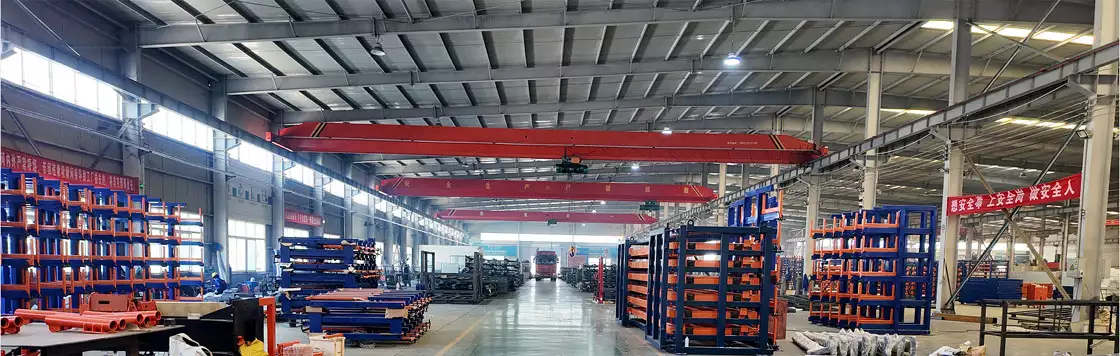
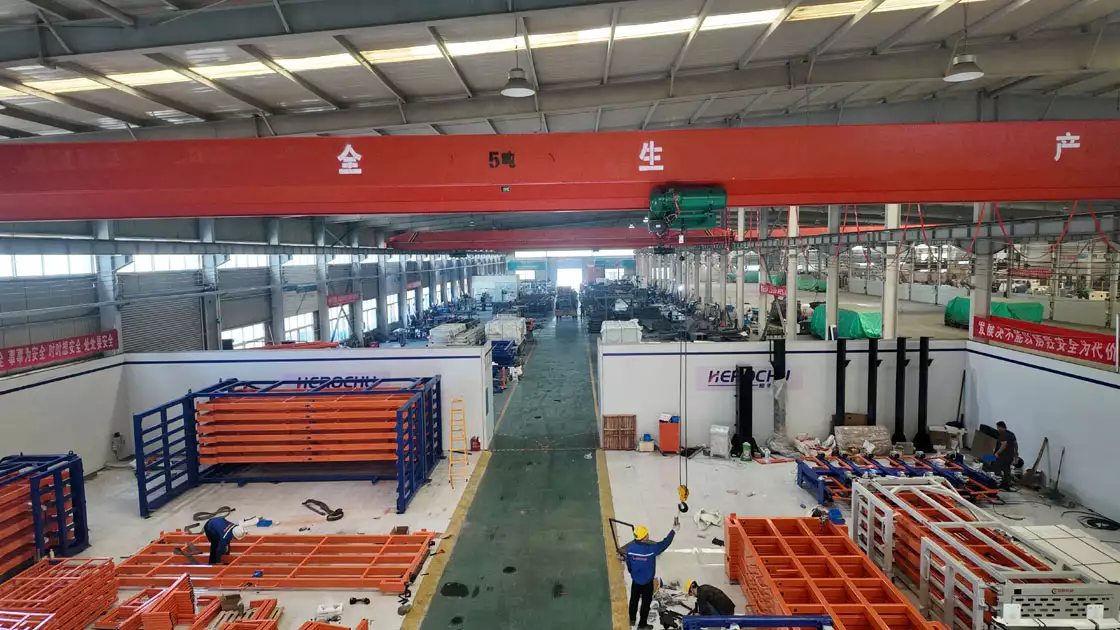
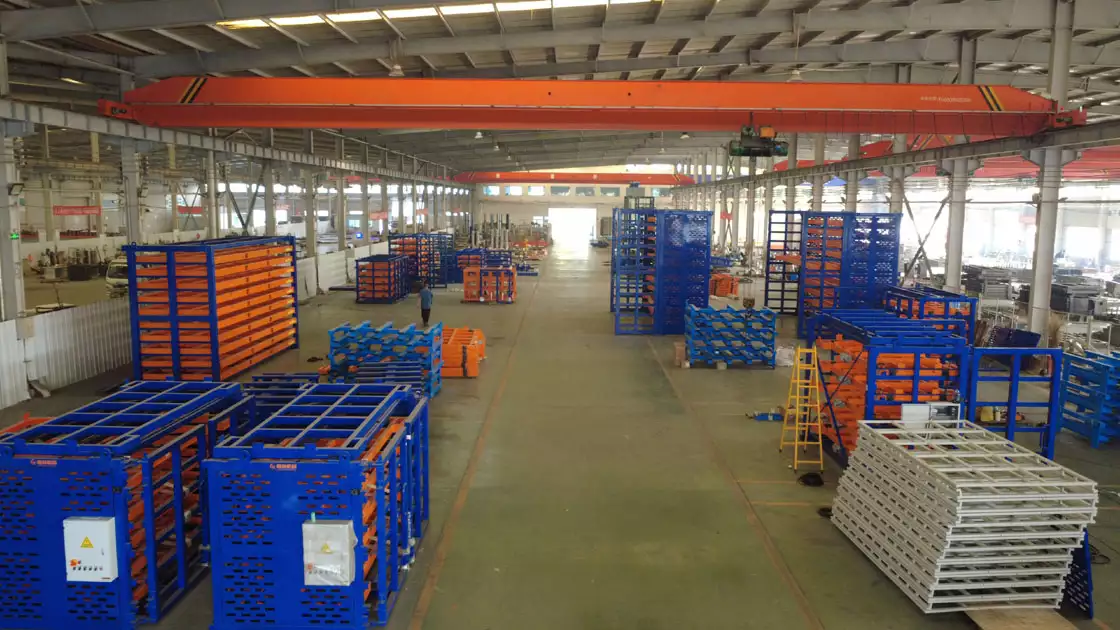
Q9: Where is your factory located? Our modern 10,000-square-meter manufacturing facility is located in Jiyang Industrial Park, Jinan, Shandong, China.
Q10: How can I evaluate your company’s capabilities? We offer virtual video factory tours and warmly welcome on-site visits.
Q11: What does your company specialize in? Jinan Constant Storage Machinery Manufacturing Co., Ltd. is a high-tech enterprise specializing in the R&D, production, sales, installation, and service of intelligent storage solutions. Our product range includes sheet material warehouses, drawer-style shelves, cantilever racks, servo manipulators, gantry loaders, and fully automated handling systems. Supported by a skilled technical team and advanced equipment, we are committed to delivering high-performance storage products and solutions to customers worldwide.
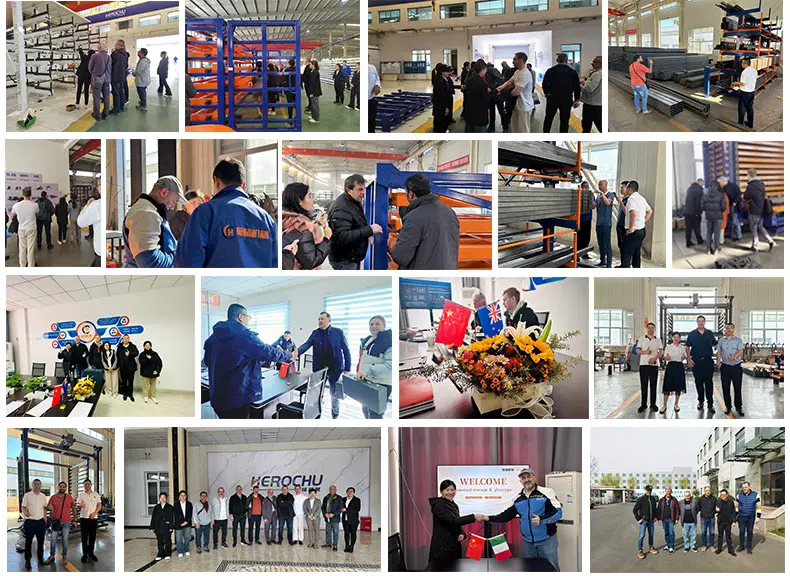
Customer visit
Herochu has always been adhering to the market-centric approach to meet customer requirements to the maximum extent, and the business philosophy of “creating brands with heart and gaining reputation with sincerity”. It provides customers with high-quality products and services with rigorous military quality, professionalism, and excellence, and has won unanimous praise in the Chinese aerospace, Chinese weapons, Chinese railways, automobile manufacturing, engineering machinery, non-ferrous metal titanium alloy and other industries.