Industrial Cantilever Pipe Rack for Warehouse Tube Storage and Long Materials
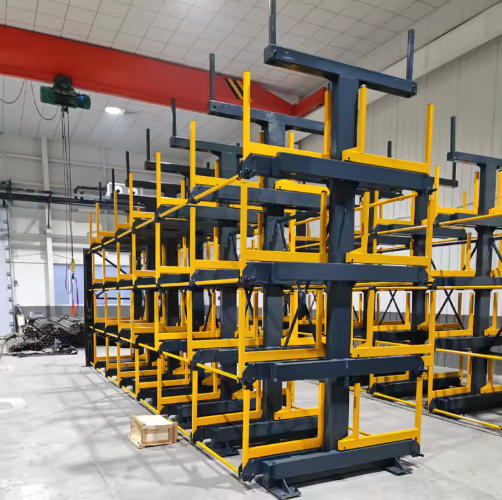
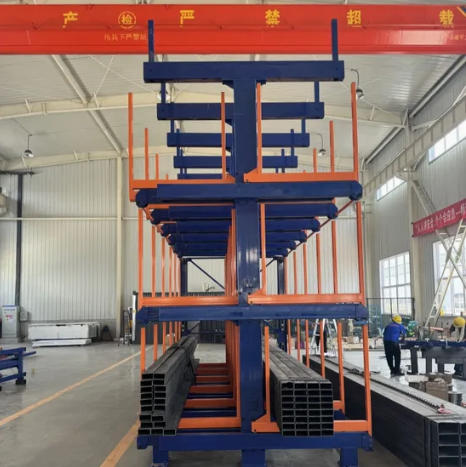
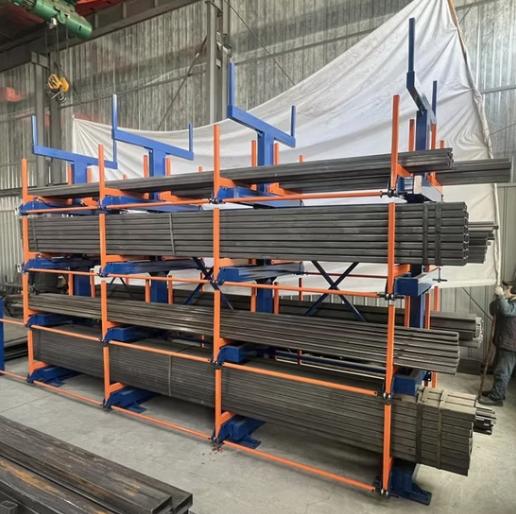
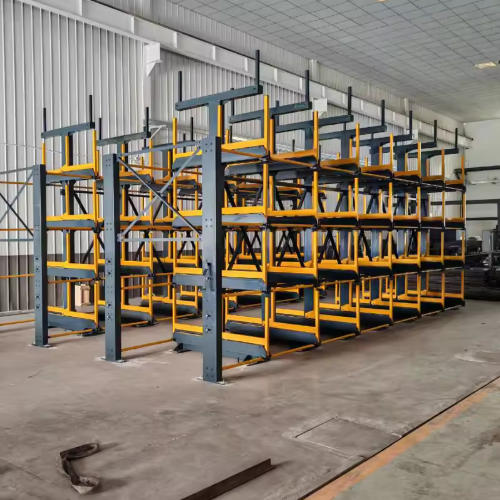
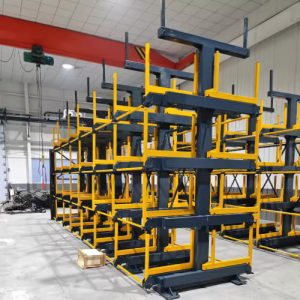
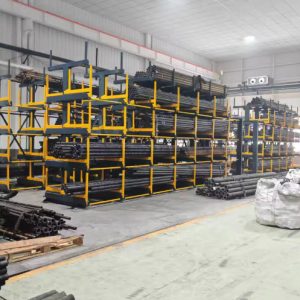
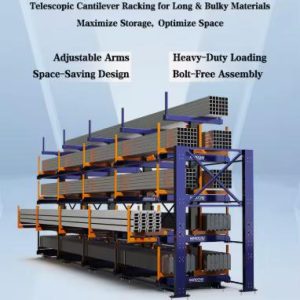
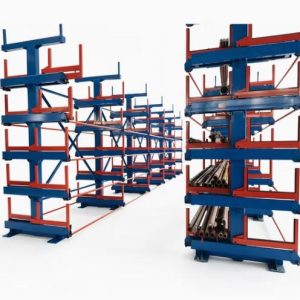
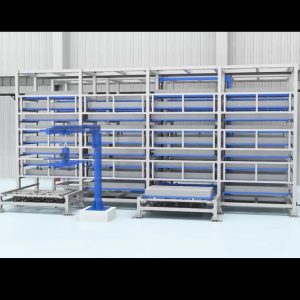
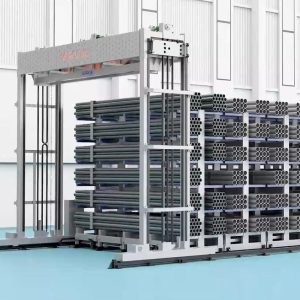
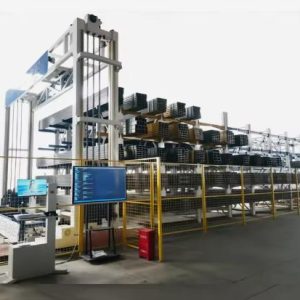
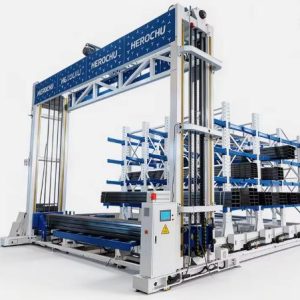
An industrial cantilever pipe rack stores tube and long material on arms fixed to one column line, leaving the front open so a crane or forklift reaches the load from above. There are no front uprights, so nothing blocks long stock. Herochu configures single or double-sided runs around the warehouse aisle plan.
Industrial Cantilever Pipe Rack for Warehouse Tube Storage and Long Materials
What makes a warehouse rack different from a yard rack
Outdoors, a cantilever rack only has to hold steel off the ground. Indoors it also has to survive a building: sprinkler coverage, forklift traffic in narrow aisles, floor loading limits, column lines that cannot move, and a picking rhythm set by the production schedule rather than the weather.
Arm capacity still matters, but so does the height at which a person can safely tag a bundle, the aisle the rack creates, and whether the run blocks a sprinkler head. A rack that is sound and badly placed loses more hours per year than one that is slightly overbuilt.
How do you read a bay before choosing the rack?
A cantilever bay is a column, a set of arms on one or both sides, and the space between two columns. Everything else is configuration.
A single bay with arms on one face is the simplest unit and the easiest to extend along a wall. A run of four to six bays sharing columns is how most warehouses actually build, because the sharing spreads the base cost and stiffens the line. Double-sided bays double the storage positions on the same column line but create a centre aisle that must stay clear when both faces are live.
The mistake is to size the bay by the number of tube sizes rather than by the number of picks. A warehouse with forty tube sizes and ten picks a shift needs fewer, wider bays. One with eight sizes and two hundred picks needs narrow bays so each item is close to the aisle face.
How should the aisle be planned?
The aisle is the part of the layout that gets negotiated after installation, usually badly. Set it before the rack is ordered.
Clear width for the equipment in use. A counterbalance forklift carrying 6 m tube needs more aisle than a reach truck or a crane bay.
The load overhang zone. Long tube overhangs the arm ends at height, so that strip must be marked and kept free of walkways.
Pedestrian separation. A painted line under the overhang is where most warehouse near-misses get designed out.
Sprinkler and lighting clearance. Top-level arms need gap for the spray pattern and for lamps that get relamped.
Herochu draws the aisle on the layout rather than leaving it to the installer, because the aisle is a rack dimension in practice even though it appears on the building plan.
How should tube be stored, size by size?
Round tube rolls, square tube stacks, and coated tube marks. Three small decisions cover most of it.
Cradles or pins at the arm end. A short upstand at the tip stops a rolling bundle without adding a front structure. It is the single most useful accessory on a pipe rack.
Level heights matched to tube diameter. Fixed-pitch levels waste height on small diameters and cramp large ones. Adjustable arms let a bay follow the stock mix, and the change takes minutes with the right pin system.
Separation of coated and bare. Galvanised and painted tube needs a sleeve or a timber dunnage strip on the arm. Bare steel on bare steel is fine; coated on coated is where scuffing starts.
Can different long materials share one run?
Warehouses rarely store one product. A cantilever run handles pipe, tube, angle, channel, flat bar and timber without modification, which is the reason the format survives in mixed inventory buildings.
Material
Arm arrangement
Watch point
Round pipe and tube
Flat arm with end pin
Rolling, especially thin wall
Square and rectangular tube
Flat arm, nested stacks
Stack height against level pitch
Angle and channel
Flat arm, alternated nesting
Load concentrated at one edge
Flat bar bundles
Flat arm with side restraint
Banding failure on tall bundles
Timber
Flat arm, no pin needed
Moisture and arm corrosion
The constraint is not the arm, it is the discipline of the level. Every level should carry a load plate stating its rated capacity, and the heaviest material belongs at the bottom where the lift is short and the column is strongest.
How do you keep inventory accurate on an open rack?
An open-front rack is easy to see and easy to miscount. Label every level with a location code and its material, and record quantity at the pick rather than at month end. A supervisor can then compare a level with the stock list in seconds, and the buyer stops ordering tube that is already sitting three bays away.
FAQ
How much floor space does a pipe rack save? Compared with ground piles, a cantilever run typically stores the same tonnage in a fraction of the footprint because it uses height. The exact gain depends on the pile height you are replacing and the lift height available.
Can the rack be loaded by forklift? Yes, on single-sided runs where the forklift approaches from the open face. Double-sided runs with a narrow centre aisle usually need a crane or a side-loading truck.
What height is practical? Height is set by the lift equipment and the sprinkler layout, not by the column. Most indoor runs stop where the top level can still be inspected and tagged safely.
Does Herochu supply the anchors? Yes. Anchors are specified from slab thickness and condition and shipped with the rack, so the base detail matches the design.
How do you plan the run?
Draw the building first: column lines, sprinkler grid, doors, and the routes forklifts actually take. Then place the bays. Herochu builds industrial cantilever pipe racks to the aisle plan rather than to a standard module, so a run can end where a column is, start where a door is, and still keep every arm within reach of the handling equipment on the floor.
FAQ
Here are some frequently asked questions about our sheet metal racks and pipe storage solutions. We hope you find them helpful!
Q1: Can I request a custom size or color? Absolutely. We offer complimentary design services and deliver efficient, tailored solutions to meet your specific requirements.
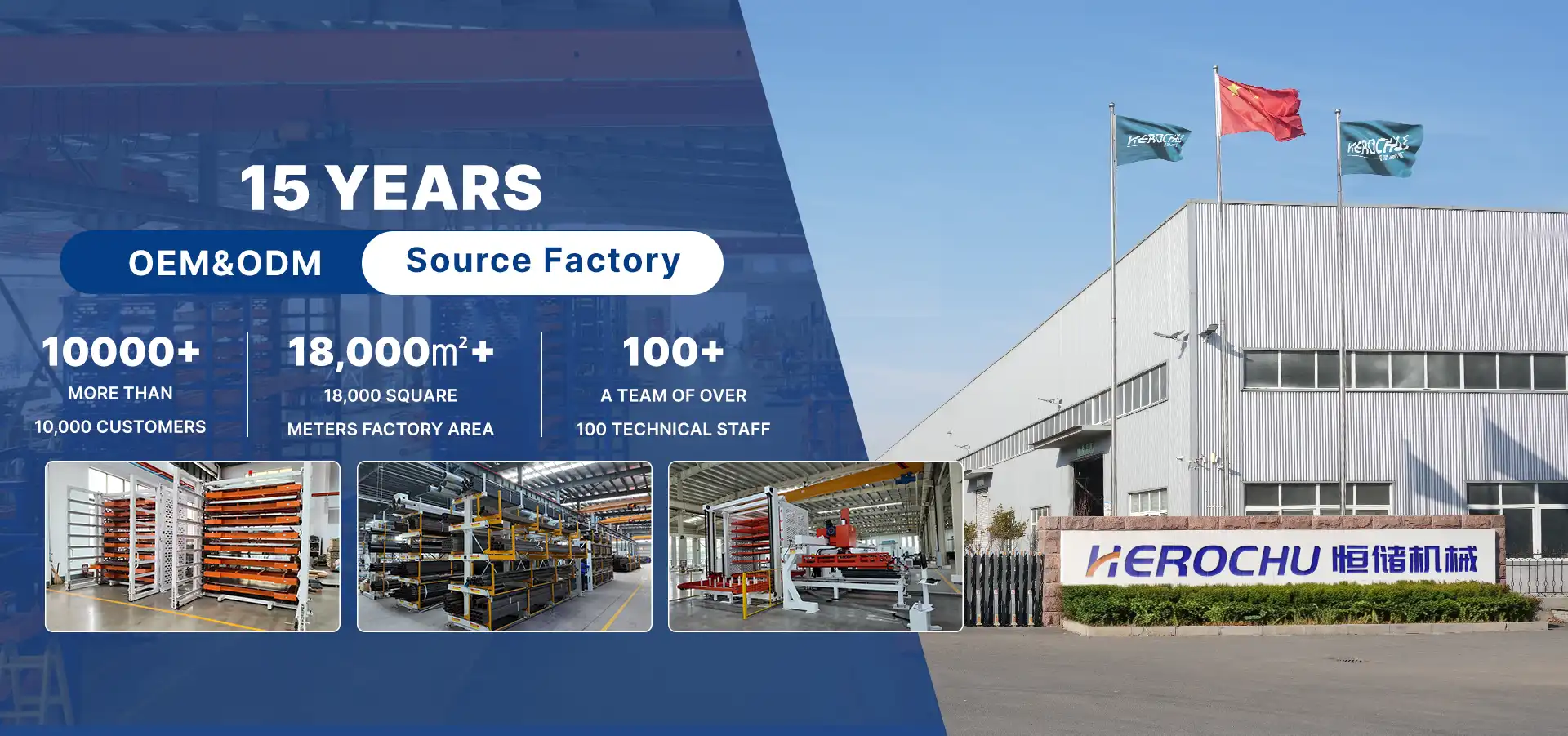
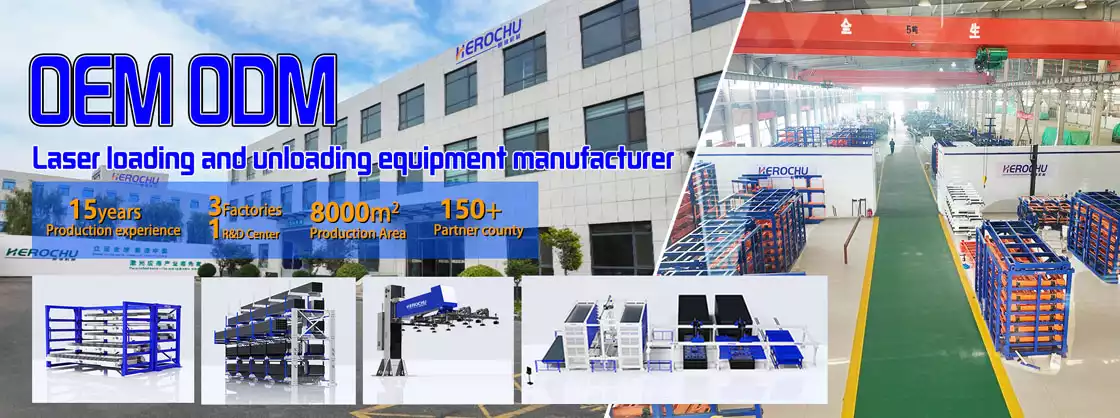
Q2: Are you a manufacturer or a distributor? We are a direct manufacturer with over 15 years of industry experience and expertise.
Q3: Is there a minimum order quantity? No. We welcome orders of any size, starting from a single unit.
Q4: How can I get detailed product information? Click the “Get a Quote” button to receive product images, detailed specifications, and videos. Our team is always ready to assist.
Q5: How do I provide my storage rack requirements? Simply share the type, dimensions, and quantity of materials you plan to store, along with any other specific needs. We will develop a professional storage solution for you. Alternatively, leave your contact details for a personalized consultation.
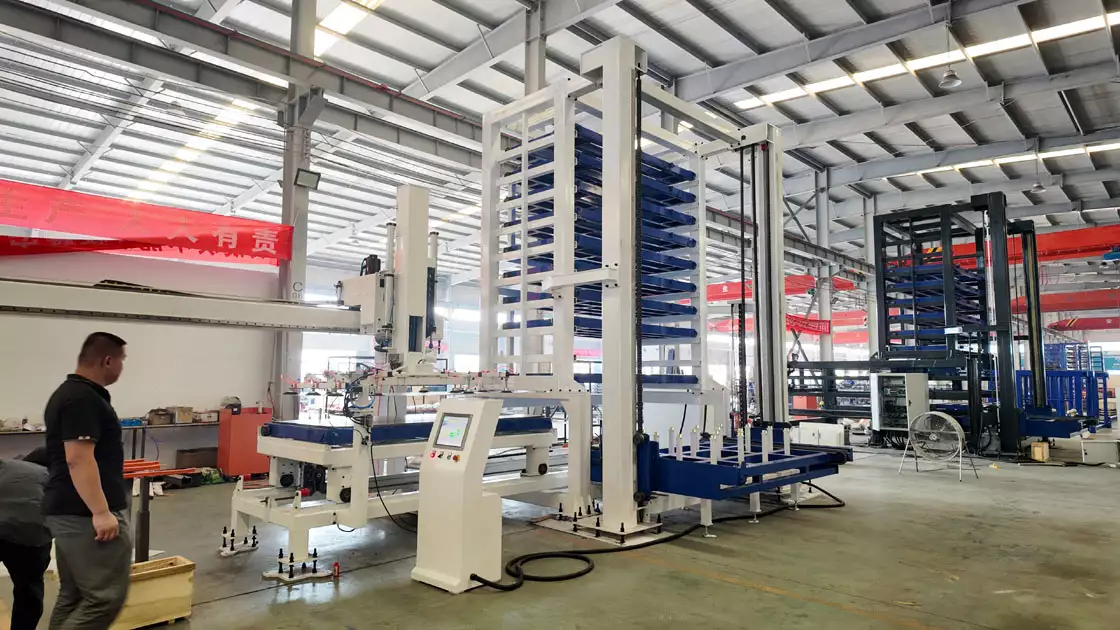
Q6: Do you offer automated loading systems or robotic arms? Yes. We provide loading robotic arms and integrated loading/unloading systems tailored to your laser cutting machine’s table size and material handling method (e.g., board rack, exchange platform, or material warehouse). Contact us with your details for a customized proposal.
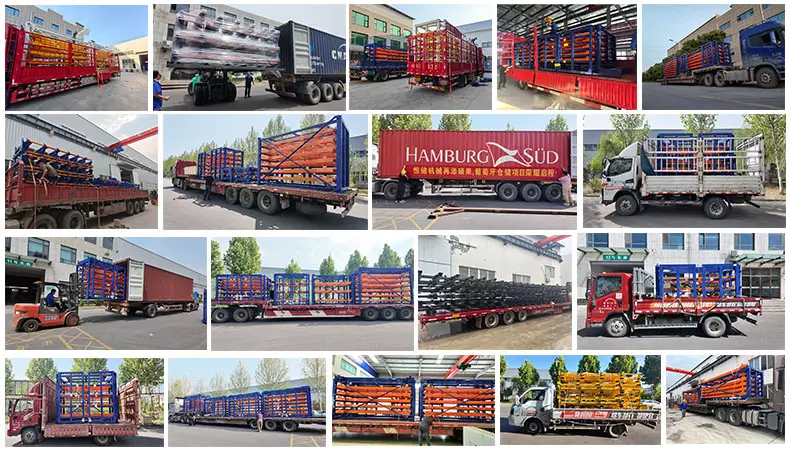
Q7: Do you provide on-site installation and debugging? Yes. Our technicians can travel to your facility for installation and debugging, ensuring successful operation. We have served clients globally, including in the USA, South Korea, Russia, Qatar, Mexico, South Africa, Egypt, and Lebanon.
Q8: How do you ensure product quality? Our quality assurance includes:
A team of over 40 technical engineers for professional debugging and support.
A dedicated quality control department compliant with ISO9001 standards.
CE certification for all exports.
Rigorous load testing before shipment to ensure structural safety and reliability.
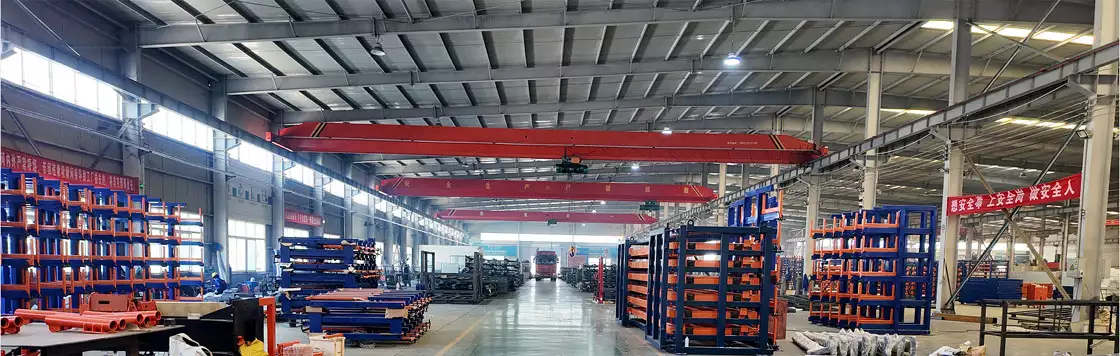
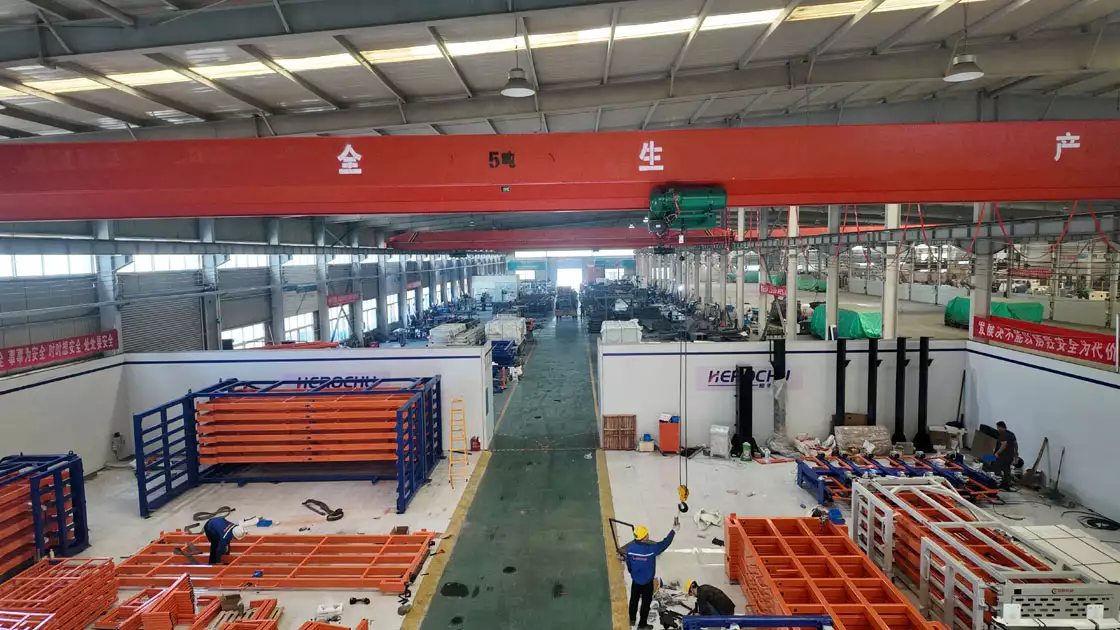
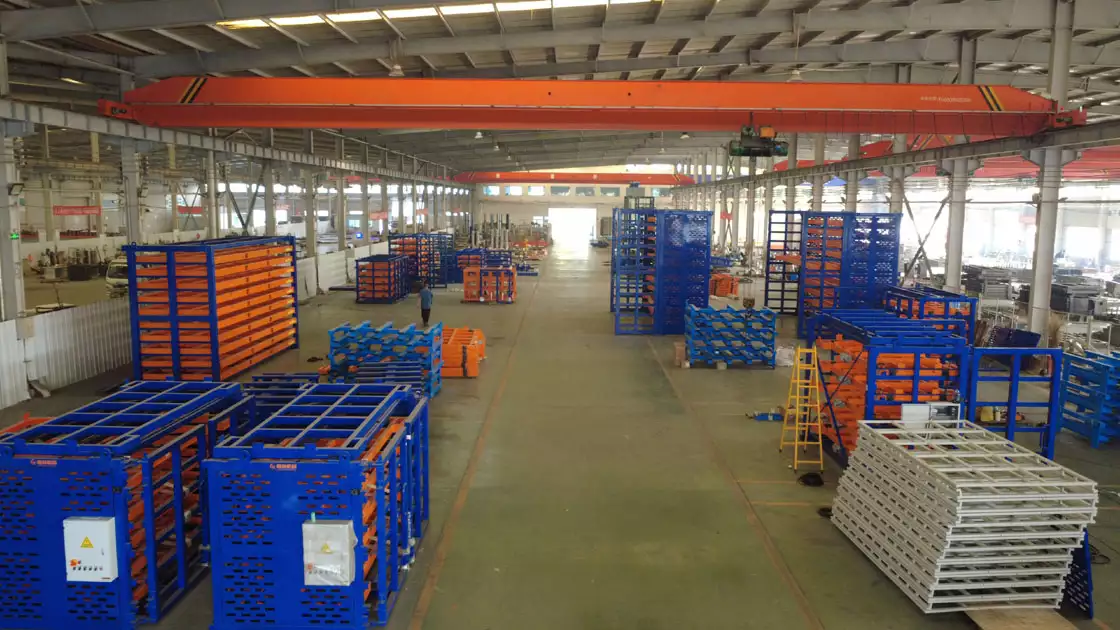
Q9: Where is your factory located? Our modern 10,000-square-meter manufacturing facility is located in Jiyang Industrial Park, Jinan, Shandong, China.
Q10: How can I evaluate your company’s capabilities? We offer virtual video factory tours and warmly welcome on-site visits.
Q11: What does your company specialize in? Jinan Constant Storage Machinery Manufacturing Co., Ltd. is a high-tech enterprise specializing in the R&D, production, sales, installation, and service of intelligent storage solutions. Our product range includes sheet material warehouses, drawer-style shelves, cantilever racks, servo manipulators, gantry loaders, and fully automated handling systems. Supported by a skilled technical team and advanced equipment, we are committed to delivering high-performance storage products and solutions to customers worldwide.
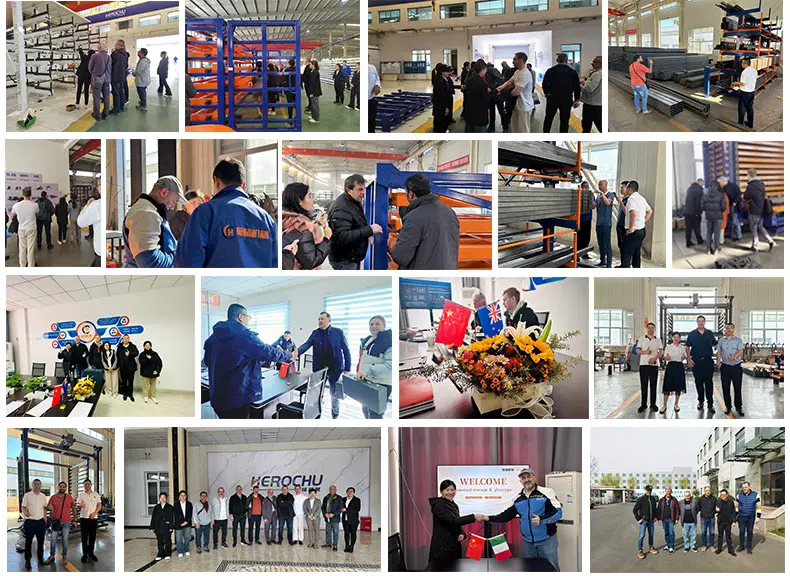
Customer visit
Herochu has always been adhering to the market-centric approach to meet customer requirements to the maximum extent, and the business philosophy of “creating brands with heart and gaining reputation with sincerity”. It provides customers with high-quality products and services with rigorous military quality, professionalism, and excellence, and has won unanimous praise in the Chinese aerospace, Chinese weapons, Chinese railways, automobile manufacturing, engineering machinery, non-ferrous metal titanium alloy and other industries.