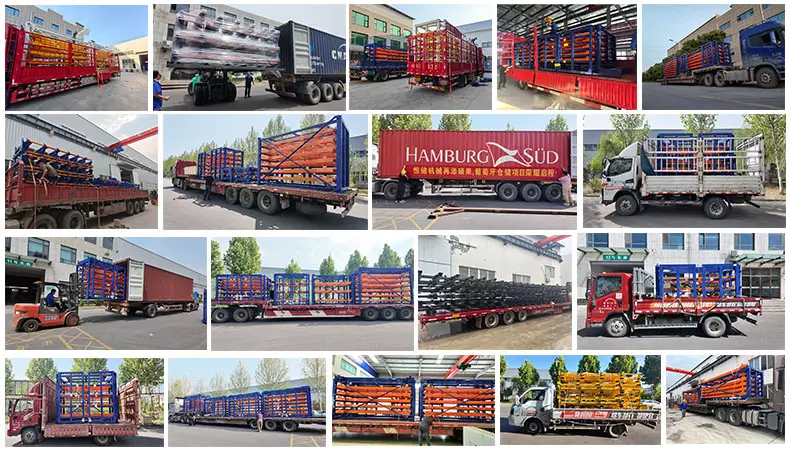
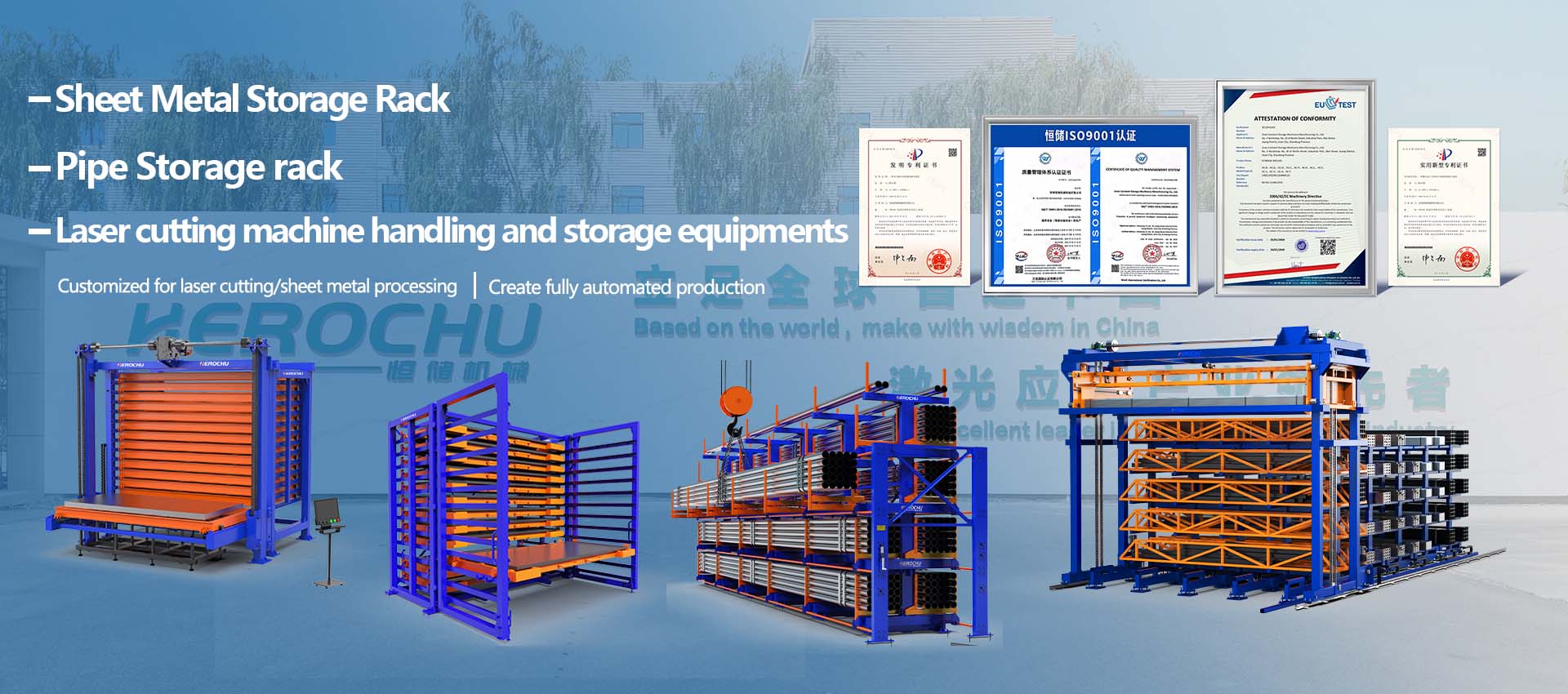
Floor space in a fabrication shop or metal service center is rarely abundant. Every square meter given to storage is a square meter not available for a cutting cell, a welding bay, or a shipping lane. The usual response is to stack higher or pack racks closer together. Both approaches reach a limit: higher stacks need more crane height, and tighter racks leave no room to retrieve material safely.
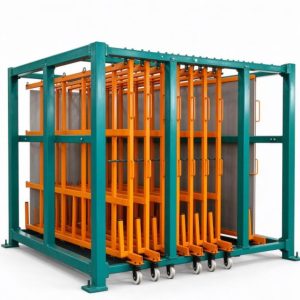
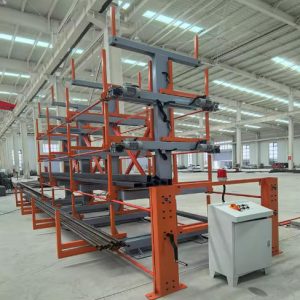
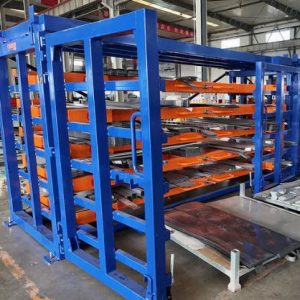
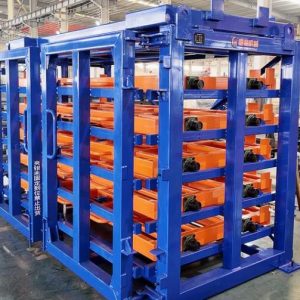
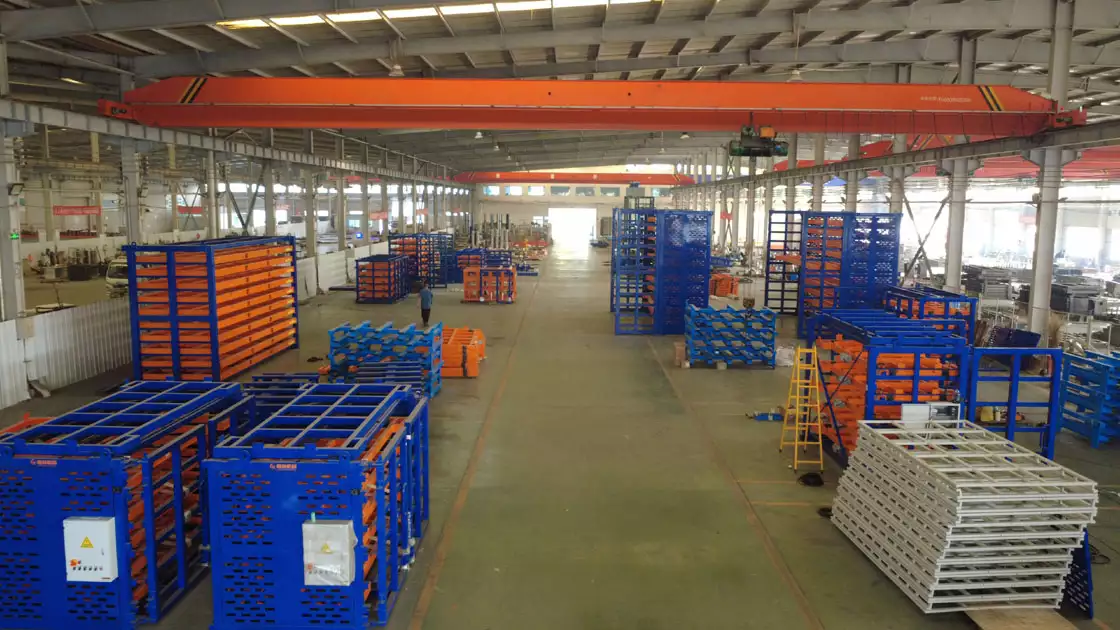
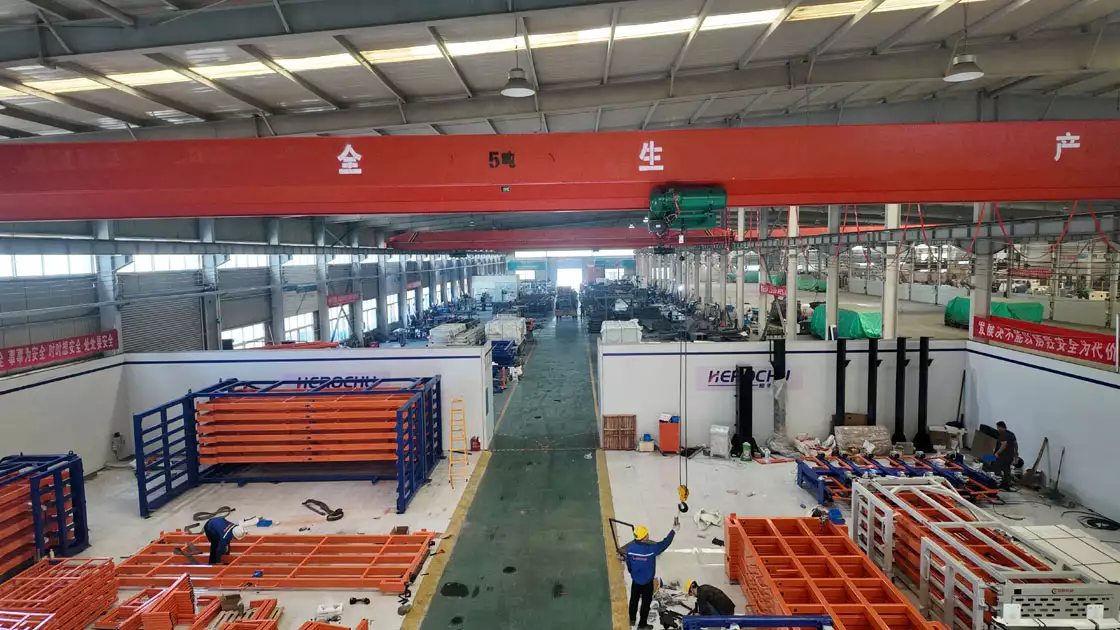
A space-saving pipe and square bar storage rack built on a heavy duty roll-out system approaches the problem differently. It reduces the aisle, increases the selectivity, and moves the handling motion to an overhead crane. The result is a storage footprint that does more work per square meter, without forcing the operator to climb, drag, or wait.
The Aisle Is the Hidden Space Consumer
A standard cantilever rack served by a forklift needs an aisle wide enough for the truck to turn and lift safely. That aisle is often 3.5 to 5 meters. In a building with fixed columns and a fixed crane runway, the aisle is not flexible space; it is permanent lost floor area.
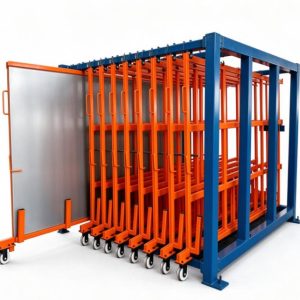
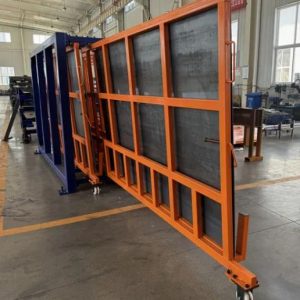
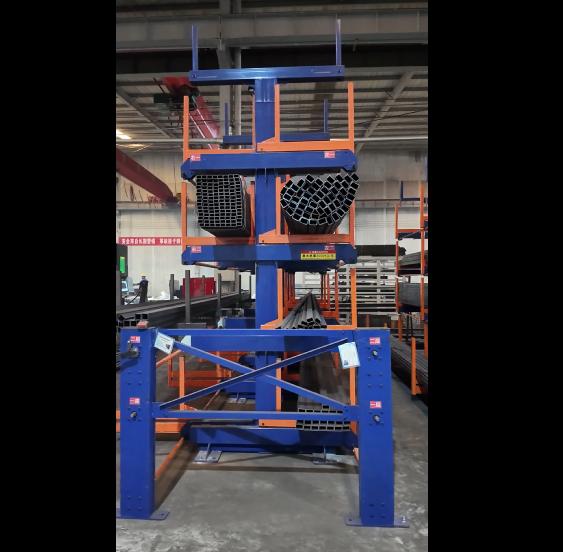
A roll-out cantilever rack changes the aisle requirement because the retrieval motion is vertical. The tier extends into the aisle, the overhead crane lifts from above, and the forklift does not need to enter the storage face. The aisle can shrink to approximately 1.4 meters — enough for the extended tier and the operator, not enough for a forklift turning circle. On a multi-row layout, that difference compounds across every row.
Vertical Density Without Losing Access
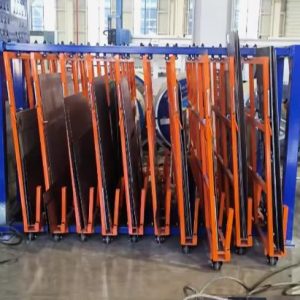
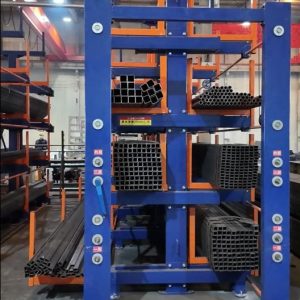
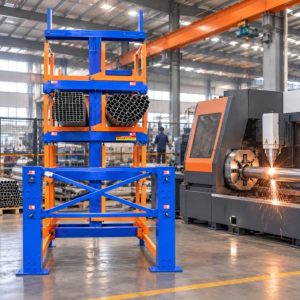
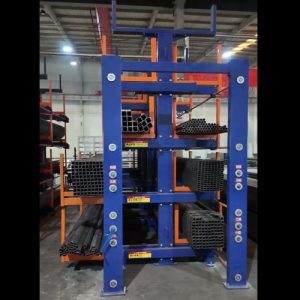
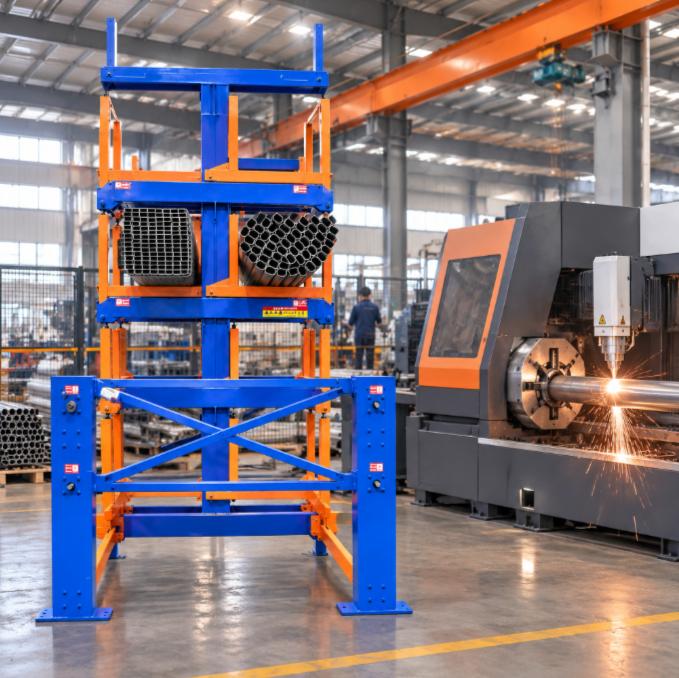
Saving aisle space is only useful if the rack can still hold the inventory. A roll-out system stacks tiers vertically, with each level functioning as an independent drawer. A four-level system is common; custom systems can go higher, up to eight levels or 20-foot rack heights in modular configurations. Because every tier extends, the top level does not block the bottom level. High-density storage and 100 percent selectivity are not in conflict.
For pipe and square bar specifically, the arm geometry matters. Long stock needs support along its length, not just at the ends. Herochu configures column spacing and arm support to the material length, so a 6-meter pipe and a 12-meter bar can be stored without excessive deflection or unsafe overhang. The rack holds the load the way the material requires, while the roll-out mechanism keeps every tier reachable.
Time Savings That Show Up Every Shift
The time cost of static storage is easy to underestimate because it is distributed across every pick. An operator spends a few minutes moving a top bundle, a few more repositioning the crane, another minute dragging the correct bundle free. Individually, these are small delays. Across a shift, they become machine idle time.
Roll-out storage compresses the retrieval sequence. The operator extends the correct tier, the crane lifts the load, and the tier returns. Herochu’s electric telescopic systems are designed for this rhythm: one operator can pick or replenish an 8-tonne bundle in under two minutes. In a service center or fabrication cell where picks happen many times per shift, the recovered minutes translate directly into cutting or shipping capacity.
Labor and Safety: One Operator, No Second Handling Step
Traditional long-material storage often requires two people or two machines: one to move the blocking material and one to retrieve the target bundle. The roll-out design consolidates the task. The tier movement and the crane lift are controlled by one operator at the aisle side. There is no need for a forklift driver to coordinate with a crane operator, and no need for a second worker to guide a bundle out of a deep rack.
Safety improves for the same reason. The forklift is removed from the storage face, so pedestrian–vehicle conflicts in the aisle drop. The load travels vertically under the crane hook rather than horizontally through a congested zone. Herochu’s electric systems include end-of-travel limit switches, a 24 V safety control circuit with emergency stop, photocell light curtains across the aisle, and mechanical anti-tip locks that engage when arms are extended. These are not add-ons; they are part of the roll-out architecture.
The Space-and-Time Arithmetic
A 36-meter-long, 4-meter-high Herochu telescopic cantilever system with six levels can store 720 tonnes of steel pipe in 144 square meters — an 80 percent space saving compared with selective pallet racking. Not every facility will match that density, but the direction is consistent: vertical storage plus shared-aisle roll-out access uses less floor per tonne than static racking plus forklift aisles.
The time saving follows the same logic. If a shop saves 20 minutes per shift on material picking, that is more than 80 hours per year returned to production. At a fully loaded labor rate, the payback on a roll-out system is often measured in months, not years.
Configuring the Rack Around the Building
A space-saving rack that does not fit the building is not a space-saving rack. Herochu engineers review the available height, crane hook path, column grid, and inventory mix before setting the tier count, arm projection, and drive type. Manual crank, electric telescopic, and electric mobile base options allow the layout to match the budget and the workflow. For facilities with limited width, the shared-rail design requires only one aisle between rows, and the electric mobile base can shrink the access footprint to 2.5 meters regardless of system length.
The rack is configured to the material and the handling method. That is what separates a storage system that saves space on paper from one that saves space, time, and labor on the floor.