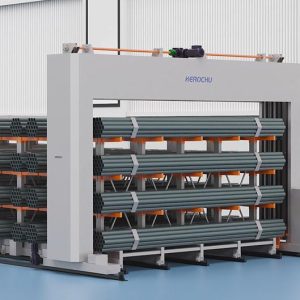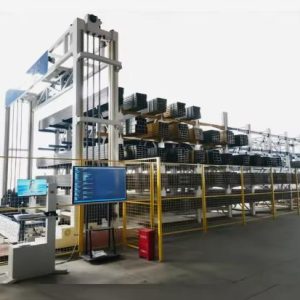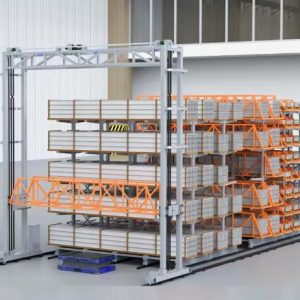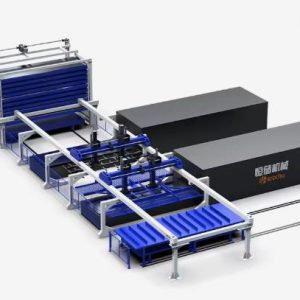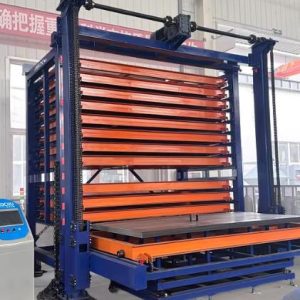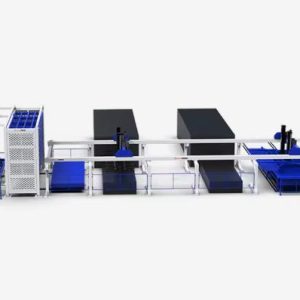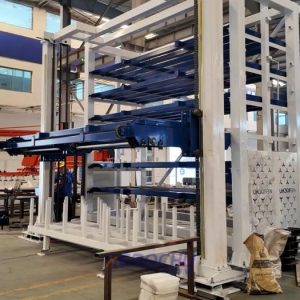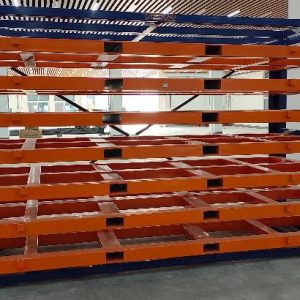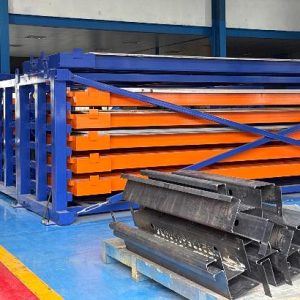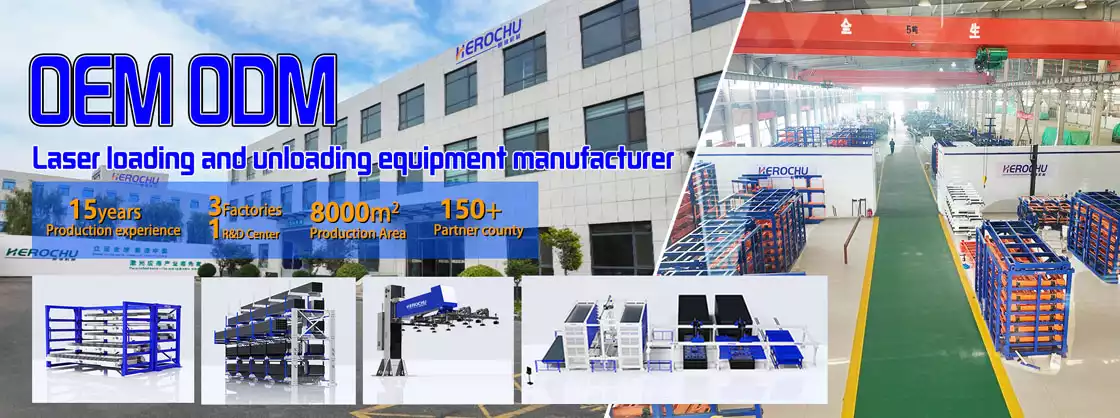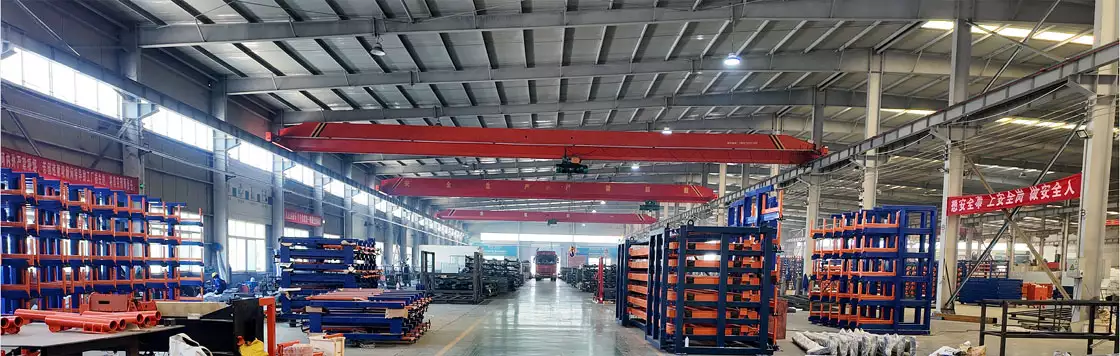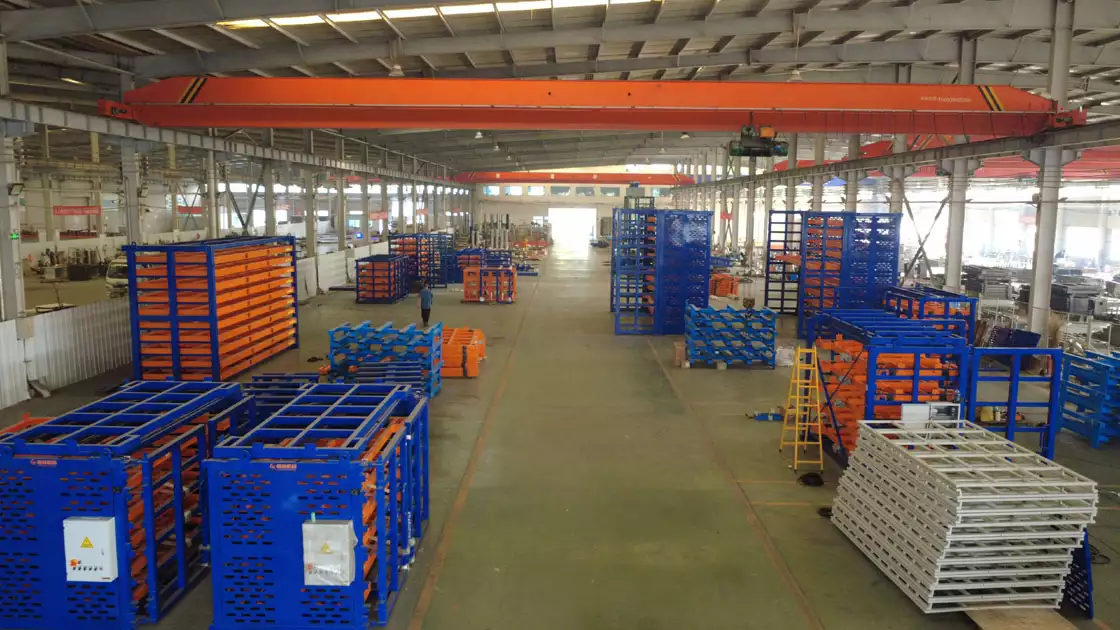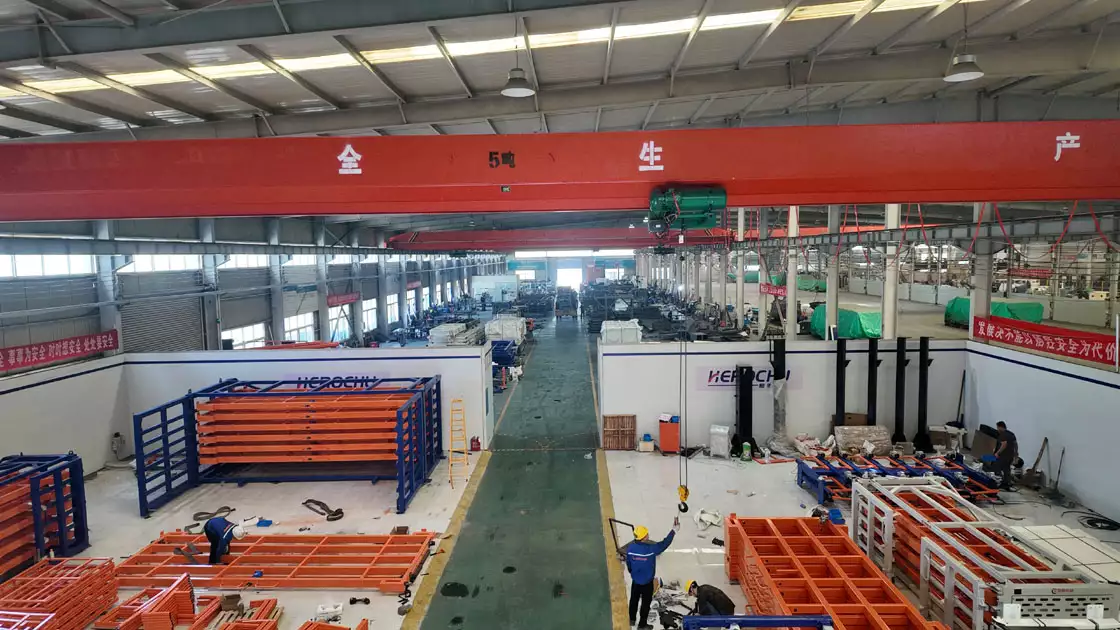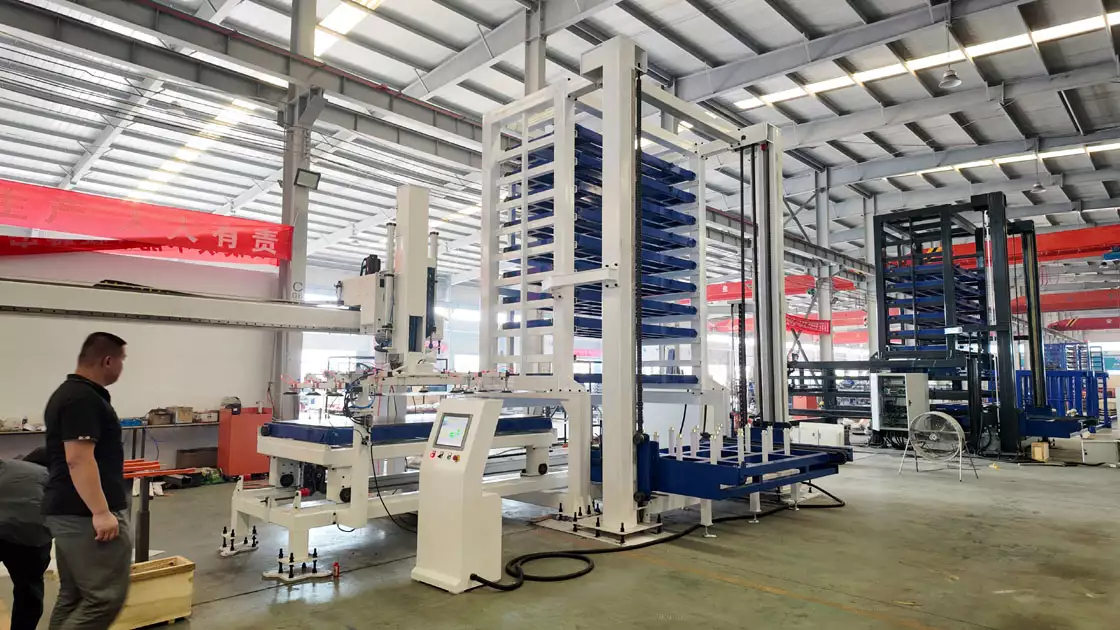
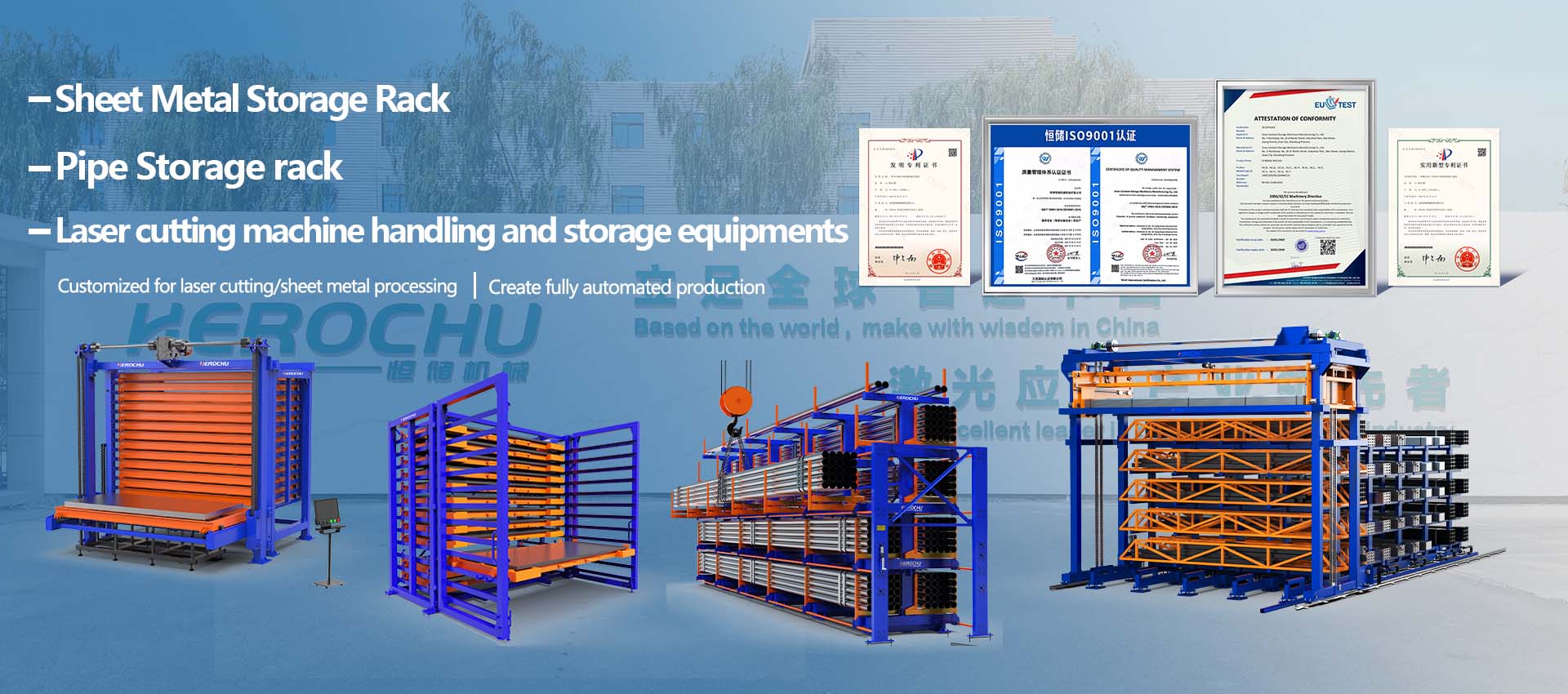
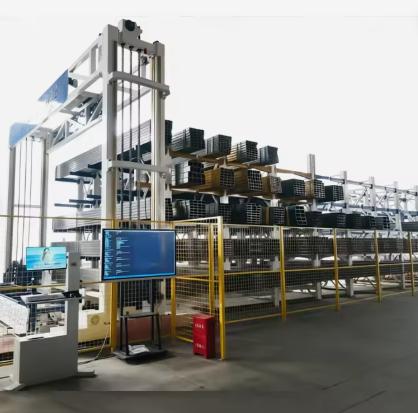
The gap between raw material storage and production machinery is where manufacturing efficiency erodes. A CNC tube laser cutting cell that processes a part every 30 seconds loses its throughput advantage when operators spend 15 minutes hunting for the next bundle of material. Herochu closes this gap with an industrial automated rack storage system for pipe, bar, and long profiles — a gantry-driven vertical storage architecture that connects directly to production scheduling and feeds material on demand.
The Material Flow Problem
Walk through a typical tube fabrication facility and the pattern is consistent. Raw stock arrives on flatbed trucks, gets unloaded by overhead crane into ground-level racks or outdoor laydown yards, and sits until a work order calls for it. When that work order arrives, a forklift operator retrieves a bundle — assuming the operator can find the correct bundle among dozens of similar-looking stacks — and delivers it to the saw or cutting cell. The time between “we need material” and “material is at the machine” often exceeds 20 minutes per bundle.
Multiply that by the number of bundles a medium-sized fabricator processes daily and the lost production minutes accumulate into hours of idle machine time. The Herochu industrial automated rack system for long pipe, bar, and profile storage collapses this interval to a predictable sub-two-minute cycle, delivering material to a fixed pickup station synchronized with the production schedule.
Integrating Storage with Production Scheduling
The key architectural difference between this system and a conventional vertical rack is the control layer that ties storage to production. The PLC managing the gantry movements also communicates with the facility’s production scheduling system — whether that is an ERP module, an MES platform, or a simple production calendar maintained at the HMI.
When the next job in the queue requires 304 stainless steel tube in 2-inch diameter with 0.065-inch wall thickness, the operator or an automated trigger sends a retrieval command to the ASRS. The gantry extracts the correct bundle and delivers it before the current job finishes cutting. Material arrives at the machine as the previous batch clears. This just-in-time material feed eliminates the staging areas that typically accumulate around production cells — pallets of partially used bundles, leftover remnants, and material pulled in anticipation but not yet consumed.
Serving Multiple Work Cells from One System
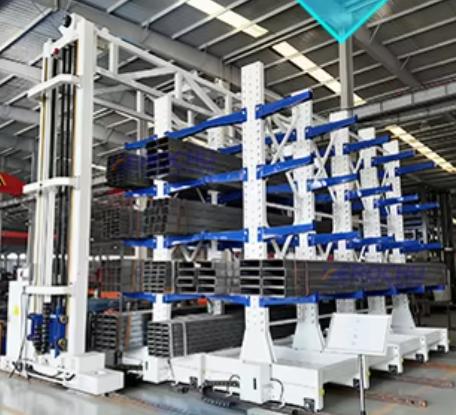
A single Herochu automated rack can serve multiple downstream processes. The retrieval station positions at a central point accessible to the facility’s material handling equipment — an overhead crane runway, a fork truck aisle, or a conveyor line. One retrieval delivers tube stock to the laser cutting cell at the north end of the shop. The next retrieval sends structural profiles to the band saw station on the south wall. The system queues retrievals in sequence, and the gantry completes each cycle before starting the next.
This centralized storage model reduces the footprint penalty of decentralizing inventory. Rather than maintaining separate pipe racks near each machine — which duplicates inventory and consumes floor area — the facility consolidates all long material into the ASRS and draws from it as needed. Consolidation also simplifies procurement: the inventory management module shows aggregate stock across all material grades and dimensions, so reorder quantities reflect total consumption rather than fragmented machine-level counts.
Handling the Awkward and the Oversized
Long material storage presents handling challenges that palletized goods never encounter. An 8,000 mm length of structural channel is simultaneously heavy, flexible, and dimensionally awkward. Lifting it from the midpoint risks bending; supporting it at multiple points requires coordinated movement. Herochu equips the gantry carriage with multi-point lifting cradles that support bundles at intervals calculated from the material’s section modulus. For pipe, the cradle design uses contoured supports that prevent rolling during travel. For square and rectangular tube, flat support bars with edge retainers keep bundles aligned.
Loose bars and short remnants — the material that typically accumulates as clutter around saw stations — store in subdivided compartments within the rack. These compartments use adjustable vertical dividers and shorter shelf depths so a 300 mm remnant does not get lost behind full-length stock on the same shelf. The operator logs remnant dimensions and material grade into the inventory system when placing them into storage, and the system tracks partial consumption so later work orders can specify “use remnant first” to minimize scrap.
PLC Architecture and Safety Logic
The control system runs on an industrial PLC with a dedicated safety controller for the gantry drives. Limit switches at the ends of the rail travel define the gantry’s working envelope. Encoder feedback provides continuous position verification. If the PLC detects a position deviation exceeding the ±2 mm tolerance band, it halts gantry motion and flags a fault requiring technician inspection.
The safety logic includes redundant checks on the lifting carriage load cells. Before the gantry lifts a bundle, the system verifies that the measured weight falls within the expected range for that storage location’s logged material. A bundle that registers significantly above expected weight triggers an alarm — it may have been misidentified during inbound storage, or the wrong material may have been placed at that location. Catching this mismatch before the bundle reaches the production cell prevents the downstream cost of cutting the wrong material.
Cold Start and Power Recovery
Industrial facilities experience power interruptions. When the Herochu automated rack restarts after a power loss, the control system executes a homing sequence: the gantry travels to a reference position at the rail end, confirms encoder alignment, and re-establishes its coordinate frame. The PLC reads the stored inventory database from non-volatile memory and compares it against the last logged transaction before the power loss. If a retrieval was in progress when power dropped, the system flags that location for operator verification before resuming normal operation.
Facility-Wide Impact
A fabrication plant that implements the Herochu industrial automated rack system for pipe, bar, and long profiles typically observes three measurable changes within the first operating quarter. First, machine utilization increases — cutting cells that previously averaged 60 percent uptime move toward 80 to 85 percent because material wait time drops to near zero. Second, direct labor hours previously allocated to material handling shift to value-added production tasks. Third, the reduction in ground-level material storage frees floor area for additional production equipment or improved workflow layout.
The system does not require a greenfield facility. Herochu designs each installation around the existing building constraints — column spacing, overhead clearance, crane interference zones, and traffic aisles. The rack structure installs within the available footprint, and the gantry rail runs parallel to existing material flow paths. For fabricators considering a facility expansion, consolidating pipe and profile storage into a vertical ASRS often delays or eliminates the need for additional square footage — the existing building gains capacity by using the height it already has.