Sheet metal inventory is one of the hardest categories to manage in a fabrication plant. Plate stock arrives in bundles. It sits in racks identified by handwritten tags. It gets pulled for jobs based on whoever remembers which stack contains the right gauge and grade. And every six months, someone walks the floor with a tape measure and a clipboard to reconcile what the computer thinks is there with what actually sits on the shelf.
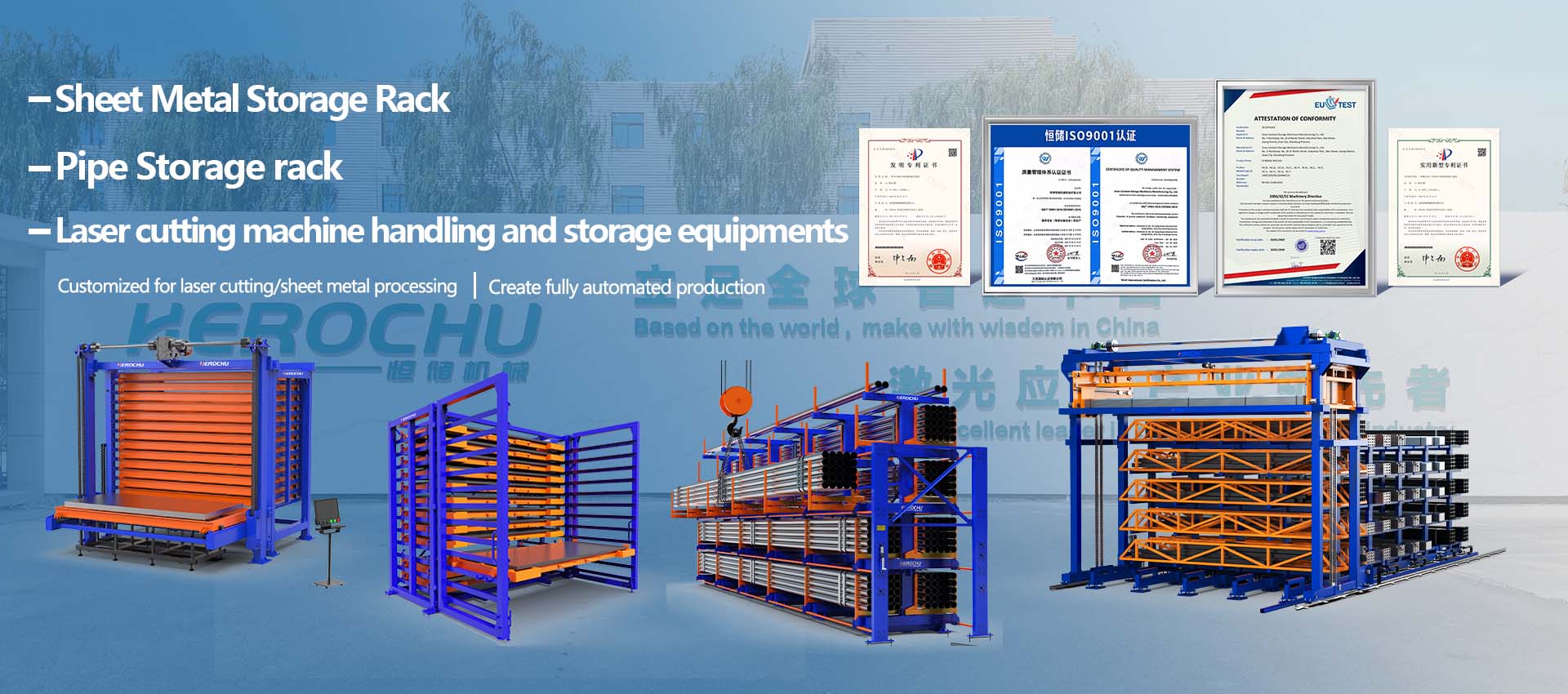
Herochu’s intelligent ASRS sheet metal warehouse storage system replaces that entire workflow with a closed-loop digital-physical inventory engine. It is not just motorized shelving. It is a storage and retrieval platform that knows what it holds, where every sheet sits, and when each piece is scheduled to move to production — and it connects all of that information to the plant’s ERP and MES layers in real time.
How the WMS Layer Manages Inventory Autonomously
The warehouse management software running on the Herochu ASRS is the system’s operational brain. Every storage position in the tower carries a logical address mapped to physical coordinates. When a new sheet enters the system — either via forklift delivery to the intake station or via overhead crane placement — the WMS assigns it a storage location based on configurable rules: material grade grouping, thickness segregation, or first-in-first-out sequencing, depending on how the plant wants its stock organized.
A barcode scan or RFID read at intake logs the sheet’s mill certificate data, dimensions, and inbound date. The WMS then commands the elevator carriage to retrieve the sheet from the intake conveyor, traverse to the designated shelf level, and deposit it. The entire transaction — from scan to stow — completes in under thirty seconds for a standard-weight sheet.
Retrieval works in reverse but with predictive logic layered on top. When the ERP generates a cutting work order, the WMS receives the material requirement and checks available stock that matches the specified grade, thickness, and minimum sheet dimensions. If multiple candidates exist, the system picks based on the configured rule — typically oldest inventory first or closest-to-size match to minimize remnant waste. The tower retrieves the sheet, delivers it to the discharge station, and marks the inventory record as allocated. No operator searches for material. No production scheduler calls the warehouse to ask what is available.
Real-Time Visibility and the End of Physical Stocktaking
One of the structural problems with manual sheet storage is that inventory accuracy decays between cycle counts. A sheet gets pulled for a rush job without logging. A remnant gets returned to the wrong shelf. A partial bundle gets counted as full. Over a quarter, the ERP’s inventory record drifts until it no longer reflects reality, and suddenly a scheduled production run stalls because the material that was supposed to be there is not.
Herochu’s ASRS eliminates this drift because every movement is a logged transaction. The WMS records every deposit and every retrieval at the moment it occurs. The inventory ledger is always current, not because someone updated it manually but because the machine cannot move material without recording that it moved material. Inventory accuracy sits at 100% by definition — the only stock the system counts as available is stock the system physically verified during its last interaction.
For production planning, this means the ERP’s material availability check is trustworthy. A scheduler can release a work order confident that the required steel is physically present and reserved. For procurement, it means reorder triggers fire based on actual consumption rates rather than approximate stock levels, reducing both stockout risk and excess inventory carrying cost.
ERP and MES Connectivity Architecture
The Herochu ASRS communicates with external systems through the Siemens S7 PLC acting as a protocol gateway. On the plant network side, the PLC supports Profinet, Ethernet/IP, and Modbus TCP, covering the three most common industrial communication standards. On the software side, the WMS exposes a REST API and supports direct database-level integration with major ERP platforms.
The typical integration path has the ERP pushing work orders and receiving inventory updates through a middleware connector that Herochu configures during commissioning. The MES layer — if the plant runs one — receives real-time material movement events so that production dashboards reflect not just machine status but material readiness state. When a sheet arrives at the laser cutting station, the MES knows it is there because the WMS reported the completed retrieval.
Batch traceability flows in the opposite direction. The ASRS records which heat number and mill certificate apply to each stored sheet. When that sheet gets allocated to a work order, the traceability chain follows the material through cutting, forming, welding, and assembly. For contract manufacturers serving automotive or aerospace customers, this end-to-end material genealogy satisfies audit requirements without requiring a separate paper trail.
Expiration Warning and Quality Hold Management
Not every sheet sitting in inventory is production-ready indefinitely. Coated materials have shelf-life limits. Pre-treated stock can develop surface oxidation. Material held under a quality hold after an incoming inspection flag must be quarantined from production even though it physically sits in the same tower as approved stock.
Herochu’s WMS manages these conditions through logical status flags attached to each inventory record. An expiration warning fires when a coated sheet approaches its shelf-life limit, prompting the material planner to either allocate it to an upcoming job or move it to a discounted-sale disposition area. A quality-hold flag prevents the WMS from allocating the affected material to any work order, regardless of physical location within the tower. The material stays in its storage position — no need to physically segregate it — but the software treats it as unavailable until quality engineering releases the hold.
Tower Configurations and Capacity Planning
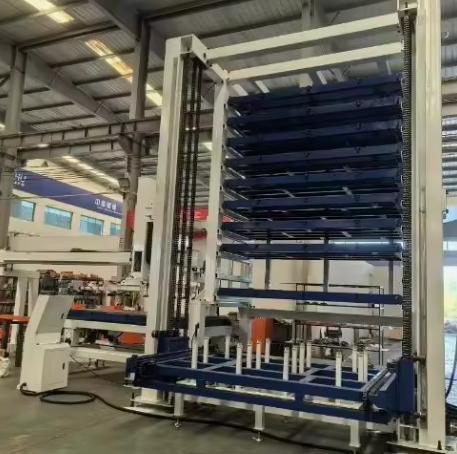
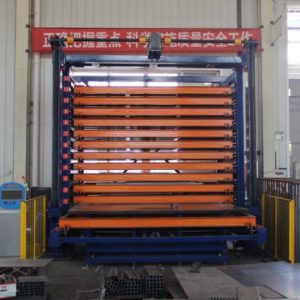
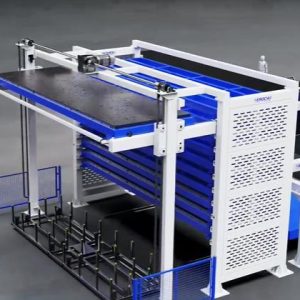
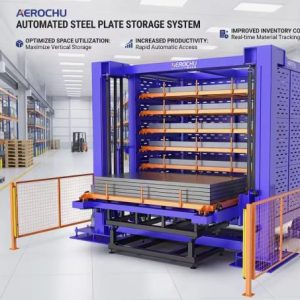
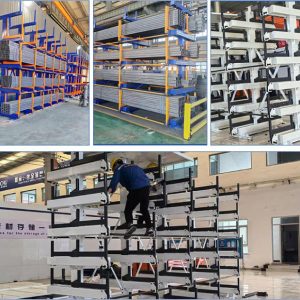
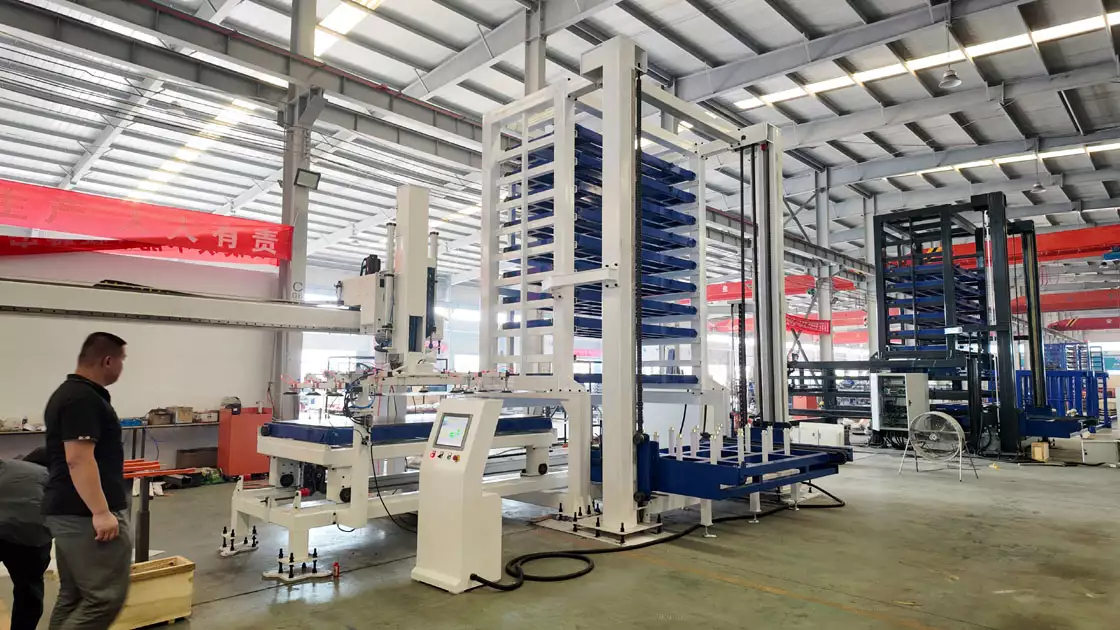
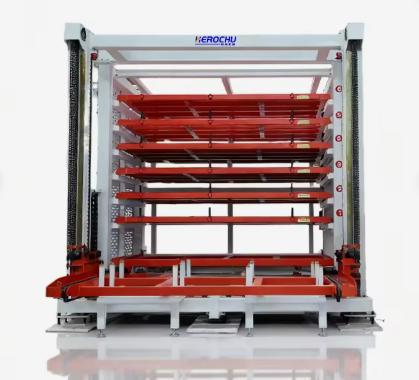
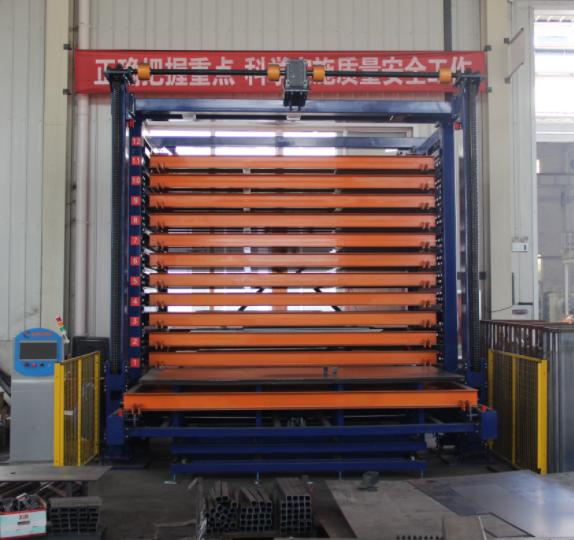
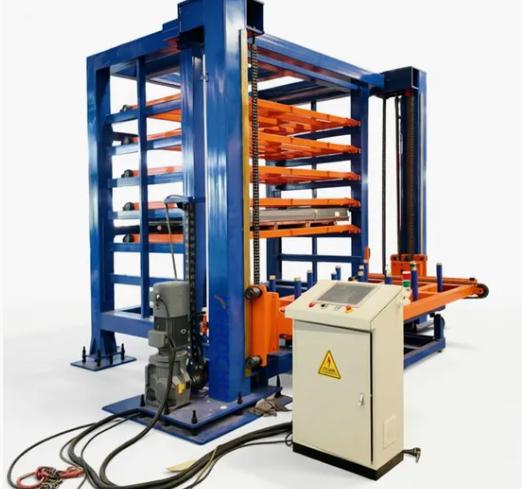
The physical side of the Herochu intelligent ASRS sheet metal warehouse system consists of one or more vertical storage towers, each containing multiple shelf levels with independently addressable storage positions. Standard configurations run from six to fifteen layers per tower, with each layer rated for 3000 kg to 5000 kg of material depending on the model.
Twin-tower installations place two elevator columns adjacent to each other, served by a shared intake and discharge station. This doubles storage density while keeping the floor footprint nearly the same as a single-tower setup, because the towers share the access aisle. For high-volume plants processing dozens of different material specifications, the twin-tower arrangement also enables parallel retrieval: while one elevator delivers a sheet to the discharge station, the second elevator pre-fetches the next sheet on the work queue, eliminating carriage travel time from the critical path.
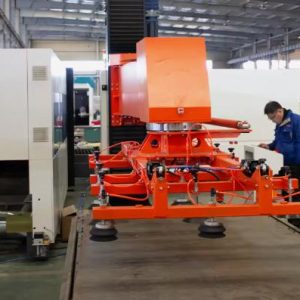
Clearance space between stored layers is configurable, with a standard gap of 350 mm that accommodates the vacuum end-effector’s vertical travel during pickup. For plants storing unusually thick plate — above 25 mm — the clearance can be widened at the cost of fewer total storage levels per tower height. Herochu’s application engineers model the trade-off during the quoting phase so the customer sees exactly how many storage positions each clearance option yields.
Material Compatibility and Handling Range
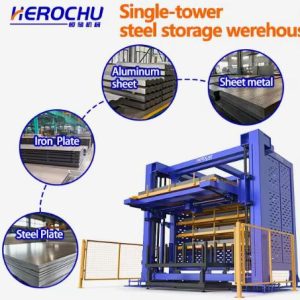
The ASRS handles the full range of sheet materials encountered in fabrication: mild steel, stainless steel, aluminum, copper, and brass. Material type is simply a data field in the WMS — the mechanical handling system works identically regardless of what the sheet is made of. Thickness range spans 0.5 mm to 25 mm, covering everything from thin-gauge aluminum body panels to heavy structural steel plate.
Surface condition matters for vacuum gripping performance. Oily or wet sheets require higher vacuum flow rates to maintain grip security, which the system compensates for by opening additional vacuum zones on the suction matrix. Dry sheets with light surface rust are generally handled without issue. Sheets with heavy mill scale or deeply pitted surfaces may require adjusted vacuum parameters during commissioning, which Herochu’s field engineer dials in during site acceptance testing.
Throughput Economics and Return on Investment
The financial case for an intelligent ASRS sheet metal warehouse system rests on three measurable improvements. First, machine utilization rises because cutting equipment no longer waits for material. A laser or plasma cutter that previously spent 20% of its available cutting hours idle while operators located and loaded sheets now runs at 85% to 90% utilization. Those additional productive hours translate directly to additional billable cut parts without purchasing additional machine tools.
Second, labor cost shifts from material handling to value-adding activity. One ASRS installation typically displaces two to three full-time material handlers whose hours get reallocated to secondary processing, quality inspection, or machine tending — roles that directly increase throughput rather than merely supporting it.
Third, inventory carrying cost drops because accurate real-time visibility enables tighter stock levels. When the ERP knows exactly what is on the shelf and exactly how fast it is being consumed, the purchasing department can reduce safety stock buffers without increasing stockout risk. For a mid-sized fabrication plant carrying 500,000inplateinventory,reducingaveragestockby1575,000 in working capital — often enough to cover a substantial fraction of the ASRS capital cost within the first year.
Installation, Commissioning, and Support
Herochu ships the tower modules pre-assembled and factory-tested. On-site installation involves anchoring the base columns, bolting the tower sections together, connecting the lift drive and control cabinet, and running the network cable to the plant LAN. A Herochu commissioning engineer spends three to five days on site handling PLC parameter configuration, WMS setup, ERP interface mapping, and operator training.
Post-commissioning support includes remote diagnostics access through the PLC’s network port, enabling Herochu’s support engineers to troubleshoot without traveling to the site. The WMS software receives periodic updates that add features and maintain compatibility with evolving ERP API versions. Spare parts for wear components — vacuum cups, chain tensioners, guide-rail carriages — are stocked regionally for same-week shipment.
The Herochu intelligent ASRS sheet metal warehouse storage system turns inventory management from a source of production risk into a source of production velocity. It closes the loop between what the ERP thinks is in stock and what is actually on the shelf, eliminates the manual labor that erodes both accuracy and throughput, and gives production planners the material visibility they need to schedule with confidence.