
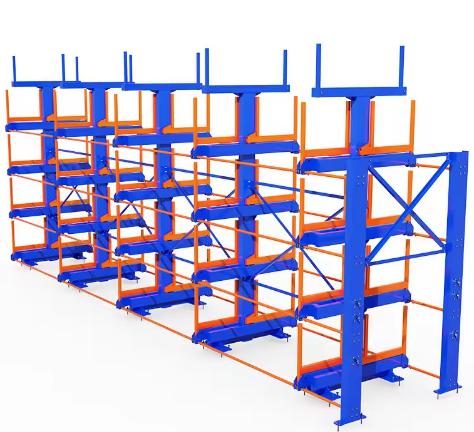
Adjustable Cantilever Racking System for Pipe Warehouses
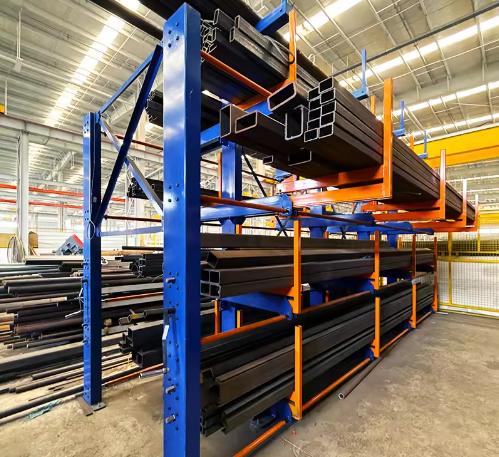
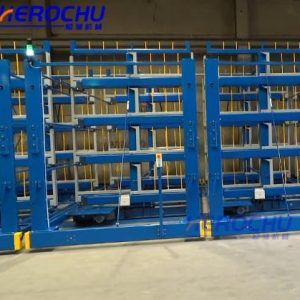
A warehouse that stores 6-meter pipe bundles today may need to store 12-meter structural tubing next year and add aluminum extrusion inventory the year after. Fixed-dimension racking forces warehouse managers into awkward compromises — oversized bays for small products waste vertical space, undersized bays for large products create unsafe overhangs, and any change in product mix means buying new racks. Herochu’s adjustable cantilever racking system takes a different approach: build the frame once, adjust the arm positions and layer count as needs evolve, and reconfigure without cutting steel or welding on site.
Adjustable Cantilever Racking System for Pipe Warehouses
A warehouse that stores 6-meter pipe bundles today may need to store 12-meter structural tubing next year and add aluminum extrusion inventory the year after. Fixed-dimension racking forces warehouse managers into awkward compromises — oversized bays for small products waste vertical space, undersized bays for large products create unsafe overhangs, and any change in product mix means buying new racks. Herochu’s adjustable cantilever racking system takes a different approach: build the frame once, adjust the arm positions and layer count as needs evolve, and reconfigure without cutting steel or welding on site.
Adjustability as a Core Design Principle
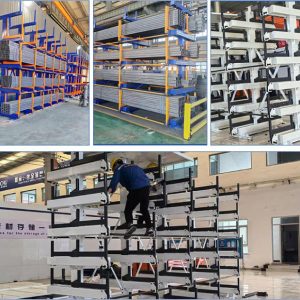
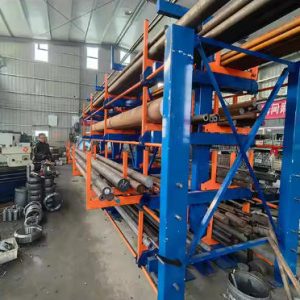
Most industrial racking ships with fixed arm spacing. The holes are drilled where they are drilled, and if the spacing does not match the product dimensions, the warehouse lives with the inefficiency. Herochu designs adjustability into the column geometry from the start. Columns feature pre-drilled hole patterns at regular intervals — typically every 75 or 100 millimeters along the vertical axis. Arms bolt into any hole pair, which means arm spacing can be set to any increment within the column range.
This adjustability impacts storage density directly. A warehouse storing 50-millimeter diameter tubing can set arm spacing at 500 millimeters center-to-center and fit 8 layers within a 4-meter column. The same column, reconfigured for 200-millimeter pipe, might use 700-millimeter spacing and 5 layers. The rack adapts; the warehouse does not need to buy two different rack types for two different product families.
The base clear space specification starts at 600 millimeters — measured from the top of one arm surface to the bottom of the arm above it. This dimension provides room for standard fork tines or crane slings to enter and exit the compartment without contacting the material above. Warehouses can increase this dimension to accommodate larger diameters or decrease it when storing consistently small products. The adjustment procedure itself takes minutes per arm: unbolt, reposition to the desired hole pair, re-torque the fasteners to specification. No fabrication skills needed.
Modular Frame That Grows With the Warehouse
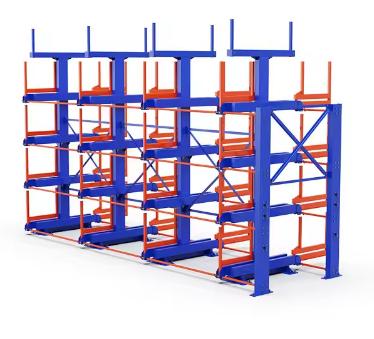
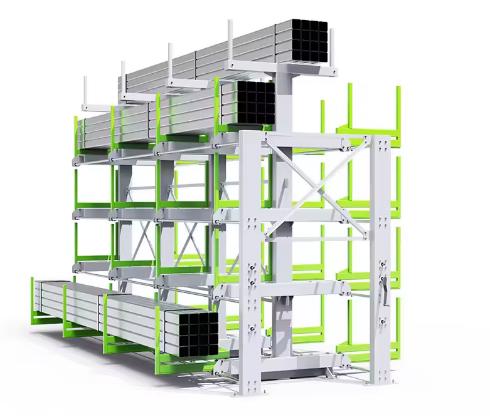
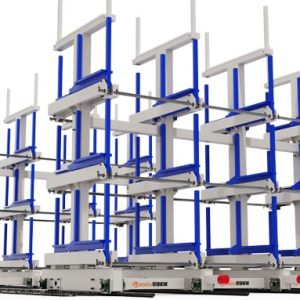
Herochu cantilever racks assemble from a kit of standard components: base plates, upright columns, cantilever arms, and crossbars. This modularity means the system scales in three directions.
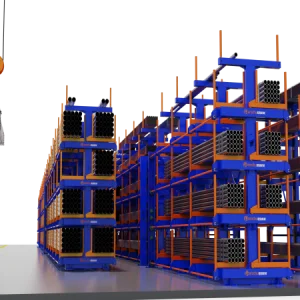
Vertically, a 5-layer HC-G6053 can become a 7-layer rack by adding arm pairs and extending the column height — provided the floor slab and base anchors support the additional weight. Horizontally, new bays bolt onto the end of an existing row by adding a new column-and-arm assembly. The row length grows by one bay at a time, matching the pace of inventory growth rather than requiring an all-at-once capital outlay.
Depth-wise, the choice between single-sided and double-sided configurations determines how many compartments the rack holds. A single-sided HC-G6053S mounts arms on one face of the column — ideal for racks positioned against a wall or used as aisle dividers. A double-sided HC-G6053 mounts arms on both faces, effectively doubling the storage density per linear meter of aisle. Facilities that start with single-sided racks against perimeter walls can add double-sided racks in the center of the floor plan as inventory expands, creating a layout that maximizes cubic storage within the existing building envelope.
Model Range for Different Pipe Lengths
Pipe length drives rack dimensions. A 6-meter pipe needs a rack with arms long enough to support the full length without excessive overhang. A 12-meter pipe needs a substantially larger structure. Herochu covers the most common industrial pipe lengths with four base models, though customization extends beyond what the table shows:
| Model | Pipe Length | Max Load/Level | Layers | Notes |
|---|---|---|---|---|
| HC-G6053S | 6,000 mm | 3,000 kg | 5+ | Single-sided configuration |
| HC-G6053 | 6,000 mm | 3,000 kg | 5+ | Double-sided configuration |
| HC-G9065 | 9,000 mm | 5,000 kg | 6+ | Heavy-duty double-sided |
| HC-G12065 | 12,000 mm | 5,000 kg | 6+ | Heavy-duty double-sided |
The layer counts shown are starting configurations. Each model supports additional layers by extending column height, subject to the total load on the floor anchors and slab. The 600-millimeter clear space between layers is a baseline — Herochu ships every rack with the arm spacing set to the customer’s specification, not to a factory default.
For warehouses that handle mixed lengths, rows can mix models. A 6-meter bay sits next to a 9-meter bay within the same row, sharing a common column where dimensions align. This mixed-length capability means a warehouse does not need separate storage zones for short pipes and long pipes — everything lives in the same aisle, organized by product type rather than product length.
Dual-Side Mechanical Loading
Every Herochu pipe cantilever rack includes dual-side mechanical assistance for material discharge. The manual crank mechanism operates from either face of the rack, enabling a bidirectional workflow that single-side-loading racks cannot support.
In a high-volume pipe warehouse, this dual-side capability translates into a flow-through layout. Inbound shipments arrive on one side of the rack row. Receiving operators load pipes into compartments using the crane for vertical lift and the crank for horizontal positioning. Outbound picking happens from the opposite side. Pickers access compartments without entering the receiving zone, and receiving operators load without navigating around pickers. The two workflows run concurrently rather than sequentially, which compresses the time between material receipt and customer shipment.
The manual crank itself uses a gear-reduction mechanism sized for the rated load. Turning the hand wheel at a comfortable pace moves a 3-ton or 5-ton load along the arm at a controlled speed — fast enough that loading a 12-meter compartment takes under a minute once the bundle is on the arm, slow enough that the operator maintains full control throughout. The crank assembly rides on sealed bearings and requires only periodic grease application as routine maintenance. There is no motor to burn out, no control panel to troubleshoot, no sensor to calibrate.
Q235B Steel Frame and Long-Term Durability
Pipe warehouses subject racking to conditions that accelerate deterioration if the steel is not properly specified and finished. Condensation forms on cold pipe surfaces and drips onto rack arms. Cutting fluid residue from freshly machined tube ends transfers to arm surfaces during loading. Outdoor or semi-enclosed storage bays bake in summer sun and freeze in winter, cycling the steel through thermal expansion and contraction daily.
Herochu fabricates the entire frame — columns, arms, crossbars, and base plates — from Q235B carbon structural steel. This grade provides a minimum yield strength of 235 MPa and maintains its mechanical properties through the temperature range that industrial warehouses experience. The steel arrives with mill test certificates that Herochu verifies against purchase specifications before releasing material to the fabrication line.
After fabrication, every component receives a powder-coated finish applied electrostatically and cured in an oven. The coating bonds to the steel surface at a molecular level, creating a uniform protective layer that resists chipping, scratching, and corrosion better than wet paint. For facilities in coastal or high-humidity environments, Herochu offers hot-dip galvanizing as an upgrade. The galvanized zinc layer provides sacrificial protection — if the surface gets scratched during loading, the surrounding zinc corrodes preferentially, leaving the underlying steel intact.
Maximizing Warehouse Cube Utilization
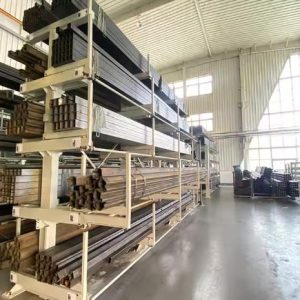
The economic argument for cantilever racking over floor stacking comes down to cubic utilization. A 12-meter pipe resting on the warehouse floor occupies roughly 1.2 square meters of floor space if stored in a single layer. Stack that pipe 5 high on a floor pile and the floor utilization improves, but the bottom pipe now carries the weight of four pipes above it, and retrieving the bottom pipe requires moving the top four.
A 5-tier Herochu cantilever rack stores the same five pipes in five independent compartments within roughly the same floor footprint, but with zero weight transfer between layers and full independent access to every pipe. The 6-tier HC-G9065 and HC-G12065 models push this ratio further, storing six layers in the space that a floor pile would occupy.
The real density gain multiplies when considering aisle width. Floor-stacked pipes require wide aisles for forklift maneuvering around irregular pile edges. Cantilever racks present a uniform face to the aisle, so aisle width can shrink to the forklift’s turning radius plus a safety margin. Narrower aisles mean more rack rows in the same building, which means more total storage capacity per square meter of warehouse floor.
Fast Installation and Reconfiguration
Herochu cantilever racks ship as a bolt-together kit. Columns, arms, base plates, crossbars, and fasteners arrive on a flatbed, organized by bay. Installation follows a straightforward sequence: anchor the base plates to the floor, bolt the columns to the base plates, attach the arms at the specified heights, and connect the crossbars between adjacent arms. A two-person crew with an impact wrench and a torque wrench can assemble a standard 6-meter bay in under four hours.
The absence of field welding carries several operational advantages. No hot-work permit means installation can proceed while the warehouse operates in adjacent areas — there is no requirement to clear the building or post a fire watch. The factory powder coating remains intact because nothing gets burned, ground, or scarred during assembly. If the rack needs reconfiguration later — arm spacing adjusted, layers added, bays relocated — the same bolt-together design makes the process equally straightforward. Unbolt, reposition, re-torque.
For warehouses planning phased rollouts, the modular design supports incremental deployment. Install one row this quarter. Add a second row next quarter as inventory grows. Extend existing rows as new product lines come online. Each phase uses identical components and the same installation procedure, so the learning curve from the first bay carries forward to every subsequent expansion.
Warehouse Safety and Operator Confidence
Floor-stacked pipe creates hazards that safety managers document in every incident report. Pipes roll when stepped on. Bundles shift when the bottom layer settles. Forklift operators navigate around irregular pile edges with limited visibility. A cantilever rack eliminates these hazards by design. Every pipe bundle sits in a defined compartment with arms that prevent rolling. Aisle faces are straight and predictable. Forklift approach paths are consistent from bay to bay.
The manual crank mechanism adds a layer of operator safety during loading. Rather than standing next to a swinging pipe bundle and guiding it by hand — a common but dangerous practice in un-racked pipe yards — the operator stands at the crank position, several feet from the load path. The crank controls the horizontal movement, so there is no reason for anyone to be in the bundle’s travel zone during loading or unloading.
Compartment labels — whether handwritten tags, barcode stickers, or RFID tags — give every SKU a permanent home. New operators learn the layout once and follow it every shift. There is no institutional knowledge about which corner of the warehouse holds a particular pipe grade or diameter, because the rack layout documents it. This transparency supports cross-training, shift handoffs, and temporary labor during peak periods.
Certification and Compliance
Herochu pipe cantilever racks carry CE marking and EU compliance documentation, confirming that the design meets structural safety and workplace health requirements for European markets. ISO 9001 certification covers the manufacturing quality system, from incoming material inspection through final dimensional verification before shipment.
Each rack ships with a certificate of conformance that links the serial-numbered columns to their material heat numbers. This traceability supports insurance audits, regulatory inspections, and internal quality management system requirements. For warehouses operating under ISO-certified management systems, the documentation package integrates directly into existing equipment procurement and safety verification workflows.
A Warehouse System That Adapts
The adjustable cantilever racking system from Herochu addresses the storage problem that pipe warehouses face every day: how to store long, heavy, varied products in a way that protects material quality, speeds up picking and put-away, and adapts as inventory changes over time. The modular Q235B steel frame adjusts arm spacing in minutes. The dual-side manual crank loading system supports flow-through warehouse layouts. The independent compartment design keeps products separated, labeled, and instantly accessible. For tube and pipe warehouses that need storage density without sacrificing flexibility, this system delivers a practical, durable answer.
FAQ
Here are some frequently asked questions about our sheet metal racks and pipe storage solutions. We hope you find them helpful!
Q1: Can I request a custom size or color?
Absolutely. We offer complimentary design services and deliver efficient, tailored solutions to meet your specific requirements.
Q2: Are you a manufacturer or a distributor?
We are a direct manufacturer with over 15 years of industry experience and expertise.
Q3: Is there a minimum order quantity?
No. We welcome orders of any size, starting from a single unit.
Q4: How can I get detailed product information?
Click the “Get a Quote” button to receive product images, detailed specifications, and videos. Our team is always ready to assist.
Q5: How do I provide my storage rack requirements?
Simply share the type, dimensions, and quantity of materials you plan to store, along with any other specific needs. We will develop a professional storage solution for you. Alternatively, leave your contact details for a personalized consultation.
Q6: Do you offer automated loading systems or robotic arms?
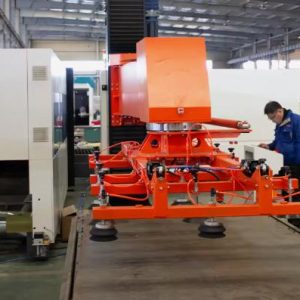
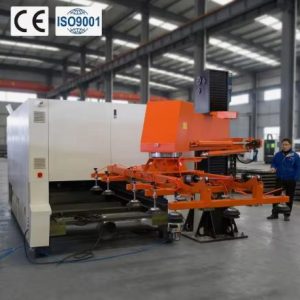
Yes. We provide loading robotic arms and integrated loading/unloading systems tailored to your laser cutting machine’s table size and material handling method (e.g., board rack, exchange platform, or material warehouse). Contact us with your details for a customized proposal.
Q7: Do you provide on-site installation and debugging?
Yes. Our technicians can travel to your facility for installation and debugging, ensuring successful operation. We have served clients globally, including in the USA, South Korea, Russia, Qatar, Mexico, South Africa, Egypt, and Lebanon.
Q8: How do you ensure product quality?
Our quality assurance includes:
A team of over 40 technical engineers for professional debugging and support.
A dedicated quality control department compliant with ISO9001 standards.
CE certification for all exports.
Rigorous load testing before shipment to ensure structural safety and reliability.
Q9: Where is your factory located?
Our modern 10,000-square-meter manufacturing facility is located in Jiyang Industrial Park, Jinan, Shandong, China.
Q10: How can I evaluate your company’s capabilities?
We offer virtual video factory tours and warmly welcome on-site visits.
Q11: What does your company specialize in?
Jinan Constant Storage Machinery Manufacturing Co., Ltd. is a high-tech enterprise specializing in the R&D, production, sales, installation, and service of intelligent storage solutions. Our product range includes sheet material warehouses, drawer-style shelves, cantilever racks, servo manipulators, gantry loaders, and fully automated handling systems. Supported by a skilled technical team and advanced equipment, we are committed to delivering high-performance storage products and solutions to customers worldwide.
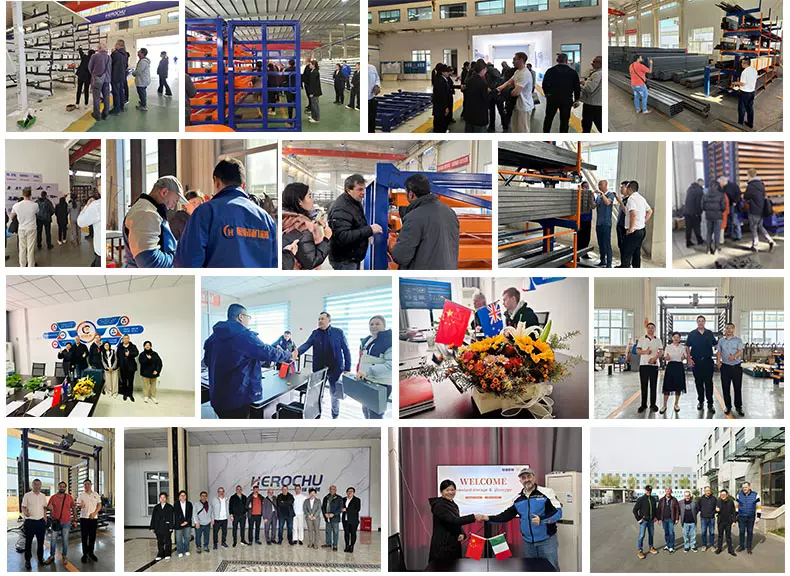
Customer visit
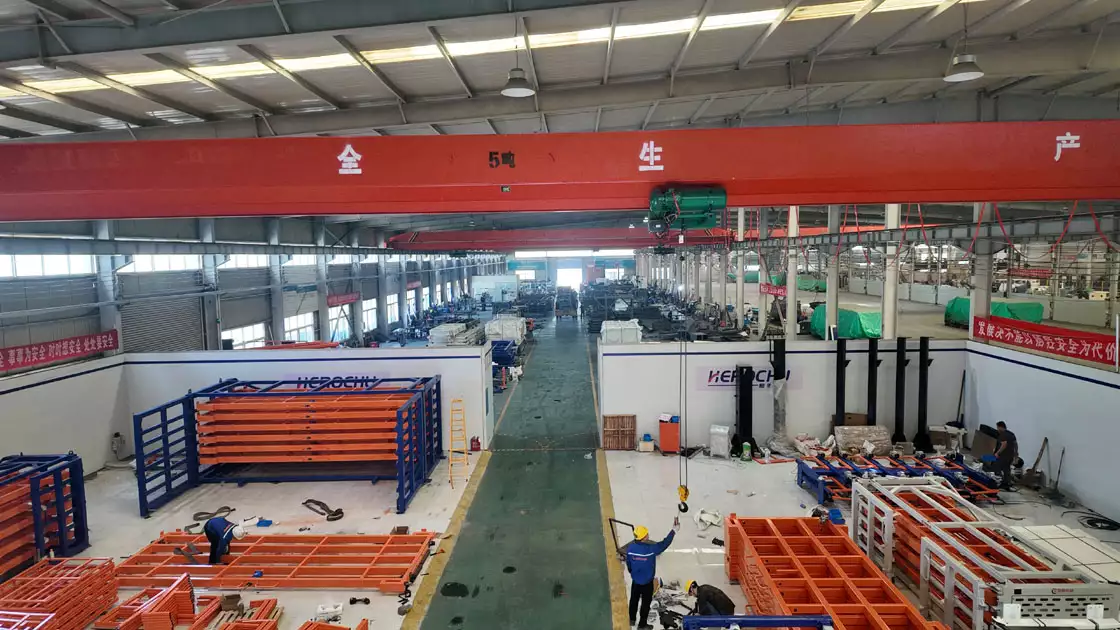
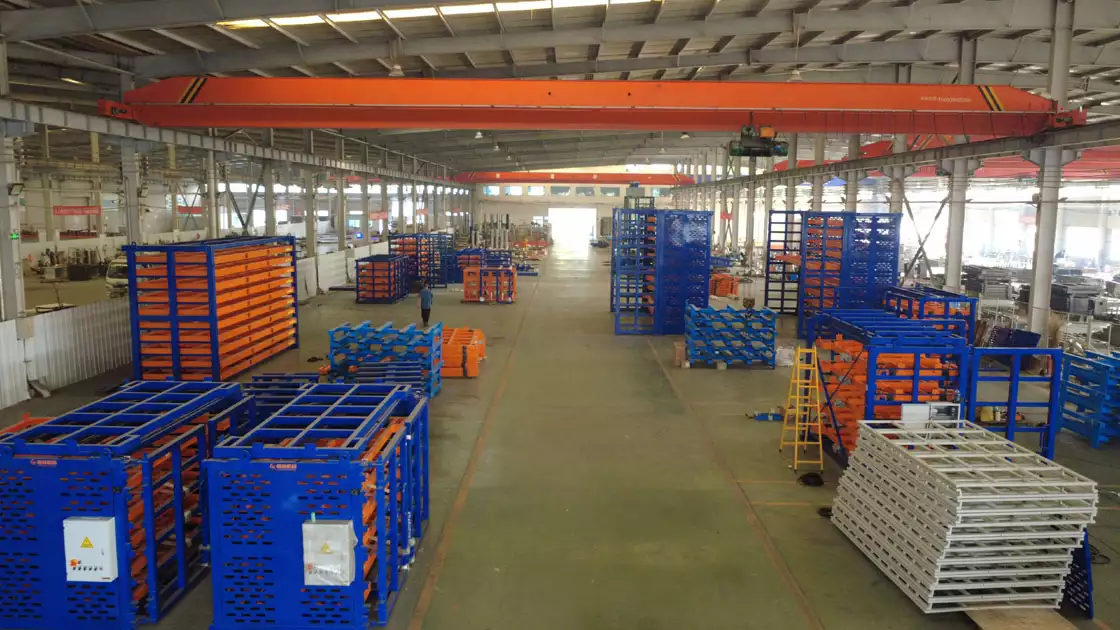
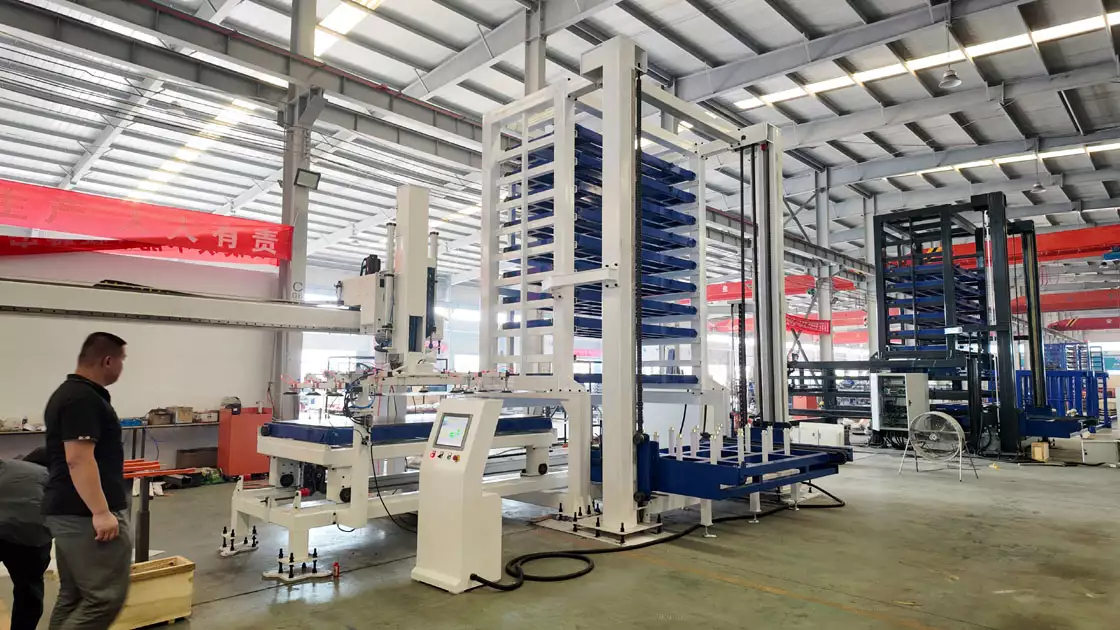
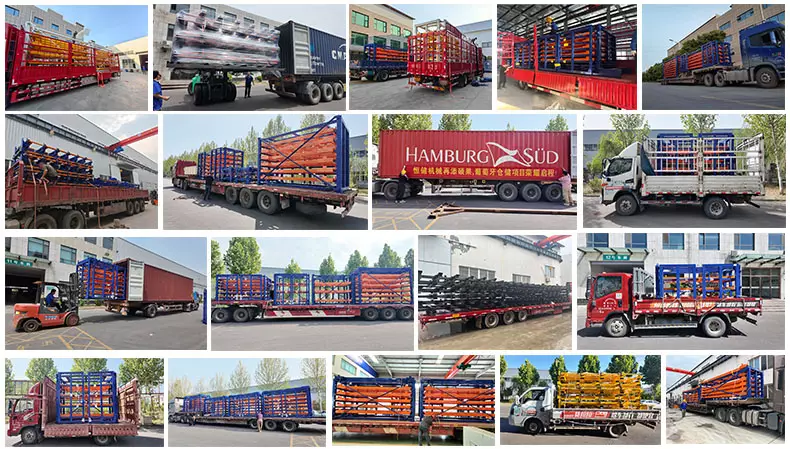
Herochu has always been adhering to the market-centric approach to meet customer requirements to the maximum extent, and the business philosophy of “creating brands with heart and gaining reputation with sincerity”. It provides customers with high-quality products and services with rigorous military quality, professionalism, and excellence, and has won unanimous praise in the Chinese aerospace, Chinese weapons, Chinese railways, automobile manufacturing, engineering machinery, non-ferrous metal titanium alloy and other industries.
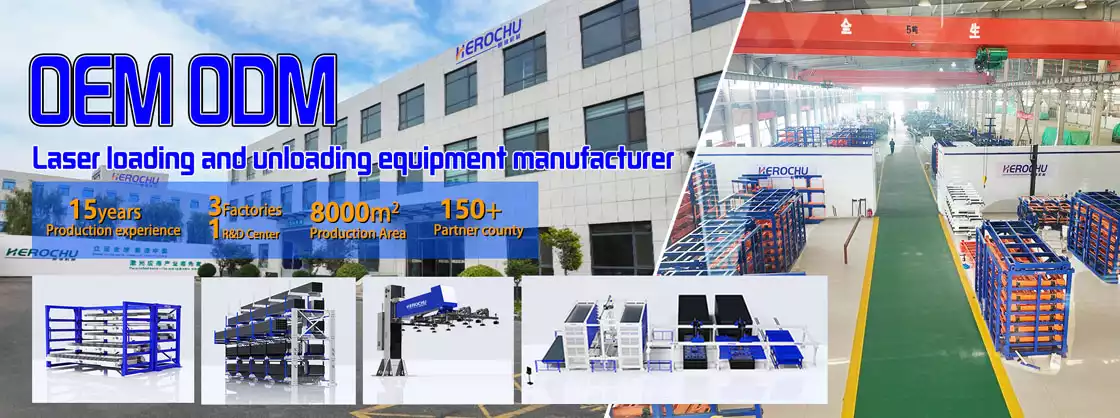
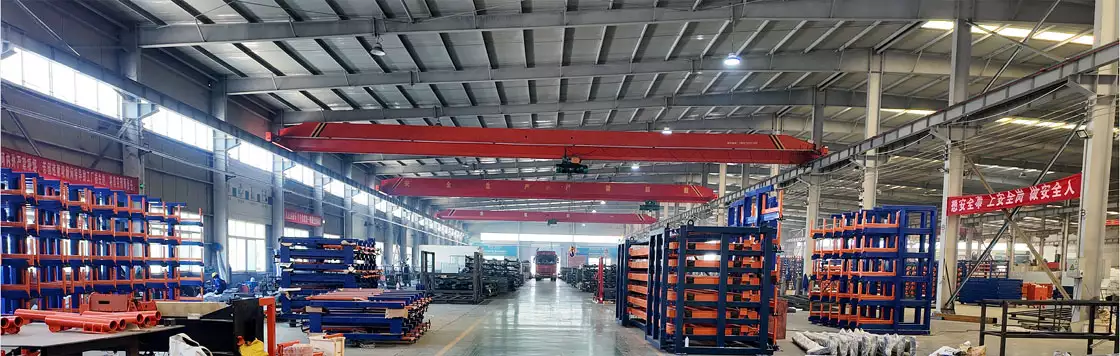
Factory

Hot Selling Machines
-
Automatic Sheet Metal Storage System
Fully Automatic Sheet Material Storage Warehouse
Read moreRated 0 out of 5 -
Automation Sheet Metal Material Warehouse
Automatic Sheet Metal Storage & Retrieval System (AS/RS)
Read moreRated 0 out of 5 -
Heavy Duty Cantilever Racking Systems
Adjustable Cantilever Racking System for Pipe Warehouses
Read moreRated 0 out of 5 -
Heavy Duty Steel Bar Storage Racks
Heavy-Duty Steel Cantilever Rack for Pipe & Bar Stock | Herochu
Read moreRated 0 out of 5 -
Heavy Duty Cantilever Racking Systems
Industrial Cantilever Storage Rack for Steel Bar & Pipe
Read moreRated 0 out of 5 -
Heavy Duty Cantilever Racking Systems
Heavy-Duty Cantilever Rack for Industrial Pipe Storage | Herochu
Read moreRated 0 out of 5 -
Swing Arm Servo Manipulator
Servo Motor Swing Arm Material Handling Equipment for Steel Processing
Read moreRated 0 out of 5 -
Swing Arm Servo Manipulator
Fully Automatic Laser Loading Machine with Servo Control
Read moreRated 0 out of 5
Related products
-
Heavy Duty Cantilever Racking Systems
Vertical pipe Storage Rack | Heavy duty pipe storage rack
Read moreRated 0 out of 5 -
Pipe Storage Rack
Pvc pipe racking system PVC Pipe Storage Telescopic Cantilever Rack
Read moreRated 0 out of 5
Product Categories