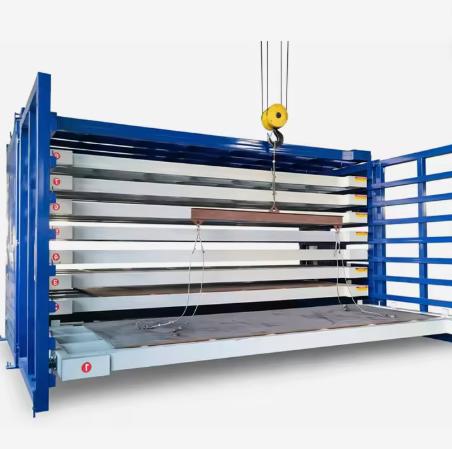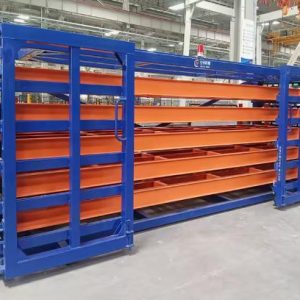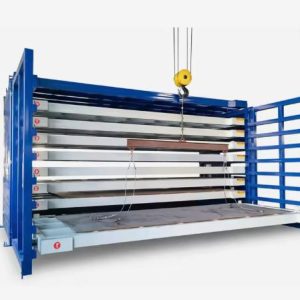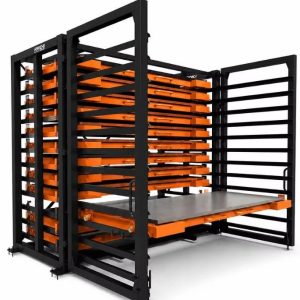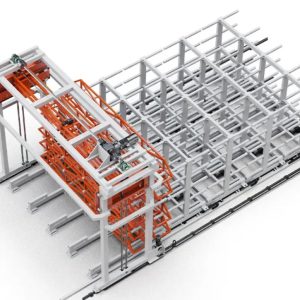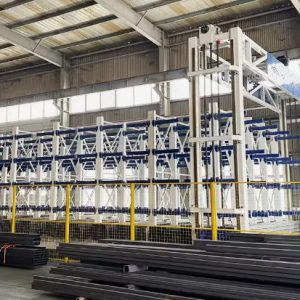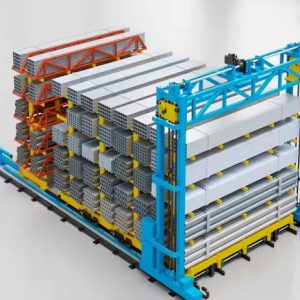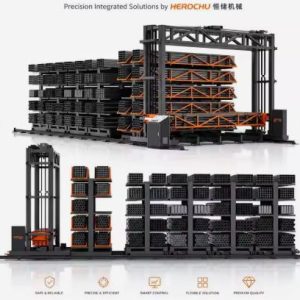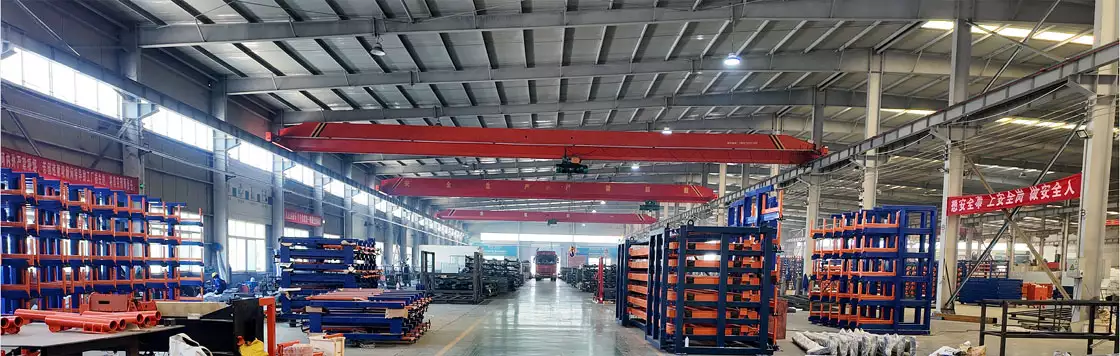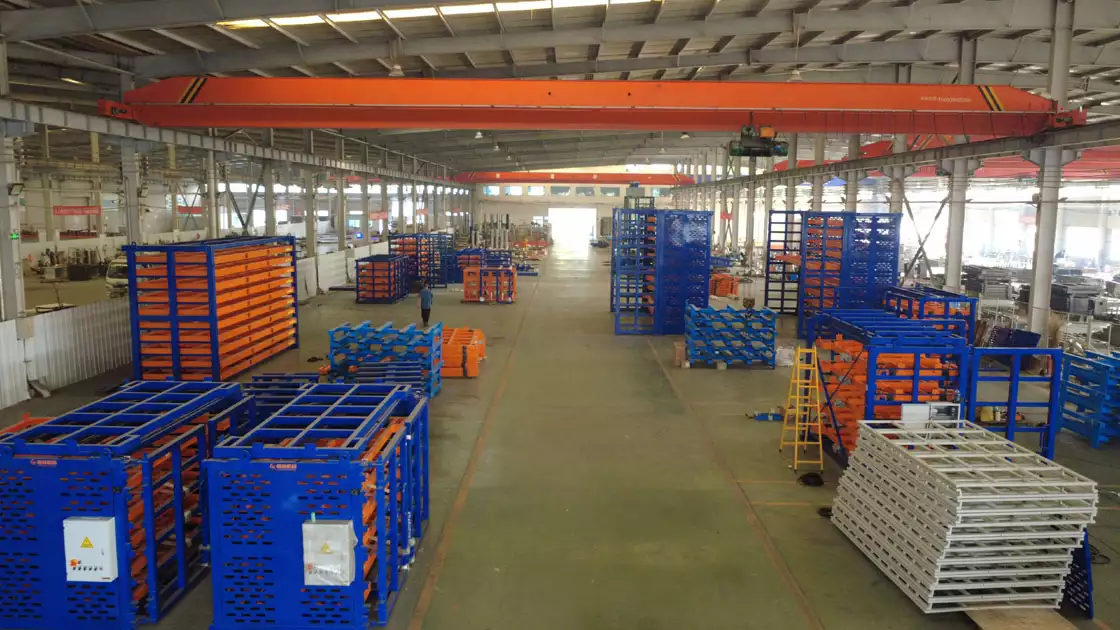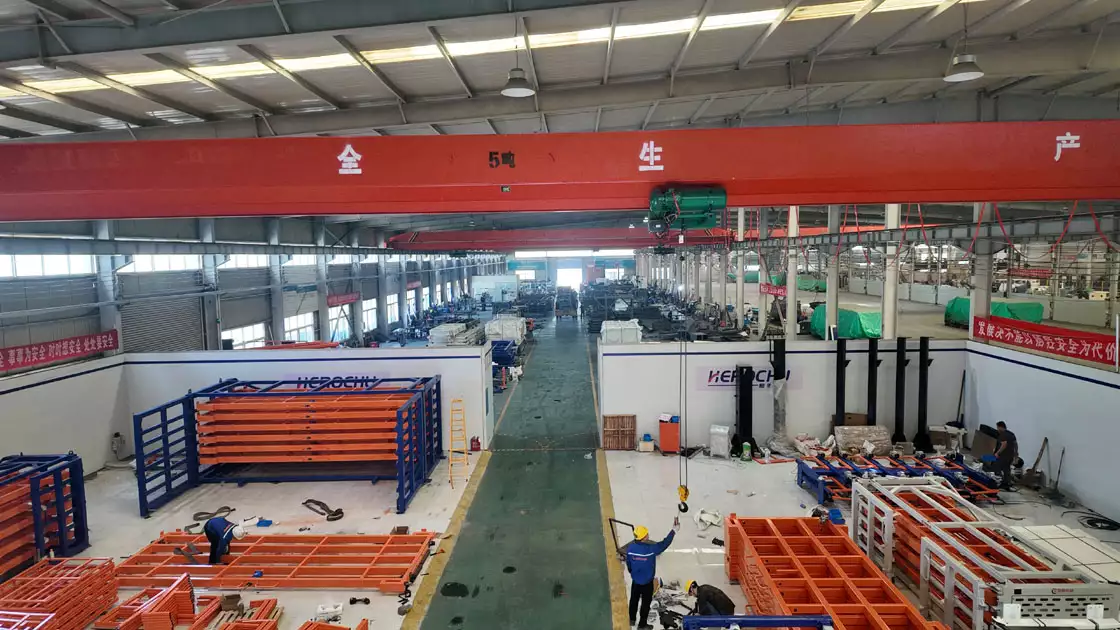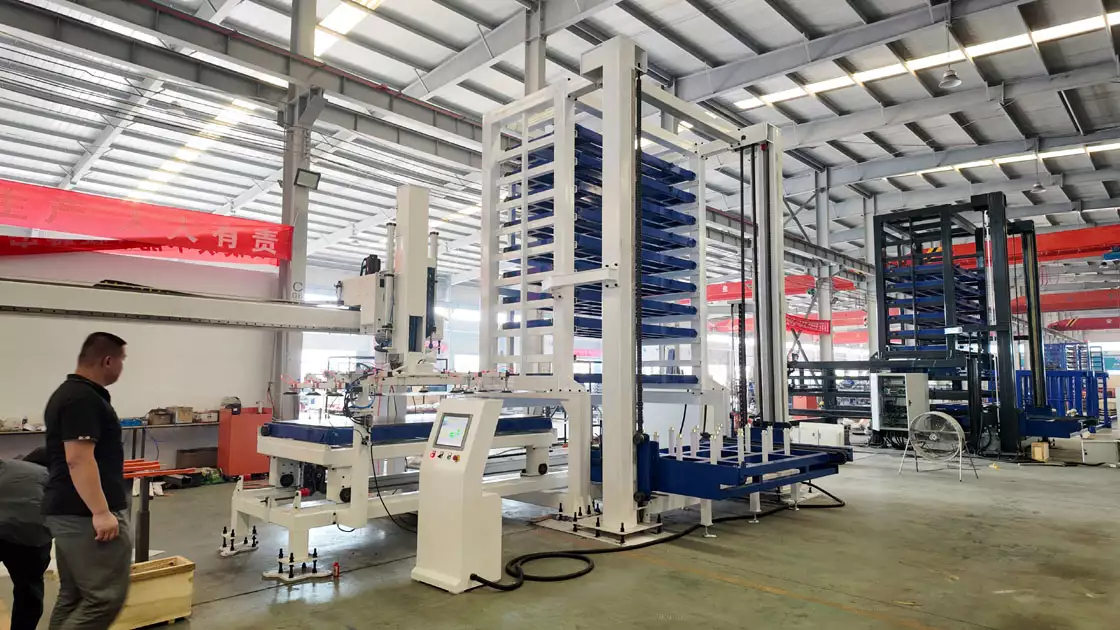
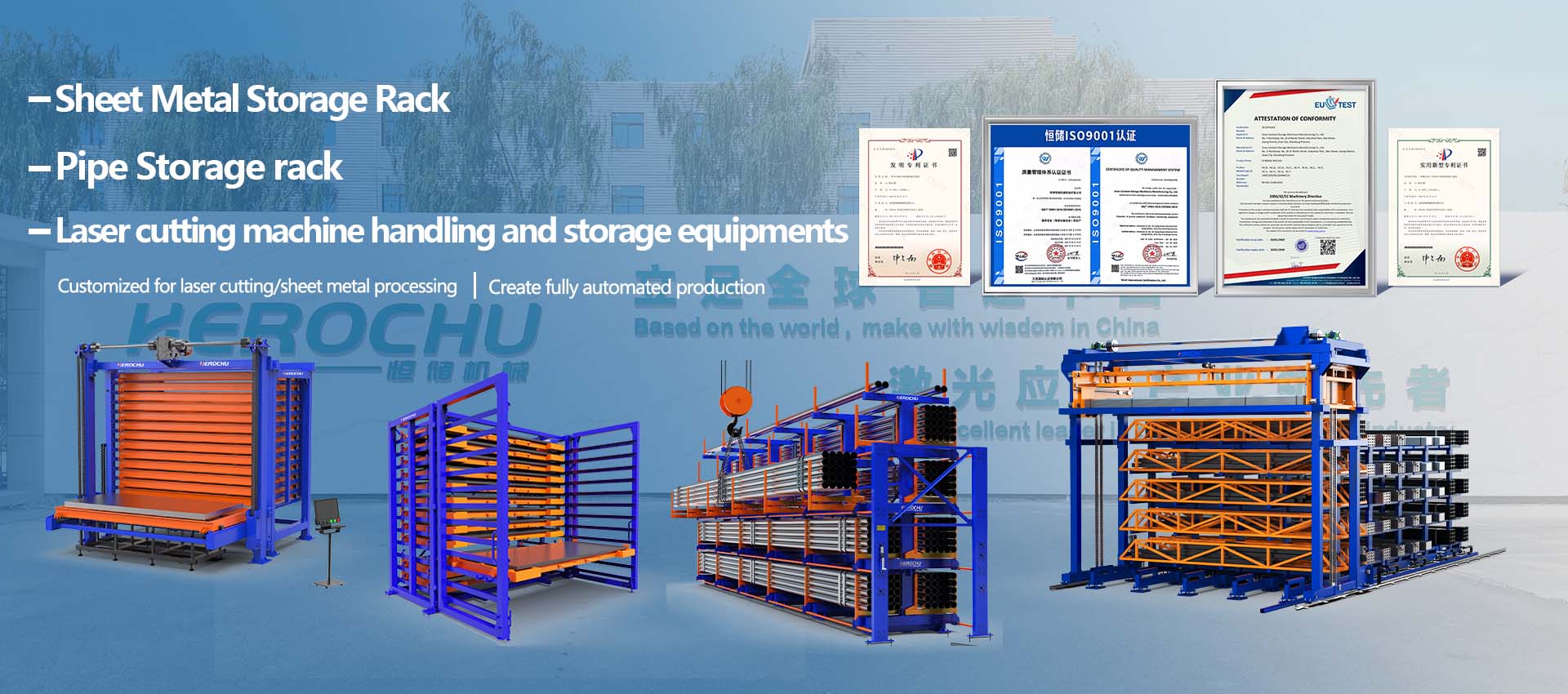
Fabrication shops that process steel, stainless, and aluminum plate face a recurring problem: floor space disappears faster than material arrives. Pallets multiply, stacks grow taller, and the bottom sheets become buried under tons of inventory. Retrieving a single plate turns into a two-person job involving a crane, a spotter, and twenty minutes of careful maneuvering. Herochu designed the Electric Drawer-Type Sheet Metal Storage Rack to eliminate that bottleneck by converting wasted floor area into organized, accessible vertical storage.
The Drawer Principle Applied to Industrial Plate
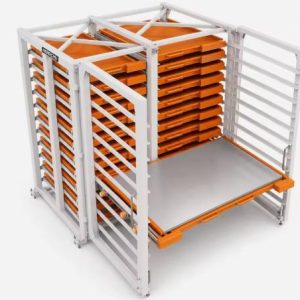
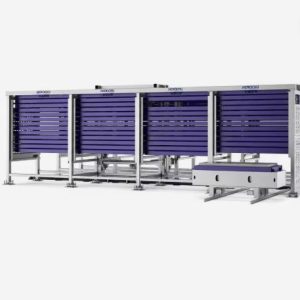
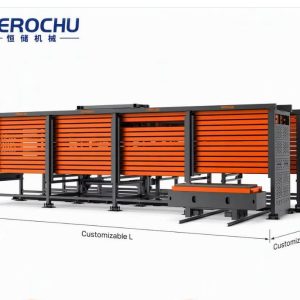
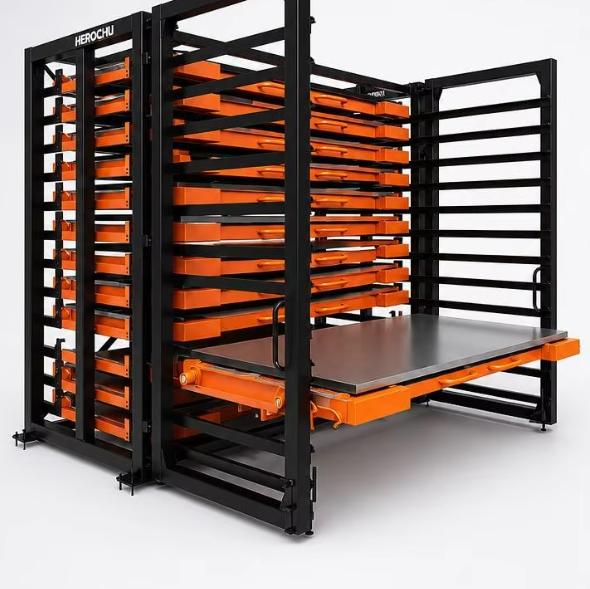
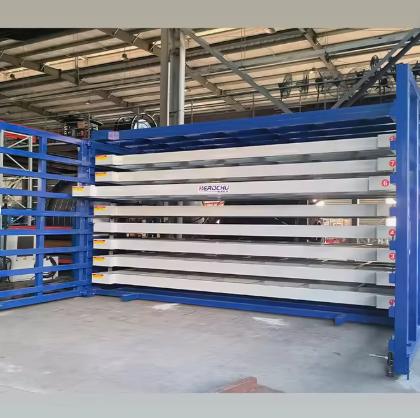
The core concept is straightforward. Instead of stacking material on pallets or storing it in fixed cantilever bays, Herochu mounts each sheet on an independent drawer that rolls out to the aisle. A motorized drive system extends the drawer on hardened steel rollers, bringing the entire sheet within easy reach of an overhead crane or vacuum lifter. The operator never climbs into the rack, never reaches across stacked material, and never moves sheets to get at the one underneath.
Each drawer is rated for loads up to 5,000 kg per level in standard configurations, with custom builds supporting substantially higher capacities. The drawer frame uses a reinforced box-beam structure with stiffening ribs that control deflection under full load, a detail that matters when a 6,000 × 2,000 mm steel plate sits extended on a single tray. Q235B high-strength steel columns and a dual-beam crossbeam design distribute the load across the entire frame rather than concentrating it on individual uprights.
Motorized Operation Changes the Labor Equation
Manual cranking systems exist for lighter applications, but once drawer loads exceed 3,000 kg, powered operation becomes the practical choice. Herochu equips the Electric Drawer-Type Sheet Metal Storage Rack with an industrial gear motor, wireless remote control, and a control cabinet interface. One operator stands at the rack, presses a button, and the loaded drawer glides out at controlled speed. Soft-start and soft-stop programming prevents the sheet from sliding during acceleration or deceleration, a critical detail when handling polished stainless or mill-finish aluminum.
The control system includes travel limits at both ends of the drawer stroke, overload protection on the motor, and a mechanical self-lock that holds the drawer in position when fully extended. An emergency stop button sits on the control panel, and an optional hand-crank mechanism provides backup operation during power interruptions or motor servicing.
Structural Engineering and Material Protection
Sheet metal storage fails when the rack deflects, binds, or allows material to shift. Herochu addresses each failure mode with specific design choices. The heavy-duty roller rails use sealed bearings and induction-hardened surfaces that maintain smooth travel even after years of daily cycles. Replaceable HDPE wear strips sit under the sheets to prevent metal-to-metal contact, protecting aluminum and pre-finished surfaces from scratches and galling.
The drawer surface itself can be fitted with rubber-capped dividers or anti-slip pads, depending on the material being stored. Different drawers in the same rack can be configured for different materials—hot-rolled steel in one bank, stainless in another, aluminum sheet in a third—which allows a single storage unit to serve multiple production areas without cross-contamination of surfaces.
Space Efficiency and Workflow Integration
A conventional pallet storage layout might consume 15 square meters to hold ten tons of plate. The same material stored in a Herochu six-layer drawer rack occupies roughly three square meters of floor space, because the rack uses vertical height rather than horizontal spread. The single-side access design eliminates the second aisle that double-sided racks require, further reducing the footprint.
For shops feeding laser cutters, plasma tables, or press brakes, the drawer rack integrates directly into the material flow. The fully extended drawer presents the sheet at a consistent height and position, so a crane operator or automated loading system knows exactly where the material will be. Batch picking becomes practical: the operator pulls several drawers in sequence, staging sheets for an upcoming job without hunting through stacks or moving material twice.
Customization and Site Adaptation
Herochu builds each rack to the buyer’s sheet dimensions and floor layout. Standard models cover the common formats—3000 × 1500, 4000 × 1500, 4000 × 2000, and 6000 × 1500 mm—with custom sizes available for non-standard plates. Layer count ranges from three to thirteen, and clear space between levels adjusts from 120 mm upward to accommodate thicker bundles.
The installation process is designed for minimal disruption. Columns bolt together on site, drawers slide into the frame on their roller tracks, and the base anchors to a level concrete floor. Herochu supplies assembly documentation and on-site commissioning support, and the modular design allows additional units to be added beside an existing rack as storage demand grows.
For fabricators who are tired of sacrificing floor space to material they cannot easily reach, the Herochu Electric Drawer-Type Sheet Metal Storage Rack offers a practical alternative: organized, protected, and accessible plate storage that costs less to operate than the piles it replaces.