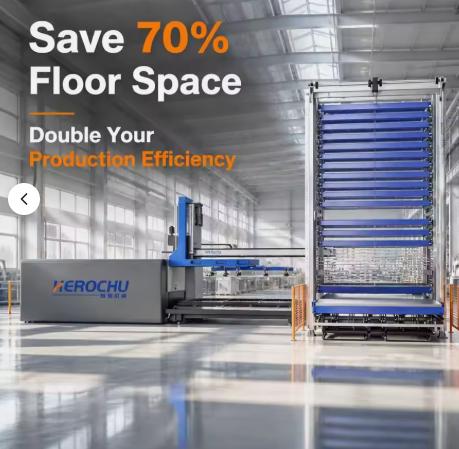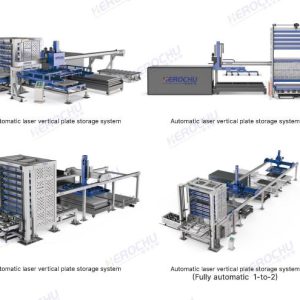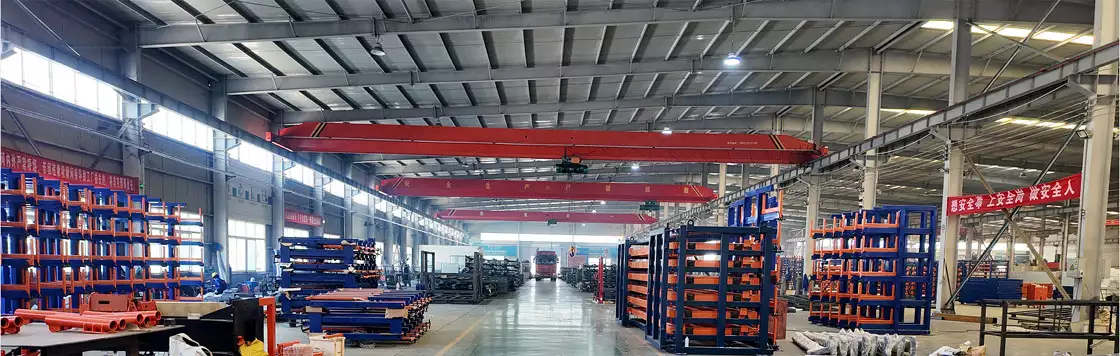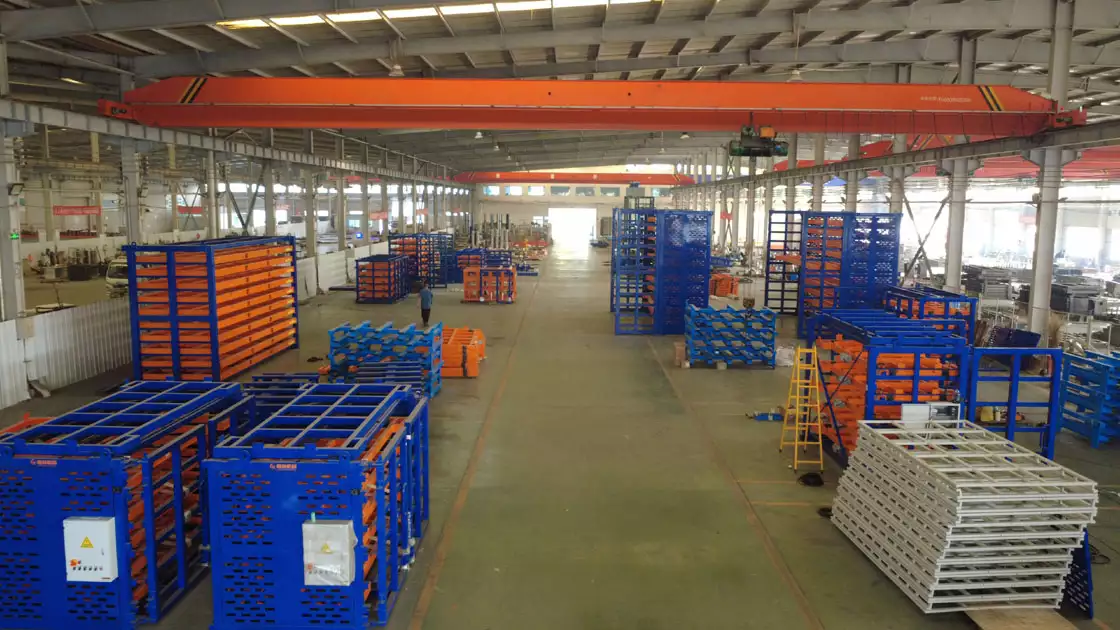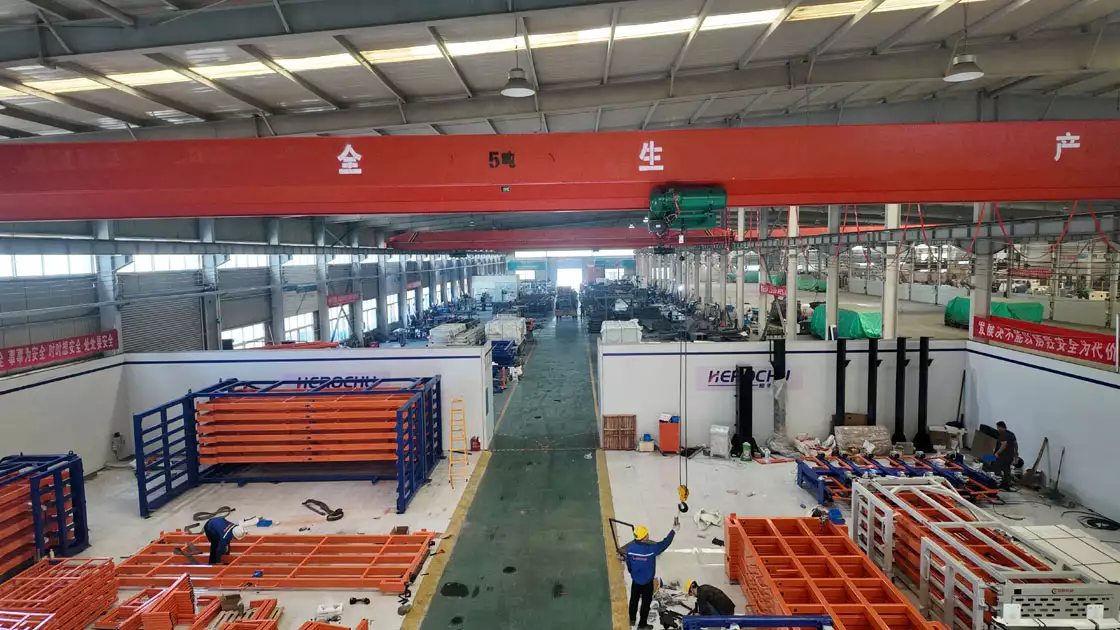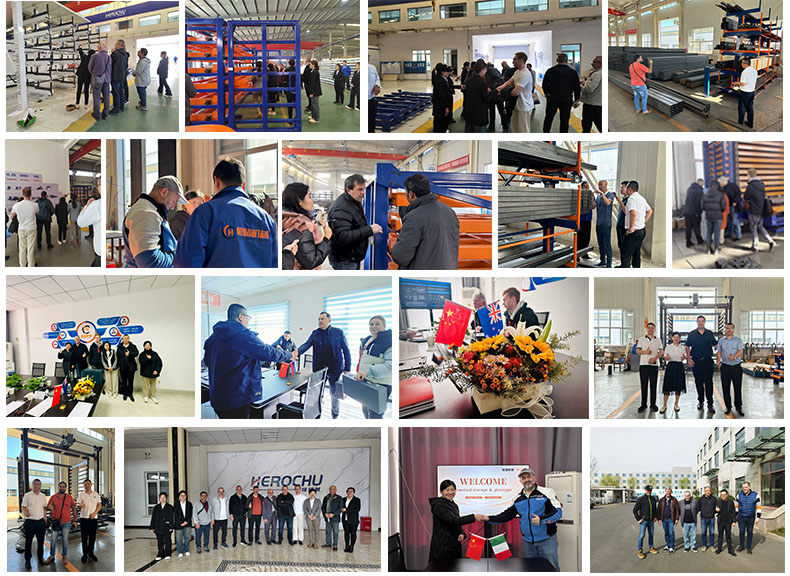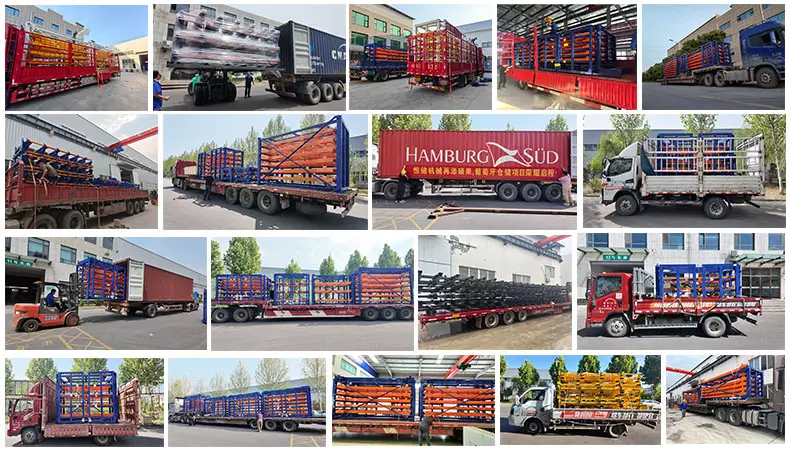
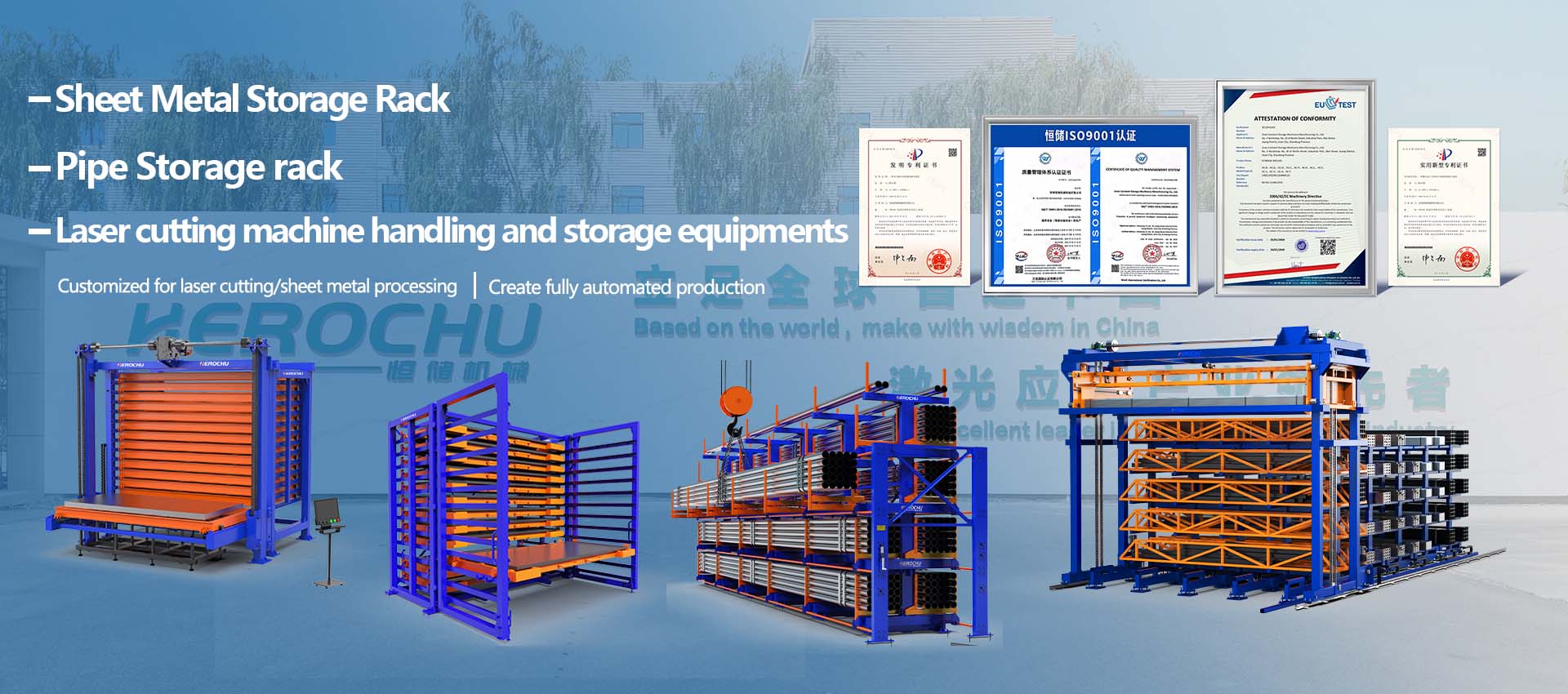
When steel and aluminum fabricators scale up their cutting operations, the bottleneck rarely lies in the laser itself. Modern fiber lasers slice through plate at remarkable speed — the real constraint is how quickly raw sheets arrive at the bed and how swiftly cut parts clear out. That is precisely where an automatic metal plate gantry loading system changes the production equation. Herochu engineered its double-tower loading and unloading warehouse to eliminate manual sheet handling from the cutting loop, giving steel and aluminum production lines a continuous, computer-driven material flow.
What the System Does
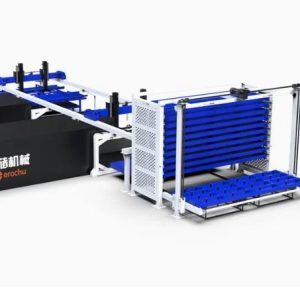
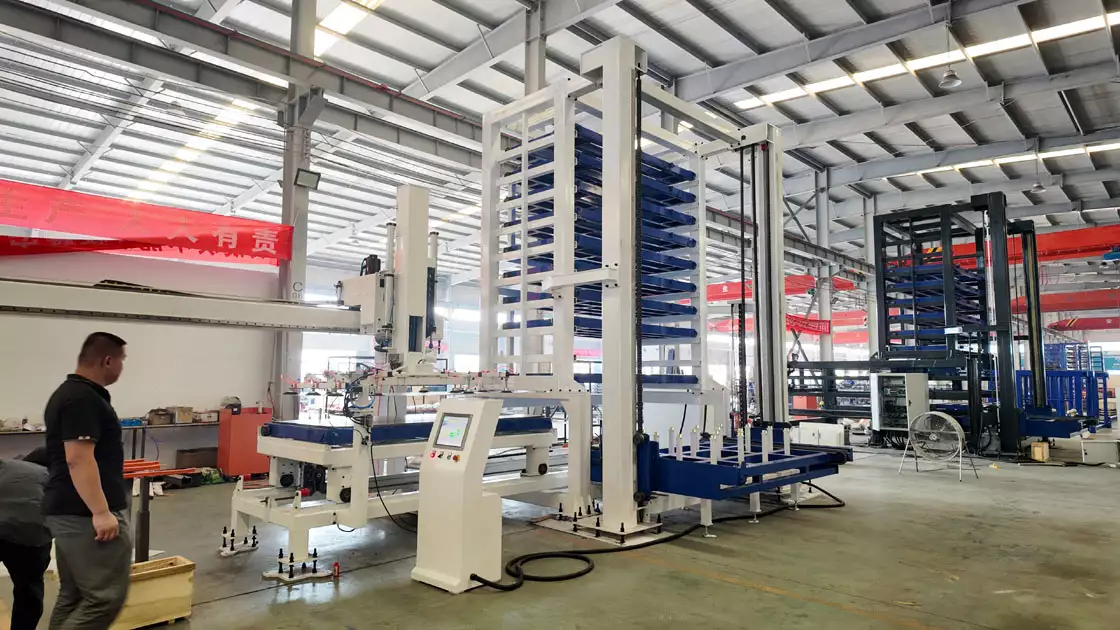
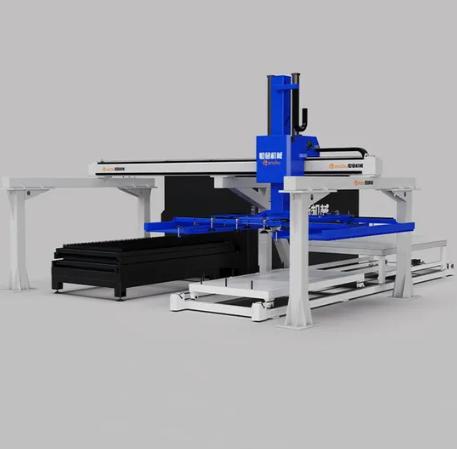
The Herochu full-automatic one-to-two loading and unloading warehouse centralizes plate storage in a three-dimensional tower architecture. Rather than stacking raw sheets on the floor or in racks that require forklift retrieval, the system stores every plate in a structured, vertically organized buffer. From this buffer, the gantry executes a complete automated sequence: auto-issue of raw sheets, automatic reclaim of cut parts, automatic sub-sheet separation, automatic feeding to the laser bed, and automatic blanking of finished workpieces. No operator lifts a sheet by hand at any stage.
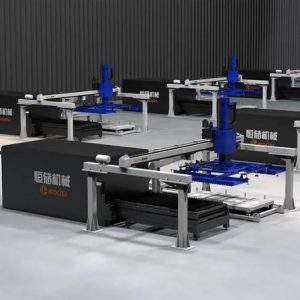
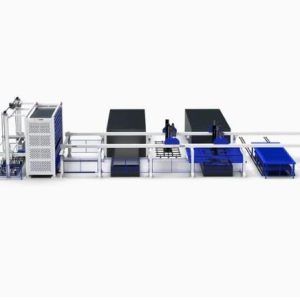
This matters most for operations running two laser cutters side by side. The one-to-two configuration lets a single storage and handling complex serve both machines, switching feed destinations through a simple operation box mounted near each laser. A touch screen interface toggles between automatic feeding and manual feeding modes, so the line adapts to maintenance windows, special jobs, or mixed-production schedules without requiring a second system.
Vacuum Suction and Gripper Integration
The core handling technology pairs two distinct mechanisms. A computer-controlled vacuum suction system manages loading — pulling raw plates from the storage tower and placing them on the laser cutting bed with positioning repeatability of ±2 mm. A mechanical gripper system handles unloading, removing cut sheets and skeletons from the bed to make room for the next plate. This division of labor is deliberate. Vacuum suction excels at picking thin, flat sheets from a stack without scratching the surface, while grippers provide the structural grip needed to lift cut parts that may have irregular edges or residual tab connections.
Each suction cup in the vacuum array carries an independent control switch. Operators can activate or deactivate individual cups from the controller, matching the suction footprint to the sheet size and preventing edge curl on narrow plates. The cups are positioned on adjustable mounts, and their relative spacing can be reconfigured within a defined range to accommodate different sheet dimensions.
Sheet separation is built into the loading cycle. When the vacuum system attempts to pick a plate, the sub-sheet function ensures only one sheet leaves the stack — preventing the double-pick problem where two fused sheets enter the laser together and cause focus errors, beam reflection, or collision. For aluminum sheets prone to surface adhesion from oxide films, this separation step is especially critical.
Technical Specifications
The Herochu HC-RT series covers five plate-size classes:
| Model | Sheet Dimensions (mm) | Max. Load (kg) |
|---|---|---|
| HC-RT2513-300 | 2500 × 1300 | 300 |
| HC-RT3015-500 | 3000 × 1500 | 500 |
| HC-RT4015-500 | 4000 × 1500 | 500 |
| HC-RT4020-500 | 4000 × 2000 | 500 |
| HC-RT6015-500 | 6000 × 1500 | 500 |
Across all models, the robot arm traverses at 10–30 m/min, the lifting mechanism moves at 5–10 m/min, and fork adjustment runs at 5–20 m/min. Repeatability holds at ±2 mm, and the system operates on 0.6–0.7 MPa compressed air.
Why Steel and Aluminum Lines Benefit
Steel fabricators running thick plate and aluminum shops handling lighter gauge sheets both gain from the same gantry architecture — only the suction configuration and load rating differ. The HC-RT series scales from 300 kg to 500 kg maximum sheet weight, covering standard gauge ranges for both metals. Because the gantry, tower, and laser communicate through a unified PLC, the line runs unattended for extended periods, letting shops operate lights-out shifts without stationing a loader at each machine. That is how a gantry loading system delivers measurable throughput gains — not by cutting faster, but by feeding the cutter without interruption.