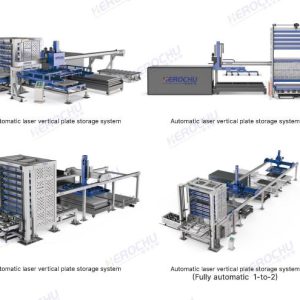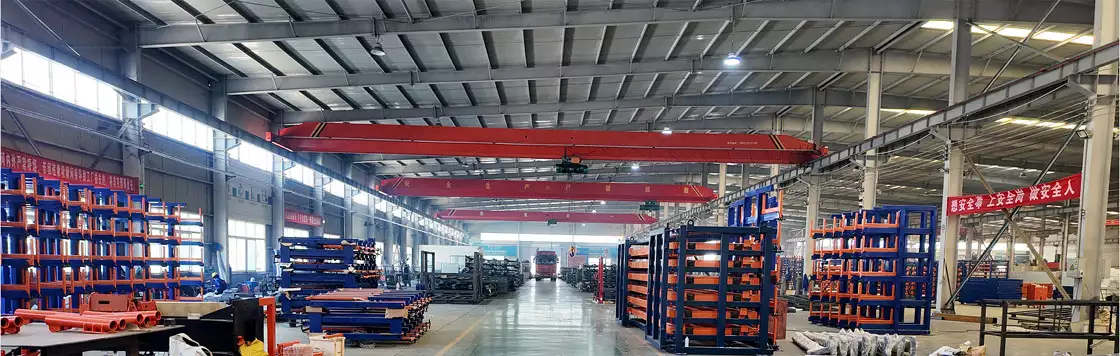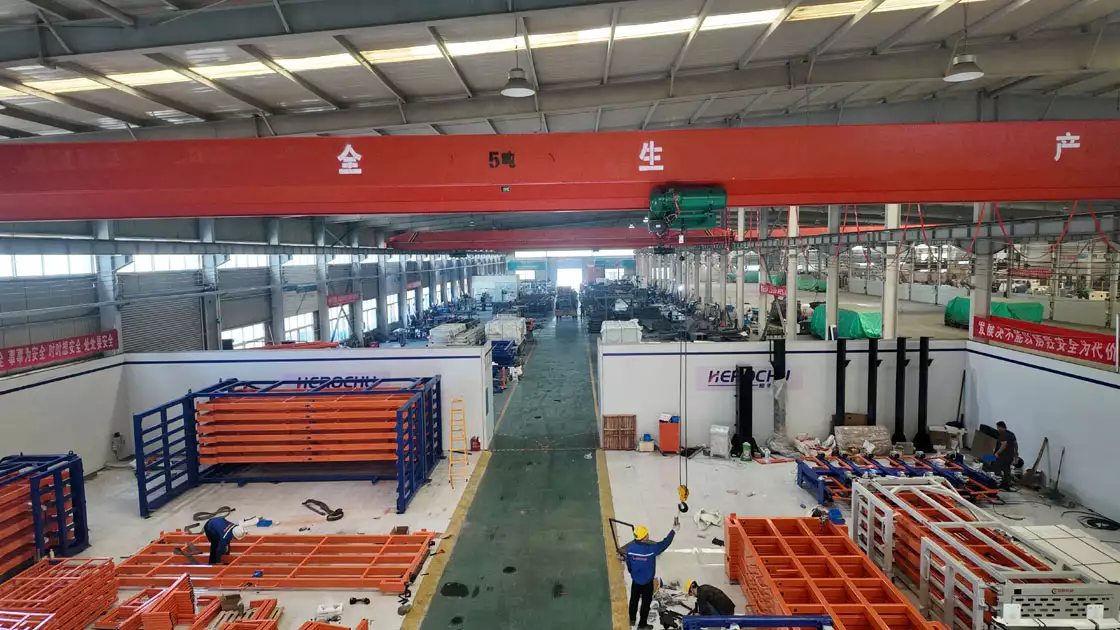
Laser cutting machines have reached a point where the beam itself is rarely the production bottleneck. Sheets arrive late, cut parts sit on the bed waiting for removal, and operators spend shifts shuttling plates between storage racks and the cutter. An automated laser material handling system solves this by connecting storage, transport, and loading into one synchronized flow — and Herochu builds that flow around a purpose-designed material storage tower.
The Storage Tower as Production Hub
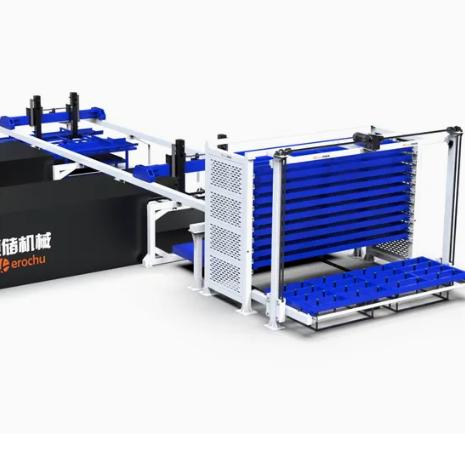
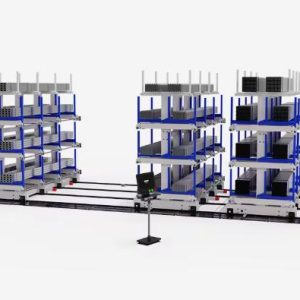
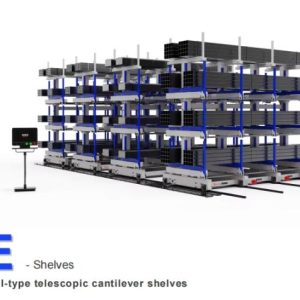
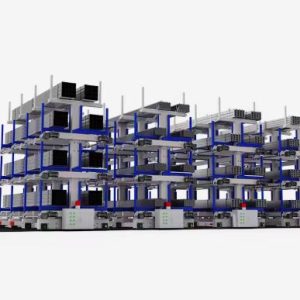
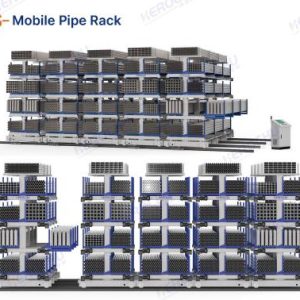
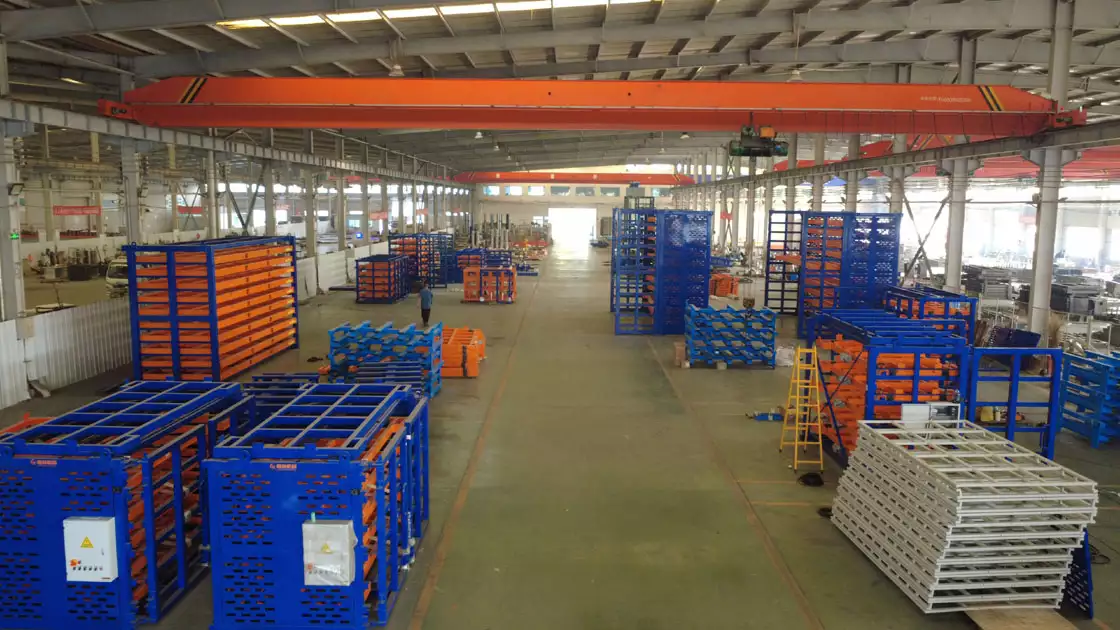
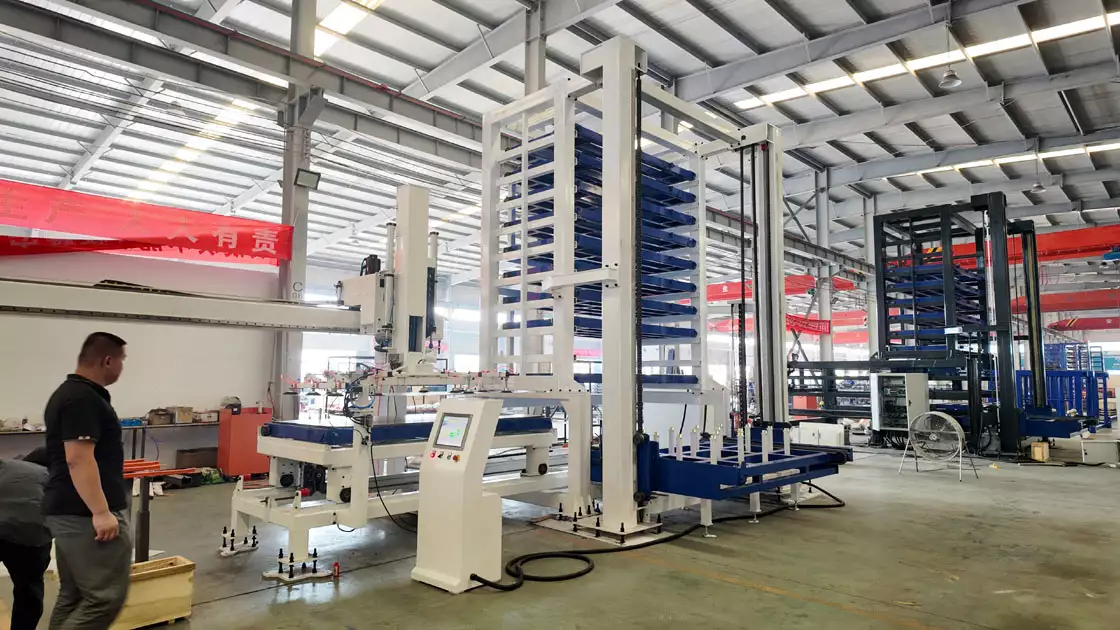
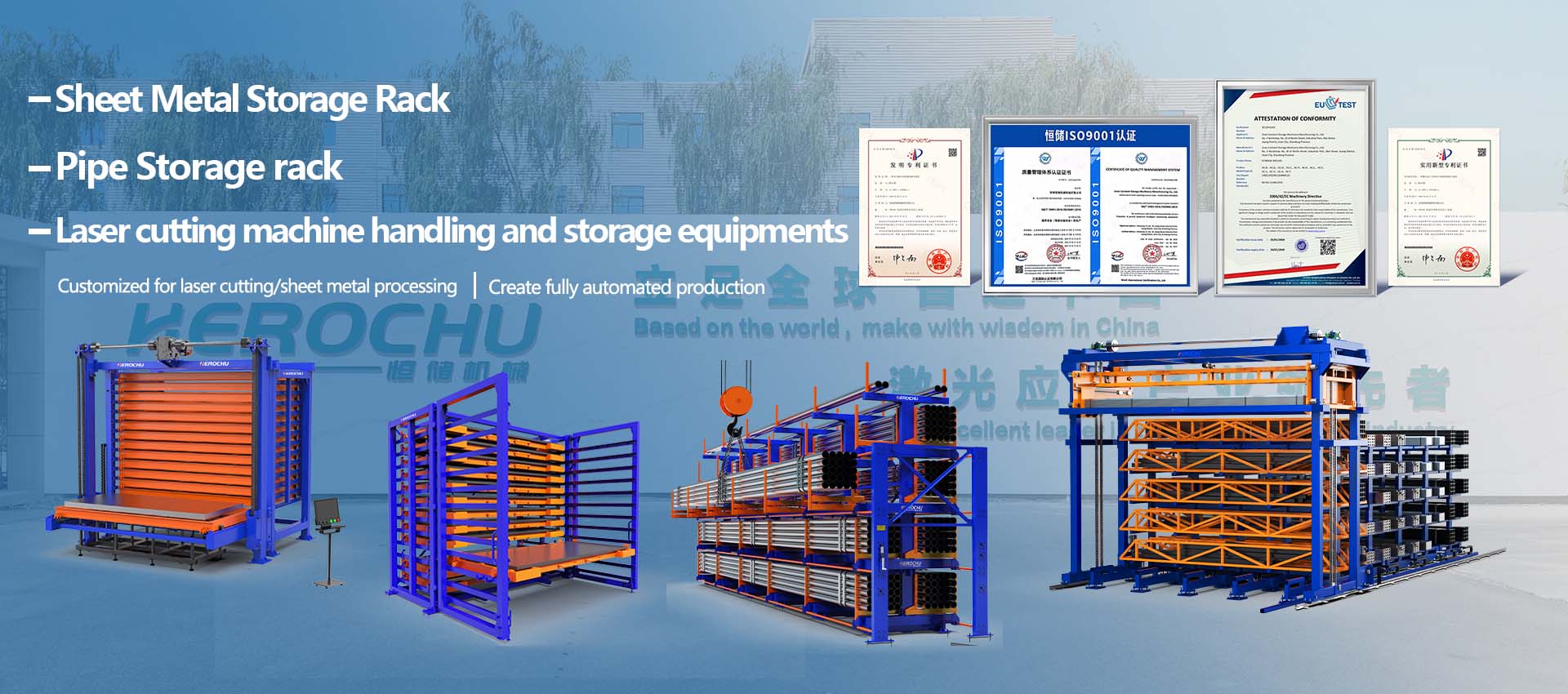
The Herochu material storage tower is not a passive rack. It is an active, three-dimensional buffer that holds raw plates in organized layers and releases them on command to the gantry loader. Each tower layer is engineered to hold a specific plate weight, and the number of layers is customized to the shop’s daily throughput. For high-volume fabricators, the tower becomes the central inventory point — every plate entering the cutting cell passes through it, and every cut sheet returns through it for organized retrieval.
This architecture matters because it decouples material supply from cutting speed. When the laser finishes a sheet, the gantry unloader immediately clears the bed while the loader simultaneously retrieves the next raw plate from the tower. The cutter never waits for a forklift. The tower never waits for the cutter. Both run on independent cycles synchronized by a shared PLC, which is what allows the cell to approach continuous production.
Full-Automation Integration
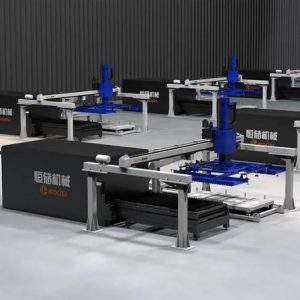
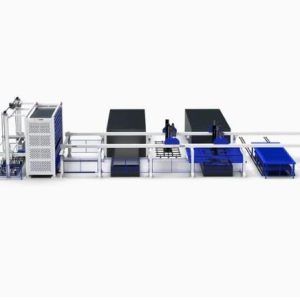
The complete Herochu system combines four physical subsystems into one production unit:
- Three-dimensional storage warehouse — holds raw and cut plates in vertical layers, managed by the central controller
- Bilateral gantry truss — spans the cutting cell, carrying loading and unloading manipulators on a shared rail
- Loading truss manipulator — retrieves raw sheets from the tower and places them on the laser bed
- Unloading truss manipulator — removes cut sheets and deposits them on the double-layer finished-material cart
The double-layer finished-material cart is a detail worth noting. Rather than dropping cut parts onto a single-level table that fills quickly, the cart uses two tiers — the upper layer receives fresh cut sheets while the lower layer holds completed batches ready for removal. This doubles the buffer capacity between the gantry and the next downstream process, reducing how often an operator must intervene to clear finished parts.
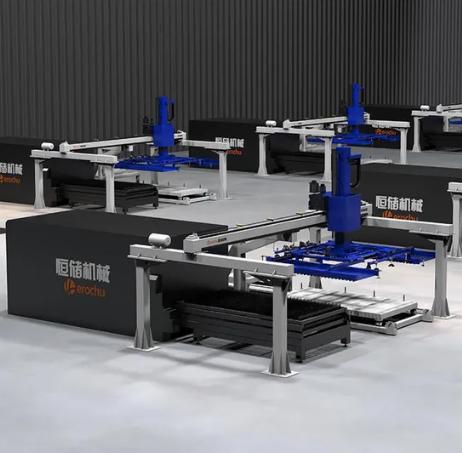
A laser cutting machine completes the unit, and the entire line — storage, gantry, cart, and laser — operates under unified PLC control.
Technical Parameters
| Model | Sheet Size (mm) | Layers | Max. Load (kg) |
|---|---|---|---|
| HC-A3015-83 | 3000 × 1500 | 8 | 3000 |
| HC-A4015-85 | 4000 × 1500 | 8 | 5000 |
| HC-A4020-85 | 4000 × 2000 | 8 | 5000 |
| HC-A6020-105 | 6000 × 2000 | 10 | 5000 |
Layer count is customizable — shops with taller bay clearance can add layers to increase buffer capacity without expanding the system footprint. Storage tower count starts at one and scales. The clear space between layers is set at 350 mm by default and can be adjusted for thicker plate stacks. Transfer speed across the system runs at 5–15 m/min, and the loading arm moves horizontally at 10–30 m/min with a lifting speed of 5–10 m/min. Maximum sheet weight handled is 500 kg, and applicable sheet dimensions range from 3000 × 1500 mm up to 6000 × 2500 mm.
Mode Switching and Operational Flexibility
Fabricators rarely run identical jobs back to back. A shop might cut heavy steel plate in the morning, switch to aluminum sheet in the afternoon, and run a short custom job overnight. The Herochu system accommodates this through its control interface. Near each laser machine, an operation box lets the user direct the automatic feeding flow to either of two connected cutters. The touch screen switches between automatic and manual feeding modes — so when a job requires hand-placed material or machine maintenance pauses the loop, the gantry stands down without locking out the cell.
This flexibility is what separates a genuinely integrated material handling system from a simple loader bolted to a machine. The storage tower, gantry, cart, and laser are not four independent pieces — they are one production unit that adapts to how the shop actually runs.