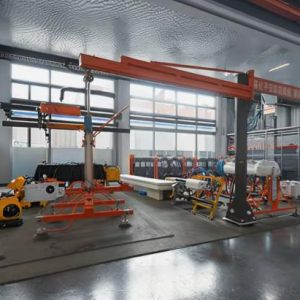
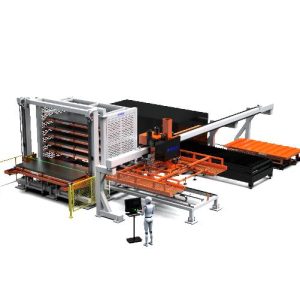
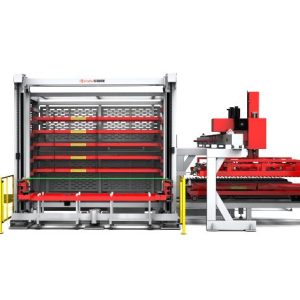
Selecting an automated overhead pipe storage system is not a catalog exercise. The variables that determine success—maximum profile length, mixed storage ratios, daily throughput, production line integration, and building conditions—interact in ways that make off-the-shelf solutions risky. The automated Industrial Overhead Pipe Storage & Retrieval System category demands a specification-first approach.
Herochu’s engineering process begins with customer CAD layouts and logistics flow data. The company provides free 3D layout design for every overhead project, based on customer-supplied plant drawings and bill of materials .
The Five Variables That Drive System Selection
Maximum profile length and weight. Standard Herochu overhead systems support 6,000 mm to 8,000 mm material, with custom configurations reaching 12,000 mm. Per-level load capacity ranges from 3,000 kg to 5,000 kg depending on model .
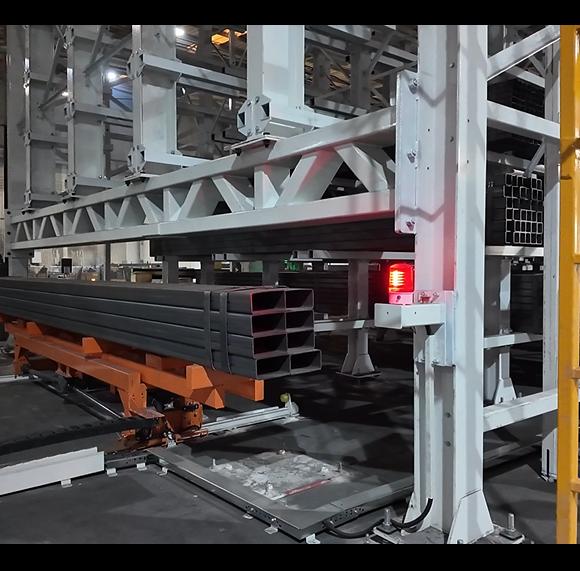
Profile specifications and mixed storage ratio. The system can simultaneously store various specifications of H-beams, I-beams, channel steel, angle steel, and pipes. Support configurations—V-cradles for round pipe, flat supports with lateral stops for square tube, calculated spacing for thin-wall material—are engineered around the specific material mix .
Daily inbound/outbound frequency and cycle time. Herochu systems achieve retrieval cycles under 90 seconds. For high-frequency operations, speed profiles can be adjusted through the touchscreen to match material type and downstream urgency .
Whether the system connects to an automated processing line. The overhead system operates as an active data node in a manufacturing execution system. Siemens S7-1200 PLCs communicate over PROFINET, and the system can link with CNC band saws, laser cutters, and drilling lines. When a downstream machine signals for material, the shuttle retrieves and delivers automatically .
Factory height, span, and foundation conditions. For steel-frame buildings, runways suspend from roof beams. For concrete buildings, chemical anchors or embedments transfer loads to structural members. Herochu performs structural load calculations for each project .
What the Standard Models Offer
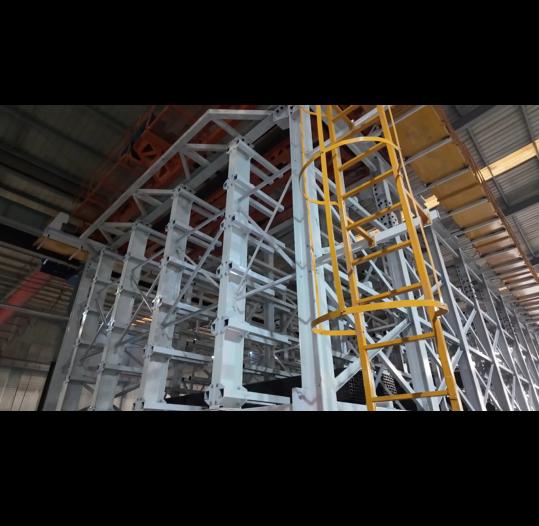
The HC-XD6083-8 handles 6,000 mm pipe with 8 customizable layers, 3,000 kg per level, and 8 customizable towers. The HC-XD90105-10 supports 9,000 mm material with 10 layers at 5,000 kg and 10 towers. The HC-XD120105-12 accommodates 12,000 mm pipe with 10 layers at 5,000 kg and 12 towers .
Across all models, the top vehicle achieves 100 m/min travel speed, the elevator achieves 40 m/min lifting speed, and repeatability holds at ±2 mm .
Space Efficiency in Concrete Terms
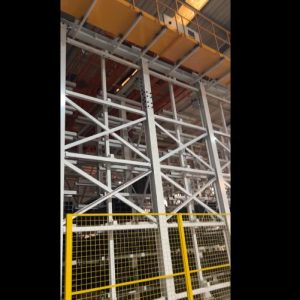
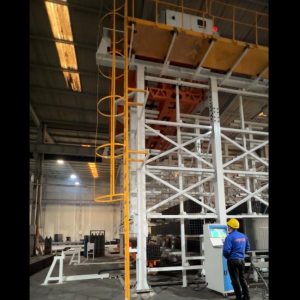
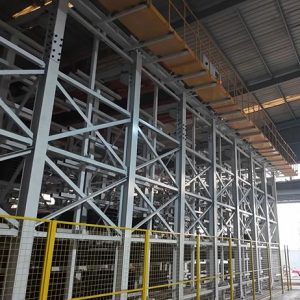
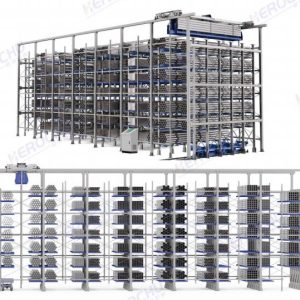
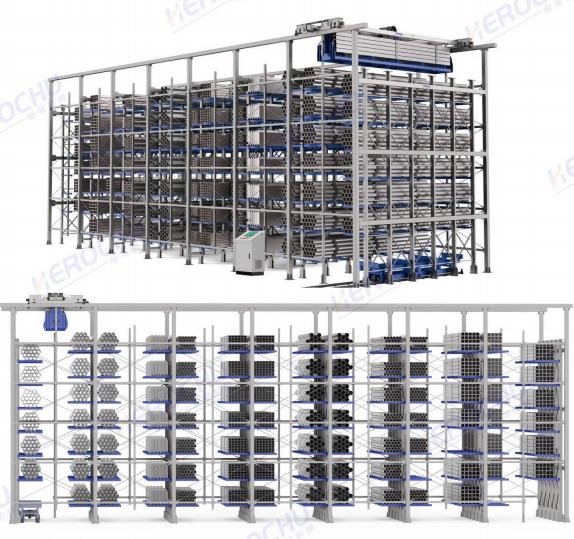
The vertical design minimizes footprint by moving storage upward. Herochu reports floor space reductions exceeding 80 percent compared with conventional floor storage layouts. A typical configuration occupies 200–300 square feet of floor space while reaching heights of 30–52 feet .
This efficiency does not come from simple upward stacking. The shelf grid design uses high-strength steel modules built to resist deflection under full load. For round pipe, square tube, rectangular hollow sections, channel, angle, and I-beam, support configurations prevent bundles from rolling during gantry acceleration and deceleration .
Digital Management and ERP Integration
The system’s PLC-based digital inventory management provides real-time stock display through a 12-inch color HMI. Operators execute retrieval commands with one-key operation. Every retrieval and deposit is logged automatically, eliminating manual tracking .
For plants running WMS or ERP systems, the Herochu controller pushes inventory data upstream through standard industrial protocols. Production scheduling can reserve material for upcoming work orders, and the system stages the corresponding bundle at the pick station before the shift begins .
Frequently Asked Questions
What is the typical lead time from specification to installation?
Herochu provides free 3D layout design and structural load calculations before fabrication. Project timelines depend on customization scope and building conditions .
Can the system store short offcuts alongside full-length stock?
Yes. Bin configurations accommodate long, short, and loose materials. Open-bottom drawers allow swarf to fall through, and perimeter retention pins keep round stock from rolling .
How does the system handle emergency stops?
Laser distance sensors, overload sensors, and emergency stop circuits provide redundant protection. Recovery requires manual reset to ensure the cause is investigated before restart .