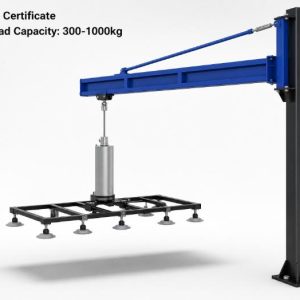
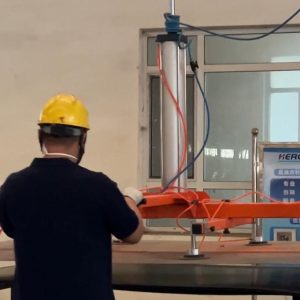
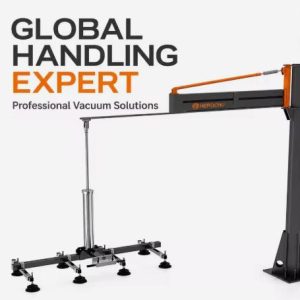
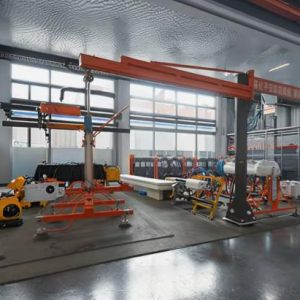
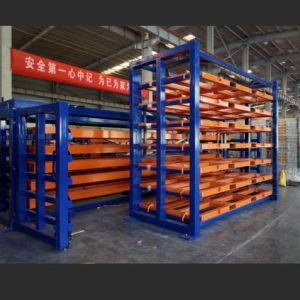
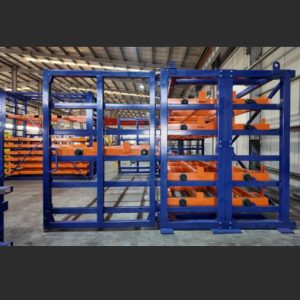
Pneumatic manipulators use compressed air to balance load weight, letting a single operator move heavy metal plates with controlled force rather than raw muscle. The air-powered balancing system counterweights the sheet, so the operator provides direction and the manipulator provides the lifting energy. For workshops that need flexible, mobile handling without committing to fixed crane infrastructure, a pneumatic manipulator fills the operational gap between manual handling and fully automated systems.
Herochu manufactures pneumatic manipulators rated for 500 kg metal plate handling, combining lightweight construction with the safety systems required for heavy industrial environments.
How Pneumatic Manipulators Work
Compressed air enters the manipulator’s cylinder and creates a balancing force against the load. The operator attaches the vacuum cup or mechanical grip to the plate, and the pneumatic system adjusts air pressure to neutralize the plate’s weight. Once balanced, the operator moves the plate through the work envelope with minimal physical effort.
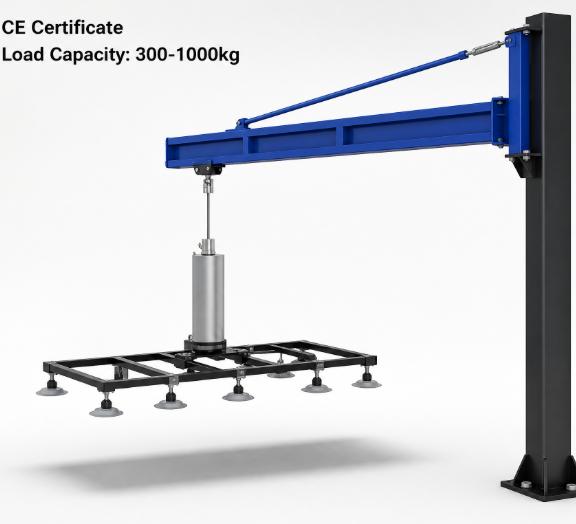
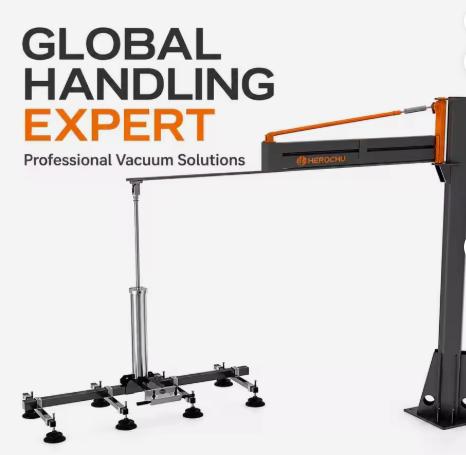
The Herochu pneumatic manipulator weighs 110 kg as a unit but handles plates up to 500 kg. This weight-to-capacity ratio makes the system practical for workshops where floor space and portability matter. The unit can be repositioned between workstations without crane assistance.
Structural Design
The manipulator frame uses a modular design that disassembles into transportable sections. Assembly requires standard tools and no welding. This construction approach serves two purposes: it reduces shipping costs and logistics complexity, and it allows maintenance teams to access internal components without removing the entire unit from service.
The overall dimensions of 500 × 725 × 1030 mm keep the footprint compact for workshop environments where equipment density is high. The column-mounted design anchors to the floor with standard bolts, requiring no special foundation work.
Handling Modes and Controls
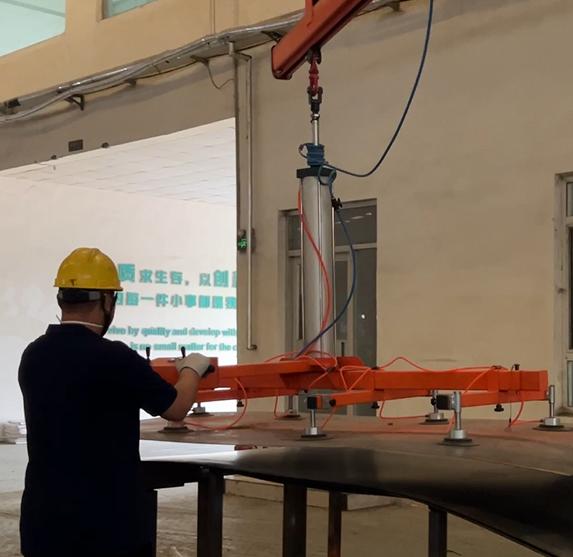
The Herochu pneumatic manipulator offers horizontal and vertical bag handle configurations, letting operators choose the grip orientation that matches the plate dimensions and handling task:
Horizontal handle: Positions the operator alongside the plate for edge-led handling, suited for loading plates onto machine beds from the side.
Vertical handle: Positions the operator above or behind the plate for stacking and de-stacking operations where the plate moves vertically between layers.
A single vacuum pad provides the gripping surface, with a pull lever release mechanism that gives the operator positive control over sheet release timing. The 180° manual rotation lets operators turn plates for orientation changes during the handling cycle.
Both manual and automatic control options are available. The manual configuration gives operators direct control over every motion, suited for variable-batch operations where each plate requires different handling. The automatic configuration sequences repeatable motions for production runs with consistent plate sizes.
Safety Systems
Pneumatic systems have a specific failure mode that electric systems do not: loss of air supply. If the compressed air line disconnects or the compressor fails, the balancing force disappears and the load drops. Herochu addresses this with the emergency air cut-off protection system, which traps residual air in the cylinder to maintain balancing force long enough for a controlled descent.
The anti-collision device prevents the manipulator arm from striking adjacent equipment or structures during operation. This is particularly important in dense workshop layouts where machines sit close together and the manipulator’s swing radius overlaps multiple work zones.
Material and Application Range
The vacuum pad grips metal, plastic, aluminum, rubber, and composite materials. For a fabrication shop processing mixed material types, this versatility eliminates the need for dedicated handling equipment per material category.
The pneumatic power source means the manipulator operates without electrical connections at the handling point. This is advantageous in environments where electrical sparks pose a hazard or where the handling area lacks convenient power access.
Throughput and Handling Cycle
The Herochu pneumatic manipulator achieves short handling cycles through the efficiency of the air-powered balancing system. Once the operator attaches the vacuum pad and the pneumatic system balances the load, the plate moves through the work envelope at a pace determined by operator input rather than mechanical cycle limitations. The system stops at any position in its travel path, holds without drift, and releases on command.
This stop-anywhere capability distinguishes the pneumatic manipulator from fixed-cycle automated loaders. In variable-batch fabrication where each plate requires different positioning, the operator’s judgment guides the handling sequence. In production runs with consistent plate sizes, the automatic control mode sequences the motions without operator intervention for each cycle.
The continuous handling process—grip, lift, move, position, release, return—repeats without cool-down periods or motor thermal limits because the pneumatic cylinder does not generate the heat that electric actuators produce under continuous duty cycles.
Compliance and Certification
The Herochu pneumatic manipulator carries CE, ISO 9001, and RoHS compliance marks. These certifications confirm that the design meets European safety standards, the manufacturing process follows ISO 9001 quality management protocols, and the materials comply with RoHS restrictions on hazardous substances. A one-year warranty backs every unit.
Frequently Asked Questions
How much weight can a pneumatic manipulator handle?
The Herochu pneumatic manipulator is rated for 500 kg load capacity. The pneumatic balancing system counterweights the plate weight, so the operator provides directional control while compressed air supplies the lifting force.
What safety features prevent dropped loads in a pneumatic manipulator?
The emergency air cut-off protection system traps residual air in the cylinder if the air supply is interrupted, maintaining balancing force for a controlled descent. The anti-collision device prevents the arm from striking adjacent equipment. These systems work together to protect personnel and material during air supply faults.
Can a pneumatic manipulator handle non-metal materials?
Yes. The vacuum pad grips metal, plastic, aluminum, rubber, and composite materials. The gripping mechanism relies on surface flatness and vacuum pressure rather than material-specific properties, so the same manipulator handles diverse material types without configuration changes.
What control options are available on the Herochu pneumatic manipulator?
Both manual and automatic control configurations are available. Manual control gives operators direct input over each motion for variable-batch work. Automatic control sequences repeatable motions for production runs with consistent plate sizes. A pull lever release mechanism provides positive control over sheet release in both modes.