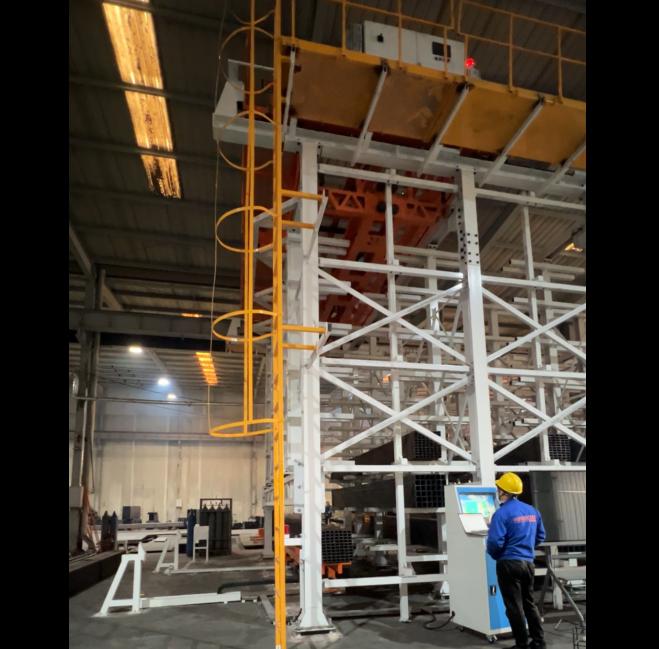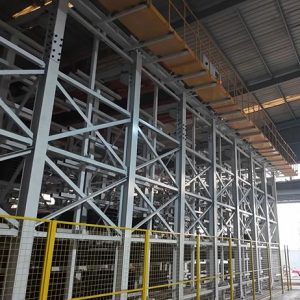
The decision to invest in automated overhead storage rarely hinges on technology alone. It hinges on throughput, labor, safety, and floor space—the metrics that determine whether a capital expenditure pays for itself. The Commercial Intelligent Overhead Bar & Pipe Vertical Storage Solutions category frames the question correctly: not “what does the system do” but “what does the system return.”
Herochu’s commercial overhead systems are engineered around three return drivers: retrieval speed, labor reduction, and digital integration with production planning.
Throughput: The 90-Second Retrieval Cycle
Manual retrieval of long materials from floor-level racks typically consumes 15 to 20 minutes per cycle—walking the rack line, operating a forklift or crane, double-checking labels, and returning to the machine. Herochu’s overhead systems complete the same cycle in under 90 seconds .
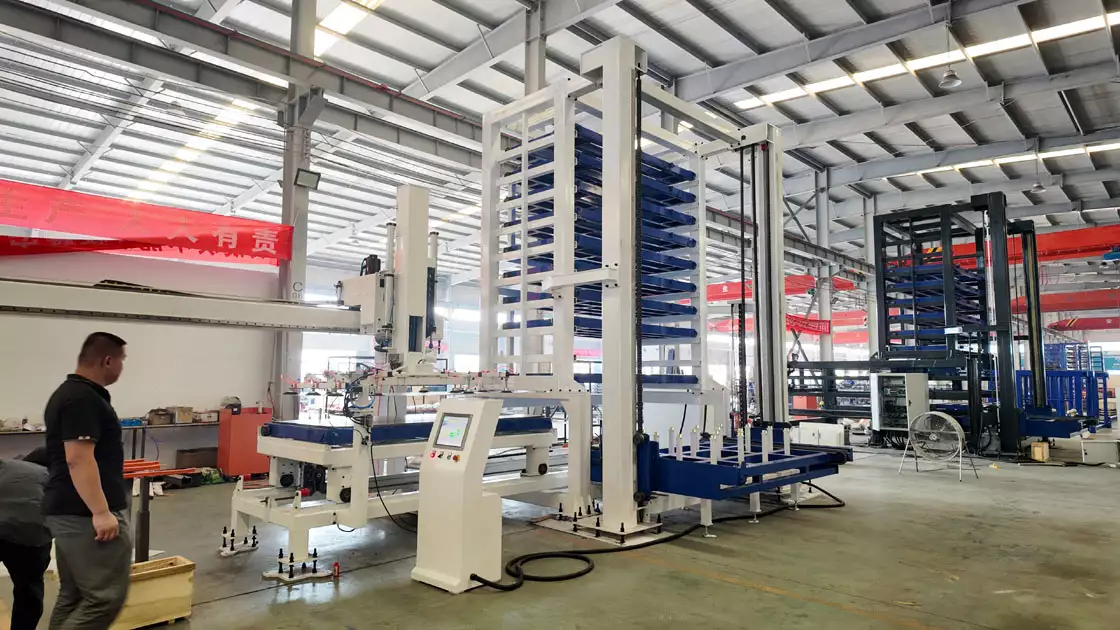
The speed comes from the entire chain being automated. A downstream machine signal starts the cycle. The PLC confirms drawer identity. The shuttle retrieves. The stock display updates before the operator reaches the pick point. There is no paperwork step, no walk to a terminal, no double-checking a label. The operator’s job narrows to taking the bundle and loading the machine .
For a facility running multiple shifts with high material turnover, the cumulative effect is substantial. A process that consumes fifteen minutes per retrieval, executed twenty times per shift, represents five hours of lost machine time. At ninety seconds, the same twenty retrievals consume thirty minutes.
Labor and Safety: The Hidden Cost Reductions
Manual handling of heavy profiles carries direct costs—labor hours, forklift operation, crane time—and indirect costs—accident risk, insurance premiums, and the productivity drag of a cautious workforce. Herochu’s overhead systems move the danger zone above ground level. Suspended loads travel above personnel traffic areas, eliminating pedestrian collision risk common in forklift handling .
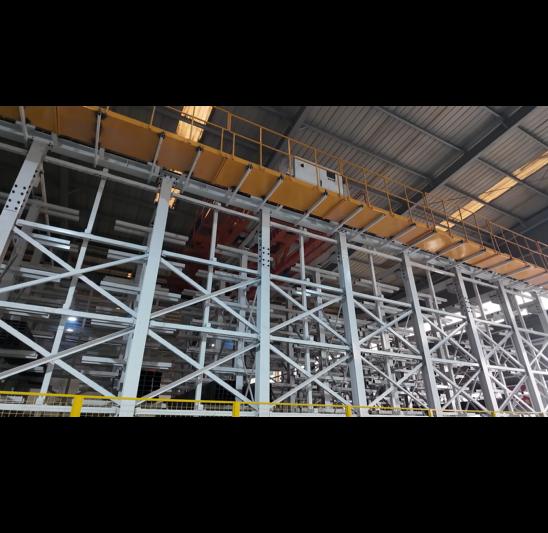
The system’s multiple anti-collision and anti-drop protections reduce accidents caused by manual handling. Laser sensors scan the travel path. Overload sensors prevent exceeding rated load. Emergency stop circuits provide redundant protection .
From a labor perspective, the system supports lights-out operation during off-shifts. Overnight and between shifts, material is delivered, cut, and consumed with minimal staffing. Day shift begins with bundles already staged at buffer positions .
Space: The 80 Percent Floor Release
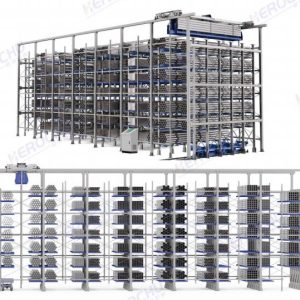
Conventional floor storage has a linear relationship between footprint and inventory capacity. Double the inventory, double the footprint. Vertical storage breaks that relationship. A typical Herochu configuration occupies 200–300 square feet while reaching heights of 30–52 feet. Compared with floor storage layouts requiring 1,500 square feet or more, ground space release exceeds 80 percent .
That released floor space can house production equipment, assembly stations, or value-added operations. For facilities where square footage carries a premium—urban fabrication shops, constrained industrial parks, facilities expanding without new construction—the space release alone can justify the investment.
Digital Integration: The Smart Factory Connection
The system’s value extends beyond physical storage. Herochu binds inventory management directly to the PLC. Every drawer is fitted with load cells that track material weight in real time. The control software triggers low-stock alerts automatically and syncs inventory data across ERP and WMS platforms .
Traceability is built in. Barcode and QR code scanners support lot- and batch-level tracking, a practical requirement for suppliers working to aerospace and automotive standards. The transaction log provides an auditable path for every bundle from receiving to consumption .
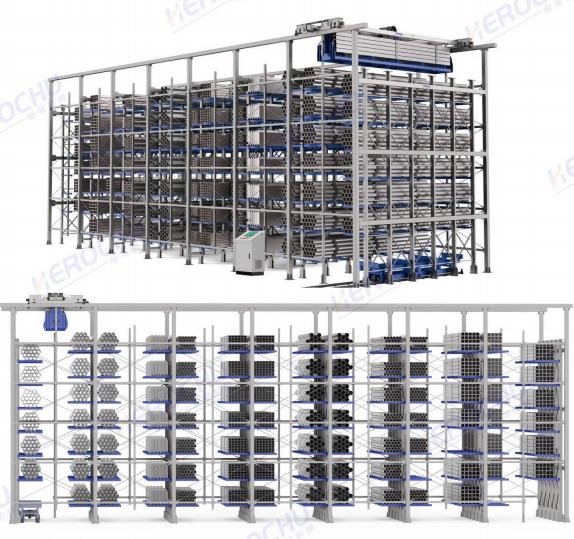
For manufacturers pursuing smart factory initiatives, the overhead storage system becomes an active data node rather than a passive rack. Production scheduling sees what material is physically on site. Purchasing sees when replenishment is needed. The storage tower behaves like another node in the material planning network rather than an island .
Customization and Expansion
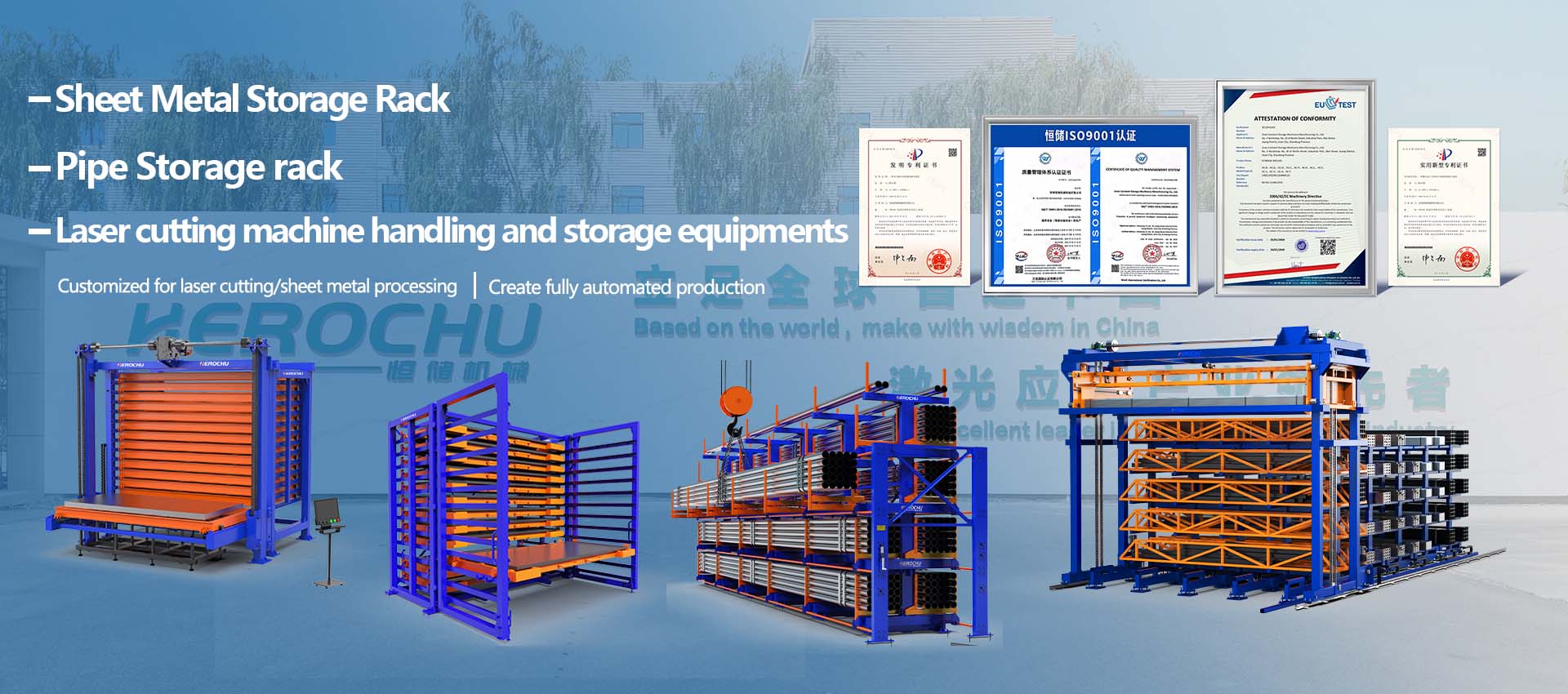
Herochu’s HC-XD series offers standard models starting with the HC-XD6083-8 at 6,000 mm and 8 layers, up to the HC-XD120105-12 at 12,000 mm and 12 towers. All models feature customizable layer counts, tower counts, and shelf layouts based on on-site material needs .
The flexible expansion path means the system grows with the business. Shelf layout can be customized based on material requirements. Storage locations and channels are expandable. For contract manufacturers that quote different work every quarter, that adaptability is the difference between a storage asset and a storage liability .
Frequently Asked Questions
What is the typical ROI timeline for a commercial overhead storage system?
ROI depends on labor rates, throughput volume, and floor space value. The primary return drivers are retrieval speed (90 seconds versus 15–20 minutes manual), labor reduction, and floor space release exceeding 80 percent .
Can the system integrate with existing ERP software?
Yes. Herochu controllers push inventory data upstream through standard industrial protocols including PROFINET, Ethernet/IP, and Modbus TCP. The system supports bi-directional data flow with ERP and WMS platforms .
How does the system support quality traceability?
Barcode and QR code scanners support lot- and batch-level tracking. The PLC logs every retrieval and deposit automatically, providing an auditable path from receiving to consumption .
What happens during a power outage or emergency stop?
Emergency stop circuits and anti-collision algorithms provide redundant protection. Recovery requires manual reset, ensuring the cause is investigated before restart. Loads remain secured in their storage positions .