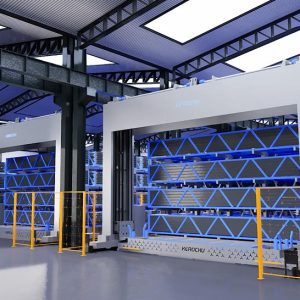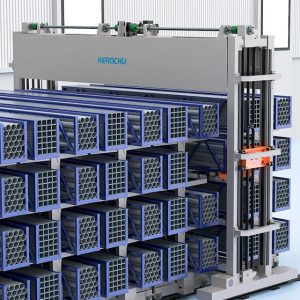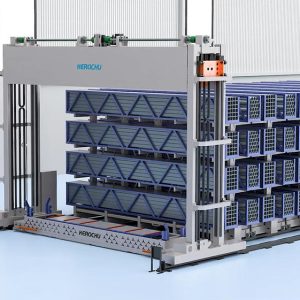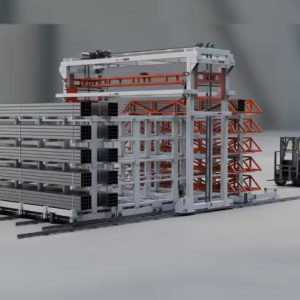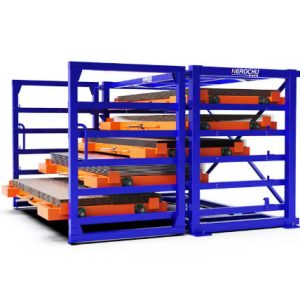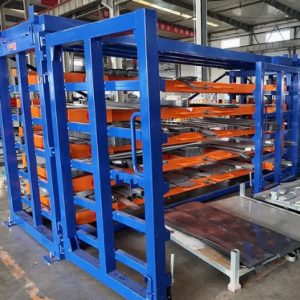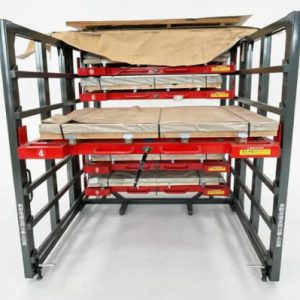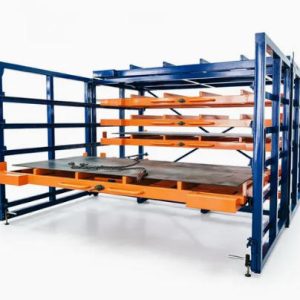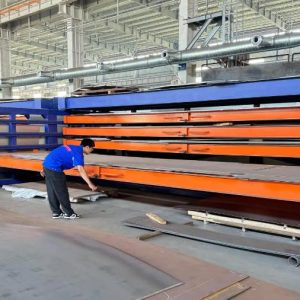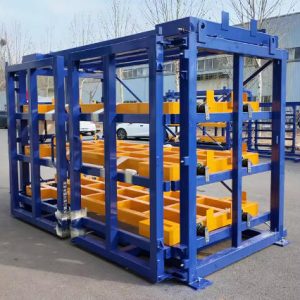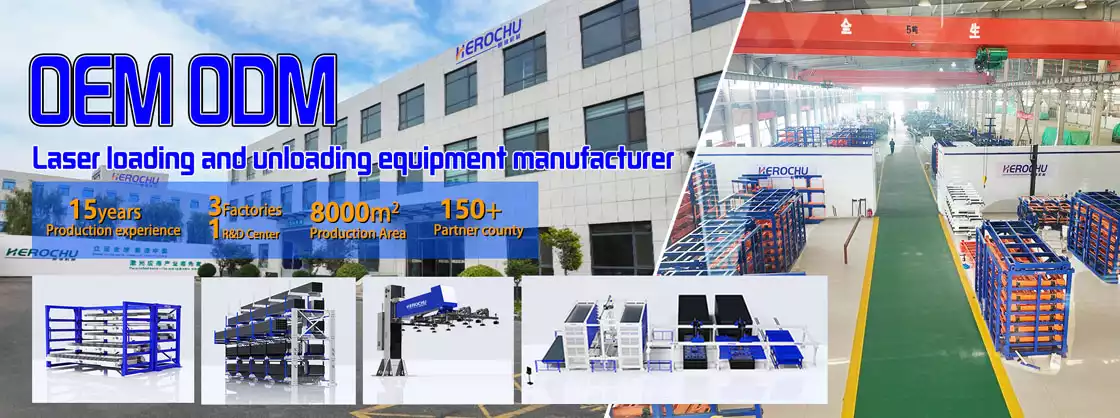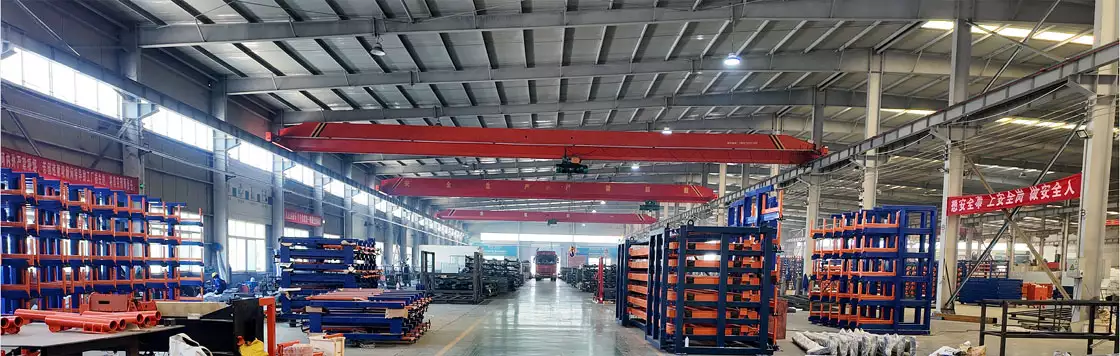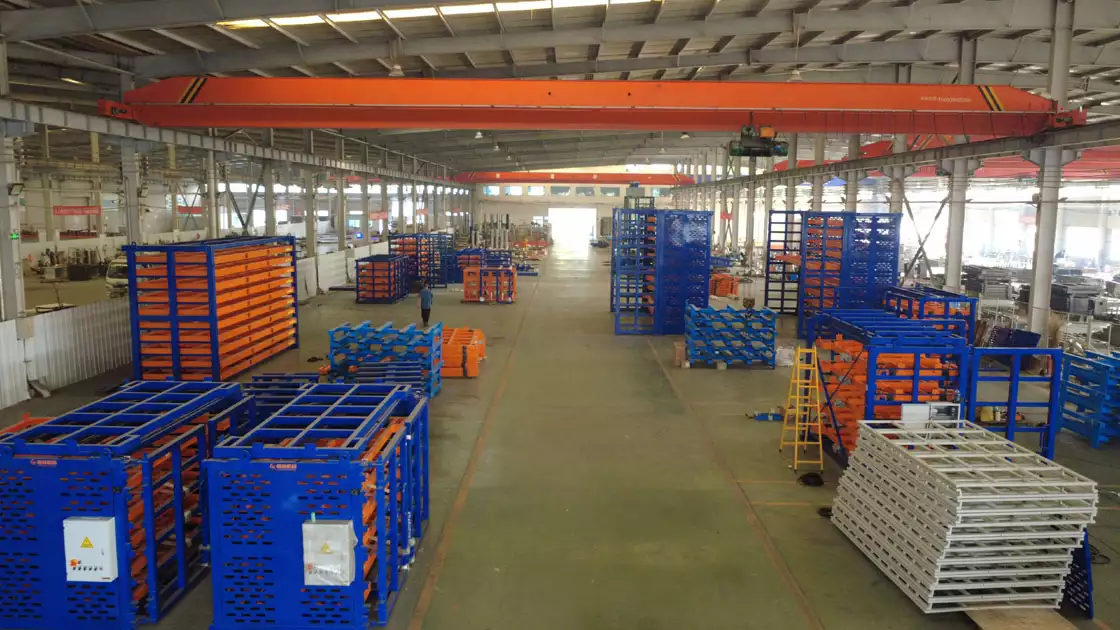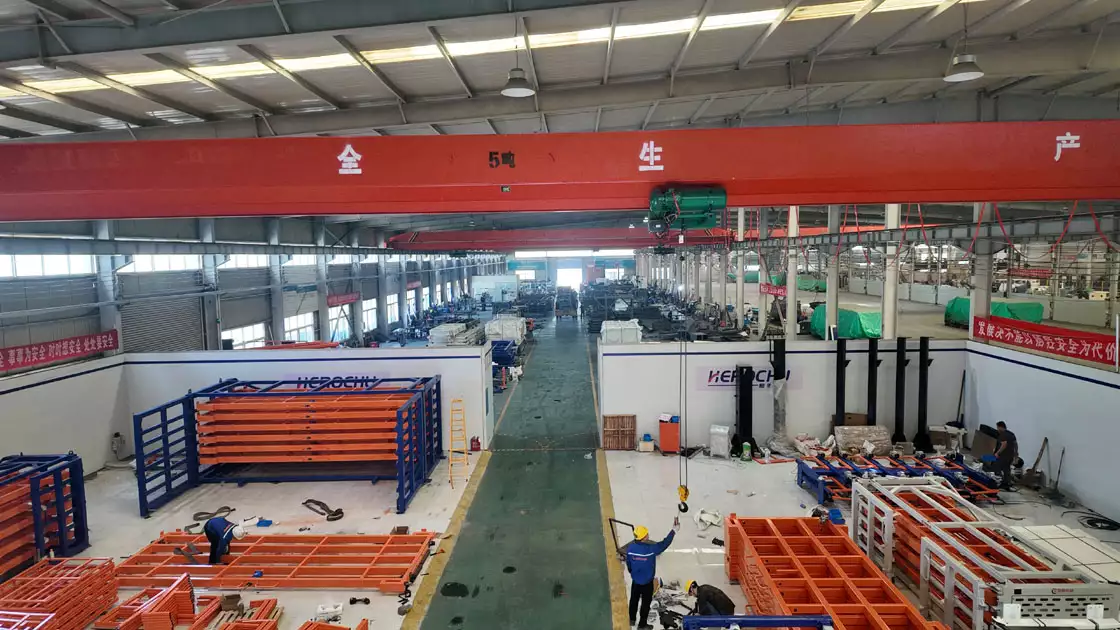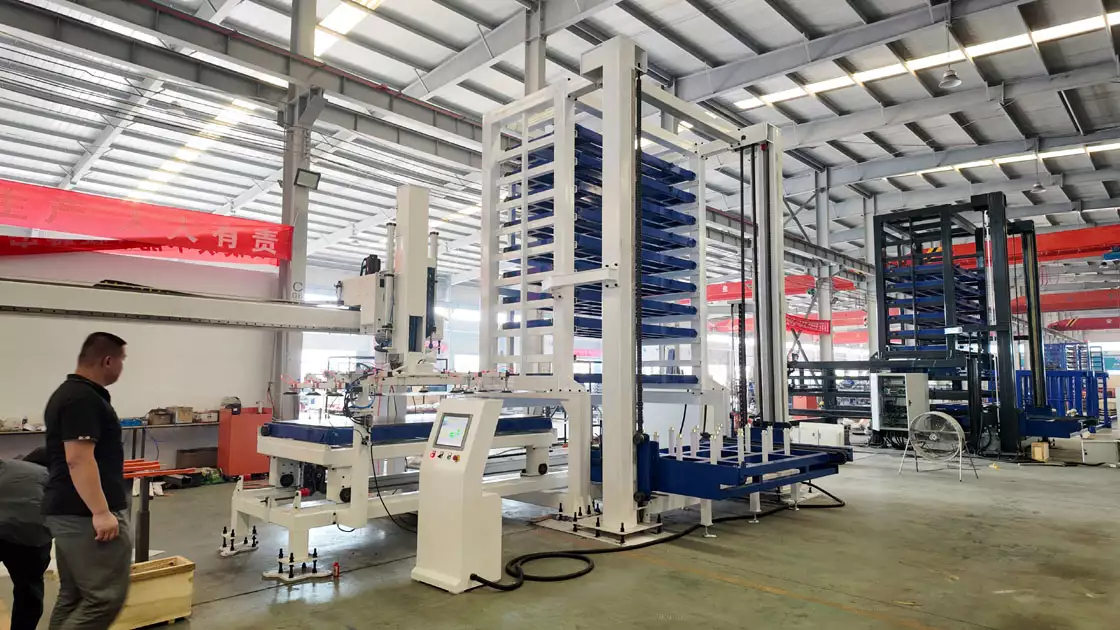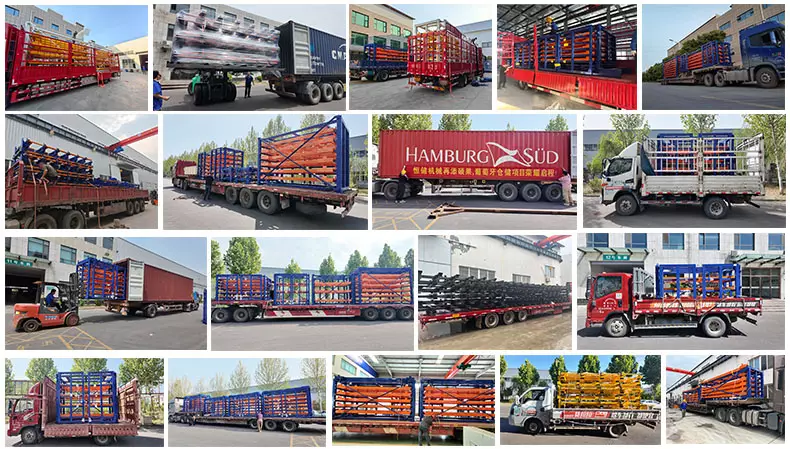
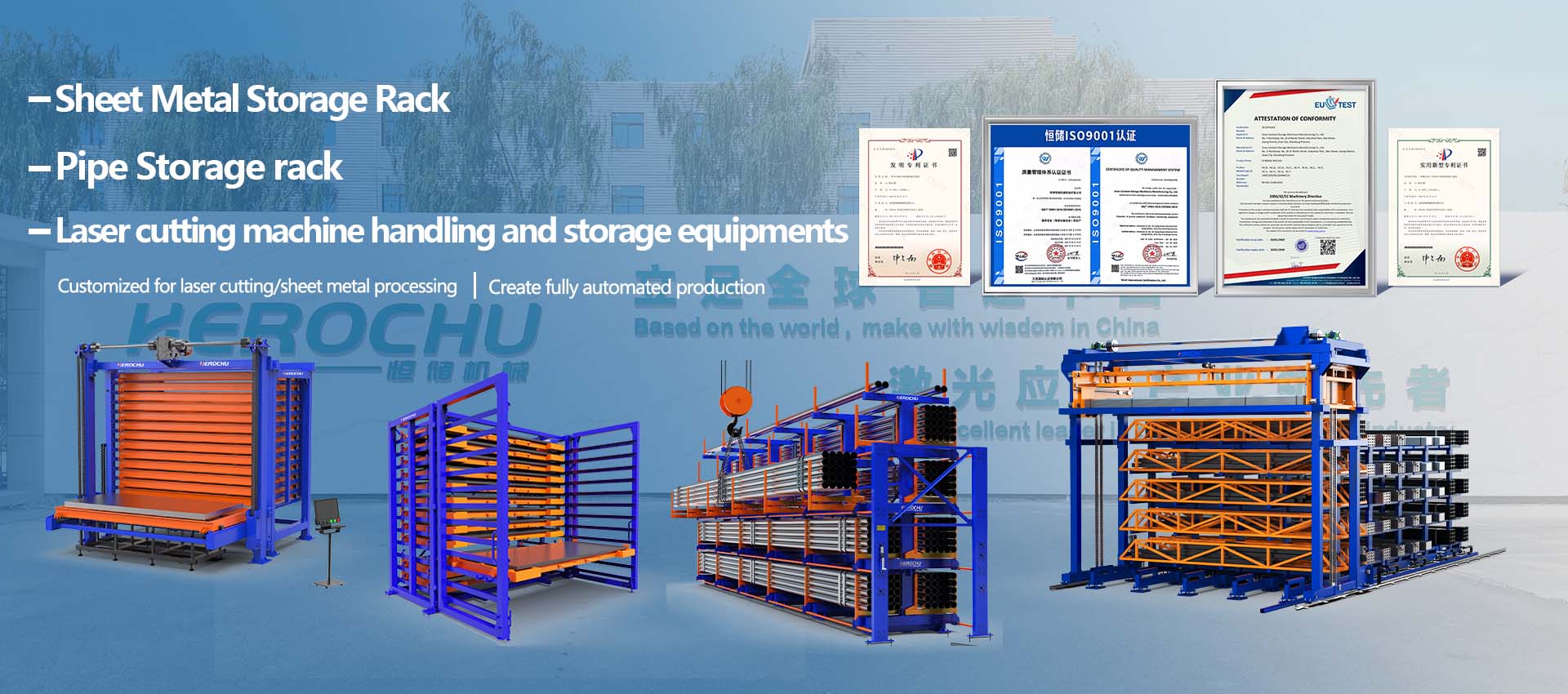
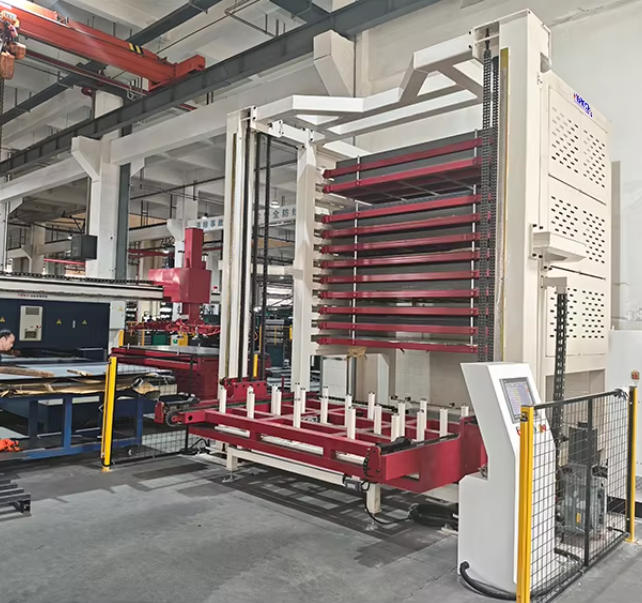
From small job shops storing 20 tons of assorted plate to industrial giants managing 500-ton inventories, the need for organized, accessible, and damage-free steel sheet storage tower solutions spans the entire metal fabrication industry. Herochu addresses this full spectrum with a product family that includes manual cantilever racks, semi-automated vertical lift units, and fully integrated tower storage system for sheet metal plates with factory automation connectivity. Rather than forcing customers into a one-size-fits-all design, Herochu offers modular sheet metal racking system solutions that scale with business growth—allowing a shop to start with standard racks and later add automation modules without discarding existing equipment.
The Three Tiers of Steel Plate Storage Towers
Herochu categorizes its steel plate storage towers into three tiers based on automation level and throughput capacity:
Tier 1 – Manual Cantilever Towers: Fixed steel structures with manually adjusted arms. Operators use a forklift or overhead crane to load and retrieve sheets. Best for shops with fewer than 20 storage positions and retrieval frequencies below 30 per shift. Price per position: low. Space efficiency: moderate (uses floor space for aisles).
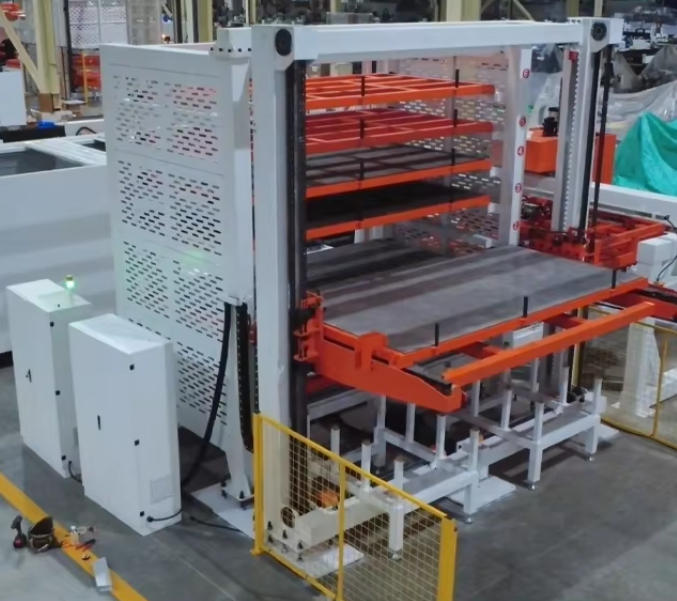
Tier 2 – Semi-Automated Vertical Lift Towers: Motorized carriages with manual sheet loading/unloading. An operator selects a position via push button; the carriage moves to that level, but the operator must push the sheet onto the carriage. Best for 20–40 positions and 30–60 retrievals per shift. Price per position: medium. Space efficiency: high (saves 60% floor space vs. racks).
Tier 3 – Fully Automated Storage Towers: PLC-controlled systems with automatic loading/unloading, conveyor integration, and ERP/MES connectivity. Best for 32–96 positions and 60–300 retrievals per shift. Price per position: high. Space efficiency: highest (saves up to 80% floor space).
Herochu engineers each tier using the same structural core—heavy steel columns, precision rails, and high-capacity carriages—so upgrading from Tier 2 to Tier 3 requires only adding sensors, actuators, and control software, not replacing the entire tower.
Customization for Non-Standard Plate Dimensions
Standard steel sheet storage tower models accommodate plate lengths from 2,000 mm to 6,000 mm and widths to 2,000 mm. However, Herochu regularly builds custom towers for specialized applications:
- Shipbuilding plates: 12,000 mm length, 3,500 mm width, 15 metric tons per position. Twin-tower configuration with reinforced columns and dual carriages per level.
- Stainless coil-processed sheets: 1,500 mm length but 8,000 mm width (cut from wide coils). Herochu designs towers with horizontal sheet orientation, using extended arms and side-stabilizing rollers.
- Non-ferrous plates (aluminum, copper, brass): Lighter weight but softer surfaces requiring padded arms and anti-tilt sensors. Herochu applies UHMW polyethylene covers to all contact surfaces.
The customization process begins with a Herochu field engineer measuring the customer’s actual sheet inventory—dimensions, weights, volumes, and retrieval patterns—then generating a 3D CAD layout of the proposed tower storage system for sheet metal plates. Customers receive a virtual walkthrough showing how the tower fits into existing workflows before any steel is cut.
Integrating Steel Plate Storage with Laser Cutting and Shearing
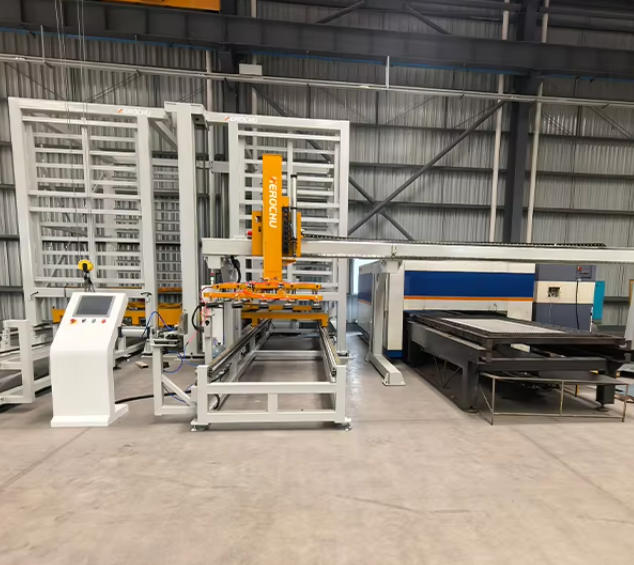
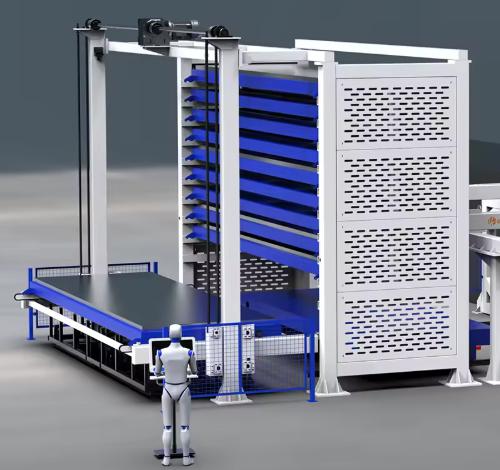
A major advantage of Herochu’s steel plate storage towers is their ability to serve as active buffers for downstream processing equipment. In a typical automated cell, the storage tower connects to a laser cutting machine via a powered roller conveyor. When the laser’s nesting software requires a specific sheet size and gauge, it sends a request to the tower’s PLC. The tower retrieves the sheet, deposits it on the conveyor, and the conveyor advances the sheet to the laser’s loading table. After cutting, remnants or skeleton sheets return to the tower for future use (if large enough) or to a scrap bin.
This closed-loop material flow eliminates the traditional “staging area” where sheets wait on floor stands or simple carts, reducing work-in-progress inventory and preventing mix-ups between different jobs. Herochu has documented a 22% reduction in setup time and a 17% decrease in material waste for customers integrating steel sheet storage tower systems with their laser cutting operations.
Safety Features Built for Heavy Plate Handling
Steel plates weighing several tons store significant potential energy. Herochu’s sheet metal racking system solutions include multiple engineering controls to prevent uncontrolled releases:
- Positive arm locks: Manual racks use spring-loaded pins that audibly click into place, confirming the arm is secured.
- Overload protection: Automated towers measure carriage load via strain gauges; if a plate exceeds the position’s rating, the system refuses retrieval and alerts the operator.
- Drop prevention: Every storage position includes a rear stop (vertical plate at the back of the arm) and a front retainer (removable bar or chain) to prevent sheets from sliding out during earthquakes or forklift impacts.
- Light curtain arrays: Automated towers stop all motion if a person enters the retrieval aisle, complying with ANSI B11.19 and ISO 13849 safety standards.
For facilities with seismic risk (Zone 3 or 4), Herochu offers seismic base isolators and cross-bracing that keep towers upright during design-basis earthquakes. Third-party testing by an accredited structural lab confirms that Herochu towers maintain arm load capacity after 1.0g horizontal acceleration.
Total Cost of Ownership Analysis
Purchasing a steel plate storage tower involves more than the initial equipment price. Herochu provides customers with a total cost of ownership (TCO) calculator comparing their current storage method (floor stacking, standard racks, or existing automation) against a proposed Herochu solution. The calculator factors:
- Floor space cost (rental or ownership carrying cost per square foot)
- Labor hours for retrieval (including walking, forklift operation, and search time)
- Material damage rate (percentage of sheet value lost to scratches, dents, or bending)
- Energy consumption (forklift fuel/electricity vs. tower’s electrical draw)
- Maintenance and spare parts (annual contract cost)
Across 47 Herochu customer case studies, the average TCO reduction from switching to a tower storage system for sheet metal plates was 34% for manual towers and 51% for automated towers. Payback periods ranged from 8 months (replacing inefficient floor stacking in high-rent urban facilities) to 26 months (replacing functional standard racks in low-rent rural shops).
Why Herochu for Your Sheet Metal Storage Project
Herochu has delivered over 1,200 steel plate storage towers across North America, Europe, and Asia since 2008. Unlike general material handling suppliers that treat sheet metal storage as a sideline, Herochu focuses exclusively on plate and sheet applications—understanding the unique challenges of heavy, wide, and easily damaged materials. Every tower comes with a five-year structural warranty, lifetime telephone support, and access to Herochu’s global network of field service technicians.
For fabricators ready to move beyond improvised storage, Herochu’s sheet metal racking system solutions offer a clear path: start with a standard cantilever tower for basic organization, add motorization when volume grows, and finally deploy full automation for lights-out operation. With Herochu, the same steel structure supports your business at every stage.