
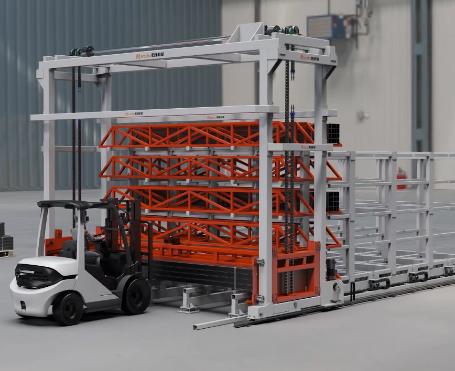
Auto-Classified Industrial Profile Storage System: Herochu Self-Optimizing Warehouse
The fundamental problem in industrial profile storage is not capacity—it is classification. A warehouse may have ample cubic footage but still suffer from slow retrieval times because no one knows exactly where a given profile is located, or because the profile was placed in an inconvenient location due to operator expediency. Manual classification systems rely on human discipline: labeling racks, updating logs, following putaway rules. These systems fail when operators are rushed, when labels fall off, or when inventory records are not updated after a retrieval. An auto-classified industrial profile storage system eliminates human error from the classification and location assignment process, using sensors and software to identify, measure, weigh, and assign every profile that enters the warehouse.
Auto-Classified Industrial Profile Storage System: Herochu Self-Optimizing Warehouse
The fundamental problem in industrial profile storage is not capacity—it is classification. A warehouse may have ample cubic footage but still suffer from slow retrieval times because no one knows exactly where a given profile is located, or because the profile was placed in an inconvenient location due to operator expediency. Manual classification systems rely on human discipline: labeling racks, updating logs, following putaway rules. These systems fail when operators are rushed, when labels fall off, or when inventory records are not updated after a retrieval. An auto-classified industrial profile storage system eliminates human error from the classification and location assignment process, using sensors and software to identify, measure, weigh, and assign every profile that enters the warehouse.
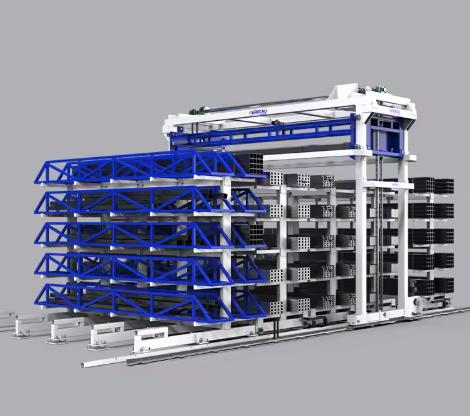
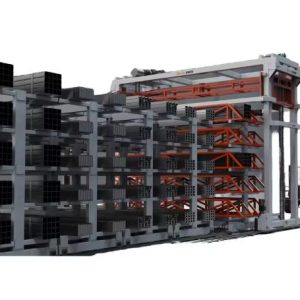
The Herochu auto-classified industrial profile storage system integrates three sensing technologies at the inbound station. First, a laser profilometer scans the incoming profile’s cross-section as it moves on the inbound conveyor. This device projects a line laser onto the profile and uses a camera to capture the deformation of the laser line, producing a high-resolution profile of the shape. The system can distinguish between round pipe (circular cross-section), square tube (square with hollow center), flat bar (rectangular solid), I-beam (I-shaped), channel (C-shaped), and angle iron (L-shaped). Second, a set of photoelectric sensors measures the length of the profile by timing how long it blocks a light beam as it moves past at a known conveyor speed. Length measurement accuracy is ±5mm over 12 meters. Third, the gripper arms on the gantry include strain gauge sensors that weigh the profile when it is picked from the inbound station. The combination of shape, length, and weight allows the system to calculate the material’s density and, by comparison with known material properties, confirm its identity. A 12-meter length of schedule 40 steel pipe has a predictable weight based on its diameter and wall thickness; if the measured weight deviates from the expected weight by more than 5%, the system flags the profile for manual inspection before storage.
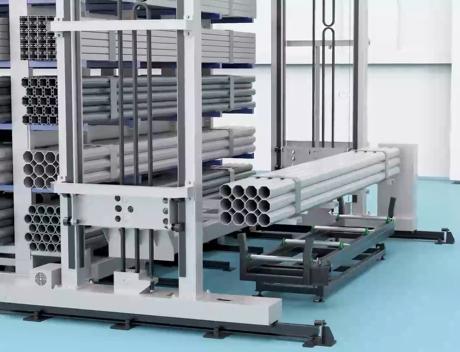
Once the inbound profile is measured and identified, the auto-classified industrial profile storage system must decide where to put it. This decision is made by the warehouse control software (WCS) using a rule-based engine with machine learning enhancements. The rules are configurable by the warehouse manager and typically include: (1) profiles of the same type should be grouped together to minimize gantry travel between retrievals; (2) frequently accessed profiles should be stored near the outbound station; (3) heavy profiles should be stored on lower levels; (4) profiles with V-support requirements (round pipes) can only be stored on levels configured with V-supports; (5) profiles that are part of a known production kit (e.g., all profiles needed for a specific product assembly) should be stored in the same tower or adjacent towers. The WCS evaluates all possible empty storage positions against these rules, assigns a score to each, and selects the highest-scoring position. The entire decision process takes less than 500 milliseconds.
The auto-classification capability extends beyond the inbound station to include periodic reclassification of stored inventory. The system maintains a database of every profile’s last-known location and condition. However, profiles can shift over time due to vibration, or their identification tags can become damaged. To address this, the gantry can be instructed to perform an inventory audit during low-activity periods. During an audit, the gantry visits each storage level, extends its gripper arms without lifting the profiles, and uses a short-range RFID reader to scan any tags attached to the profiles. For profiles without RFID tags, the system relies on the fact that the storage location was recorded when the profile was deposited; if the profile is missing from that location, the system marks it as “exception” for manual investigation. A full audit of a 500-tonne, 10-level, 4-tower warehouse takes approximately 90 minutes to complete.
The “auto-classified” label also applies to the system’s ability to handle mixed bundles. A bundle of mixed profile types—for example, a pallet containing both round pipes and flat bars—presents a classification challenge. The laser profilometer cannot scan interior profiles in a bundle. The solution is the optional bundle de-stacker, a device installed at the inbound station that uses a vacuum gripper to separate individual profiles from a bundle and present them one by one to the profilometer. The de-stacker can process a bundle of 20 profiles in about 3 minutes, classifying each one individually, after which the system stores each profile in its appropriate location. For warehouses that primarily receive material in bundles, this option is essential. For those receiving single profiles, it is unnecessary.
Weight distribution is a critical sub-function of the auto-classified industrial profile storage system. The system maintains a real-time model of the center of mass of each storage tower. When a profile is added or removed, the model updates. If adding a profile to a particular level would cause the tower’s center of mass to rise above a safe threshold (configurable, typically 60% of tower height), the system refuses the assignment and selects a lower level instead. This prevents the type of progressive instability that can occur in high-bay warehouses when heavy loads accumulate at the top over time. The weight distribution model also informs the gantry’s movement speeds. When the gantry is carrying a load that represents more than 80% of its rated capacity, the acceleration and deceleration rates are reduced to prevent dynamic instability.
The communication architecture of the auto-classified industrial profile storage system is worth describing. The WCS runs on an industrial PC located in a control cabinet adjacent to the storage zone. This PC communicates with the gantry’s onboard controller via a flexible cable track or, in some installations, a wireless industrial network. The gantry’s onboard controller handles real-time motor control, safety monitoring, and sensor data acquisition. It reports to the WCS every 100 milliseconds with position, load weight, and status information. The WCS in turn communicates with the factory’s enterprise resource planning (ERP) or warehouse management system (WMS) via standard protocols such as OPC UA or Modbus TCP. When the ERP system sends a retrieval request for a specific profile type and quantity, the WCS translates that into a sequence of gantry movements, executes them, and reports back when the profile is placed on the outbound station. The entire transaction, from ERP request to outbound confirmation, typically takes 2 to 4 minutes for a single profile, depending on the distance the gantry must travel.
For warehouses requiring integration with existing manual processes, the Herochu auto-classified industrial profile storage system can operate in a semi-automated mode. In this mode, the gantry performs putaways and retrievals as directed by a human operator using a handheld terminal or a fixed workstation. The operator scans a profile’s barcode, and the system suggests a storage location based on its classification rules. The operator can accept the suggestion or override it. This mode is useful for warehouses that receive unpredictable or one-off profiles that do not fit the classification rules. Over time, as the pattern of overrides is analyzed, the classification rules can be updated to incorporate the operator’s preferences.
Herochu provides training for warehouse staff on the operation of the auto-classified system. The training covers: interpreting system alerts, performing manual overrides, conducting inventory audits, and basic maintenance such as cleaning the laser profilometer windows and checking chain tension. Certification is offered for power users who wish to modify the classification rules and optimization parameters. The system includes a simulation mode that allows rule changes to be tested against historical inventory data before they are deployed live, preventing unintended consequences from poorly configured rules.
FAQ
Here are some frequently asked questions about our sheet metal racks and pipe storage solutions. We hope you find them helpful!
Q1: Can I request a custom size or color?
Absolutely. We offer complimentary design services and deliver efficient, tailored solutions to meet your specific requirements.
Q2: Are you a manufacturer or a distributor?
We are a direct manufacturer with over 15 years of industry experience and expertise.
Q3: Is there a minimum order quantity?
No. We welcome orders of any size, starting from a single unit.
Q4: How can I get detailed product information?
Click the “Get a Quote” button to receive product images, detailed specifications, and videos. Our team is always ready to assist.
Q5: How do I provide my storage rack requirements?
Simply share the type, dimensions, and quantity of materials you plan to store, along with any other specific needs. We will develop a professional storage solution for you. Alternatively, leave your contact details for a personalized consultation.
Q6: Do you offer automated loading systems or robotic arms?
Yes. We provide loading robotic arms and integrated loading/unloading systems tailored to your laser cutting machine’s table size and material handling method (e.g., board rack, exchange platform, or material warehouse). Contact us with your details for a customized proposal.
Q7: Do you provide on-site installation and debugging?
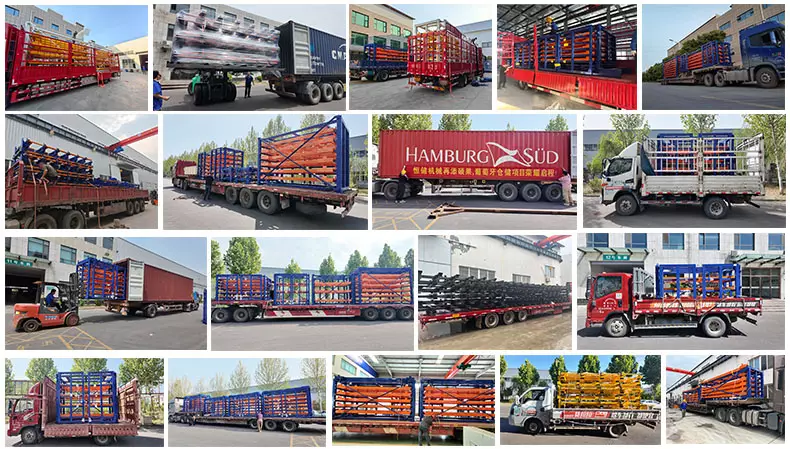
Yes. Our technicians can travel to your facility for installation and debugging, ensuring successful operation. We have served clients globally, including in the USA, South Korea, Russia, Qatar, Mexico, South Africa, Egypt, and Lebanon.
Q8: How do you ensure product quality?
Our quality assurance includes:
A team of over 40 technical engineers for professional debugging and support.
A dedicated quality control department compliant with ISO9001 standards.
CE certification for all exports.
Rigorous load testing before shipment to ensure structural safety and reliability.
Q9: Where is your factory located?
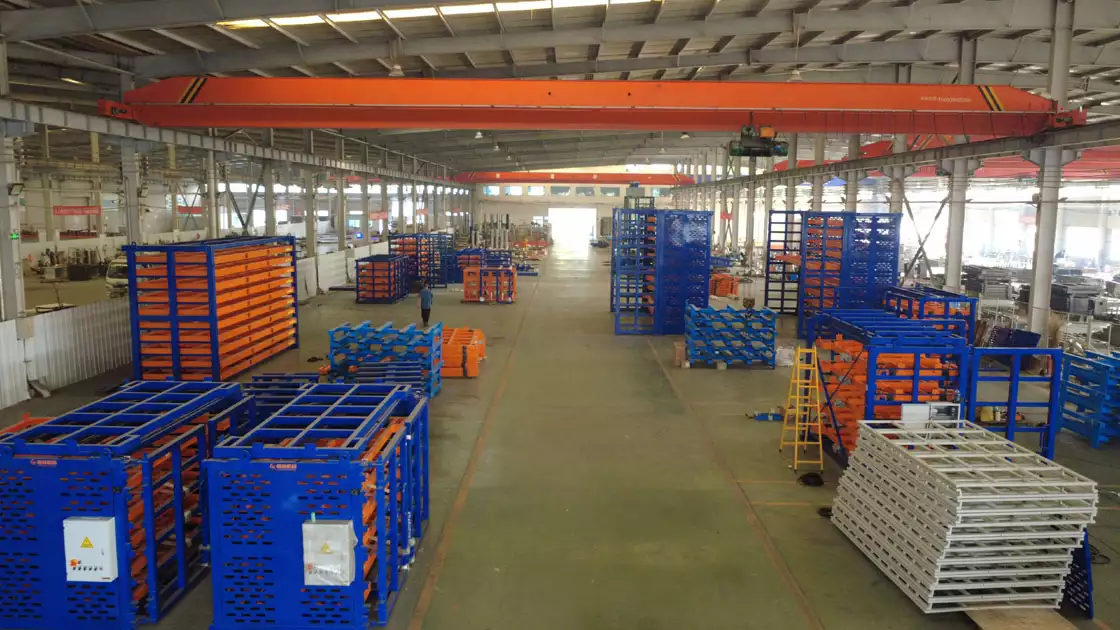
Our modern 10,000-square-meter manufacturing facility is located in Jiyang Industrial Park, Jinan, Shandong, China.
Q10: How can I evaluate your company’s capabilities?
We offer virtual video factory tours and warmly welcome on-site visits.
Q11: What does your company specialize in?
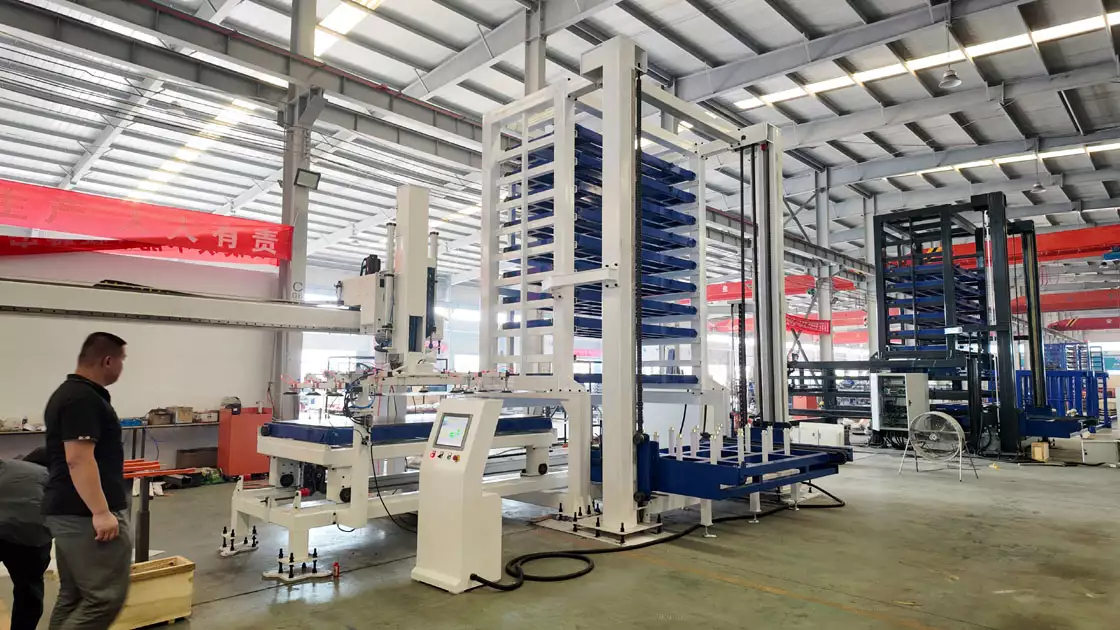
Jinan Constant Storage Machinery Manufacturing Co., Ltd. is a high-tech enterprise specializing in the R&D, production, sales, installation, and service of intelligent storage solutions. Our product range includes sheet material warehouses, drawer-style shelves, cantilever racks, servo manipulators, gantry loaders, and fully automated handling systems. Supported by a skilled technical team and advanced equipment, we are committed to delivering high-performance storage products and solutions to customers worldwide.
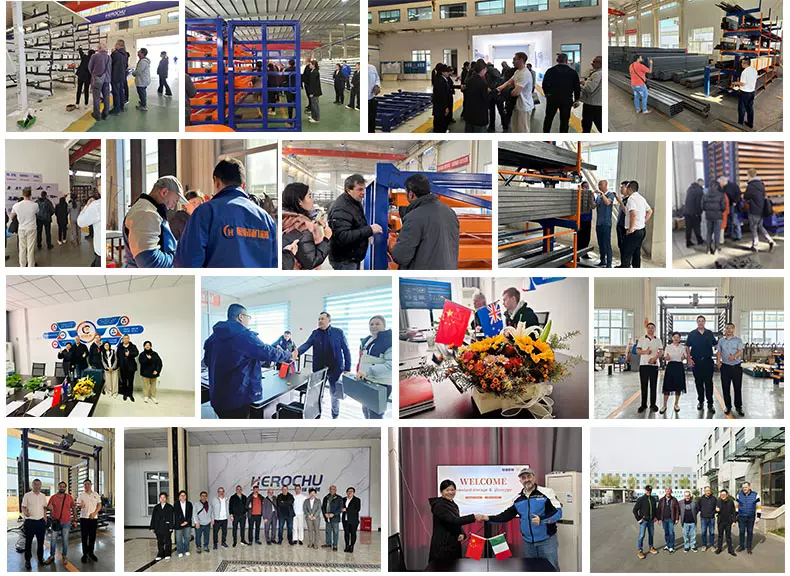
Customer visit
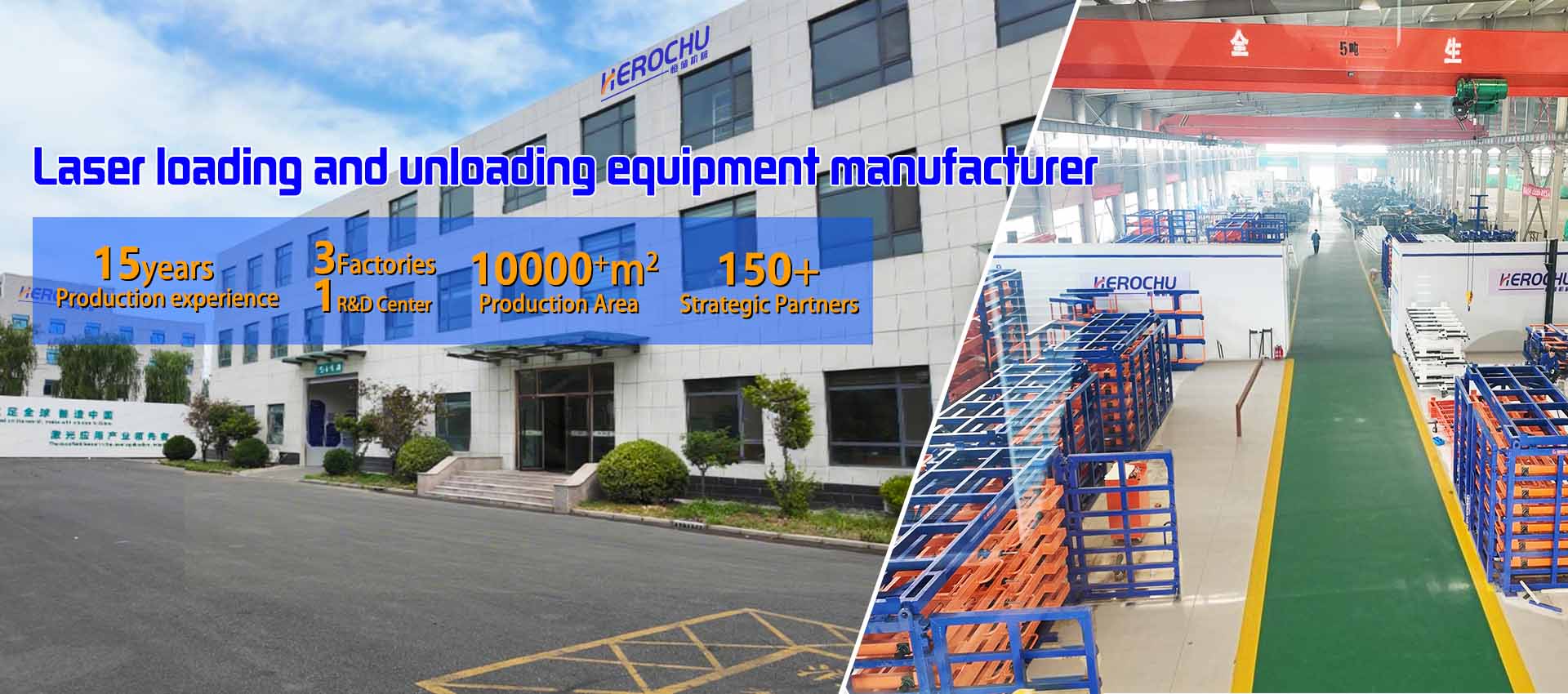
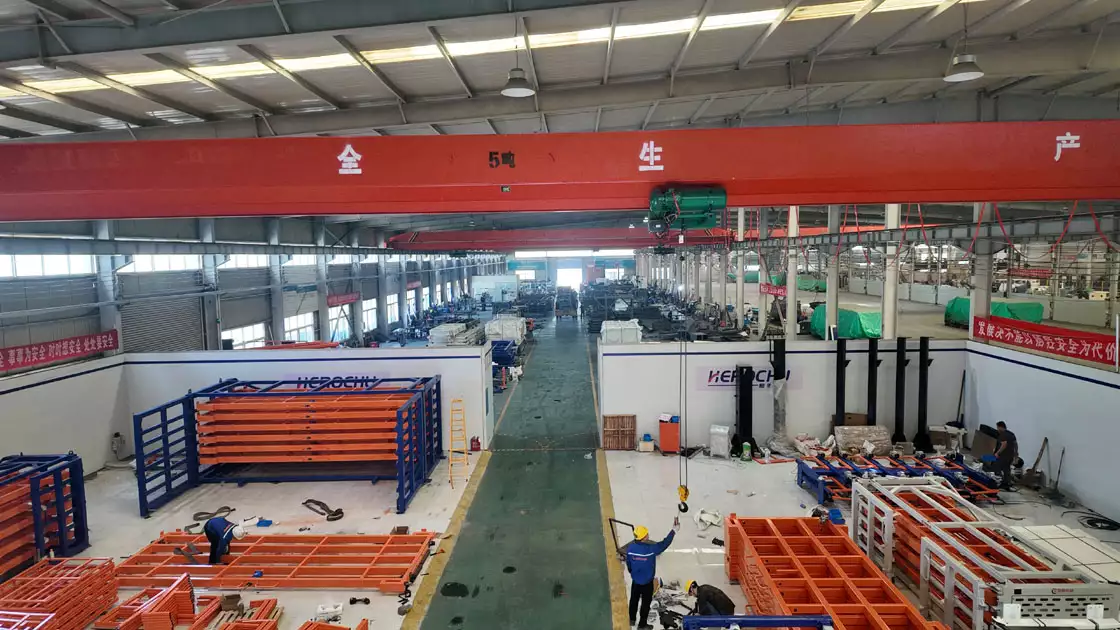
Herochu has always been adhering to the market-centric approach to meet customer requirements to the maximum extent, and the business philosophy of “creating brands with heart and gaining reputation with sincerity”. It provides customers with high-quality products and services with rigorous military quality, professionalism, and excellence, and has won unanimous praise in the Chinese aerospace, Chinese weapons, Chinese railways, automobile manufacturing, engineering machinery, non-ferrous metal titanium alloy and other industries.
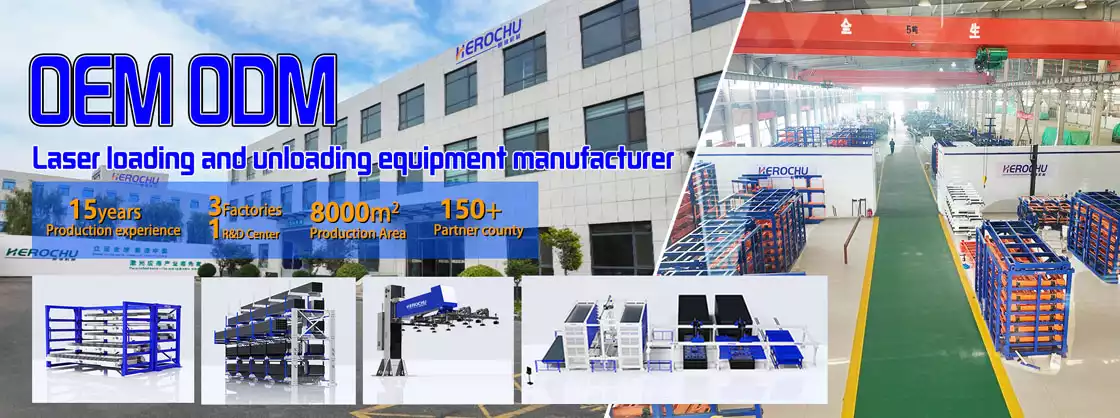
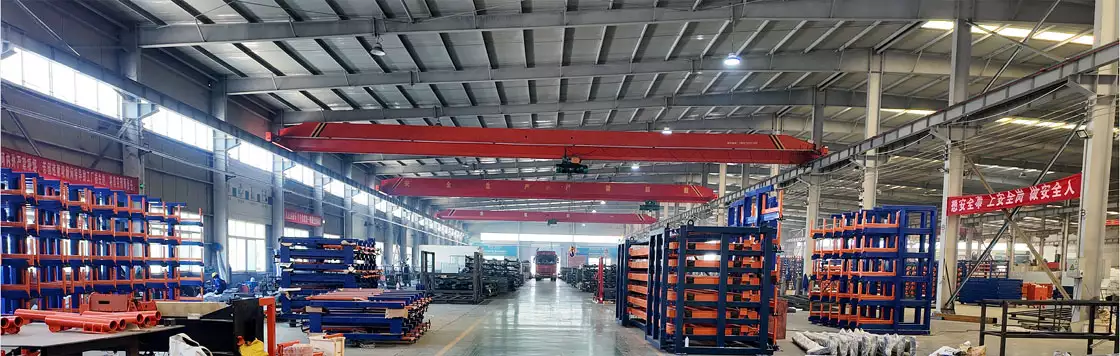
Factory

Hot Selling Machines
-
Automated Pipe Storage Systems
Automatic Storage Solutions for Metal Pipe and Profiles: The High-Capacity Standard
Read moreRated 0 out of 5 -
Automated Pipe Storage Systems
Auto-Classified Industrial Profile Storage System: Herochu Self-Optimizing Warehouse
Read moreRated 0 out of 5 -
Automated Pipe Storage Systems
Heavy Duty Smart Warehouse for Profiles: Herochu 500-Tonne High-Density Storage
Read moreRated 0 out of 5 -
Automated Pipe Storage Systems
Automated Adjustable Steel Pipes Racks: Herochu Multi-Layer Configurable Storage System
Read moreRated 0 out of 5 -
Automated Pipe Storage Systems
Automatic Storage Solutions for Metal Pipe: Herochu High-Density Intelligent Warehouse
Read moreRated 0 out of 5 -
Pipe Storage Rack
6-Meter Long Steel Pipe Storage Rack: Technical Specifications and Engineering
Read moreRated 0 out of 5 -
Heavy Duty Cantilever Racking Systems
High-Capacity Heavy Duty Shelf Factory Pipe Storage: Maximizing Space and Efficiency
Read moreRated 0 out of 5 -
Pipe Storage Rack
Heavy Duty Pipe Storage Rack: The Ultimate Solution for 6-Meter Long Steel Pipe Storage
Read moreRated 0 out of 5
Related products
-
Heavy Duty Cantilever Racking Systems
Vertical pipe Storage Rack | Heavy duty pipe storage rack
Read moreRated 0 out of 5
Product Categories