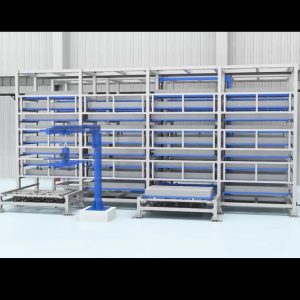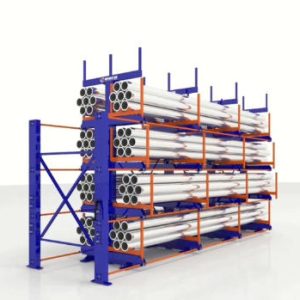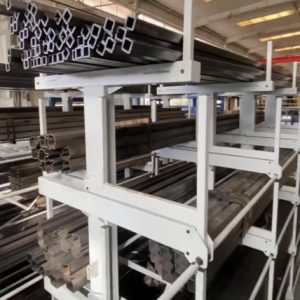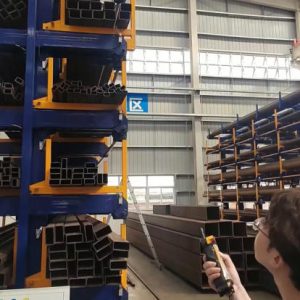
Can you build to a non-standard level count or arm depth?
Yes. Three to eight levels and arm depths from about 20 to 36 in cover most long-stock profiles, and drive length follows upright spacing. Anything outside that range needs a fresh structural check, not an edited drawing.
Should I buy single sided or double sided Cantilever Rack?
Double sided when the same material feeds two work areas or floor space is the constraint. Single sided when the rack backs onto a wall and one face is enough.
What shortens the engineering phase?
A marked-up floor plan showing the crane runway, an accurate bundle weight and a photograph of the slab. Those three usually remove a full round of questions.
Can the rack grow later?
If the base and drive are sized for additional bays at the start, extra uprights can be added in line. Retrofitting capacity onto an undersized base is not practical.
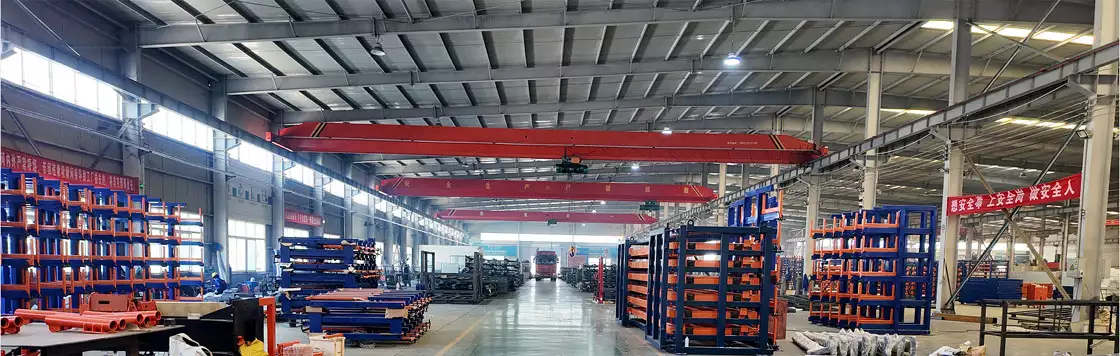
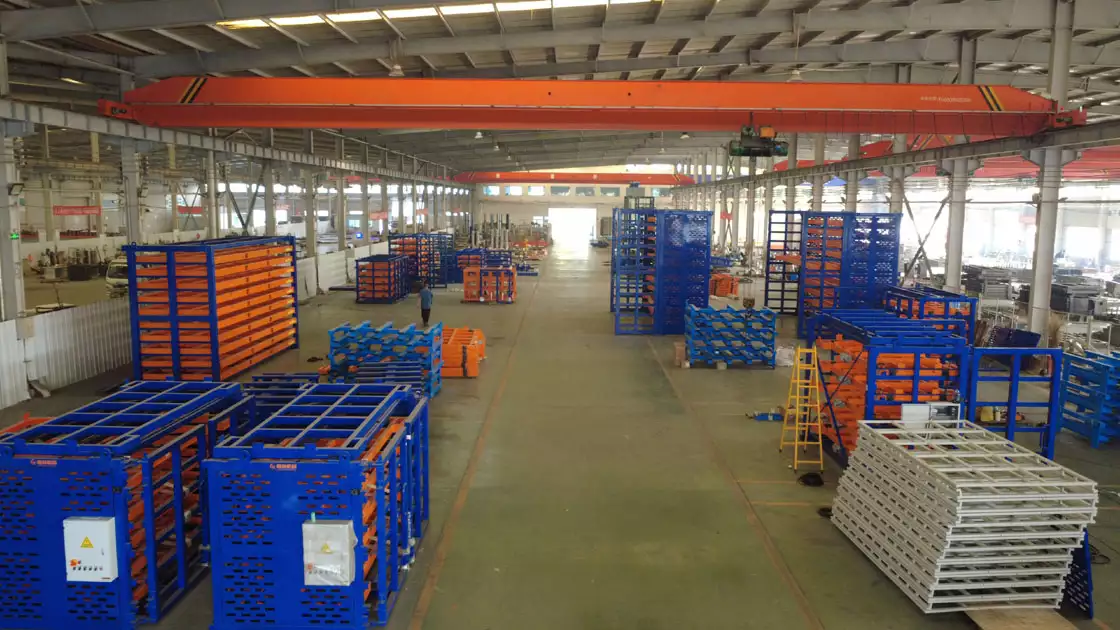
Herochu works as a cantilever rack manufacturer for plants storing 6 m steel, quoting from bundle weights and crane data rather than a size list. Every rack leaves with a load chart, anchoring details and a lubrication schedule, so installation and maintenance work from the same document.
Is 14,400 lb per level enough for 6 m pipe?
Work it out from the pipe: outside diameter, wall thickness and piece count give the bundle weight. Large-diameter pipe adds up quickly, so send the figures and let the load chart decide rather than estimating on the floor.
Can the top level be cranked out?
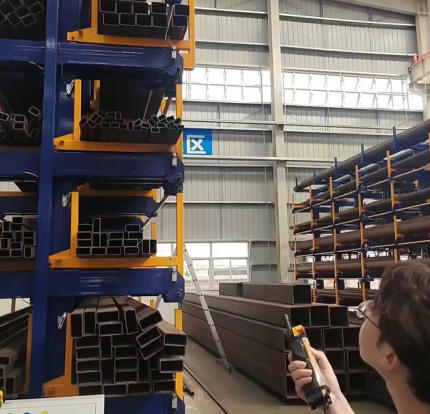
No. The top level is fixed storage. Every level below it extends up to 100 percent of arm depth for overhead access.
Can I add a level later?
Sometimes, if the uprights were prepared for it and the drive was sized for the extra carriage. It needs an engineering check, not just another set of arms.
What floor slab does the rack need?
A reinforced concrete slab sized for the loaded rack’s overturning moment, confirmed by a structural engineer. Slab thickness on its own is not enough information.
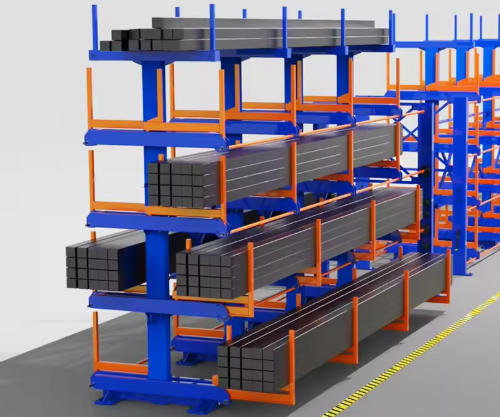
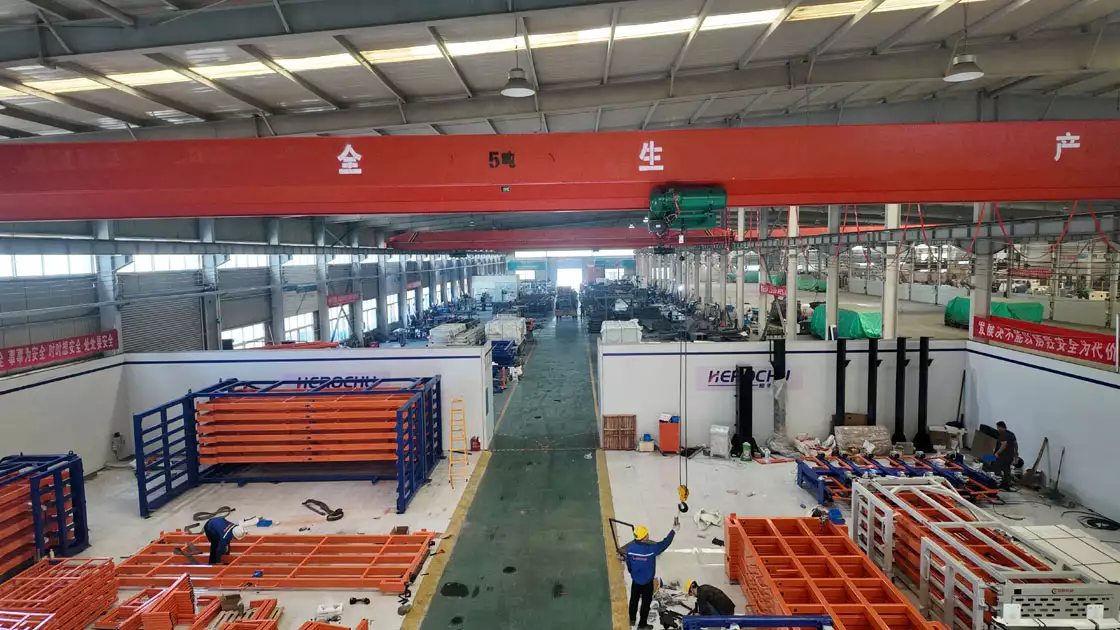
Herochu builds heavy duty crank-out racks for 6 m steel, with per-level load charts, anchored bases and guarded chain drives. Send the section list, bundle weights and hook height, and the specification comes back sized to the load rather than to a standard bay.
Can the crank move a fully loaded shelf?
Yes. The reduction gearing is sized for a loaded start, which is why the arms glide out instead of jerking. If a loaded level needs unusual force, stop and inspect the chain and track.
Does it need electricity or compressed air?
No. The drive is mechanical, so the rack works in unserviced areas of a plant and during power interruptions.
How many levels can one rack have?
Three to eight levels are practical, four being the common starting point. More levels change drive length and upright load, so the count is confirmed at the engineering stage.
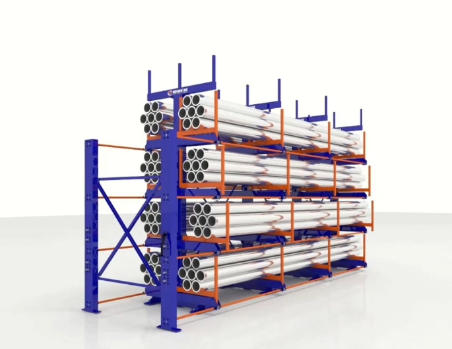
Can it hold pipe as well as profiles?
Yes, with dividers, cradles or shaped liners to stop round stock rolling. The same upright line can carry pipe on one face and profiles on the other.
Herochu builds manual crank-out racks for shops that want overhead access without adding a power feed or a hydraulic system. Send the material list, bundle weight and hook height, and the layout follows from those numbers.
Can both sides of the rack be loaded at the same time?
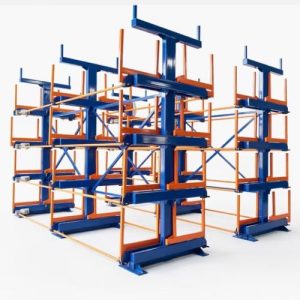
Yes. Each face has its own arm sets on the shared column line, and every level cranks out independently. A crane can work one face while the other stays loaded, which suits plants feeding two machines from the same stock.
How much weight can one level hold?
The standard four-level build is rated at 14,400 lb (6,532 kg) per level, assuming an evenly distributed bundle over the full arm depth. A load concentrated at the arm tip reduces it, and Herochu issues a load chart with each rack.
Do the arms extend while loaded?
Yes. The crank and reduction gearing start a loaded level from rest and glide it out to full extension. Partial extension is normal too; stop wherever the crane needs clearance.
Is an overhead crane essential?
The design assumes overhead access. Without a crane or hoist the rack still stores profiles, but extension loses its advantage and handling falls back to forklifts.
For a 6 m extrusion line, four answers decide the layout: profile section, bundle weight, hook height and crane travel. Herochu engineers crank-out racks around those answers, with arm depths, level counts and liners matched to the material.