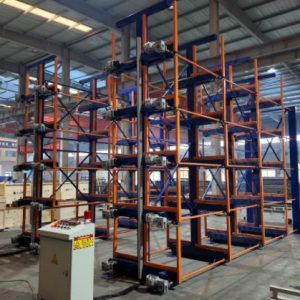
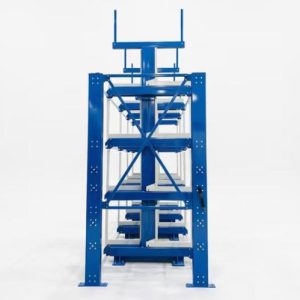
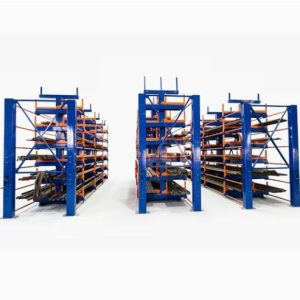
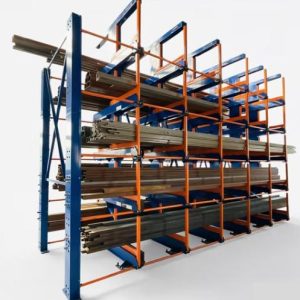
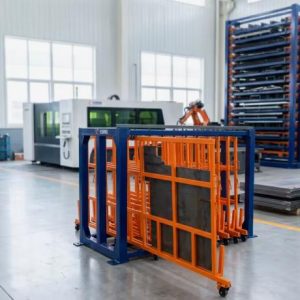
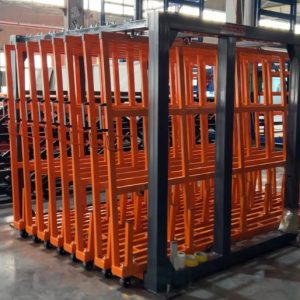
Fiber laser cutting machines process a wide range of metals—carbon steel, stainless steel, aluminum, copper, and various alloys—each with distinct physical properties that affect how material must be handled. A loading system designed for one material type often fails when switched to another, causing surface damage, sheet misalignment, or double-sheet errors. Herochu’s fiber laser sheet metal loading system addresses this challenge through programmable material handling recipes and a dual end-effector design that adapts to each material’s specific requirements.
Material-Specific Handling Challenges
Carbon steel plates typically arrive with mill scale and oil films that cause sheets to stick together in storage. Stainless steel sheets have reflective, work-hardened edges that resist mechanical separation and are sensitive to surface contact marks. Aluminum plates are lightweight, easily scratched, and frequently delivered with protective plastic films that must remain intact through the loading process.
A single loading mechanism cannot handle all three materials effectively. Vacuum cups calibrated for heavy carbon steel apply too much force for aluminum surfaces. Mechanical grippers designed for steel skeletons may damage aluminum sheet edges. The Herochu system solves this through a dual end-effector architecture and programmable handling recipes that adjust operating parameters to the selected material.
Dual End-Effector Design
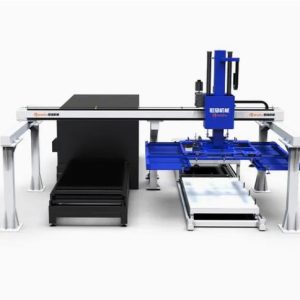
The gantry robot carries two independent end-effector systems:
Vacuum Suction Array: Used for loading raw sheets onto the laser bed. The array consists of multiple vacuum cups with soft-compound contact surfaces that distribute holding force across the sheet. Each cup operates on an independent control circuit—when positioned over a cutout, hole, or open area, that cup deactivates automatically to prevent vacuum loss. The system maintains holding force on the remaining contact points without pressure bleed.
For aluminum sheets with protective films, the vacuum cups apply reduced contact pressure and softer engagement to prevent film tearing or surface marring. For heavy carbon steel, the system increases vacuum pressure and applies more aggressive air-blast separation to break oil adhesion between stacked plates.
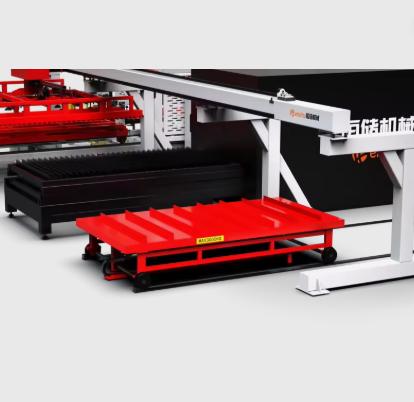
Mechanical Gripper System: Used for unloading cut parts and skeletons from the laser bed. The gripper uses positive mechanical engagement—clamping the skeleton frame at predetermined points and dragging the entire cut sheet off the bed as a unit. This prevents small nested parts from shifting, falling, or becoming mixed during transfer.
The gripper applies force calibrated to the material type and thickness, avoiding deformation of thin-gauge aluminum parts while maintaining secure engagement with heavy steel skeletons. Operators select the appropriate material recipe on the HMI touchscreen before beginning a production run.
Programmable Material Recipes
The PLC controller stores material-specific handling parameters that adjust automatically when an operator selects a material type:
- Aluminum: Reduced vacuum pressure, softer contact engagement, slower Z-axis acceleration, gentle fork opening speed. Air injection pressure reduced to avoid bending thin sheets.
- Carbon Steel: Maximum vacuum suction, aggressive air-blast separation at 0.6–0.7 MPa, higher Z-axis acceleration, standard fork speed. Thickness verification sensors calibrated for dense material.
- Stainless Steel: Moderate vacuum pressure with soft-contact cups, standard air injection, controlled acceleration to avoid edge contact marks. Thickness sensors adjusted for reflective surface conditions.
These recipes eliminate the need for manual parameter adjustment when switching between materials. The operator selects the material grade on the HMI, and the system configures every handling parameter for that material automatically.
Sheet Size and Weight Capacity
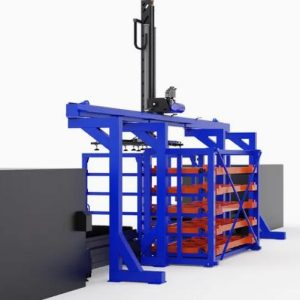
The HC-A series handles sheet dimensions from 3000×1500 mm up to 6000×2500 mm, with maximum sheet weight of 500 kg per cycle. Four model configurations cover different production requirements:
- HC-A3015-83: 3000×1500 mm, 8 layers, 3000 kg tier capacity
- HC-A4015-85: 4000×1500 mm, 8 layers, 5000 kg tier capacity
- HC-A4020-85: 4000×2000 mm, 8 layers, 5000 kg tier capacity
- HC-A6020-105: 6000×2000 mm, 10 layers, 5000 kg tier capacity
The loading arm horizontal speed ranges from 10 to 30 m/min, Z-axis lifting speed from 5 to 10 m/min, and fork opening/closing speed from 5 to 20 m/min. Positioning repeatability is ±2 mm across the full gantry travel range.
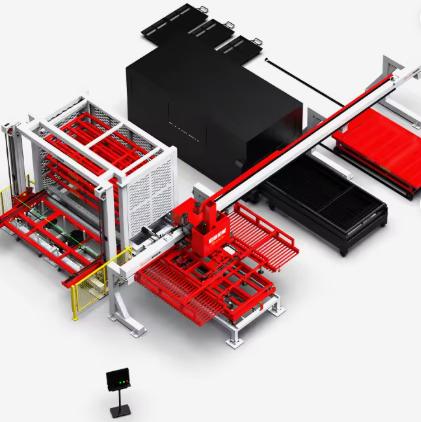
Gantry Structure and Travel System
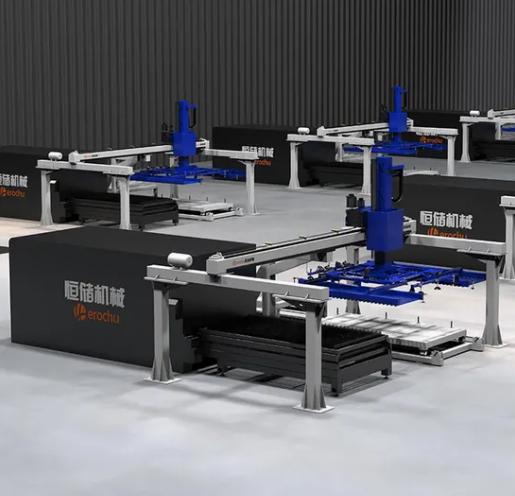
The loading gantry is built on a dual-girder composite truss structure, providing the rigidity needed to maintain positioning accuracy over long travel strokes. Guide rails mounted on the floor or elevated supports direct the gantry along its travel path, with the truss design distributing load evenly across both girders to prevent deflection under maximum sheet weight.
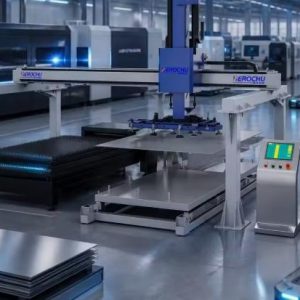
For facilities requiring long-distance material transport—such as moving sheets from a remote storage area to multiple laser cutting machines—the gantry rail system extends to accommodate travel distances of 50 meters or more. The composite truss maintains structural stiffness across these extended spans without the deflection that would compromise positioning accuracy.
Orientation Control for Mixed Production
Laser cutting programs require sheets in specific orientations—some jobs call for longitudinal feeding while others need transverse positioning. The Herochu loading system includes a pneumatic 90-degree rotation mechanism that reorients sheets between the storage tower and laser bed. When the nesting software specifies a particular sheet orientation, the system rotates the sheet during transfer without adding cycle time to the loading sequence.
This rotation capability allows a single storage tower to supply sheets to laser machines with different bed orientations, and supports job sequences that alternate between longitudinal and transverse cutting programs.
Surface Protection and Quality Assurance
For fabricators producing parts with cosmetic surface requirements—stainless steel panels, aluminum enclosures, or painted components—material handling quality directly affects finished part quality. The Herochu system’s soft-contact vacuum cups, material-specific recipes, and controlled acceleration curves prevent the scratches, dents, and edge deformations that manual handling or single-mode loading systems commonly cause.
Every transfer cycle is logged with material type, sheet dimensions, cycle time, and handling parameters used. This production data supports quality traceability—when a surface defect appears on a finished part, the handling records identify whether the issue originated in the loading process or the cutting operation itself.
Herochu’s fiber laser sheet metal loading system gives fabricators a single automated solution that handles the full range of metals processed on fiber laser equipment, with material-specific parameters that protect each surface and maintain cutting accuracy across mixed-material production schedules. The HC-A series models scale from the HC-A3015-83 for standard 3000×1500 mm sheets to the HC-A6020-105 for large-format 6000×2000 mm plates, ensuring that every fabrication shop—regardless of sheet size or material mix—can achieve continuous, automated loading that matches the speed and precision of modern fiber laser cutting technology.