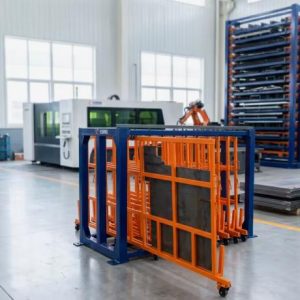
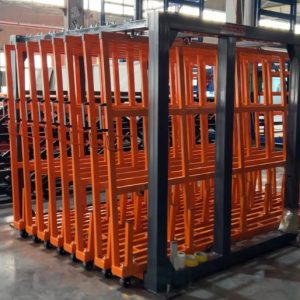
Laser cutting machines generate revenue only when the cutting head is active. Every minute spent waiting for an operator to load a fresh sheet or clear a finished nest represents lost capacity that compounds across shifts. Herochu’s industrial laser loading unloading solution targets this specific inefficiency with a gantry-based robotic system that handles both the loading of raw material and the unloading of cut parts from multiple laser beds.
Dual-Action Loading and Unloading Cycle
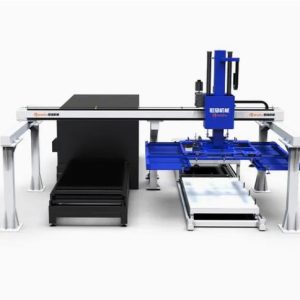
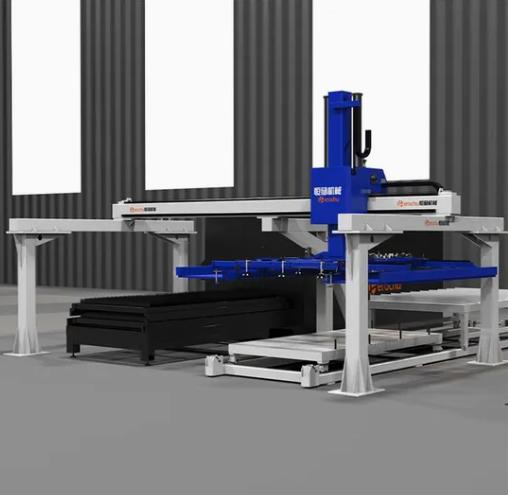
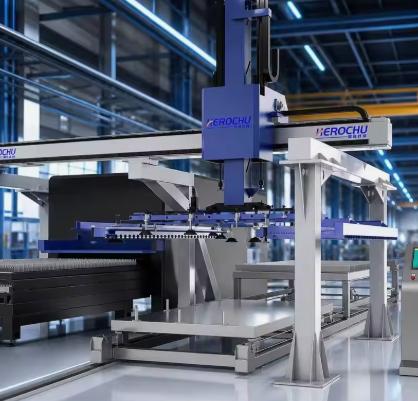
The core of the Herochu system is a gantry robot equipped with dual end-effectors that perform loading and unloading in a single coordinated pass. When a laser cutting cycle completes, the gantry moves to the cutting bed with both the next raw sheet staged on its loading forks and an empty unloading mechanism ready to receive the cut parts.
The sequence operates as follows: the unloading mechanism engages the cut sheet—parts and skeleton together—and lifts it clear of the bed. The loading forks then deposit the new raw sheet onto the exchange table. The gantry transports the cut parts to the unloading station or material cart while the laser begins its next cutting program. This exchange takes place in a fraction of the time required for manual loading and unloading.
Fork Mechanism and Speed Parameters
The loading forks operate at opening and closing speeds of 5 to 20 m/min, adjusting to the sheet dimensions being handled. The gantry arm travels horizontally at 10 to 30 m/min and lifts on the Z-axis at 5 to 10 m/min. These speed ranges allow the system to match its pace to the laser cutting cycle time, ensuring material is always staged and ready when the machine signals for the next sheet.
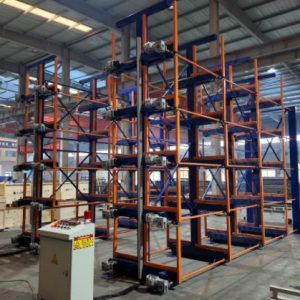
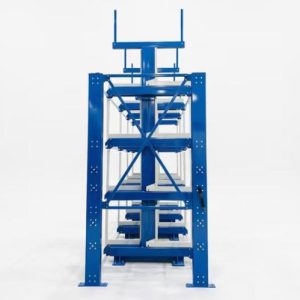
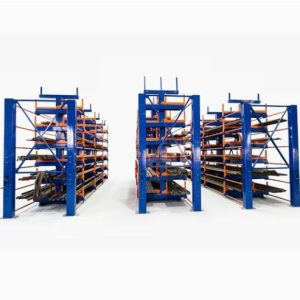
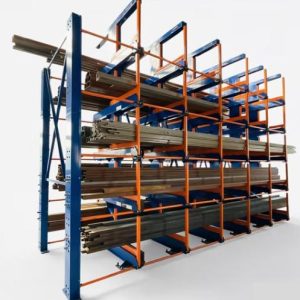
Maximum sheet weight capacity is 500 kg, covering the full range of standard plate thicknesses that fiber lasers process. The system handles sheet dimensions from 3000×1500 mm up to 6000×2000 mm across four model configurations:
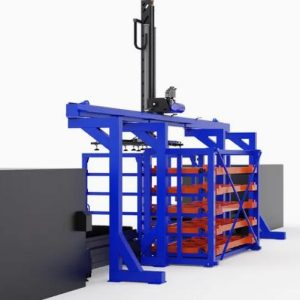
- HC-A3015-83: 3000×1500 mm sheets, 8 storage layers, 3000 kg tier capacity
- HC-A4015-85: 4000×1500 mm sheets, 8 storage layers, 5000 kg tier capacity
- HC-A4020-85: 4000×2000 mm sheets, 8 storage layers, 5000 kg tier capacity
- HC-A6020-105: 6000×2000 mm sheets, 10 storage layers, 5000 kg tier capacity
Skeleton and Part Unloading Strategy
Unloading cut parts from a laser bed presents distinct challenges compared to loading raw sheets. Cut nests often contain small parts held in place by micro-tabs, skeletons with complex geometries, and scrap pieces that shift during handling. Herochu addresses this with a mechanical gripper system that uses positive engagement—grabbing the skeleton frame at strategic points and dragging the entire cut sheet off the bed as a unit.
This approach prevents small nested parts from shifting or falling during transfer. The gripper applies controlled force calibrated to the material type and sheet thickness, avoiding deformation of thin-gauge parts while maintaining secure engagement with heavy skeletons.
For raw sheet loading, the system uses a vacuum suction array with soft-compound cups that distribute contact force across the sheet surface. This prevents scratches, dents, or edge damage on materials with sensitive surfaces—particularly stainless steel and aluminum plates that may carry protective films.
Multi-Machine Coordination
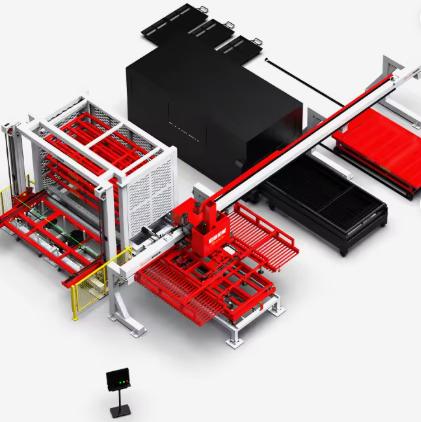
Fabrication shops running multiple laser cutters face the challenge of coordinating material delivery to several machines simultaneously. A single Herochu gantry can serve two laser cutting beds, alternating between them based on real-time status signals from each machine’s control system.
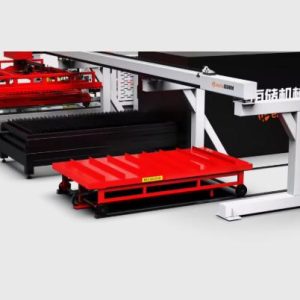
The PLC controller maintains a priority queue—when both machines request material simultaneously, it routes the next available sheet to the machine with the higher production priority. Transfer carts move raw material from the storage tower to the gantry pickup zone, and the gantry loads each machine in sequence without operator direction.
This multi-machine architecture reduces the equipment footprint per laser cutter. Instead of dedicating a separate loading system to each machine, one gantry and one storage tower serve two cutting beds, lowering both capital investment and floor space requirements.
Integration with Production Scheduling
The loading and unloading system connects to the facility’s nesting software and production scheduling system through standard industrial communication protocols. When a new job sequence is loaded into the nesting software, the storage tower receives advance notice of which material grades, thicknesses, and sheet sizes will be required.
The tower pre-stages the appropriate sheets in the transfer queue, so when the laser machine completes its current cycle, the next sheet is already positioned at the gantry pickup point. This predictive staging eliminates the delay between job completion and material availability that typically occurs when operators must locate and retrieve material manually.
Operator Interface and Control Modes
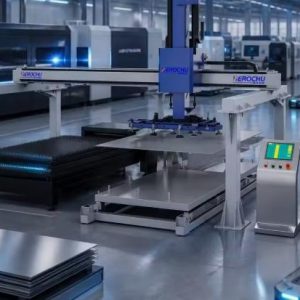
The HMI touchscreen provides operators with full visibility into the loading and unloading cycle. The display shows gantry position, fork status, vacuum pressure, current sheet dimensions, and the next three scheduled transfers. Operators can pause the automatic cycle, override the material selection for non-standard sheets, or initiate a manual single-sheet load for testing purposes.
Alarm conditions—such as material depletion in the storage tower, vacuum pressure loss, or machine communication errors—trigger immediate visual and audible alerts on the HMI. The system logs every event for production analysis, including cycle times, material usage, and downtime causes.
Protecting Laser Machine Investment
Fiber laser cutting machines represent significant capital investments, and their productive hours directly determine return on investment. Herochu’s industrial laser loading unloading solution maximizes those productive hours by ensuring the cutting head never waits for material. The gantry robot, storage tower, and transfer cart work as an integrated cell that keeps every connected laser cutter fed with raw material and cleared of finished parts—continuously, automatically, and without the labor costs and cycle time variability of manual handling.
The HC-A series scales from the compact HC-A3015-83 handling 3000×1500 mm sheets to the HC-A6020-105 processing 6000×2000 mm plates with 10 storage tiers. Transfer speeds of 5 to 15 m/min for the material cart and 10 to 30 m/min for the gantry arm ensure that material delivery keeps pace with even the fastest fiber laser cutting cycles. For fabrication shops seeking to convert batch-oriented laser cutting into continuous automated production, Herochu provides a proven solution that integrates storage, handling, and loading under unified PLC control.