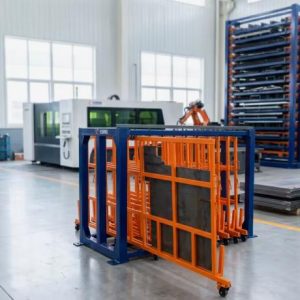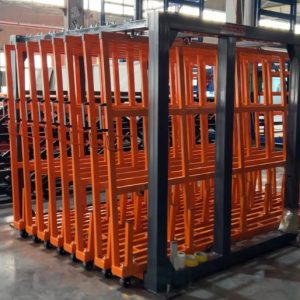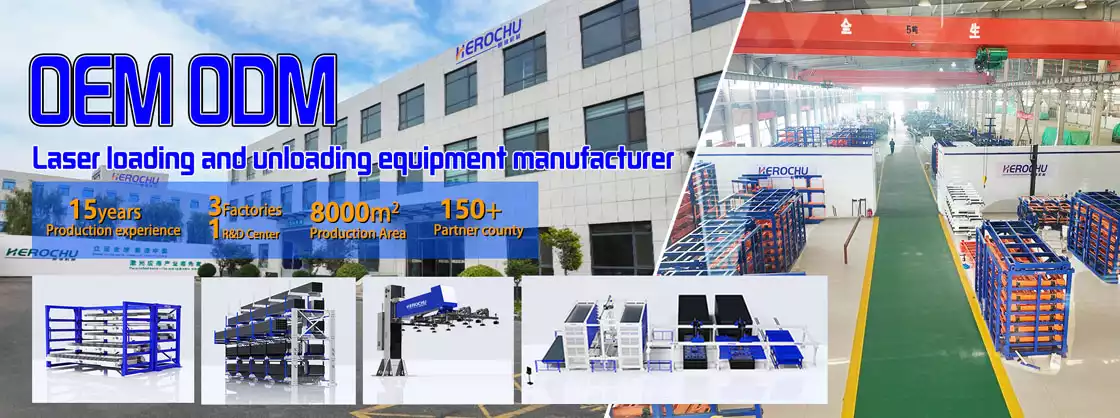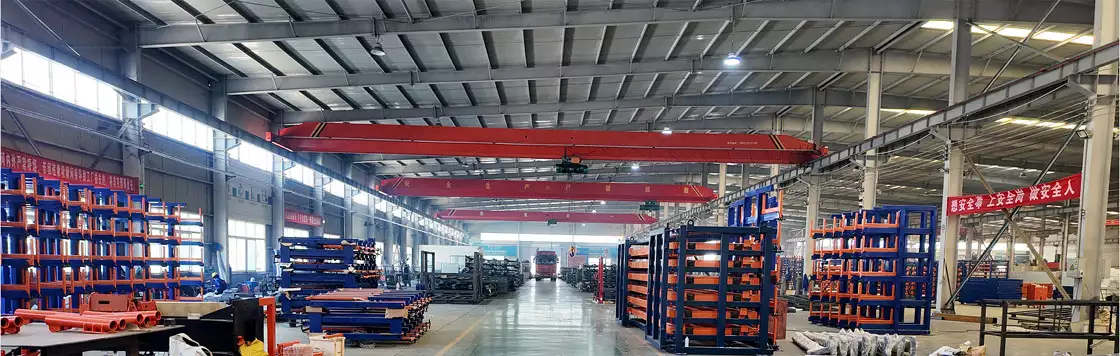
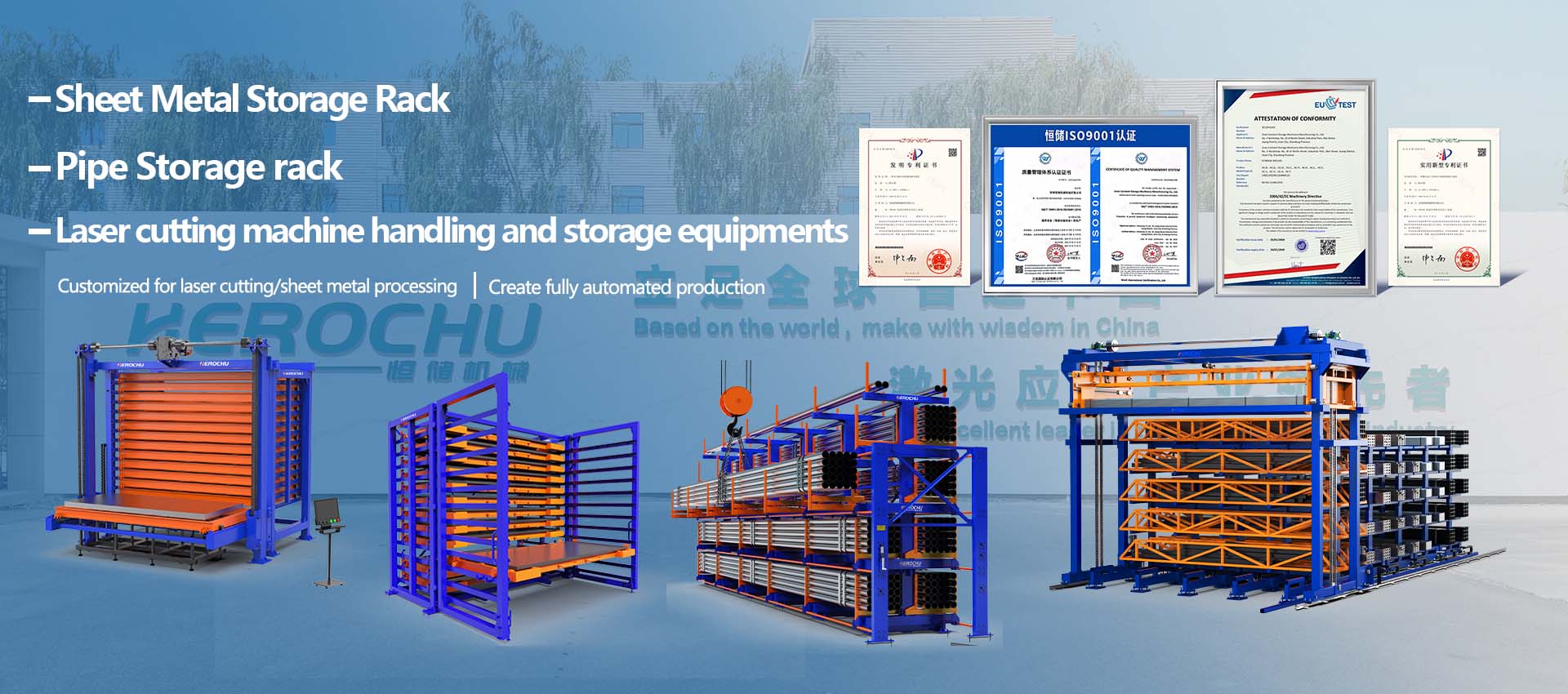
Metal fabrication facilities invest heavily in fiber laser cutting machines capable of processing full sheets in minutes. Yet a significant portion of potential cutting time is lost to material logistics—the manual fetching, positioning, and clearing of sheets that happens between cutting cycles. Herochu’s automated material handling for laser cutting systems directly addresses this operational gap by integrating vertical storage, gantry robotics, and automated material carts into a single synchronized production cell.
The Integrated System Architecture
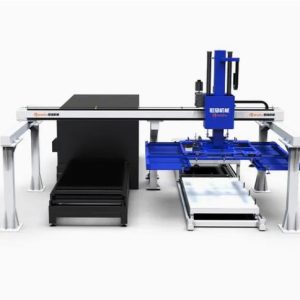
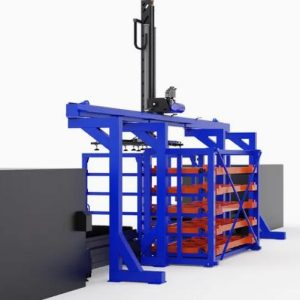
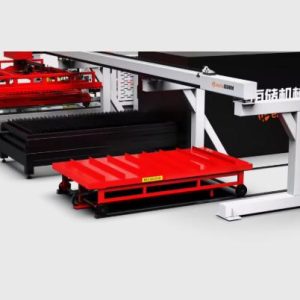
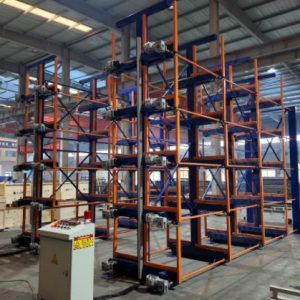
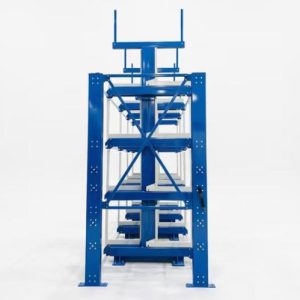
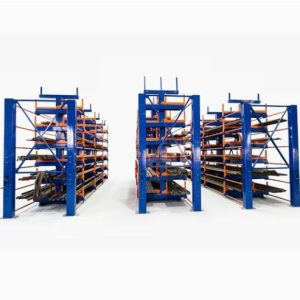
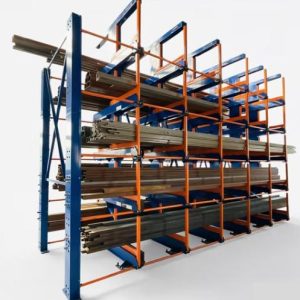
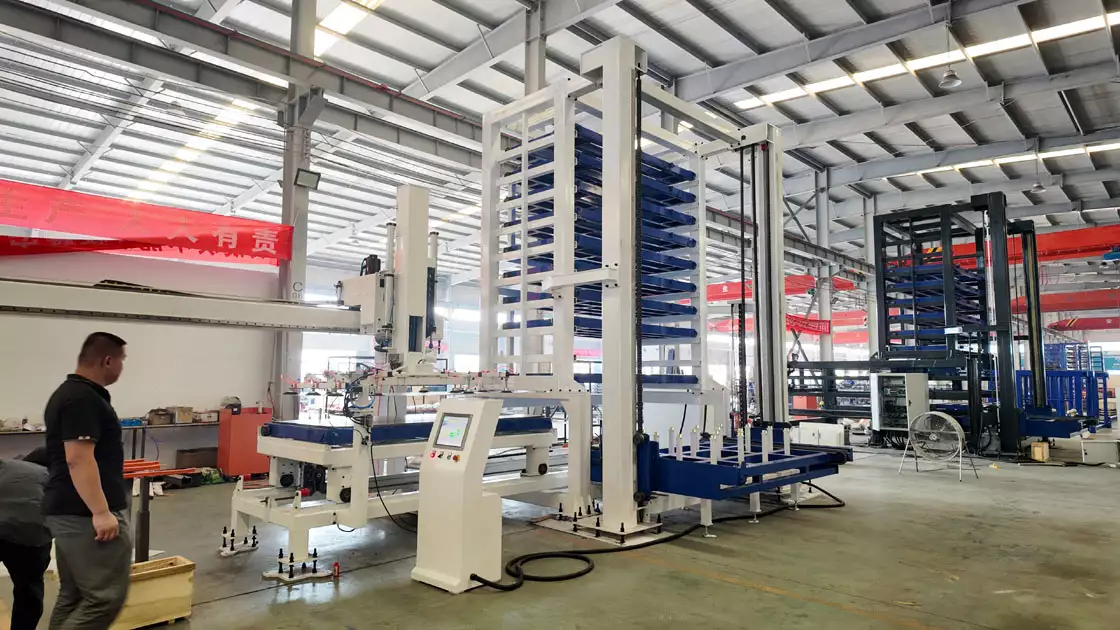
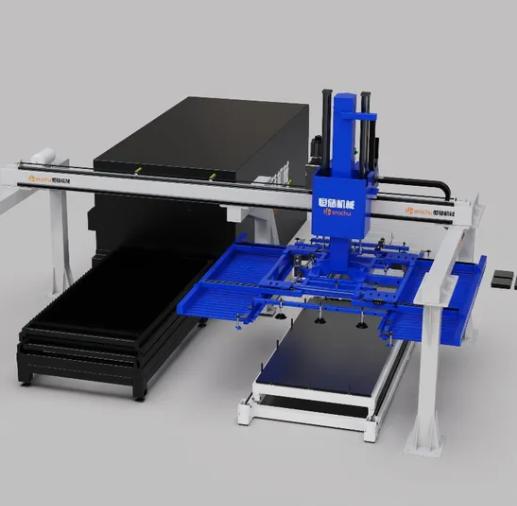
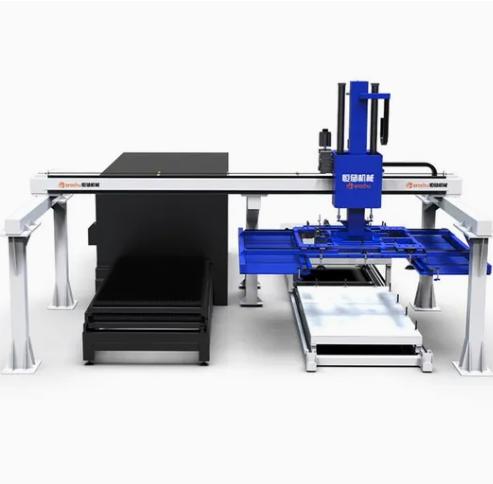
The Herochu HC-A series combines three functional modules into one coordinated system: a multi-tier vertical storage tower, an overhead gantry loading robot, and an automated material transfer cart. Rather than operating as isolated equipment, these modules communicate through a central PLC controller that synchronizes every movement with the connected laser cutting machines.
When a laser cutter signals that a cutting cycle is approaching completion, the storage tower retrieves the next scheduled sheet from the appropriate tier. The transfer cart moves the sheet to the gantry pickup position while the laser finishes its current job. The gantry robot then loads the new sheet onto the cutting bed and removes the cut parts and skeletons from the previous cycle. This parallel operation means the laser cutting head spends more time cutting and less time waiting.
Multi-Machine Synchronization
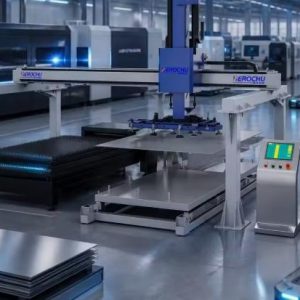
A single Herochu gantry unit can serve two laser cutting machines simultaneously. The system coordinates material flow across both beds without cross-aisle forklift traffic or operator intervention. This 1-to-2 architecture doubles the cutting output per unit of floor space and reduces the number of operators required to maintain production flow.
The PLC logs every transfer cycle, tracks raw material inventory levels in real time, and alerts operators when stock replenishment is needed. Nesting software integration allows the system to select the exact sheet material and thickness required for upcoming jobs, ensuring the right plate is always staged and ready.
Technical Performance Parameters
The HC-A series covers four model configurations designed for different sheet sizes and production volumes:
| Parameter | HC-A3015-83 | HC-A4015-85 | HC-A4020-85 | HC-A6020-105 |
|---|---|---|---|---|
| Sheet Dimensions (mm) | 3000×1500 | 4000×1500 | 4000×2000 | 6000×2000 |
| Storage Layers | 8 | 8 | 8 | 10 |
| Max. Load Capacity (kg) | 3000 | 5000 | 5000 | 5000 |
| Applicable Sheet (mm) | 3000×1500 | 4000×2000 | 6000×2000 | 6000×2500 |
Transfer speed across the system ranges from 5 to 15 m/min, with the gantry loading arm traveling at 10 to 30 m/min horizontally and 5 to 10 m/min on the Z-axis. Maximum sheet weight capacity is 500 kg per cycle, accommodating standard plate thicknesses across carbon steel, stainless steel, and aluminum.
Eliminating Manual Handling Bottlenecks
In a conventional setup, an operator uses a forklift or overhead crane to retrieve each sheet from a horizontal storage rack, transports it to the laser bed, manually aligns it against the machine stops, and then repeats the process in reverse to clear cut parts. Each of these manual cycles consumes 15 to 20 minutes of non-cutting time.
Herochu’s automated material handling compresses this cycle to a fraction of that duration. The gantry robot positions sheets with a repeatability of ±2 mm, eliminating the alignment adjustments that operators typically perform by hand. Fork opening and closing operates at 5 to 20 m/min, and the entire load-unload exchange happens while the laser cutting head is still completing its previous program.
Layout Customization for Existing Facilities
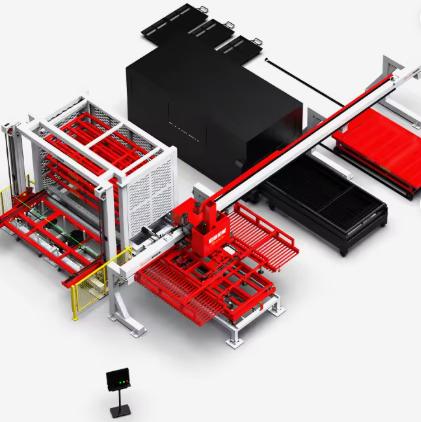
Every fabrication shop has different floor constraints—column spacing, ceiling height, machine positioning, and material delivery routes. Herochu engineers each installation around the specific site conditions rather than forcing a standard template.
The vertical storage tower height adjusts from 8 to 10 tiers based on available ceiling clearance, with 350 mm clear space between layers accommodating various plate thicknesses. Rail lengths, gantry span, and cart routing are configured during the 3D layout planning phase to integrate with existing laser cutting machines without requiring major facility modifications.
For facilities running multiple laser cutters of different sizes or brands, the HC-A series adapts its loading sequence to match each machine’s bed dimensions and exchange protocol. The system recognizes which machine requires material and routes the correct sheet size accordingly.
Production Visibility and Control
Operators interact with the system through an HMI touchscreen that displays real-time status of every storage tier, gantry position, transfer cart location, and connected laser machine. The interface shows material inventory by thickness and grade, upcoming job requirements from the nesting software, and cycle time data for each completed transfer.
In automatic mode, the system runs without operator input—selecting, retrieving, loading, and unloading sheets based on the production schedule. A manual override mode allows operators to handle single-sheet setups, material testing, or non-standard sheet sizes through touchscreen commands.
Applications Across Fabrication Sectors
Herochu automated material handling systems serve fabricators processing sheet sizes from 3000×1500 mm up to 6000×2500 mm. Typical applications include automotive component manufacturing, electrical enclosure production, aerospace structural panels, heavy equipment fabrication, and high-volume sheet metal job shops where laser cutting throughput directly determines delivery capacity.
By converting material handling from a manual, time-consuming process into a synchronized background operation, Herochu helps fabricators extract maximum cutting time from their laser equipment investment. The integrated storage, gantry, and cart architecture scales from single-machine cells to multi-machine automated production centers, with layout customization that fits each facility’s physical and operational requirements.