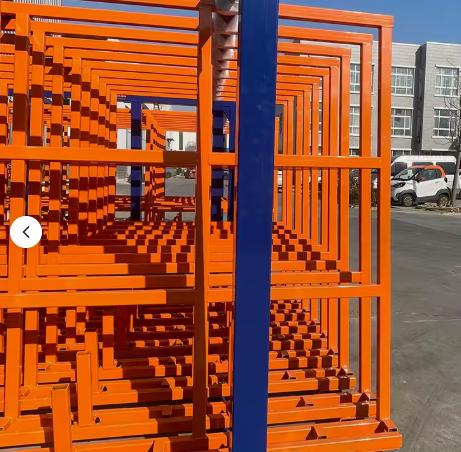
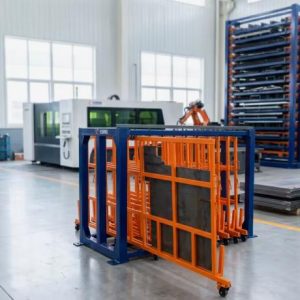
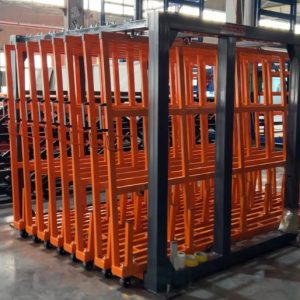
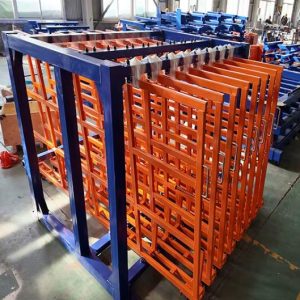
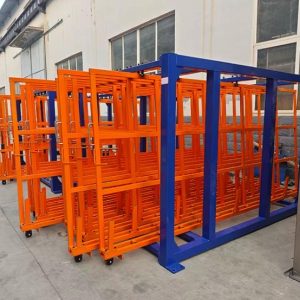
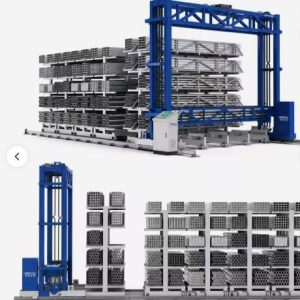
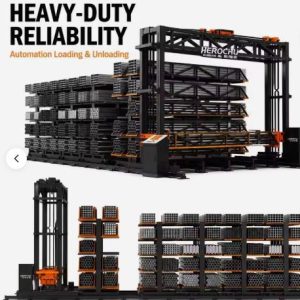
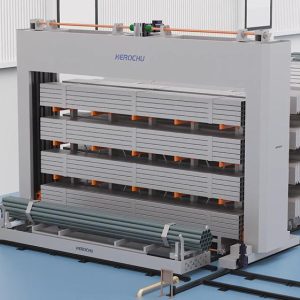
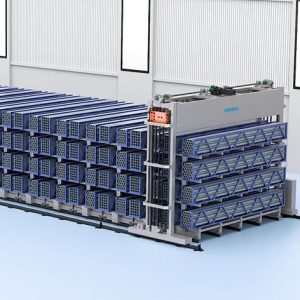
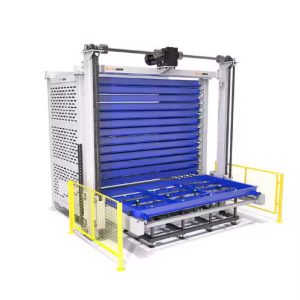
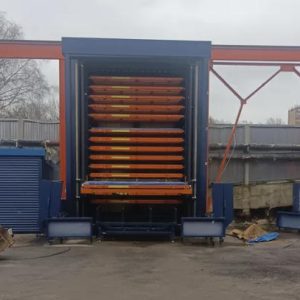
Floor space in a fabrication shop is not free. Every square meter occupied by leaning offcuts and disorganized remnant piles is a square meter unavailable for machines, workflow, or revenue-generating activity. Herochu’s compact heavy-duty vertical rack addresses this constraint by storing leftover sheet materials in a footprint measured in square meters while delivering load capacity measured in tons.
Density as a Design Principle
The core premise is vertical compression. A rack holding dozens of remnant pieces occupies the floor area of a single pallet. For shops where floor space is the binding constraint, this compression determines whether remnants are kept or scrapped. A shop that discards usable material because it has nowhere to put it is discarding money. A shop that stores remnants in a compact vertical rack preserves that value for future jobs.
Herochu’s heavy-duty configuration illustrates the density achievable. A single rack holds approximately 20 tons of plate material within roughly 6 square meters of floor space—over 3 tons per square meter. Multiple racks placed side by side along a wall create a high-capacity remnant storage wall that scales with workshop output without consuming additional aisle width.
Load Capacity Without Excuses
Compact does not mean compromised. Per-level capacity reaches 1000 kg across the standard HC-V2513-8 and HC-V3015-8 models, with custom configurations available for heavier requirements. The structural frame is built from grade-appropriate steel with reinforcement at stress points, and the roll-out drawers are formed from thick-gauge material that resists deformation from sharp edges and concentrated loads.
The bearing system carries the rolling load, not the operator. Even a fully loaded drawer moves smoothly on sealed rails, which matters for both ergonomics and safety. A worker should never strain to access material—the rack should do the work.
The Independence Advantage
Multi-tier storage is only useful if the tiers operate independently. A rack that requires sequential access—where retrieving from level four means moving levels one through three—defeats the purpose of organized storage. Herochu’s drawers operate as individual units. The operator pulls the required tier, retrieves the material, and closes the drawer. Adjacent tiers remain undisturbed.
This independence creates a sorting framework that shops can adapt to their own material categories. One tier for stainless offcuts. Another for aluminum. Another for the carbon steel pieces too small for full-sheet storage but too valuable for the scrap bin. The physical organization reduces search time and makes remnant inventory visible. When remnants have designated locations, purchasing decisions change—shops order less new material because they can see what is already on hand.
Handling Irregular Material
Leftover materials are not uniform. Remnants come in irregular sizes, uneven weights, and awkward dimensions. A storage system designed for standard sheets will not serve them well. Herochu’s drawers accommodate irregular material naturally: the piece sits on the drawer surface, the drawer slides into its tier, and the remnant is stored. There is no requirement for the material to conform to a standard format.
Safety is a particular concern with remnants because they are unpredictable. Herochu’s drawers contain the material within a defined space. Non-skid surfaces prevent movement during extension. The drawer mechanism reduces the manual handling that causes scratches, dents, and bent edges—damage that erodes the usable area of the remnant with each move.
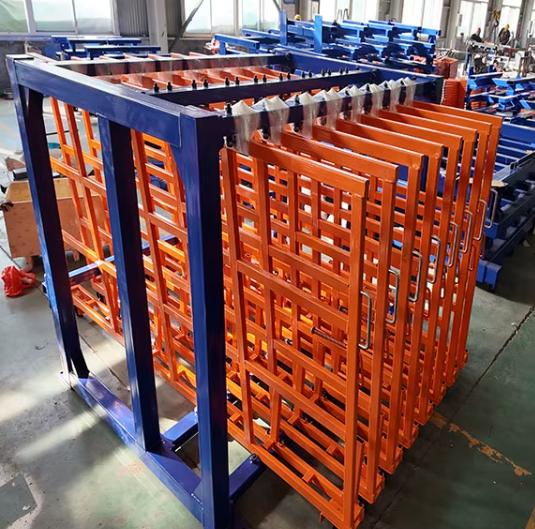
Mobility and Layout Flexibility
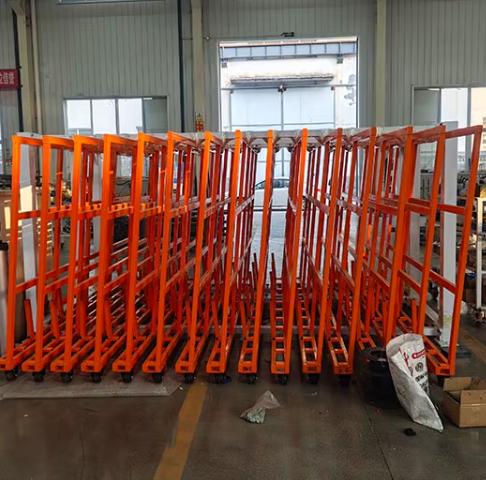
Manufacturing environments change. A rack that serves one layout today may need to move tomorrow. Herochu offers industrial-grade wheels as an option, allowing the compact vertical rack to relocate within the workshop as production needs shift. During peak periods, the rack sits beside the laser or punch press. During slower cycles, it moves to a secondary storage zone, freeing premium floor space for active work.
Customization to Material Reality
Standard configurations cover common sheet sizes, but Herochu builds to the material profile each shop actually handles. Drawer dimensions, tier counts, clear space between levels, and load ratings are all specified to the remnants a shop generates. A facility producing long narrow drops receives drawers sized accordingly. A shop stacking thicker sections specifies greater opening height. The vertical space is used efficiently rather than filled with empty gaps.
For workshops that have accepted disorganized remnant piles as unavoidable, the compact heavy-duty vertical rack offers a different outcome. The material retains its value. The floor retains its utility. And the shop gains an inventory asset that pays for itself through avoided purchases and reduced waste.