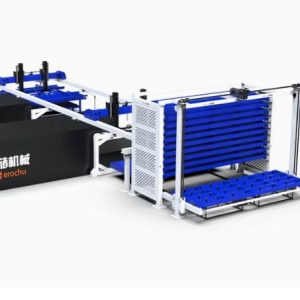
Sheet metal fabrication depends on throughput. A laser cutter that processes plates faster than they can be loaded and unloaded is a machine running below capacity. The Herochu industrial laser gantry loading system for sheet metal machines solves this imbalance by bringing overhead automation to the material flow problem—moving sheets in and cut parts out without slowing the cutting cycle.
Overhead Gantry Architecture for Material Handling
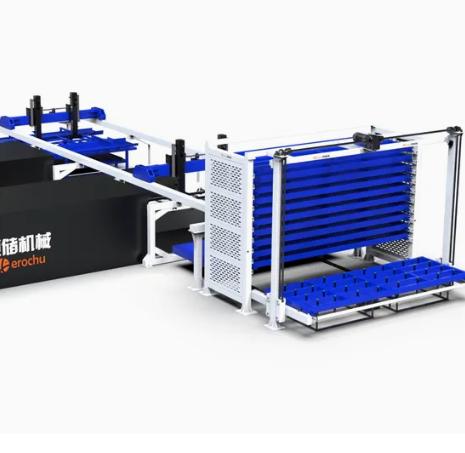
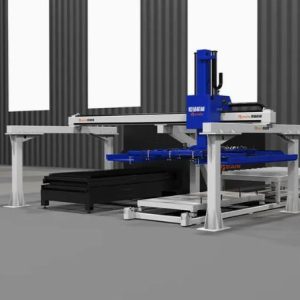
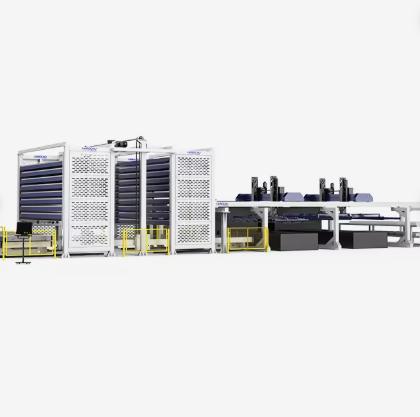
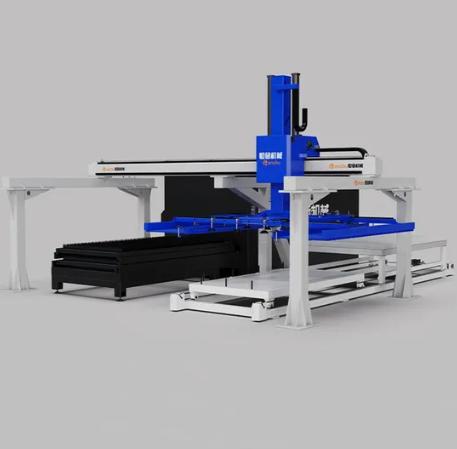
The Herochu system uses a truss-style overhead gantry that spans the width of the laser cutting machine. This architecture keeps the floor space on both sides of the machine clear for forklift access, raw material staging, and finished part removal. The manipulator travels above the machine, descending only to pick or place material at the loading station, cutting bed, and unloading station.
The dual-girder cross-member design distributes bending loads across paired guidance rails. This structural approach allows the gantry to carry heavy payloads—up to 500 kg on standard models—without deflection that would compromise positioning accuracy. The frame is built from welded steel with stress-relief treatment to maintain dimensional stability over years of continuous service.
For facilities with limited floor space, the overhead configuration is particularly valuable. The gantry occupies vertical space that would otherwise be unused, and the shared single-aisle structure means that loading and unloading stations sit on opposite sides of the machine without requiring additional floor area for separate automation equipment.
Supporting Various Sheet Dimensions and Machine Models
Sheet metal shops cut a wide range of plate sizes. A job shop might process small 1 × 2 meter brackets in the morning and switch to 4 × 2 meter structural plates in the afternoon. The Herochu gantry loading system accommodates this variety through five standard models:
- HC-RT2513-300: handles 2500 × 1300 mm sheets, 300 kg capacity
- HC-RT3015-500: handles 3000 × 1500 mm sheets, 500 kg capacity
- HC-RT4015-500: handles 4000 × 1500 mm sheets, 500 kg capacity
- HC-RT4020-500: handles 4000 × 2000 mm sheets, 500 kg capacity
- HC-RT6015-500: handles 6000 × 1500 mm sheets, 500 kg capacity
Each model supports the corresponding laser bed format, and the end-effector adjusts within its model range to handle sheets narrower or shorter than the maximum dimension. The vacuum cup array can be reconfigured for different sheet sizes, and the fork spacing adjusts through the 5 to 20 m/min fork adjustment speed range.
This size compatibility means that a shop investing in a Herochu gantry system is not locked into a single sheet format. As cutting jobs change, the system adapts without requiring structural modification or additional end-effector purchases.
Fully Automated Loading Cycle
The loading cycle begins when the controller receives a signal that the laser bed is clear and the next cutting program is queued. The vacuum head moves to the loading station, descends to the top of the raw sheet stack, and activates the vacuum circuit. Suction cups engage the sheet surface, and the system verifies grip through pressure sensors.
Before lifting, the sheet separation mechanism activates. Mechanical fingers insert between the top two sheets, and an air burst breaks any adhesion. The load cell confirms that only one sheet has been picked. The vacuum head then lifts the sheet to clearance height and traverses to the laser bed at 10 to 30 m/min.
At the bed, the head descends and positions the sheet against the alignment stops. Repeatability of ±2 mm ensures that the sheet lands in the same location every cycle. The vacuum releases, the head retracts, and the laser cutting program begins.
Automated Unloading with Gripper System
When the laser completes the cutting program, the unloading cycle initiates. The gripper mechanism descends to the slat bed and engages the cut skeleton and finished parts. The gripper jaws adjust to match the skeleton dimensions, securing the material without crushing small parts nested within.
The gripper lifts the entire cut assembly from the bed and transfers it to the unloading station. This automated removal eliminates the need for an operator to reach into the machine between cycles, reducing both idle time and the risk of contact with sharp cut edges or hot material.
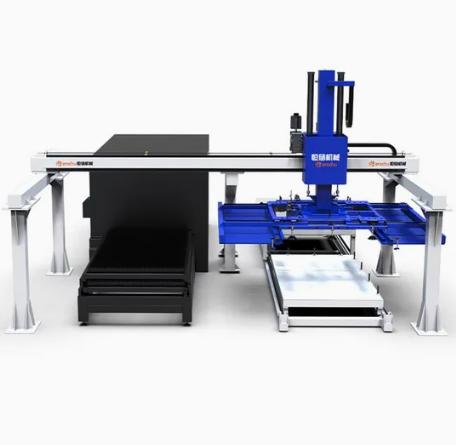
The dual Z-axis design means that unloading and loading can happen simultaneously. While the gripper removes the finished cut, the vacuum head is already positioned with the next raw sheet, ready to place it the moment the bed clears. This overlap is what allows the system to maintain high cycle rates that keep the laser cutting continuously.
Preventing Double-Pick and Sheet Sticking
Double-picking is the most common failure mode in automated sheet loading. When two sheets stick together and both are loaded onto the laser bed, the cutting program is ruined, the machine may be damaged, and the slat bed can be bent or broken.
The Herochu system uses a three-stage approach to prevent double-picks:
- Mechanical separation: Spring-loaded fingers insert between the top two sheets in the stack, physically breaking the bond before lifting begins.
- Air burst disruption: A controlled puff of compressed air enters the gap created by the fingers, further separating the sheets and clearing any oil pooling.
- Weight verification: The load cell measures the lifted weight and compares it to the programmed single-sheet weight. If the reading indicates two sheets, the system pauses and alerts the operator.
This three-stage process has proven reliable across material types including carbon steel, stainless steel, and aluminum, with thicknesses from 1 mm to 20 mm and various oil coating conditions.
Motion and Control Specifications
All five models in the HC-RT series share consistent motion specifications:
| Parameter | Value |
|---|---|
| Robot arm traverse speed | 10–30 m/min |
| Lifting speed | 5–10 m/min |
| Fork adjustment speed | 5–20 m/min |
| Repeatability | ±2 mm |
| Air supply | 0.6–0.7 MPa |
The repeatability specification is particularly important for sheet metal operations. When a sheet is positioned on the laser bed, the cutting program assumes the material is in a known location. If the sheet is off by even a few millimeters, the cuts near the edges may miss the material entirely or produce parts with incomplete edges. The ±2 mm repeatability ensures that the sheet position matches the program expectations every cycle.
Workshop Integration and Floor Space Recovery
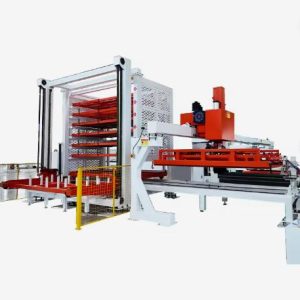
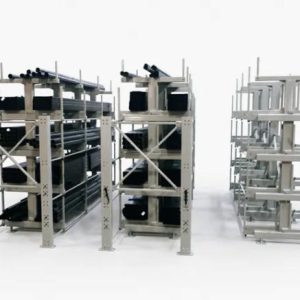
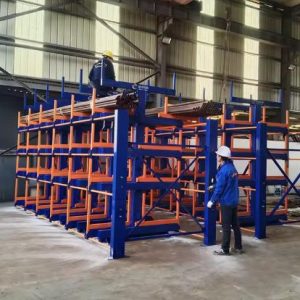
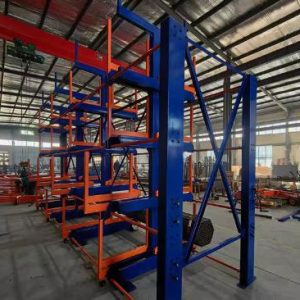
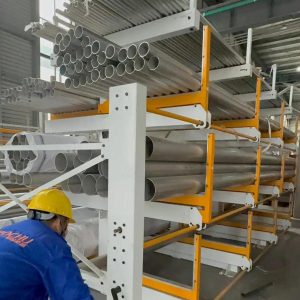
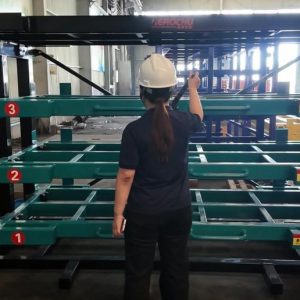
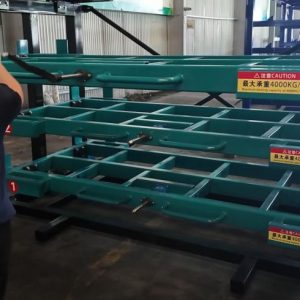
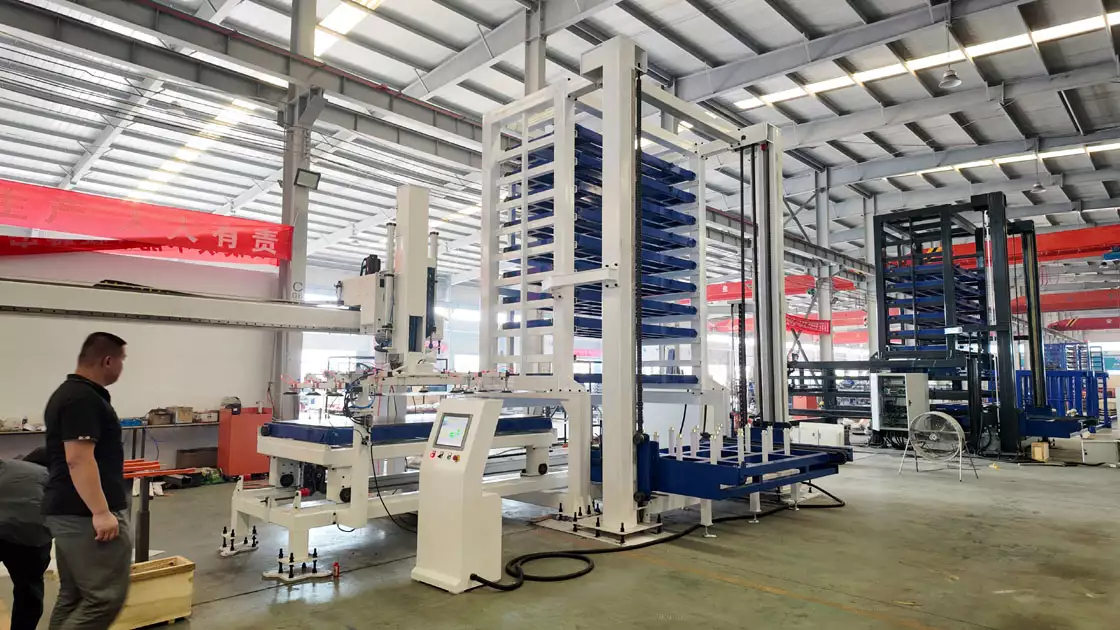
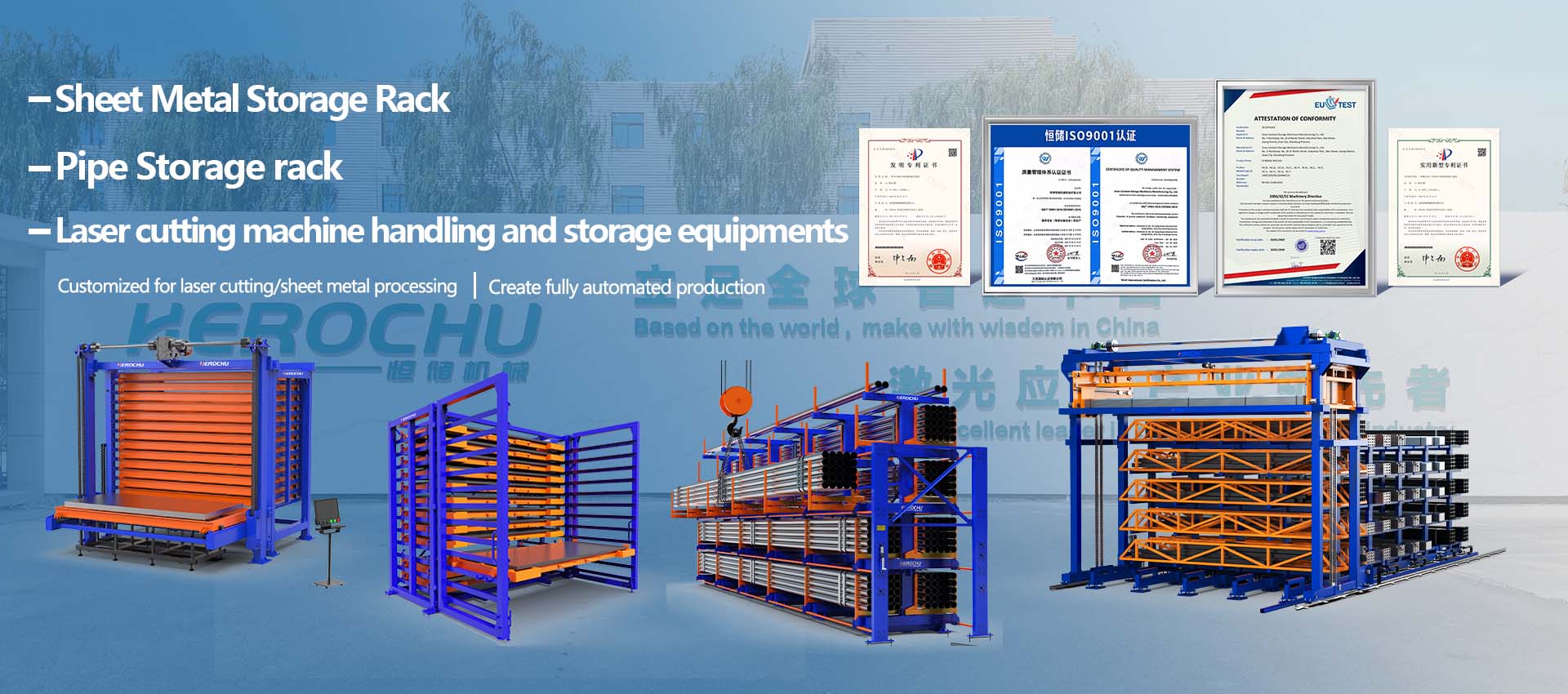
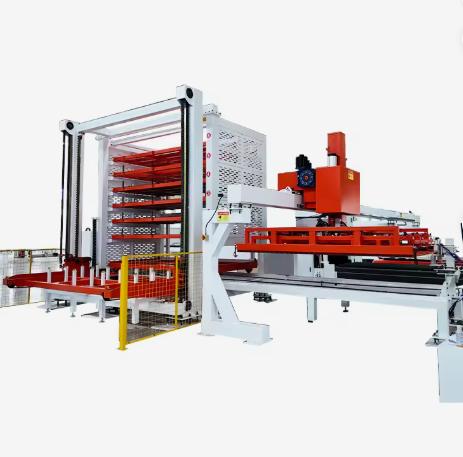
Beyond the laser machine itself, the Herochu gantry system integrates with upstream storage. Multi-tier gantry-type sheet metal storage racks can connect directly to the loading station, creating a continuous material flow from storage to cutting bed. This integration uses the same overhead structure, meaning the storage racks and loading system share a single aisle rather than requiring separate floor space.
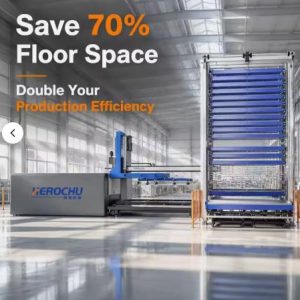
For shops where floor space is at a premium, this shared-structure approach can recover up to 50 percent of the area previously dedicated to material staging. The recovered space can be used for additional equipment, finished part storage, or expanded cutting capacity.
The system also supports semi-automatic teaching modes for setup and changeover. Operators can manually guide the manipulator through a new sheet size or machine configuration, saving the position data for automatic recall on future runs. This teaching capability reduces changeover time when switching between different job types or laser machines.
Safety Systems for Industrial Environments
Industrial automation must protect both personnel and equipment. The Herochu gantry system includes spring-applied mechanical brakes that engage instantly on power loss or air pressure drop below 0.4 MPa. This fail-safe prevents a loaded arm from falling or drifting during utility interruptions.
Soft-cushion bumpers line the gantry travel path to absorb any unintended contact. LED safety beacons provide 360-degree visibility of system operation status, and emergency stop controls are accessible from both the loading and unloading sides of the machine. Counterbalanced arms allow maintenance personnel to inspect the system safely without hydraulic or pneumatic support.
These safety features make the system suitable for occupied shop floors where operators work alongside the automated equipment. The gantry operates above head height during traverse, descending only at designated pick and place points, minimizing interaction with floor-level personnel.
Operational Benefits Summary
Facilities that install the Herochu industrial laser gantry loading system typically report three categories of improvement:
- Machine utilization: Laser cutting uptime increases from approximately 60 percent to 90 percent, adding 30 percentage points of productive capacity without purchasing additional machines.
- Labor efficiency: Manual loading crews of two to three operators per shift are replaced by single-operator oversight, freeing personnel for higher-value tasks.
- Cutting quality: Consistent sheet placement at ±2 mm repeatability eliminates alignment-related edge defects and reduces scrap rates.
The combined effect of these improvements delivers payback periods of four to six months on system investment, making the gantry loading system one of the most cost-effective productivity upgrades available for sheet metal cutting operations.