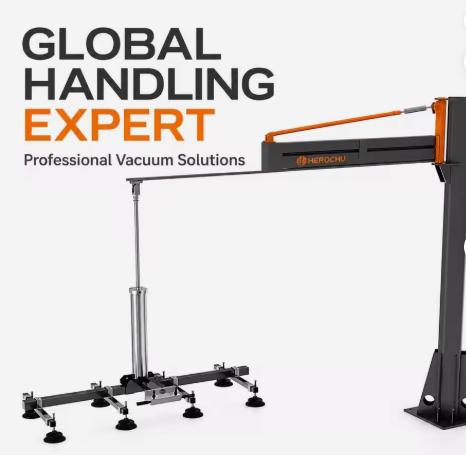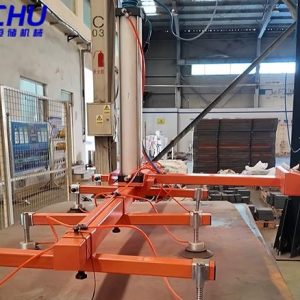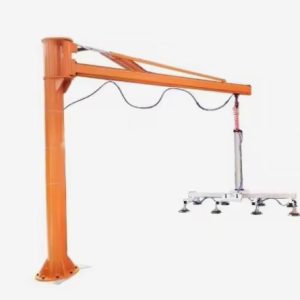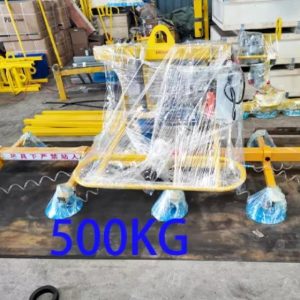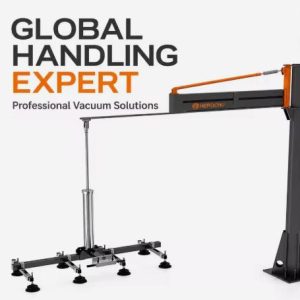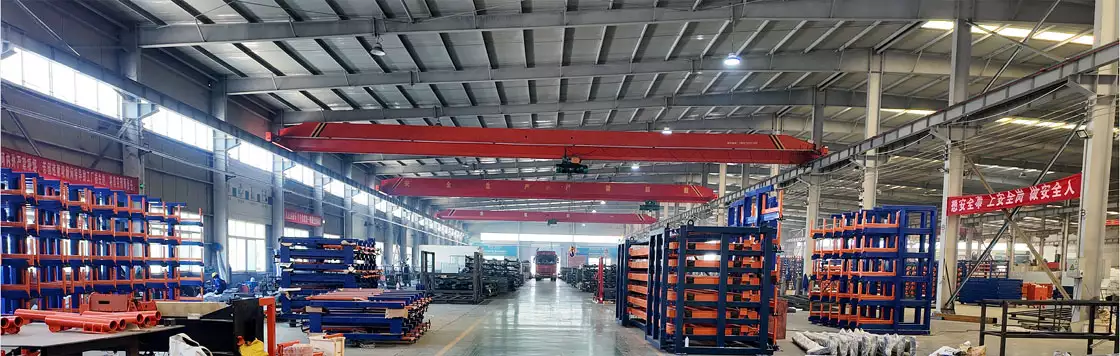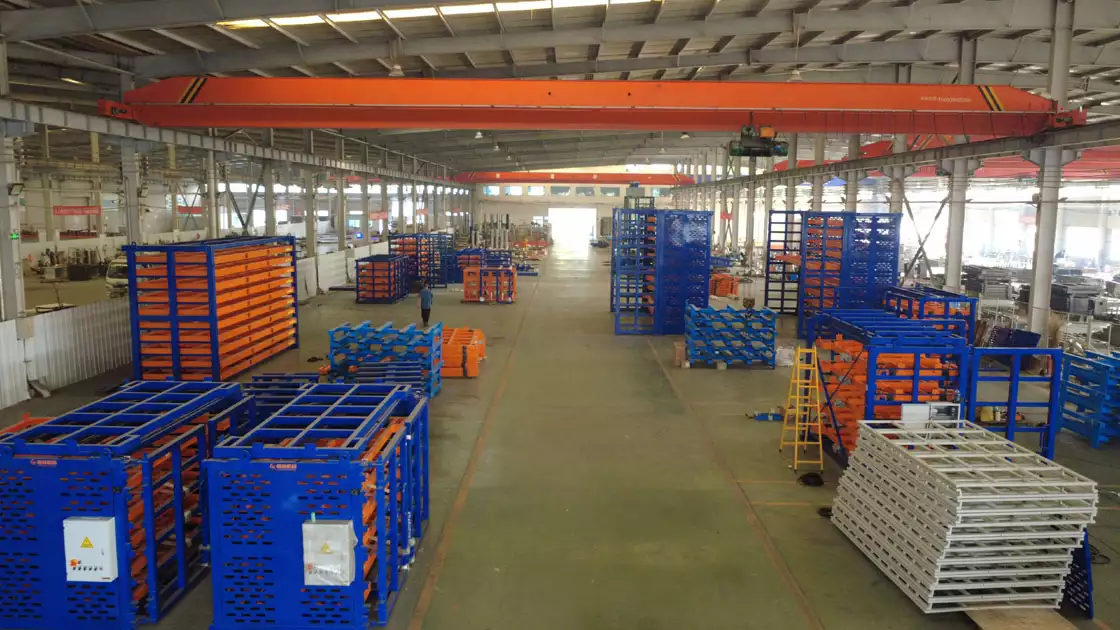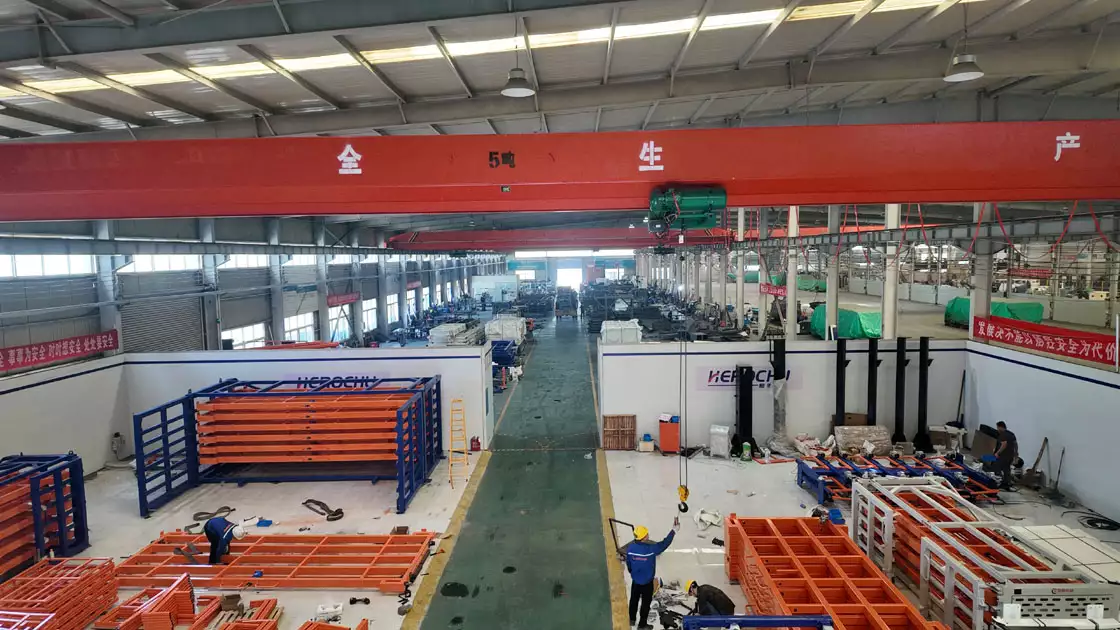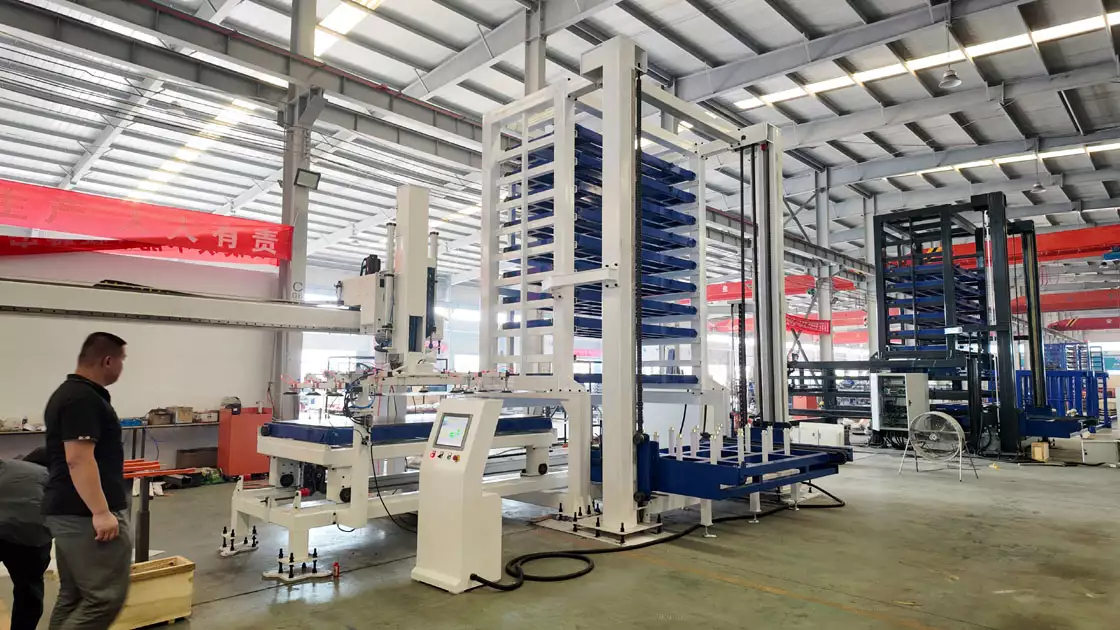
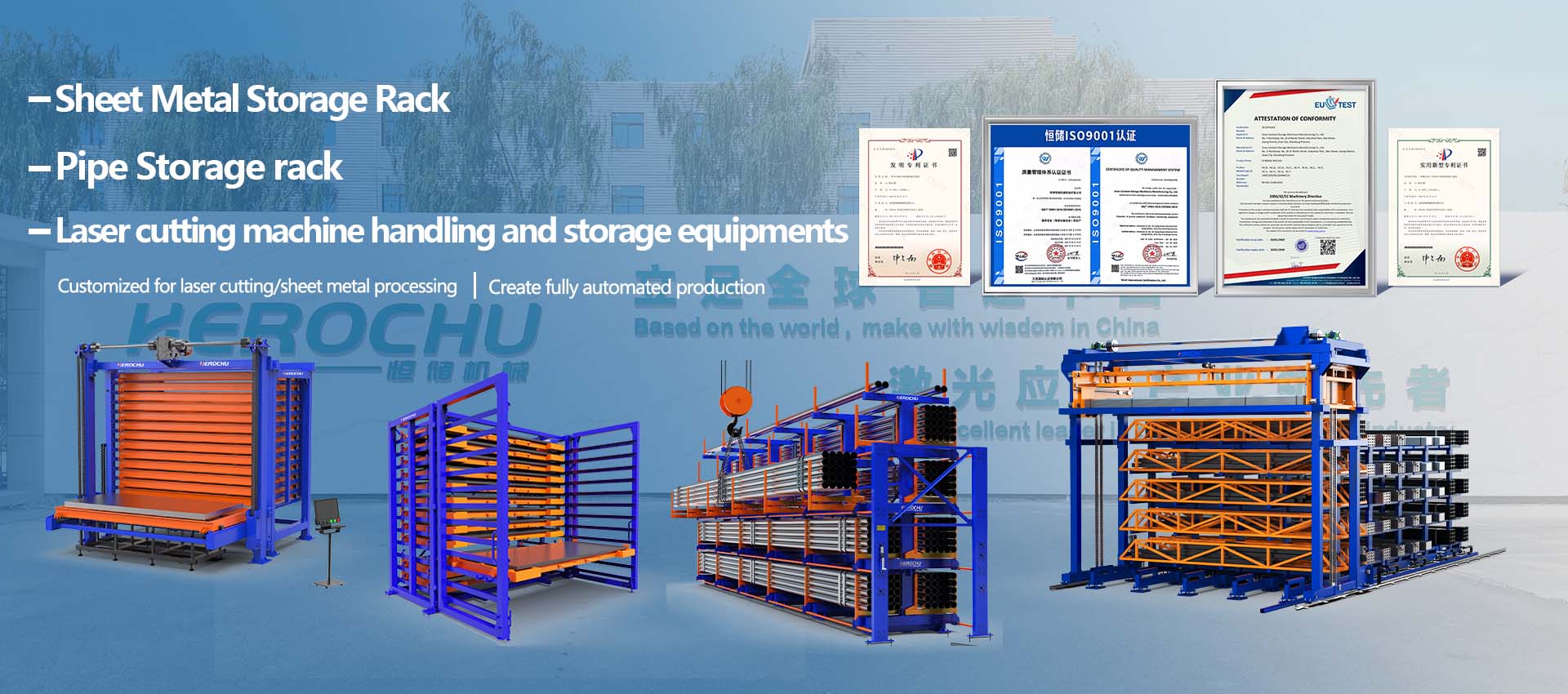
Not every fabrication shop has the floor space or the ceiling height to accommodate a floor-mounted lifting system. For operations with constrained layouts, a sheet metal hoisting crane equipment configuration—whether mounted on a bridge crane, jib crane, or gantry structure—offers an alternative approach to material handling. Herochu manufactures vacuum lifting systems designed for overhead integration, bringing the same single-operator efficiency to shops where floor-mounted columns are impractical.
When Overhead Hoisting Makes Sense
The decision between a floor-mounted lifter and an overhead hoisting configuration depends primarily on three factors: available space, building structure, and production workflow.
Floor-mounted lifting systems require a clear footprint adjacent to the laser cutting machine. A typical column-based unit occupies roughly 1–2 square meters of floor area, plus the operating clearance around the base. In a shop where every square meter is allocated to production equipment or material storage, this footprint may not be available.
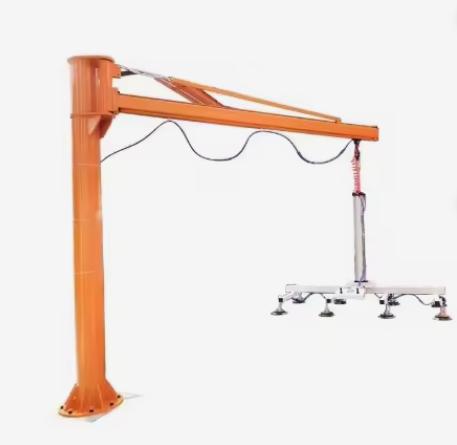
Overhead hoisting equipment solves the floor space problem by using the building’s upper structure for support. A jib crane mounted to a structural column, a bridge crane running on elevated rails, or a gantry frame spanning the work area can all serve as the mounting platform for a vacuum lifting system.
Structural Considerations for Overhead Mounting
Integrating a vacuum lifter with a crane system requires attention to load paths and dynamic forces. The crane structure must be rated for the combined weight of the lifter assembly, the vacuum beam, and the maximum sheet load. For a 500 kg sheet capacity, the crane must support the lifter’s dead weight (typically 150–250 kg for a comparable unit) plus the live load, with an appropriate design factor.
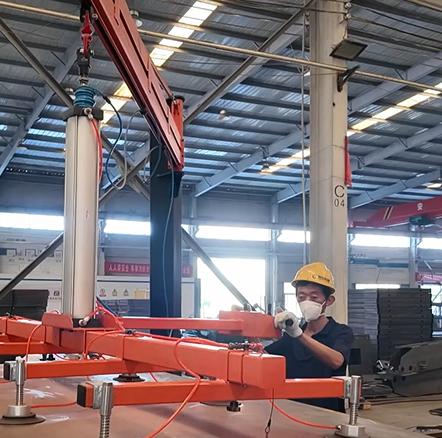
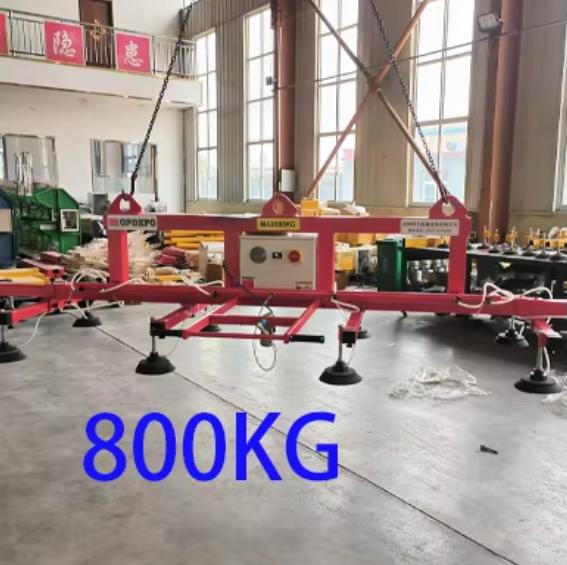
Herochu’s overhead configurations use the same vacuum beam and suction cup technology as the floor-mounted models, but with a crane interface that accommodates standard hook or trolley connections. The control system is adapted for the crane’s movement axes—typically hoist travel, trolley travel, and bridge travel—combined with the lifter’s rotation and vacuum functions.
The operator controls the entire system from a pendant or radio remote, coordinating crane movement with vacuum engagement and release. This integration requires that the vacuum system’s response time aligns with the crane’s movement characteristics. A slow vacuum response creates delays; an overly sensitive response creates jerky motion that can destabilize the load.
The Safety Case for Overhead Hoisting
Vacuum lifting systems mounted on overhead cranes present a different risk profile than floor-mounted units. The load travels above the work area rather than through it, which reduces the number of personnel exposed beneath the load path. However, the consequences of vacuum failure increase with height.
For this reason, Herochu overhead configurations incorporate multiple safety layers:
Emergency air-cut protection. The vacuum reservoir maintains holding force for a defined period after air supply interruption, allowing the crane operator to lower the load to a safe position. As with floor-mounted systems, this is a fundamental design requirement for pneumatic lifting equipment .
Low-level release interlocking. The system is configured to prevent vacuum release until the load is within a defined distance of the target surface, reducing the risk of a dropped sheet from height.
Visual and audible vacuum indicators. The operator can confirm vacuum integrity at a glance. Low vacuum conditions trigger an alarm before holding force degrades to an unsafe level.
Regular inspection protocol. The vacuum cups, hoses, and structural components require scheduled inspection and maintenance. Worn or damaged cups must be replaced promptly, and the vacuum system’s performance should be verified periodically .
Integration with Laser Cutting Workflows
A sheet metal hoisting crane equipment configuration is particularly effective when paired with multiple laser cutting machines or a combination of cutting and forming equipment. The crane can serve several workstations sequentially, amortizing the lifting system’s cost across a larger production volume.
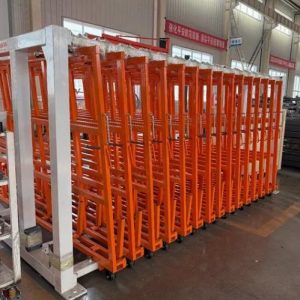
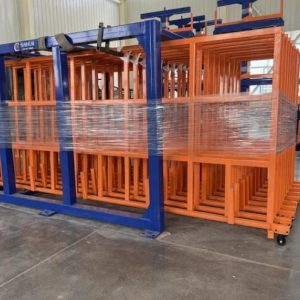
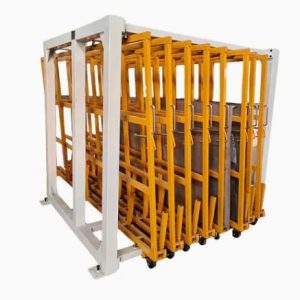
In a typical installation, the overhead vacuum lifter picks a sheet from a storage rack, transfers it to the laser cutting bed, and returns to the storage area for the next sheet. The empty suction beam can also be used to remove cut parts or skeletons from the cutting bed, streamlining the post-cut clearing process.
This multi-function capability distinguishes the overhead hoisting configuration from single-purpose loading devices. The same crane and vacuum system that loads raw material can handle finished parts, reducing the need for separate handling equipment.
Heavy-Duty Plate Lifter Machine Configurations
For operations processing thick plate—12 mm to 20 mm and beyond—the sheet metal hoisting crane equipment can be specified with Herochu’s heavy-duty plate lifter machine configuration. These units use the same overhead crane interface but increase vacuum capacity, structural reinforcement, and lifting beam stiffness to accommodate the additional weight and rigidity of thick plate.
A 3000 mm × 1500 mm × 20 mm carbon steel plate weighs approximately 706 kg. The lifting system must handle this load without excessive deflection that could compromise the vacuum seal or cause the sheet to shift during transport. Herochu’s heavy-duty configurations use a reinforced aluminum or steel lifting beam with a deeper cross-section and additional cup support points to maintain flatness under load.
Conclusion
Sheet metal hoisting crane equipment extends the benefits of vacuum lifting to shops where floor-mounted systems are impractical. By using overhead structure for support, the system frees floor space for production and material storage while maintaining the same single-operator efficiency. For operations with sufficient building height and crane infrastructure, overhead hoisting represents a versatile and space-efficient solution.