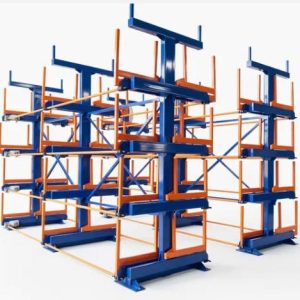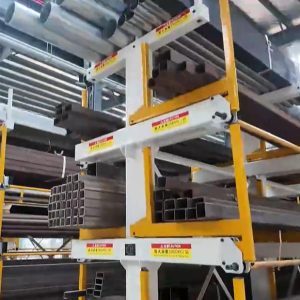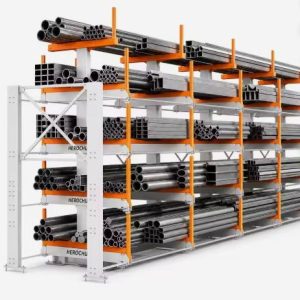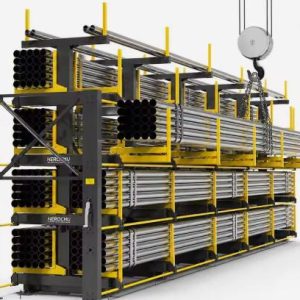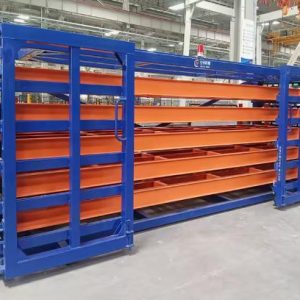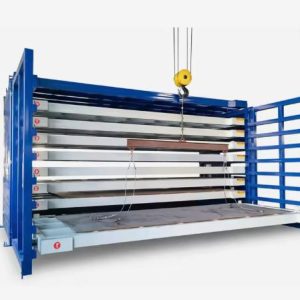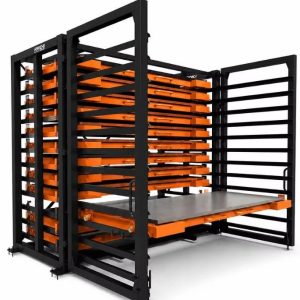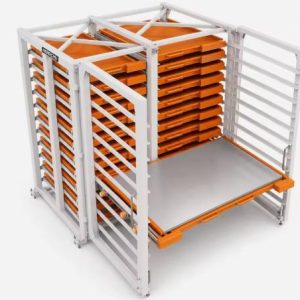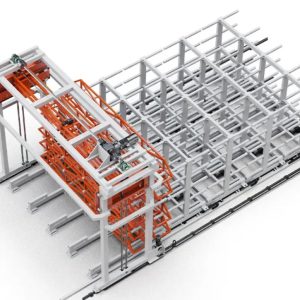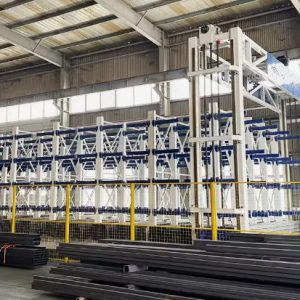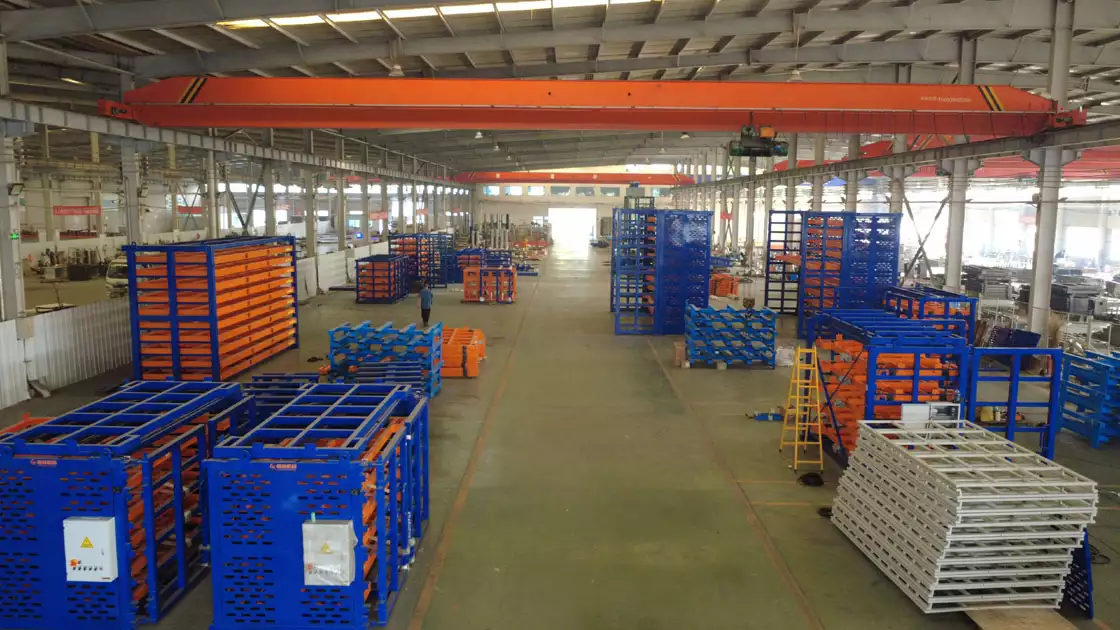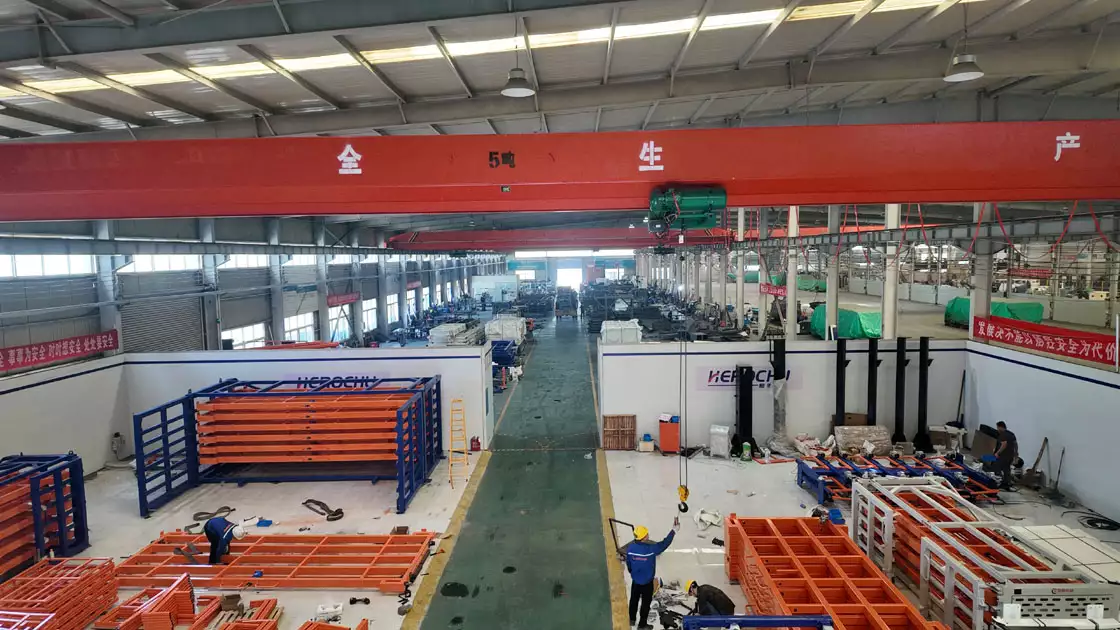
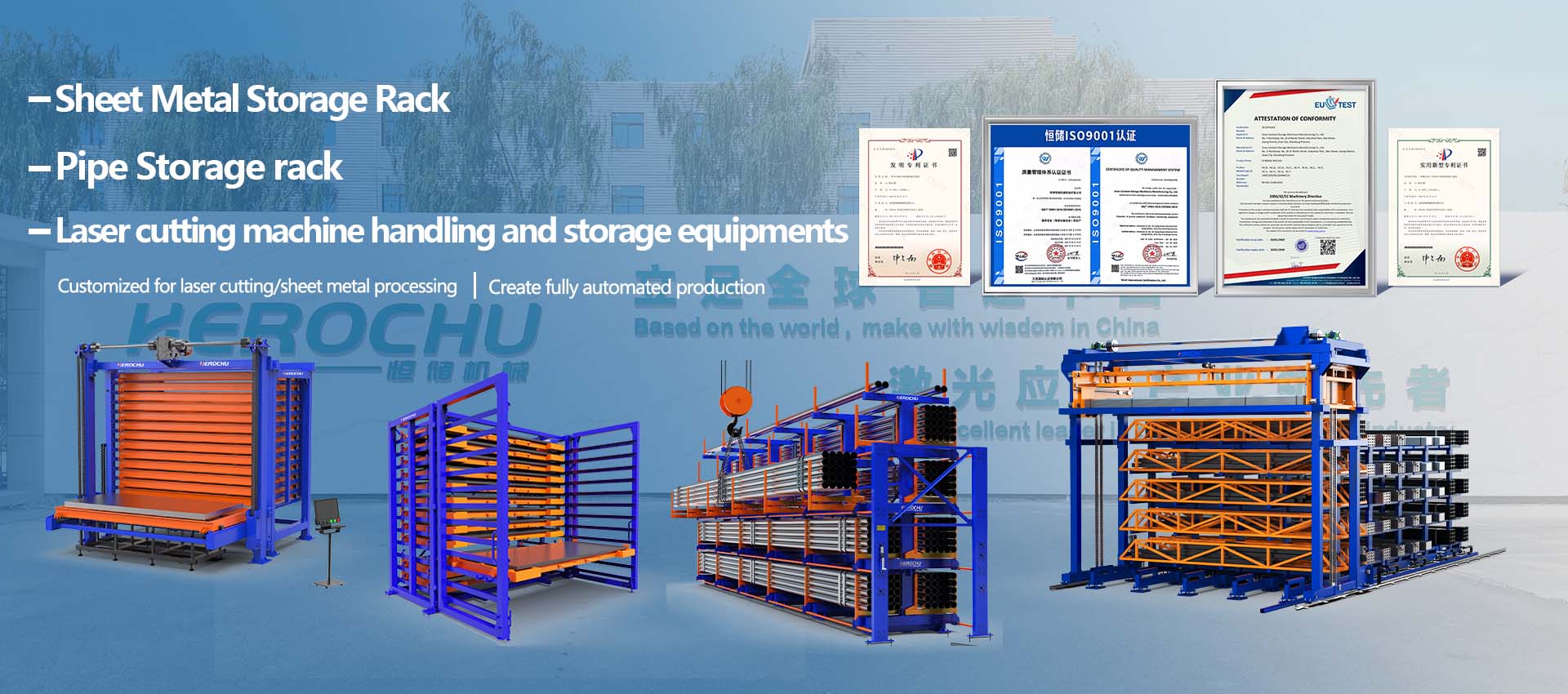
Long material is the hardest inventory to store. A six-meter steel pipe or a seven-metre aluminium extrusion profile cannot rest on a standard rack designed for palletized goods—it overhangs, sags, and creates a safety hazard for anyone working below. Yet steel service centers, aluminium extrusion distributors, and metal fabrication facilities receive these lengths daily. The challenge is not just supporting the weight; it is supporting the length without deflection, providing enough clearance for handling equipment, and keeping the material accessible for retrieval. Herochu engineered its long storage rack for steel pipe, profile, and aluminium extrusion material up to 6-7 m to address each of these demands directly.
Accommodating 6-7 Metre Material Lengths
The Herochu rack system is designed around the physical reality of long stock. The model HC-G6053 supports a 6,000 mm pipe length—the standard length for structural steel pipe, seamless tube, and many aluminium extrusion profiles. For operations handling material that runs slightly longer—common with custom-cut extrusion orders—the column spacing and arm depth provide clearance that accommodates 6-7 m lengths without the material contacting the adjacent rack row.
This matters because long material deflects under its own weight. A six-meter aluminium extrusion profile, though lighter per metre than steel pipe, still sags if the support points are too far apart. The Herochu arm spacing is set to prevent mid-span deflection—the arms support the material close enough together that the material rests flat, not in a catenary curve that induces internal stress and dimensional inaccuracy in downstream fabrication.
Column Heights from 2,000 mm to 6,000 mm
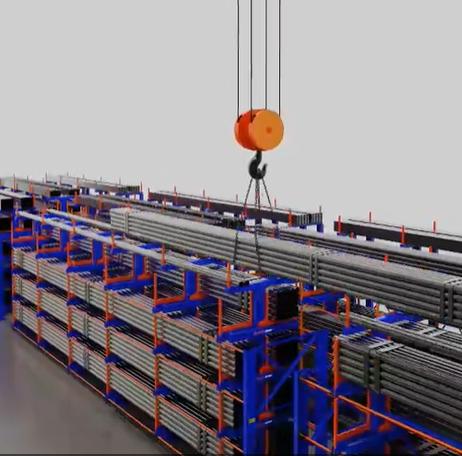
Upright columns are available from 2,000 mm to 6,000 mm in height. For 6-7 m long material, this range lets the operation choose the vertical strategy that fits the warehouse:
- Low columns (2,000-3,000 mm): Fewer tiers, maximum clearance per tier. Ideal when handling large-diameter pipe or tall extrusion bundles that need vertical headroom for forklift forks to enter and exit without contacting the tier above.
- Mid columns (3,000-4,500 mm): Balanced storage—typically four to five tiers of standard pipe bundles. The most common configuration for steel service centers running mixed inventory.
- Tall columns (4,500-6,000 mm): Maximum vertical density—five to six tiers. Used when floor space is constrained and the operation needs to store as much long material as possible in a compact footprint.
Arm levels adjust every 75 mm along the column, so the tier spacing is not fixed at the factory default. An operation that starts with 300 mm between tiers for small-diameter tube can later open that to 500 mm for larger pipe profiles without replacing any structural component.
Telescopic Arms That Adapt to Material Length
Long material does not always come in uniform bundle depths. A 6 m steel pipe might arrive in a 400 mm deep bundle; a 7 m aluminium extrusion order might be 700 mm deep because of profile height and stacking. Fixed-depth arms force the operator to either under-fill the arm (wasting capacity) or overhang the material (creating a fall hazard).
The Herochu telescopic arm extends from 400 mm to 800 mm in 100 mm increments. For long material specifically, this means the arm extends to match the bundle depth without the material overhanging the arm tip. An aluminium extrusion distributor who handles both shallow and deep bundles in the same rack row adjusts the arm extension per tier—shallow arms for thin profiles, extended arms for deep bundles.
Dual-Side Mechanical Assistance for Long Material Handling
Long material is difficult to load and retrieve because it requires simultaneous support at both ends. A single forklift cannot safely handle a 6 m pipe from one side—the material will lever out of the forks. The Herochu dual-side mechanical assistance discharge addresses this by presenting the material from both faces of the rack. The manual crank mechanism on each compartment extends the material into the aisle for picking, then retracts it flush for storage.
This is particularly valuable for aluminium extrusion profiles, which have softer surfaces than steel pipe. A forklift fork pressing against an extrusion profile can gouge the surface, creating a defect that downstream fabrication must grind out. The cranked presentation eliminates fork-to-material contact during retrieval—the operator picks the material from the cranked arm, not from the fork pressing against the bundle.
Clear Space and Compartment Configuration
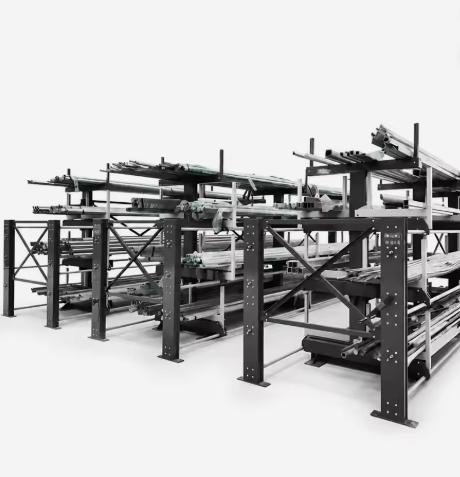
The standard 600 mm clear space between arms—customizable to match the operation’s material profile—gives enough room for the manual crank mechanism to function without the material binding against the adjacent tier. For aluminium extrusion, which often comes in wider bundles due to profile geometry, the clear space can be increased to accommodate the bundle width without the material wedging during loading.
Each compartment holds 3,000 kg per level on the HC-G6053 model, with five layers as standard and customized layer counts available. For a steel service center storing 6 m pipe, this translates to roughly 15,000 kg of storage capacity per upright face—sufficient for a full delivery of structural pipe without splitting the load across multiple rack units.
Corrosion and Surface Protection for Mixed Material
Steel pipe and aluminium extrusion have different corrosion profiles. Steel pipe rusts; aluminium extrusion oxidizes to a chalky surface film that, while not structurally damaging, affects appearance and downstream finishing. The Herochu rack protects both material types through its own surface treatment: galvanized steel cantilever arms resist the condensation that drips from cold pipe, and the electrostatic powder-coated frame does not transfer iron oxide onto aluminium profiles the way bare steel arms would.
This is a consequential detail for operations that store both steel and aluminium in the same facility. Cross-contamination—iron particles from steel storage embedding into aluminium surfaces—causes pitting corrosion in aluminium that only appears after the material is in service. The galvanized and powder-coated Herochu rack surfaces eliminate this transfer pathway.
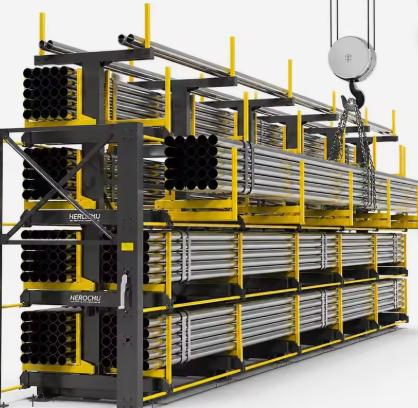
Floor Anchoring for Long Material Stability
Long material multiplies the consequences of rack instability. If a 6 m pipe falls, it endangers a much larger floor area than a palletized load. Herochu anchors every upright with reinforced base plates and 20 mm anchor bolts into the concrete floor, preventing tipping under full load. This is the engineering foundation that makes storing 6-7 m material safe—it is not just the arms and the columns, but the connection between the rack and the floor that determines whether long material stays where it is put.
Certification and Assembly Documentation
Every Herochu long material storage rack is CE certified and manufactured under ISO 9001 quality management. Shipments include a detailed assembly manual and foundation drawing, giving the installing team engineering-level documentation. A three-year structural warranty covers all components. For operations storing 6-7 m steel pipe, profile, and aluminium extrusion, the Herochu rack provides the length support, surface protection, and floor anchoring that long material demands—purpose-built, not adapted from a generic product.