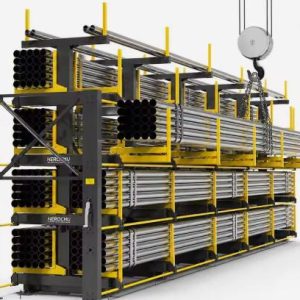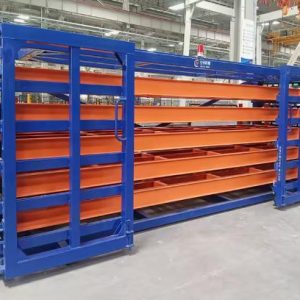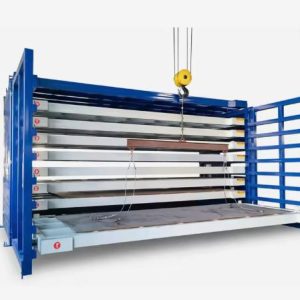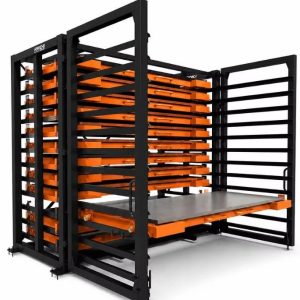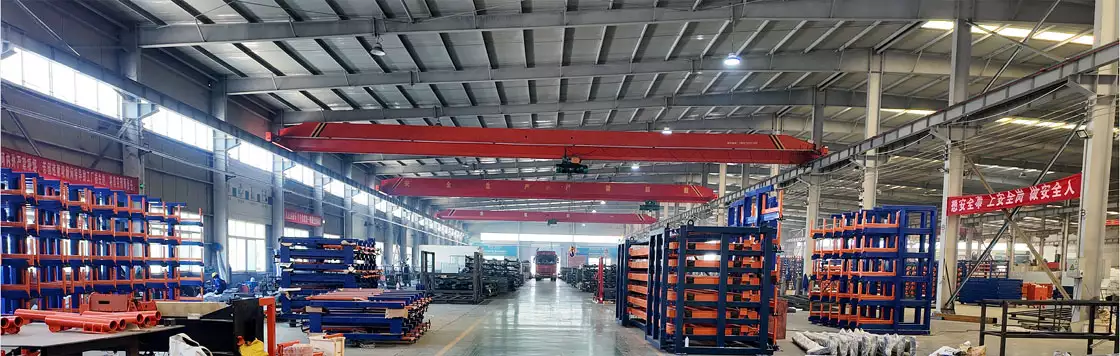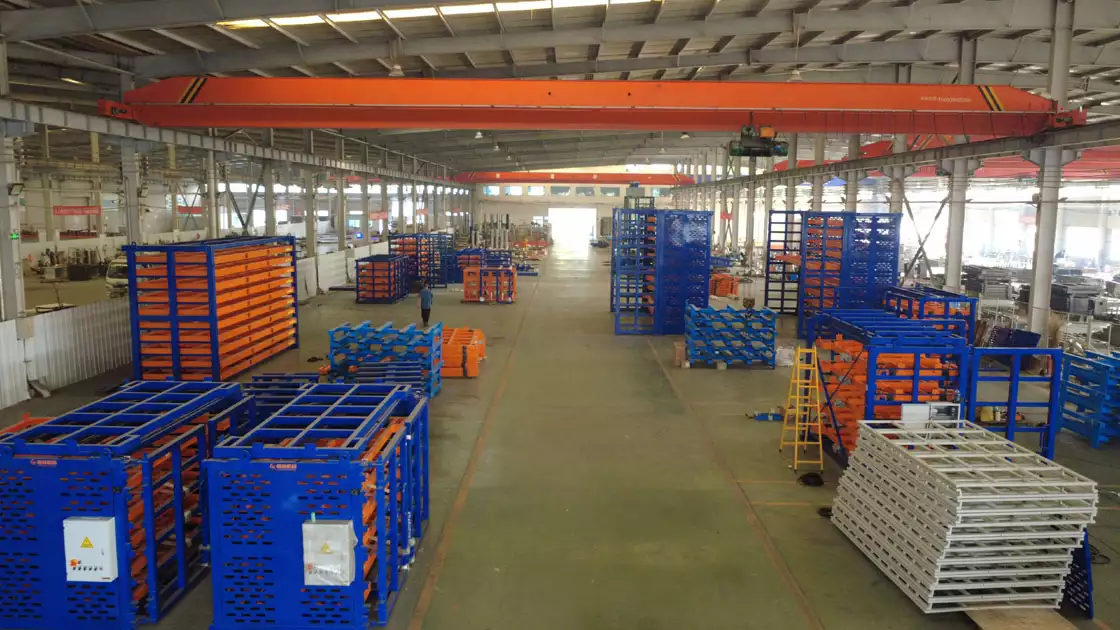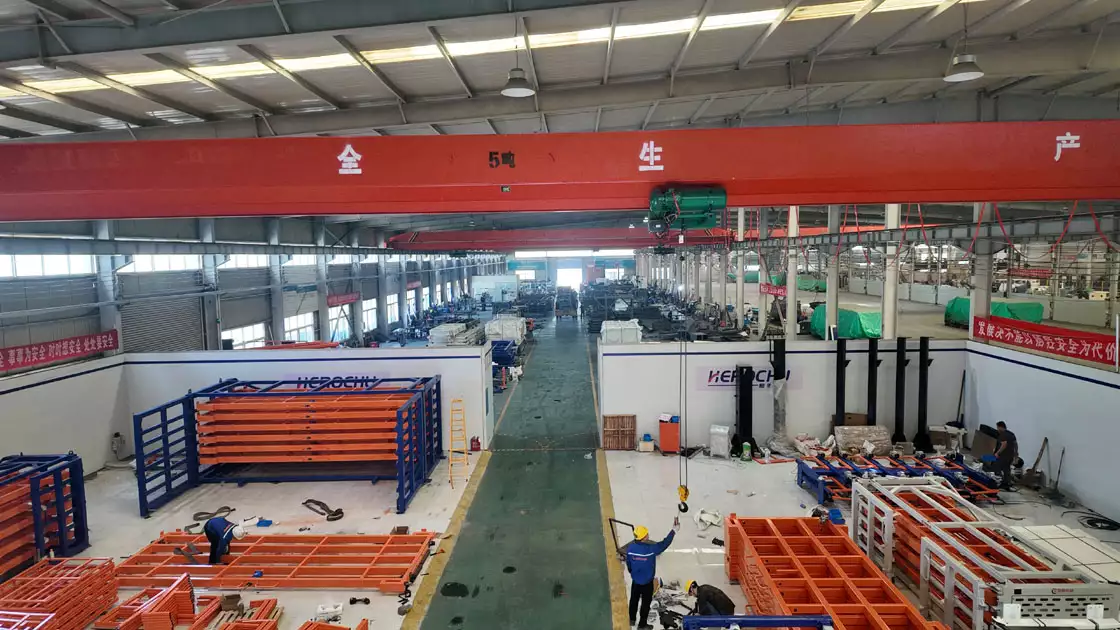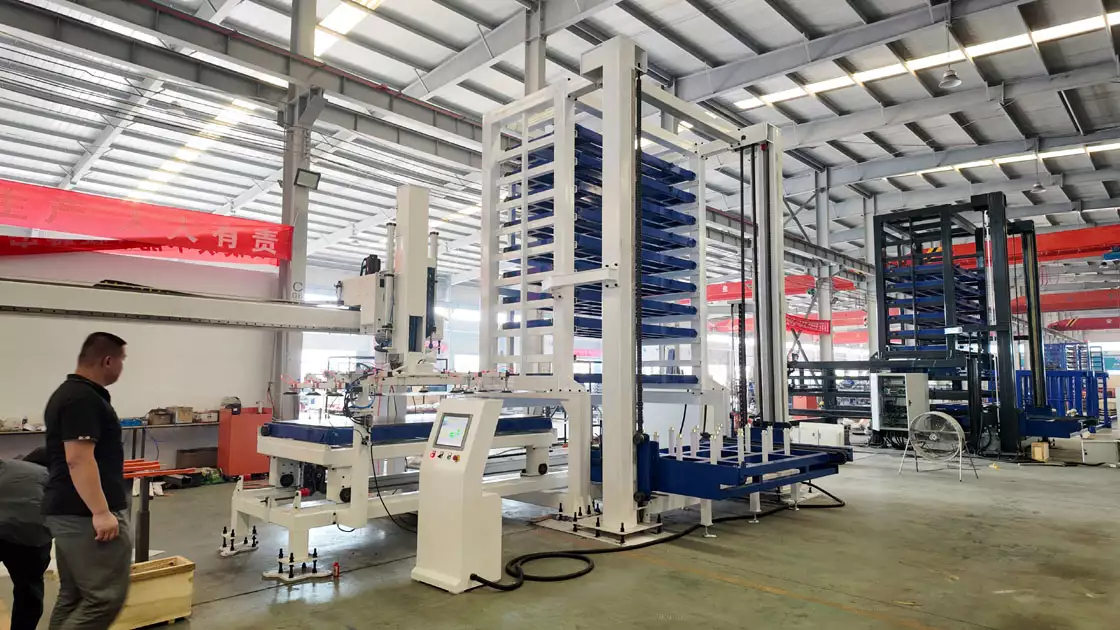
A metal fabrication factory runs on material flow. Raw steel tube arrives at the receiving bay, moves to storage, then feeds cutting, bending, welding, and assembly stations in a sequence dictated by the production schedule. When storage is inefficient—when operators spend twenty minutes searching for the right tube, when material sits in mixed piles that damage surface finish, when aisle congestion blocks the forklift path to the saw station—the entire production line slows. Herochu built its telescopic steel profile and tubes storage rack for the metal fabrication factory environment, where storage is not a passive warehouse function but an active input to production throughput.
Storage as a Production Input
In a fabrication factory, the storage rack sits between receiving and the first cutting operation. Its job is to present the right material, at the right length, in the right orientation, to the saw or laser operator on demand. A rack that buries small-diameter tube behind large-diameter pipe forces the operator to unload the front material to reach the back—a delay that compounds across every job in the production queue.
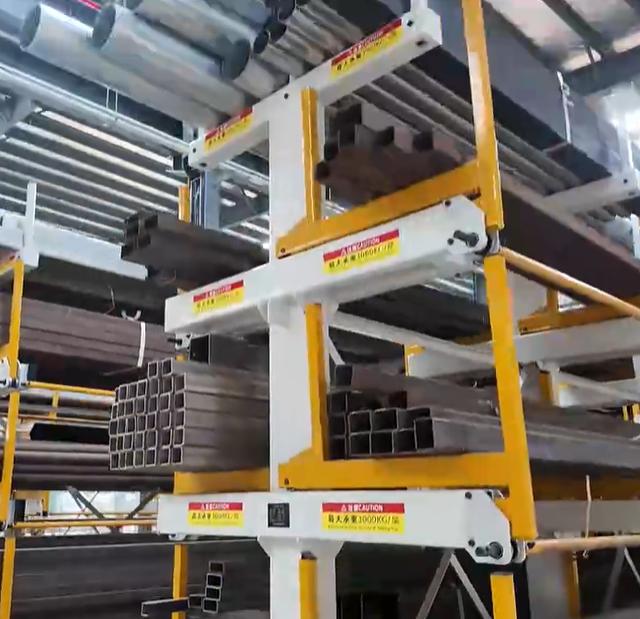
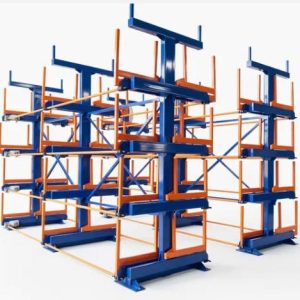
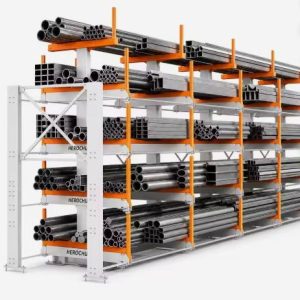
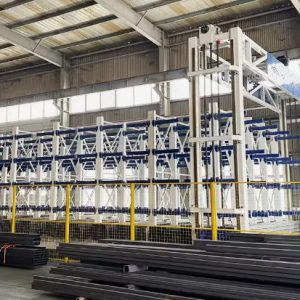
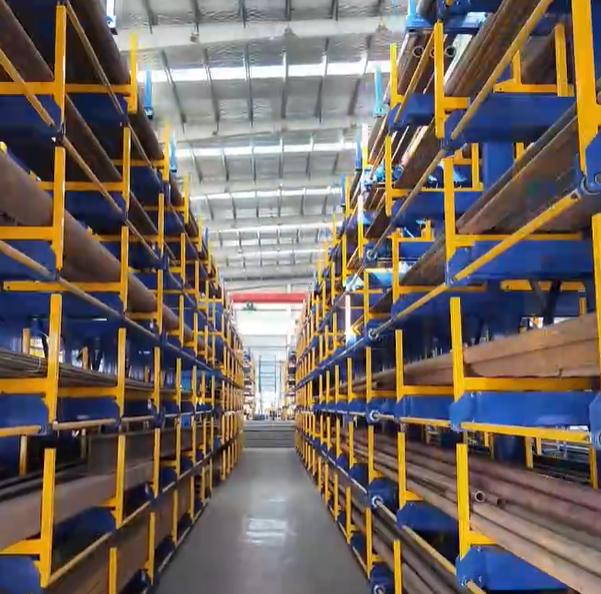
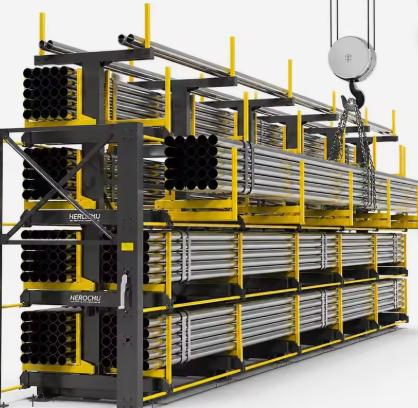
The Herochu telescopic rack solves this through classified storage. Each tier is an independent compartment, and the double-sided design gives the operation dedicated faces for different material categories. Production tube on one side, structural profile on the other. Within each face, the manual crank mechanism extends the material into the aisle for picking, so the operator retrieves exactly the length needed without disturbing adjacent stock. Search time drops; material damage from rough handling drops with it.
Telescopic Arms for Varying Fabrication Stock
Metal fabrication factories process a wide material range. One day the saw line cuts 6 m carbon steel tube; the next day it runs stainless pipe for a food-grade fabrication job; later that week it handles aluminium extrusion for a structural frame order. Each material type has a different bundle depth, and a fixed-depth rack forces the operation to either reconfigure the rack between jobs (costly downtime) or accept that some tiers are underutilized.
The Herochu telescopic arm extends 400 mm to 800 mm in 100 mm increments. Between jobs, the operator adjusts the arm extension to match the incoming material profile—deeper for large-diameter pipe bundles, shallower for slim extrusion profiles. No arm replacement, no tools beyond a standard lock mechanism, no production delay. The same rack serves the full fabrication material spectrum.
Manual Crank Operation and Aisle Width
Fabrication floor space is expensive. Every square metre devoted to storage aisles is a square metre not used for a cutting station, a weld fixture, or an assembly cell. The Herochu manual crank mechanism reduces the aisle width the rack requires. Because the material cranks forward into the aisle for loading and unloading, the forklift does not need to reach deep into the rack compartment. The aisle can be narrower than a fixed-arm cantilever rack would require, which reclaims floor space for production equipment.
The manual crank also enables single-operator material handling. The operator cranks the arm forward, picks the material, and cranks it back—no second worker needed to steady a long pipe as it slides out of a fixed compartment. In a fabrication factory where labor cost is a direct input to product cost, this efficiency is measurable.
Load Capacity for Fabrication-Grade Inventory
Fabrication factories store heavier material than distribution warehouses. The stock includes thick-walled carbon steel pipe, solid bar stock, and structural sections—materials that test the upper range of any storage system’s capacity. The Herochu rack handles this with 3,000 to 5,000 kg per compartment, with arms load-tested to a 1.5x safety factor. The Q235B high-strength steel frame and dual-beam crossbar design distribute the load through the upright and into the reinforced base plate, which 20 mm anchor bolts secure to the floor.
This load path is engineered for the dynamic forces a fabrication environment generates. When a crane sets a bundle onto the arm, the impact force travels through the arm, into the upright, through the base plate, and into the concrete. At every junction, the connection is bolted and tested—not welded in the field where quality varies with the welder’s skill and conditions.
Plug-In Installation and Reconfiguration
Fabrication factories reconfigure. A layout that served a structural steel product line may need to change when the factory takes on a stainless process piping contract. Welded racking cannot move without destruction. The Herochu plug-in, bolt-together design lets the factory relocate, re-tier, or re-extend the rack as production demands shift. Two workers assemble a unit in approximately four hours using standard hand tools, and the same crew can disassemble and re-erect the system in a new location with the same structural integrity.
The arm levels adjust every 75 mm, so reconfiguring tier spacing for a new material profile does not require new upright columns. The operation changes the job; the storage system adapts to the change.
Corrosion Resistance in the Fabrication Environment
Fabrication floors are hard on equipment. Cutting fluid mist, grinding dust, weld spatter, and humidity cycling all attack exposed steel surfaces. The Herochu rack resists this environment through two protective systems: galvanized steel cantilever arms that resist rust from condensation and fluid contact, and an electrostatic powder-coated frame finish that seals the main structure against corrosion. This protection extends the rack’s service life in an environment where bare steel would show surface rust within a single season.
Model Selection for Fabrication Operations
The Herochu rack line covers the full range of fabrication material lengths and loads:
- HC-G6053S: 6,000 mm length, 3,000 kg per level, 5 layers—for standard tube and profile
- HC-G6053: 6,000 mm length, 3,000 kg per level, 5 layers—for mixed fabrication stock
- HC-G9065: 9,000 mm length, 5,000 kg per level, 6 layers—for long structural sections
- HC-G12065: 12,000 mm length, 5,000 kg per level, 6 layers—for heavy long-stock fabrication
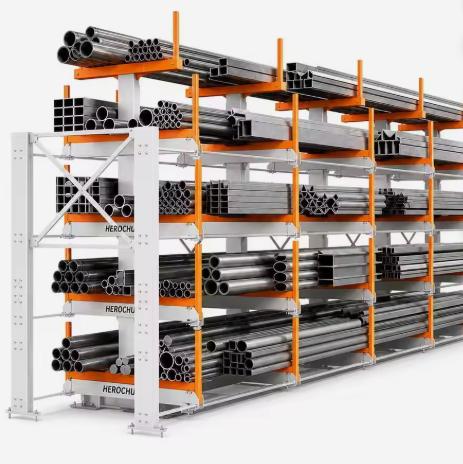
The 600 mm clear space (customizable) and dual-side mechanical assistance discharge suit the varied bundle profiles a fabrication factory processes. Compatible with both bundled and loose materials, the rack handles the full inbound material spectrum without requiring separate storage systems for each form.
Certification and Structural Warranty
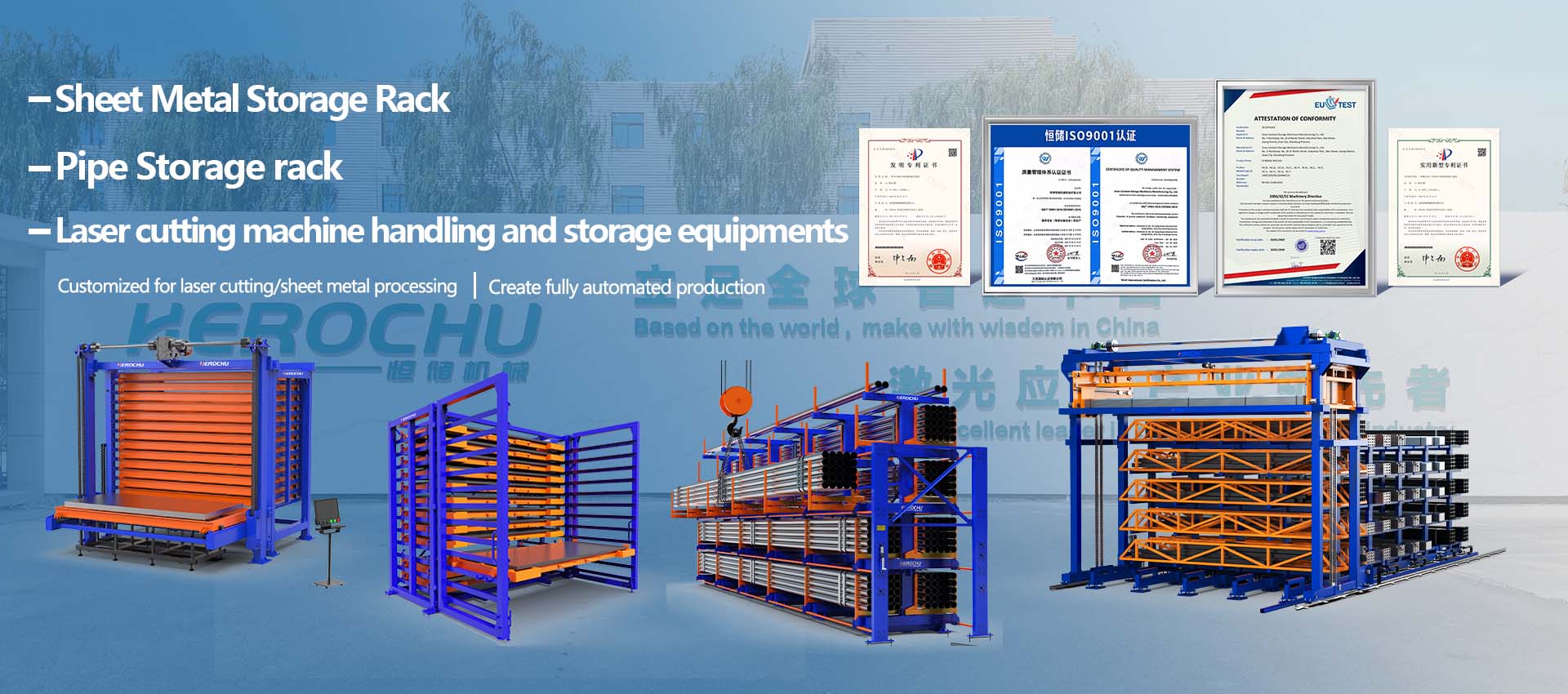
Every Herochu rack is CE certified and manufactured under ISO 9001 quality management. Shipments include a detailed assembly manual and foundation drawing, giving the factory maintenance team engineering-level documentation for installation and future reconfiguration. A three-year structural warranty covers all components—reflecting the load testing and quality control that back every unit.
For metal fabrication factories where storage directly governs production throughput, the Herochu telescopic steel profile and tubes storage rack delivers the load capacity, material adaptability, and floor-space efficiency that fabrication operations need to keep material flowing from receiving to the saw line without delay.