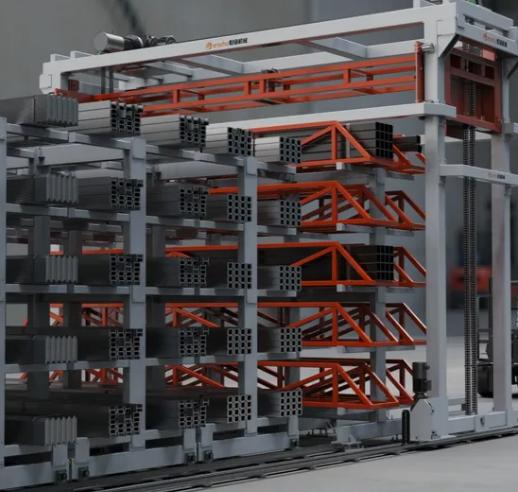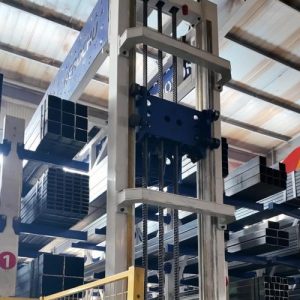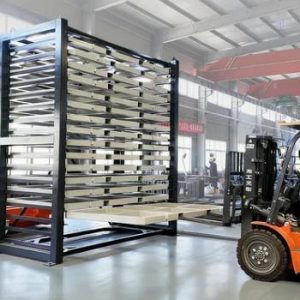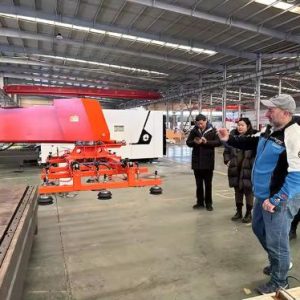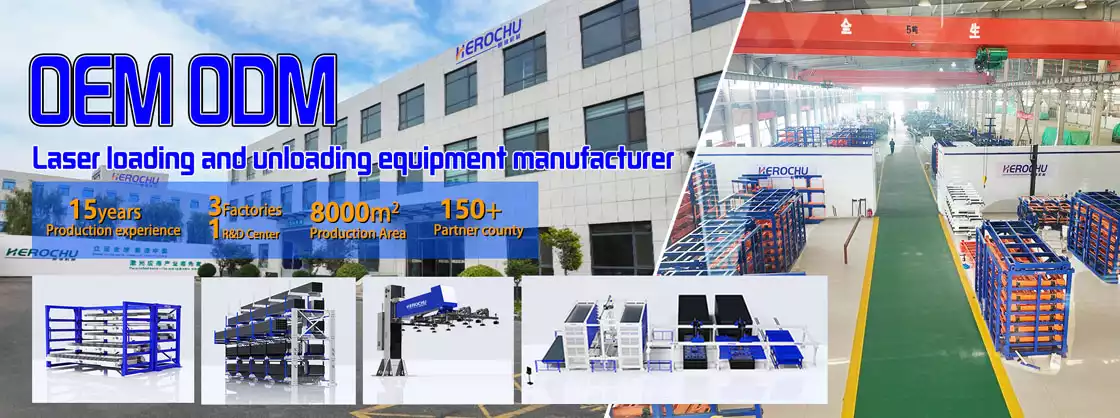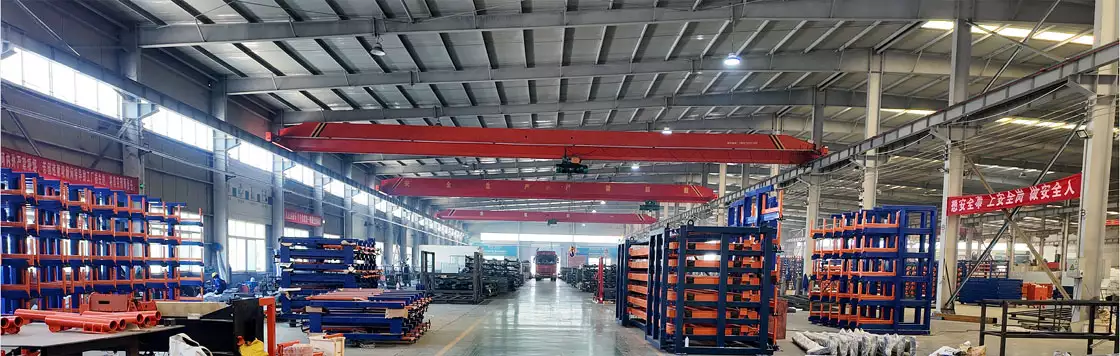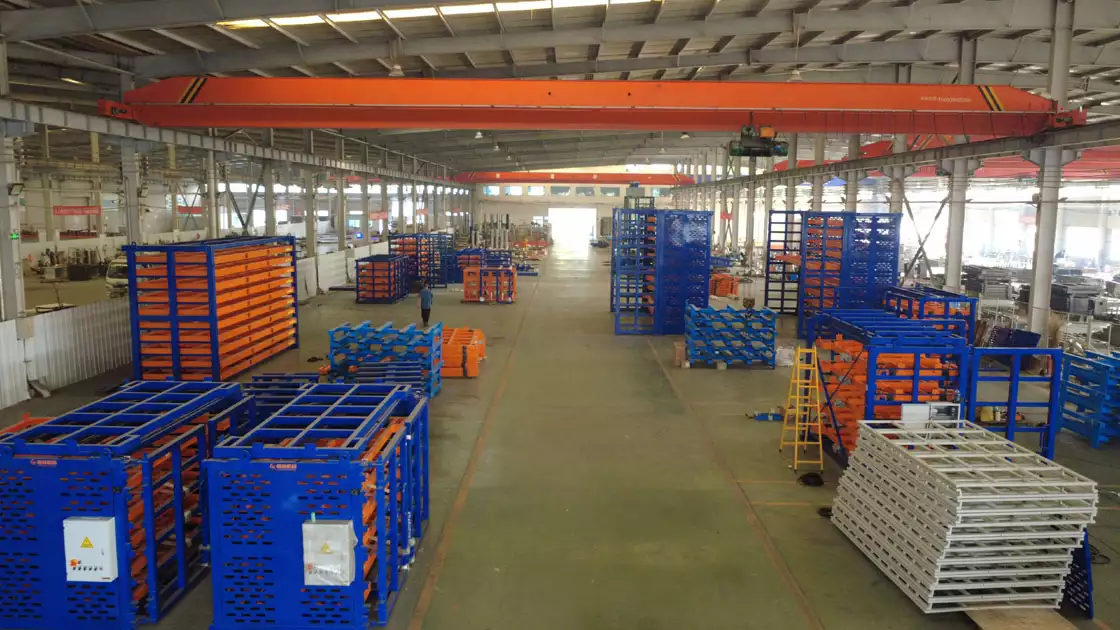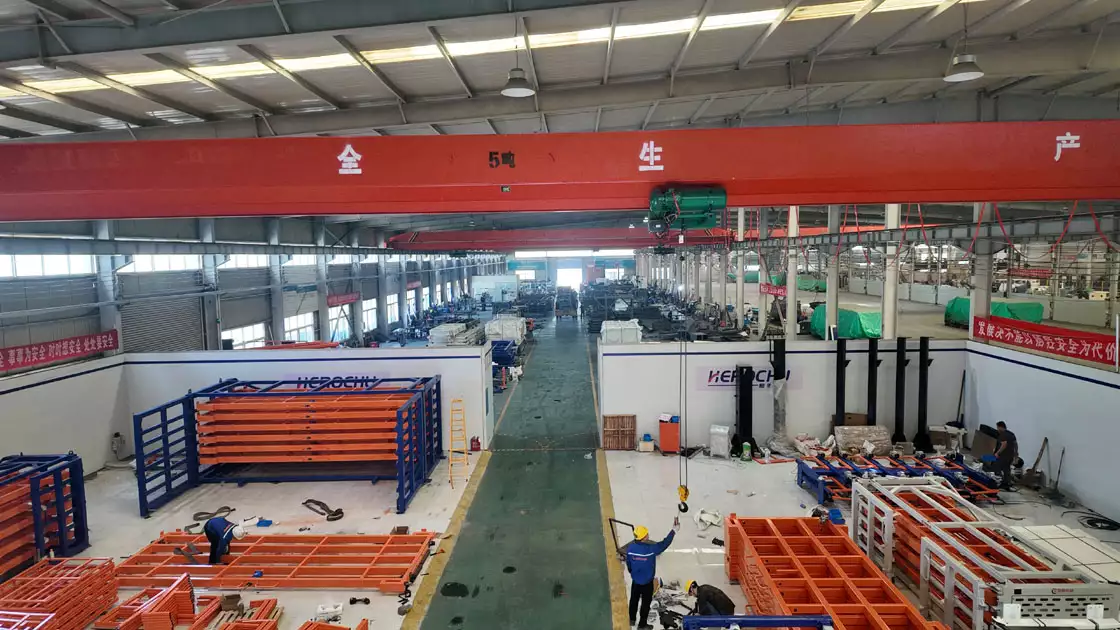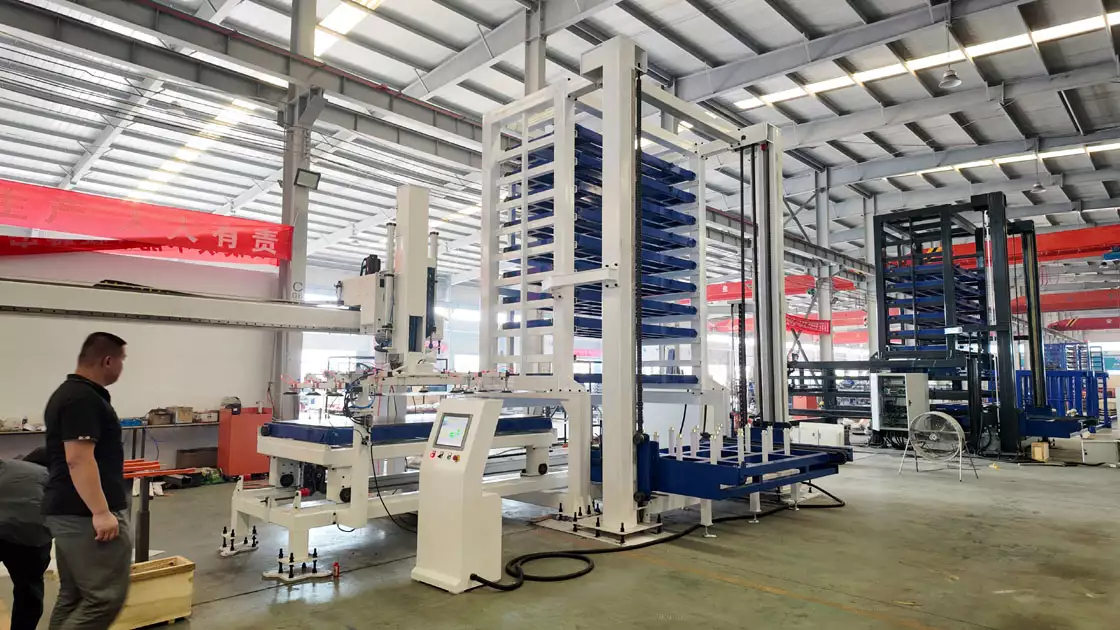
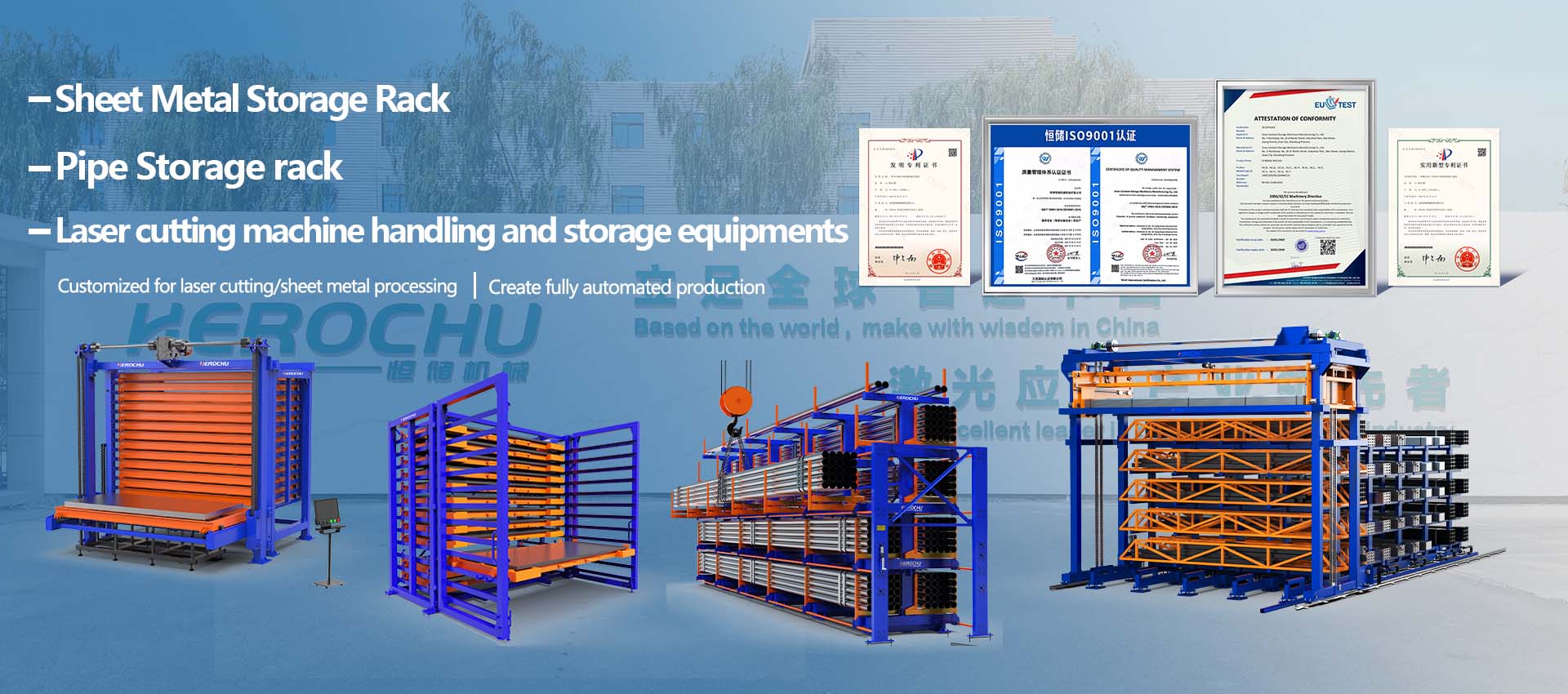
The transition from manual warehousing to automated material handling represents one of the most consequential operational shifts a manufacturing facility can undertake. For businesses that process steel pipes, aluminum profiles, structural tubing, and bar stock, the choice of automation architecture directly affects throughput, space utilization, and long-term scalability. Herochu’s Gantry-Based Pipe & Profile Automated Storage System deploys a floor-rail gantry design paired with PLC-driven control logic to deliver precise, repeatable, and fully programmable storage and retrieval cycles for long materials.
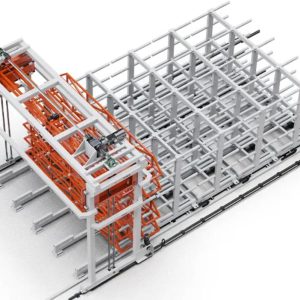
At the mechanical core of the system is a gantry robot that traverses along floor-mounted rails spanning the full length of the storage towers. This configuration differs from overhead crane solutions in several important respects. Floor rails transfer the gantry’s dynamic loads directly into the foundation rather than into the building structure, eliminating the need for reinforced ceiling supports and making the system viable in existing workshops without structural modification. The shared picking aisle arrangement — one gantry serving multiple storage towers on both sides — maximizes the ratio of storage volume to access equipment, reducing capital cost per stored ton.
Motion control is handled through variable-frequency drives that modulate both travel speed and lifting speed across calibrated ranges. The gantry carriage moves at 5 to 30 meters per minute along the longitudinal axis, while the vertical lift operates at 5 to 15 meters per minute. These overlapping speed bands allow the control system to optimize cycle times — rapid traverse across empty aisle sections, decelerated approach to target positions, and controlled acceleration during lift sequences with heavy payloads. The net effect is a positioning system that delivers ±2 mm repeatability without sacrificing throughput.
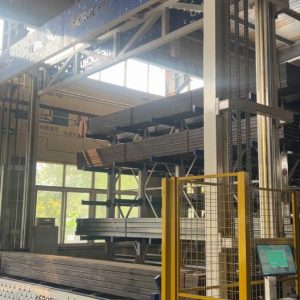
The PLC controller functions as the brain of the operation, executing storage and retrieval commands while continuously monitoring position feedback, load sensors, and safety interlocks. Operators program the system through an industrial touchscreen HMI that displays live rack occupancy, material locations, and pending job queues. The interface is designed for shop-floor use — large touch targets, color-coded status indicators, and confirmation prompts that prevent accidental misrouting. Training time for new operators typically runs under four hours because the workflow mirrors familiar warehouse logic: select material, confirm retrieval, receive tray at station.
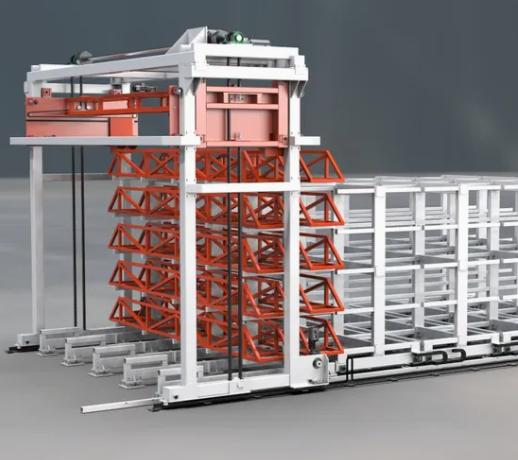
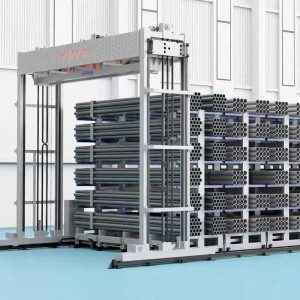
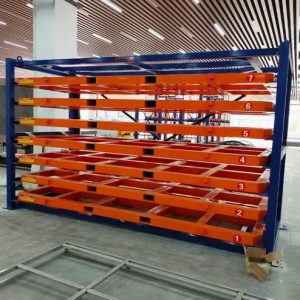
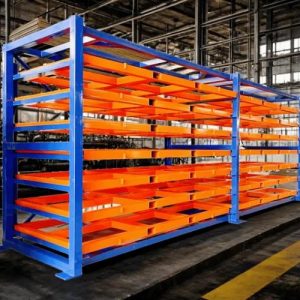
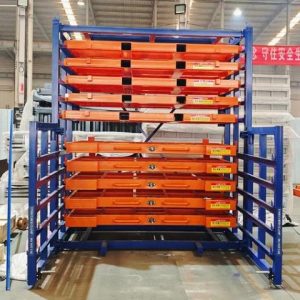
A key advantage of the gantry-based architecture is its ability to handle mixed-material storage within the same system. A single Herochu installation can simultaneously manage 6,000 mm steel pipes in one tower section, 7,000 mm aluminum profiles in another, and loose shorter bar stock in designated bins — all retrievable through the same gantry aisle and the same operator interface. The tray design accommodates variation in both length and format, from bundled long stock to individually separated bars, without requiring tooling changes or manual reconfiguration between retrievals.
Digital inventory integration elevates the system beyond mechanical automation into the realm of smart warehousing. The PLC maintains a persistent database of every stored item, its SKU, its bin location, and its put-away timestamp. This data can be exposed to upstream WMS or ERP platforms via standard industrial communication protocols, enabling production planners to see real-time raw material availability without walking the warehouse floor. For facilities practicing just-in-time manufacturing, this visibility prevents production stoppages caused by undetected stock depletion of critical profiles.
Energy consumption profiles are modest relative to the mechanical work performed. The gantry drive system recovers energy during deceleration phases via regenerative braking fed back through the VFD bus. The vertical lift’s counterweight design reduces the motor power requirement for ascending movements, while gravity assists the controlled descent. Idle power draw drops to standby levels when the system is not actively cycling, with wake-on-demand logic that returns the gantry to operational state within seconds of receiving a retrieval command.
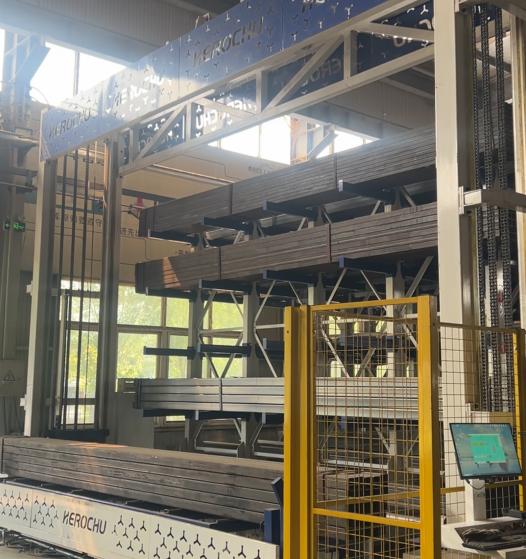
Physical safety is addressed through layered protections. Light curtains at the picking station prevent tray movement when an operator is in the retrieval zone. Mechanical limit switches at tray travel endpoints provide hard-stop redundancy beyond the software position limits. Emergency stop circuits follow Category 3 safety architecture with dual-channel monitoring, ensuring that any single component failure results in a safe shutdown rather than an uncontrolled motion. The enclosed tray design further protects stored material from shop-floor contaminants — grinding dust, welding spatter, and cutting fluid mist that can degrade stock quality over time.
Maintenance requirements are engineered for accessibility. The gantry drive components, chain tensioners, and guide rail lubrication points are positioned at service height rather than overhead, allowing technicians to perform routine inspections and adjustments without specialized access equipment. The PLC logs operational hours, cycle counts, and diagnostic events into a maintenance dashboard that flags approaching service intervals based on actual usage rather than calendar schedules.
For manufacturers evaluating automation, the Herochu Gantry-Based Pipe & Profile Automated Storage System offers a solution architecture that balances mechanical simplicity with control sophistication. The floor-rail gantry design avoids building modification costs, the PLC-based control system integrates directly into existing production IT infrastructure, and the modular tower configuration allows phased deployment aligned with budget cycles. In an industrial landscape where every percentage point of utilization improvement compounds into annual savings, automated long-material storage has moved from a capital luxury to an operational necessity for competitive fabrication businesses.