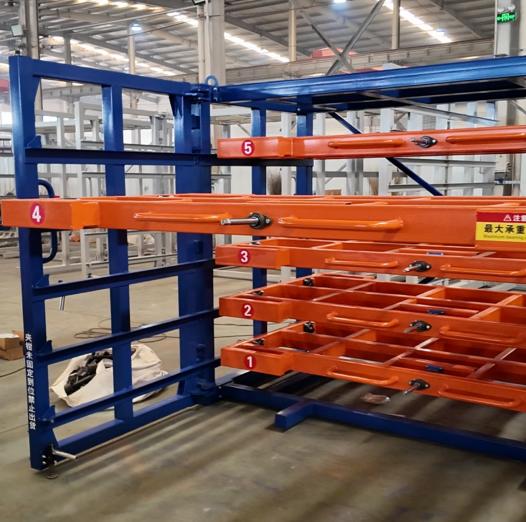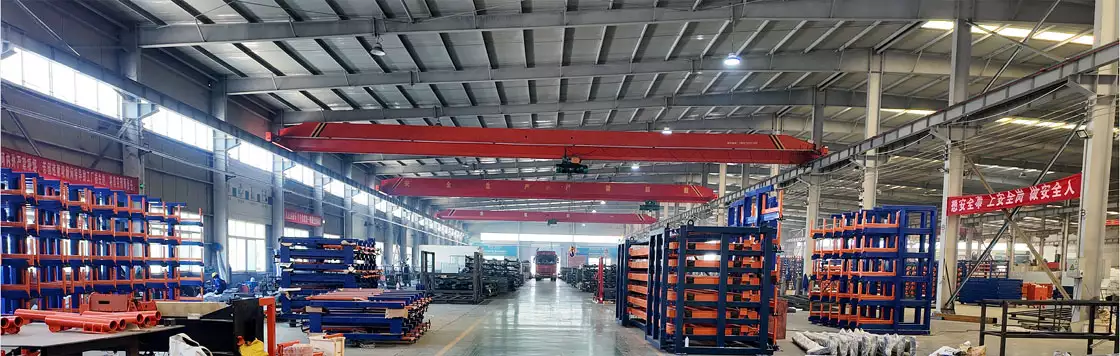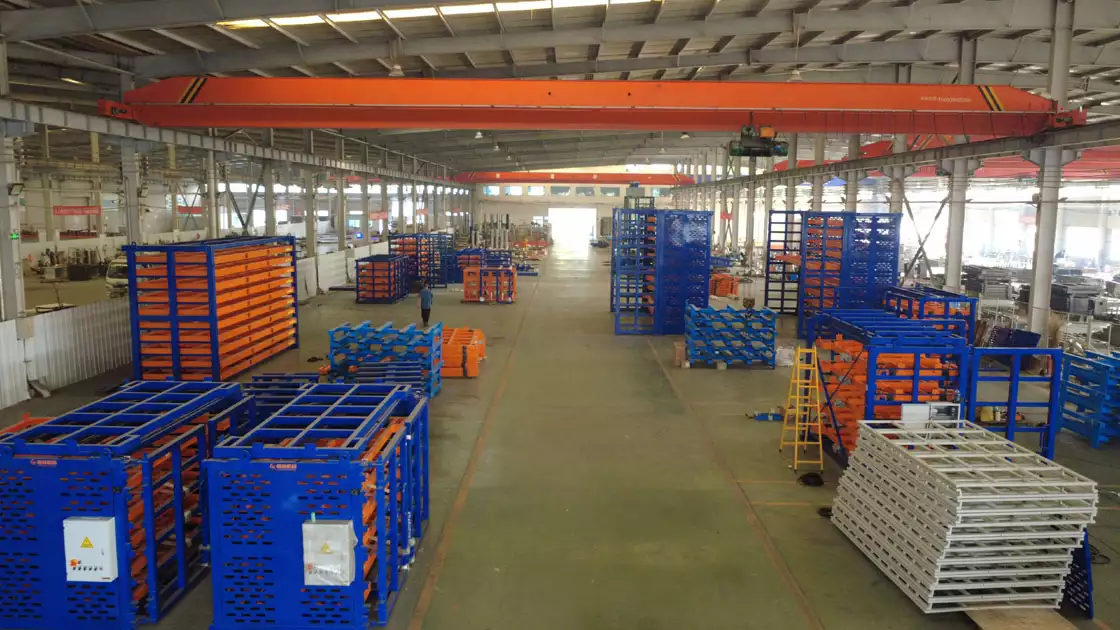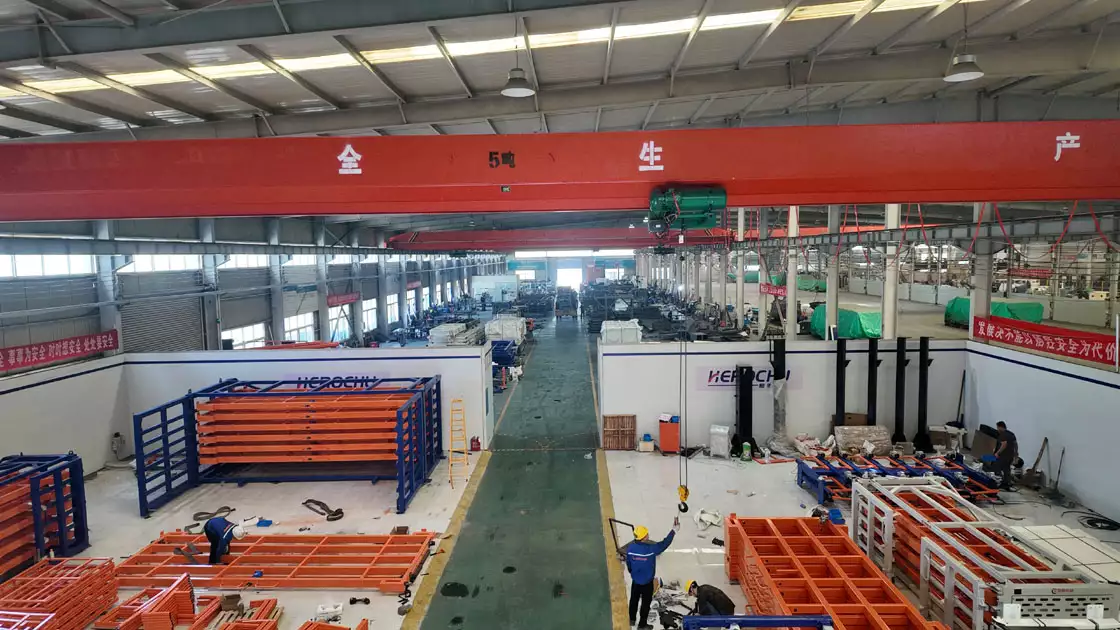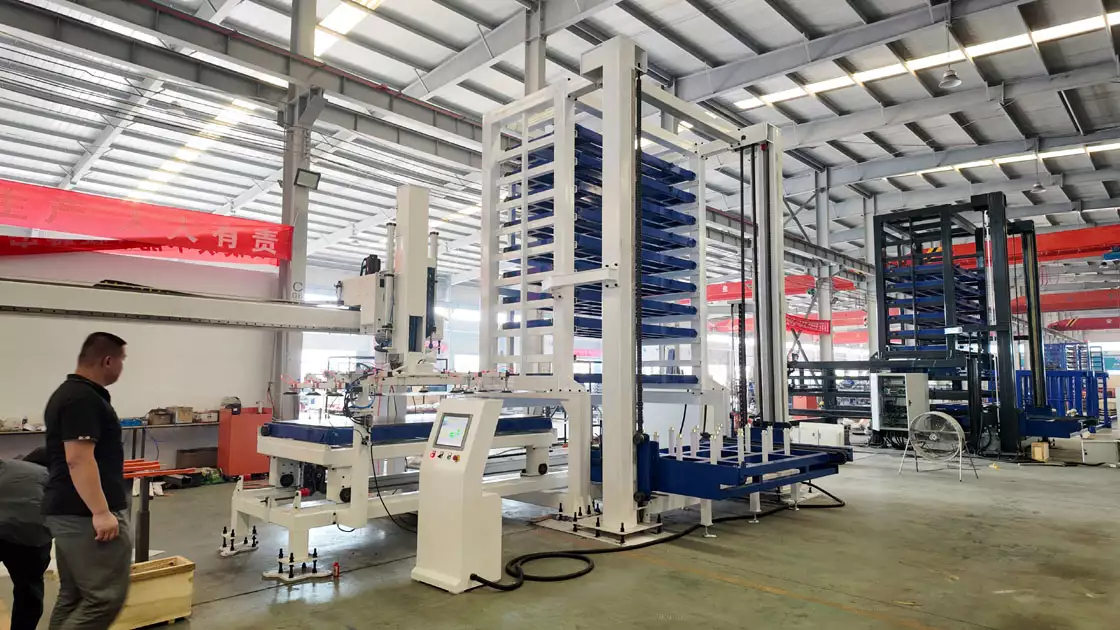
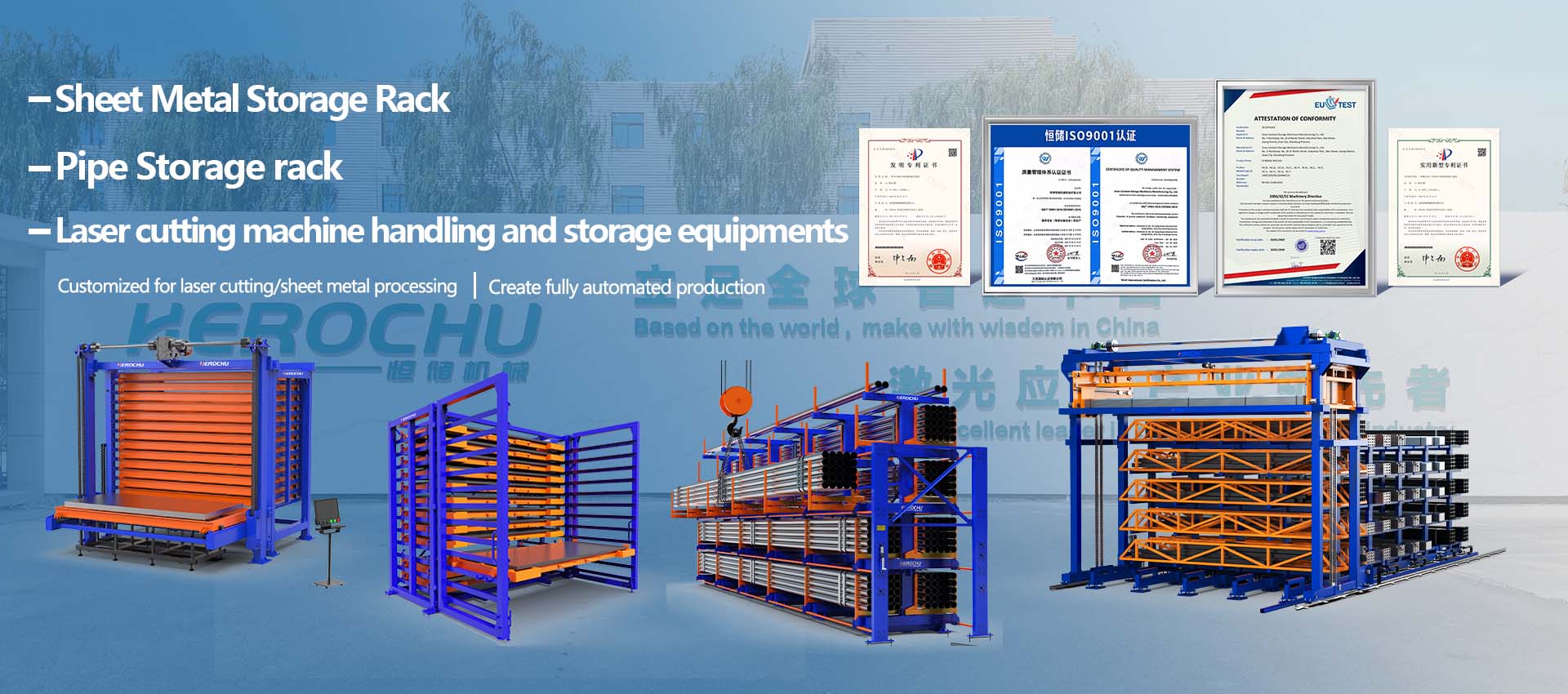
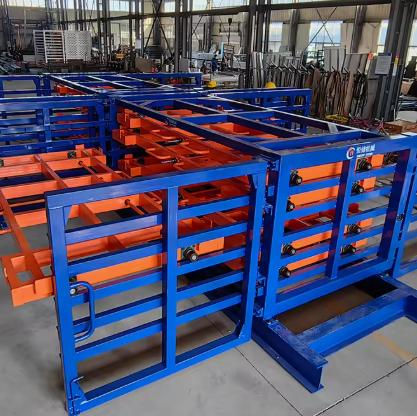
Industrial warehouses handle sheet metal in volumes that expose every inefficiency in the storage system. Material sits on pallets, taking up aisle space; operators spend shifts locating the right plate; and sheets at the bottom of a stack get scratched, dented, or forgotten until they rust. The Herochu industrial drawer storage rack is a motorized roll-out system designed around the realities of metal processing: up to 5,000 kg per drawer, a frame rated for 30,000 kg total, and a layout that turns high-density storage into a daily operating advantage.
Built for Continuous Industrial Duty
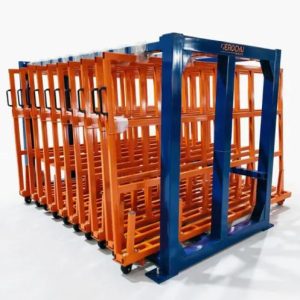
The frame is the part that gets the least attention and takes the most punishment. Herochu builds the rack from Q235B high-strength steel columns with a dual-beam crossbeam design, so the load of every drawer is carried by the full structure rather than a single point. Thickened steel sections resist the corrosion and deformation that appear in cutting and forming environments, and the dual-beam crossbeam keeps the frame square when a heavy drawer is fully extended. The result is a rack that holds its geometry after years of daily use, which is what separates industrial-grade storage from equipment that needs constant shimming and adjustment.
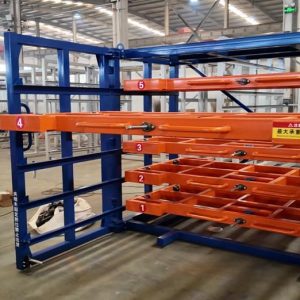
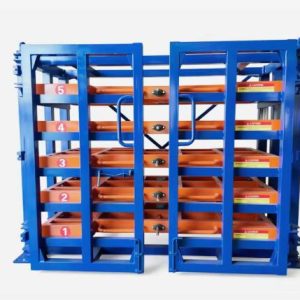
The series covers sheet sizes up to 6,000 × 2,000 mm, with six layers as standard and drawer counts configurable from three to eight. Clear space of 120 mm between levels keeps bundles accessible, and the whole rack supports up to 30,000 kg, so a fully stocked unit does not flex, bind, or shift under load.
Maintenance follows the same industrial logic. The rollers and drawer guides are replaceable wear parts, and the frame is designed so a drawer can be removed and serviced without dismantling the rack above it. Herochu keeps the critical spares in stock and documents every service point, which keeps downtime measured in hours rather than days.
Motorized Roll-Out: One Button, One Operator
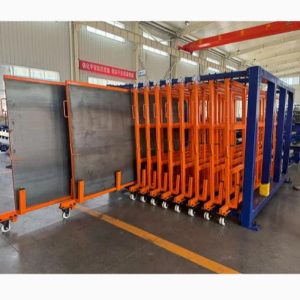
The motorized drive is the feature that changes the labor equation. Pressing a button rolls a loaded drawer out to the aisle; the operator takes the sheet and sends the drawer back. There is no manual cranking of a 5-ton tray, no second person to help steer, and no time spent repositioning a forklift around a stack. For plants that standardize on mechanical handling, a manual crank version with mechanical assistance is available, and both versions share the same drawer geometry, so mixed installations run identically.
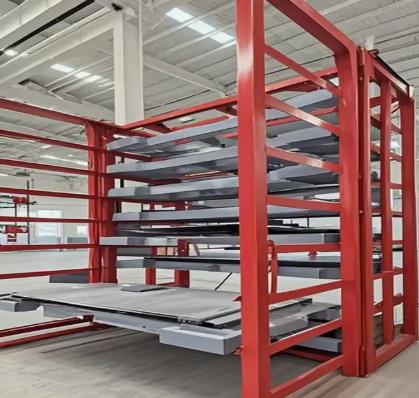
A safety interlock system backs the motorized operation: drawer travel is blocked during lifting, and a second drawer cannot extend while another is out. That prevents the two most common accident patterns in sheet handling, which matters in warehouses where operators work close to heavy loads. The interlock also protects the material, since a drawer that moves while a crane hook is near it can shift the sheet.
A typical cycle on a Herochu rack shows the gain. The operator selects the drawer at the label, presses the button, and the tray arrives at the aisle in seconds. The crane or forklift lifts the exposed sheet while the next drawer is already staged. What used to be a two-person, ten-minute retrieval becomes a one-person, two-minute task, and the warehouse moves the same tonnage with fewer moves per sheet.
High-Density Storage Without the Access Penalty
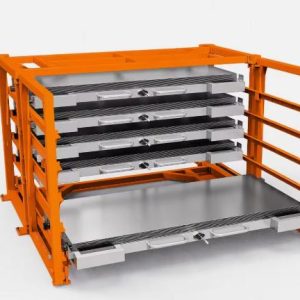
Dense storage usually costs accessibility. Vertical drawer racks avoid that trade-off by bringing the material to the aisle instead of forcing the operator into the rack. Aisle occupation drops by 30 to 70 percent compared with pallet storage, yet every sheet remains fully accessible: the full pull-out structure exposes the entire plate, so there is no stacking, no turning goods over, and no digging to the bottom of a pile. Forklifts and overhead cranes work through standard-width aisles and never enter the structure, which keeps the handling equipment fleet unchanged.
Retrieval time falls by up to 70 percent in field use, and the layout supports first-in, first-out rotation, so older stock leaves the rack before it rusts or becomes obsolete. Inventory turnover improves, dead stock shrinks, and the warehouse stops carrying plate it cannot find. Each drawer can be labeled by material grade, specification, and thickness, which gives the warehouse the classification discipline of a dedicated system without the floor area it would consume. Rack rows can be placed back to back or against a wall, and the aisle width stays at the plant’s existing standard, so the layout integrates with the warehouse plan without a redesign.
Material Protection for Steel and Aluminum
Every drawer is fitted with inclined plastic supports that hold each sheet flat and independent. The supports prevent slipping during drawer travel and keep sensitive surfaces off bare steel, so aluminum and pre-finished sheet leave the rack without scratches, dents, or warping. Placing each sheet on its own tray also removes the stacking pressure that damages the bottom layers of a pallet, which reduces scrapped material and downstream rework in cutting and forming lines. For plants that track plate by heat number or batch, Herochu drawer labels can carry the same codes, so material traceability survives the move from pallet to rack.
The Cost Argument for the Warehouse Manager
The case for the motorized drawer rack is easiest to state in operating terms. One operator retrieves a sheet in the time two people previously needed; material preparation time drops; floor space is reclaimed; and inventory turns faster because material is visible and organized. Herochu builds the series under CE and ISO 9001 certification, with drawer count, shelf height, and overall dimensions customized at order time, so the rack is sized to the building and the material rather than the other way around.
For warehouses and processing plants storing steel and aluminum sheet in industrial volumes, the Herochu motorized roll-out drawer rack balances practicality and cost-effectiveness: high-density storage, full accessibility, and a structure rated to carry the load for years. Contact Herochu with your sheet sizes, tonnages, and warehouse layout to get a drawer rack configuration planned around your material flow.