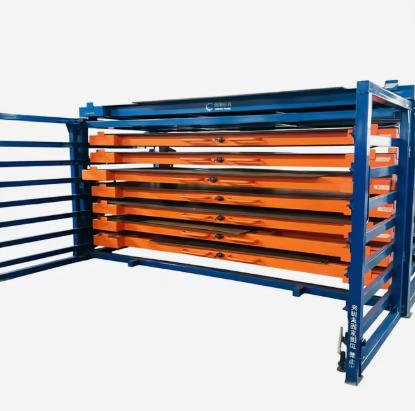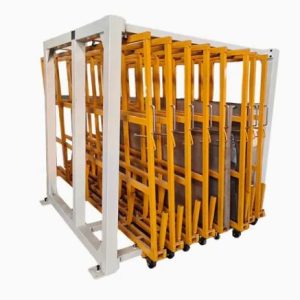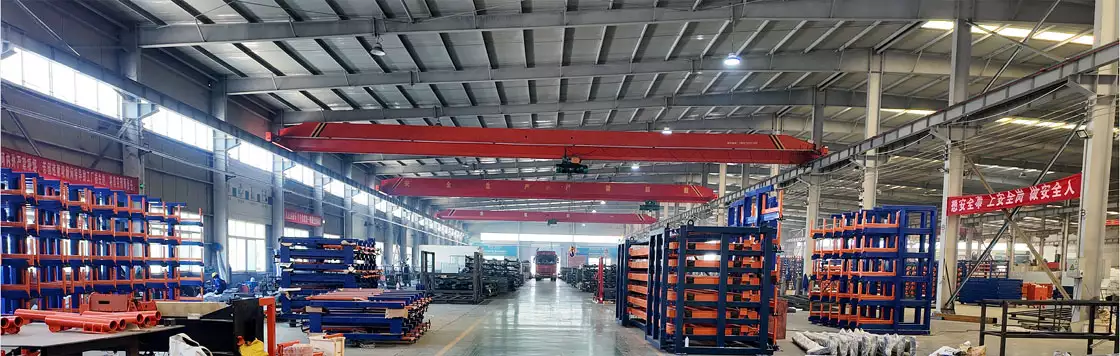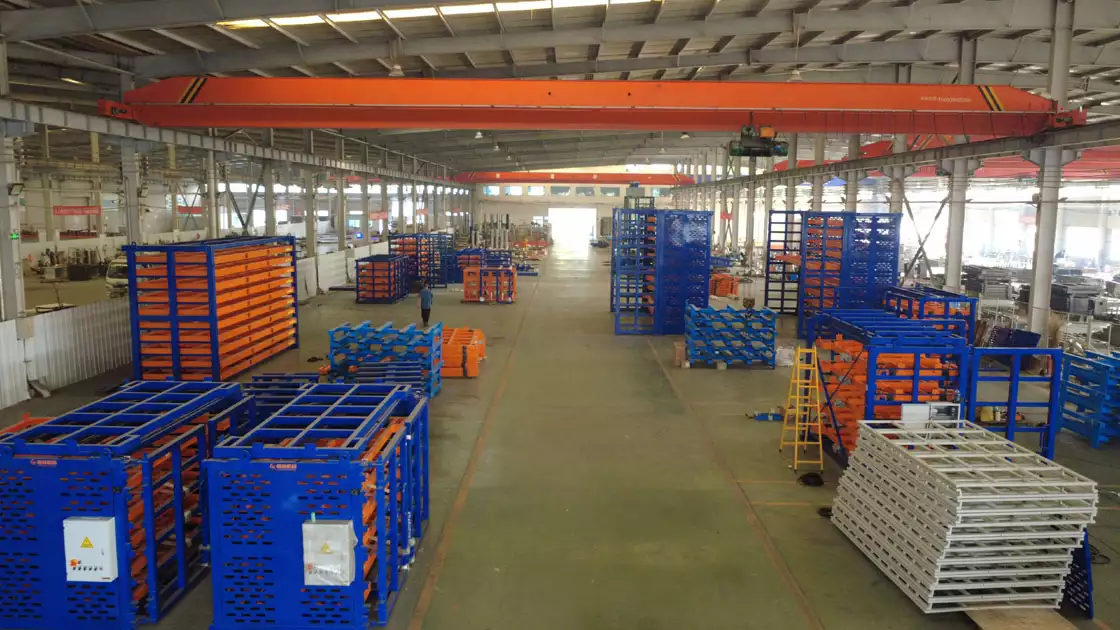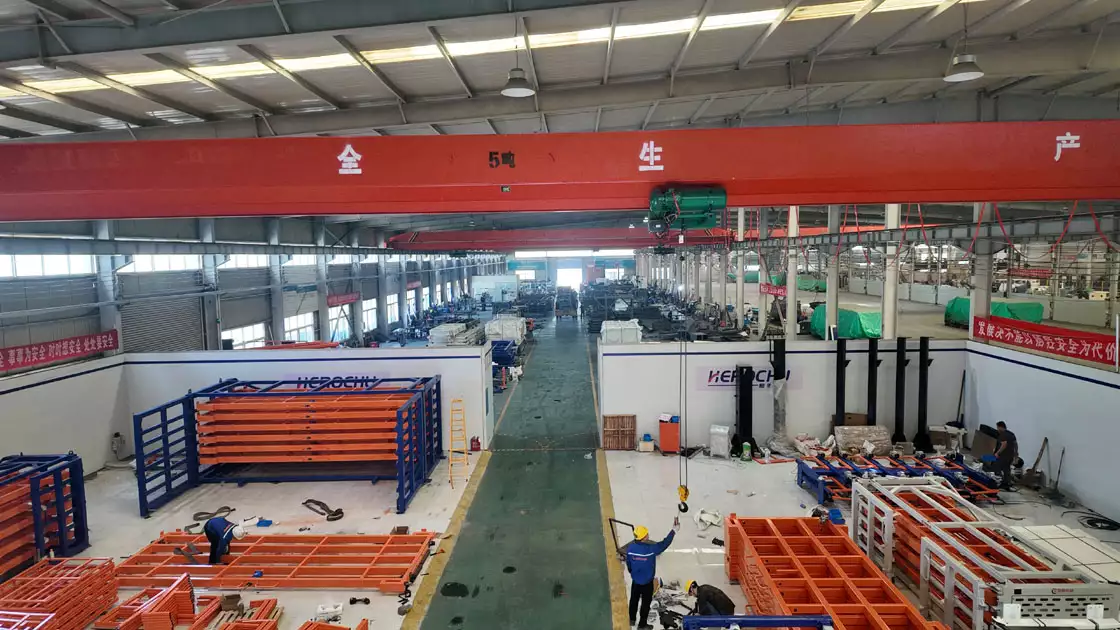
Workshop space is never free. Every pallet of steel sheet parked against a wall takes a forklift route hostage, and every stack taller than waist height forces an operator to guess which plate is on top. The Herochu roll-out sheet rack approaches the problem from the floor plan: it stores plate vertically in full-extension drawers, each rated up to 5,000 kg, so a workshop keeps the same inventory in a fraction of the footprint and retrieves any sheet without unloading the stack above it.
A Roll-Out Rack That Fits Existing Workshop Workflow
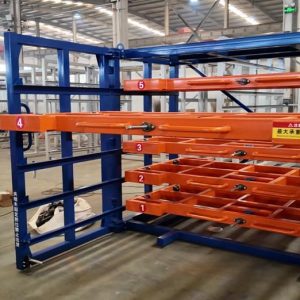
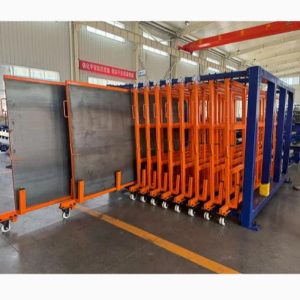
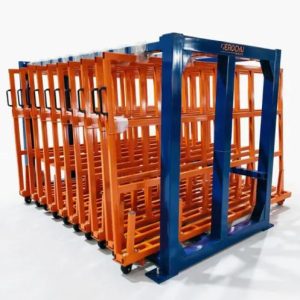
The rack is built from Q235B high-strength steel with a dual-beam crossbeam frame, and each drawer rolls out on heavy-duty rollers for full access to the plate. Herochu builds the drawer mechanism with replaceable rollers and sealed bearings, so the pull stays smooth and maintenance is a matter of checking the tracks at each service interval. Retrieval is a straight pull: the drawer comes to the aisle, the operator takes the sheet, and the drawer returns. There is no stacking, no turning goods over, and no reaching between plates. Drawer operation is available in manual crank and motorized versions, so a workshop that handles 5-ton plate a few times a day can choose the electric drive, while lighter-duty bays keep the lower-cost manual option. Either way, the mechanism uses mechanical assistance, which keeps the pull effort low even on a fully loaded tray.
Because the drawer brings the material to the aisle, existing lift equipment keeps its normal routine. A forklift or overhead crane works from the front face of the rack through a standard-width aisle and never enters the structure. Workshops that already run cranes for machine loading find the rack slots naturally into the same handling loop.
The Floor Space Math Behind the 30–70 Percent Saving
Pallet storage spreads inventory in two dimensions: each pallet occupies aisle frontage, and access to one pallet usually requires moving others. The roll-out rack compresses that layout vertically. With plate stacked in layers instead of spread across the floor, aisle occupation drops by 30 to 70 percent, and the freed area becomes usable production space. The exact saving depends on the number of drawers and plate sizes, but the mechanism is consistent: the rack holds the same tonnage in the vertical plane that pallets held on the floor.
The practical result in a typical sheet metal workshop is a clear path where a pallet farm used to sit. Cutting machines can be repositioned, a second workbench can be added, or the space simply stays open for material flow. Shops that reclaim this area typically report faster material preparation as well, because the plate is visible and labeled instead of buried in a stack. Retrieval time falls by up to 70 percent compared with traditional storage, and the first-in, first-out loading order keeps older sheets moving before they rust or go out of specification.
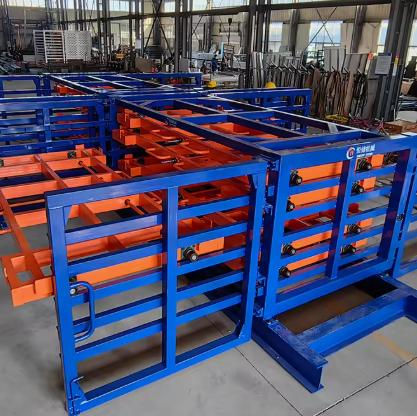
A concrete example puts the saving in numbers. Six pallets of 3,000 × 1,500 mm plate, each holding 3 tons, occupy roughly 40 m² of floor plus the maneuvering space in front of them. One Herochu HC-B3015-63 rack with six drawers holds the same 18 tons in a footprint of about 10 m², freeing the rest for machines and walkways. In workshops where every square meter carries a production cost, that difference is the difference between expanding the building and not.
Protection Built Into the Drawer, Not Added Later
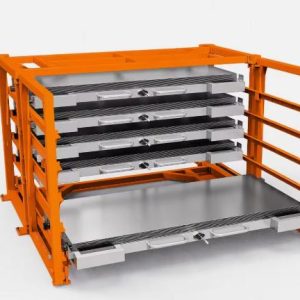
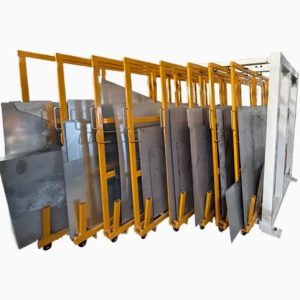
A roll-out drawer solves the accessibility problem, but the surface protection has to be designed into the tray. Herochu fits continuous trays with inclined plastic supports that hold each sheet flat and independent. The supports stop the plate from slipping during drawer travel and keep the sheet surface off bare steel, which protects soft material such as aluminum and pre-finished sheet from scratches, dents, and warping. Each sheet lies on its own support surface, so the stacking pressure and friction that damage palletized stock never occur. For workshops feeding laser or punch lines, this matters: a scratched or bowed sheet costs setup time downstream.
Handling Capacity Without Compromise
The series covers sheet sizes from 2,500 × 1,300 mm to 6,000 × 2,000 mm. Standard models carry 3,000 kg per level, and the large-format models HC-B4020-65 and HC-B6020-65 carry 5,000 kg per level, with total rack capacity reaching 30,000 kg. The frame is built from thickened Q235 steel that resists corrosion and deformation, so the rack keeps its geometry under the vibration and humidity of a working shop. Clear space between drawers is 120 mm as standard and can be customized for thicker bundles.
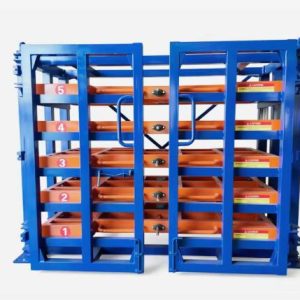
Safety is part of the handling package: Herochu fits the racks with a safety interlock system that prevents drawer movement during lifting operations. Drawer count is configurable from three to eight, and shelf height and overall dimensions are set at order time, so the rack can be sized to a specific bay rather than squeezed into a standard footprint.
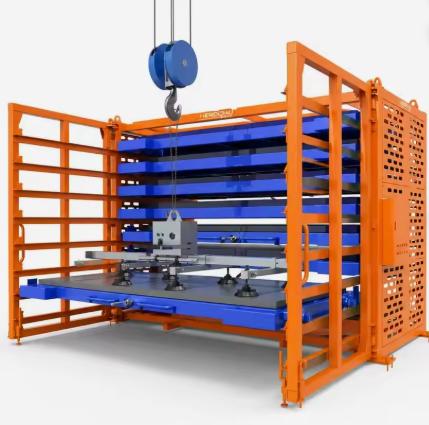
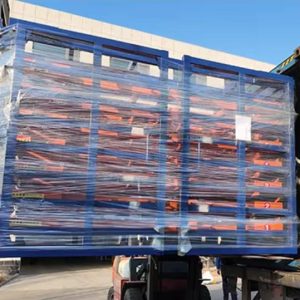
The rack arrives as a modular kit: columns, crossbeams, drawer assemblies, and roller tracks. Assembly is done with standard tools on a level floor, and Herochu provides the layout drawing and a step-by-step erection guide, so the rack can be commissioned over a weekend without stopping production.
The Workshop’s Storage Upgrade Path
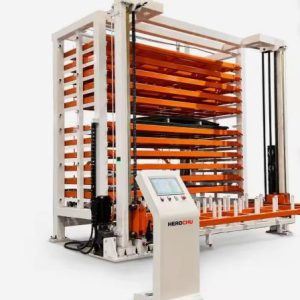
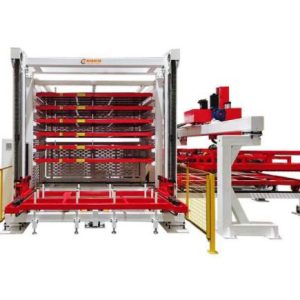
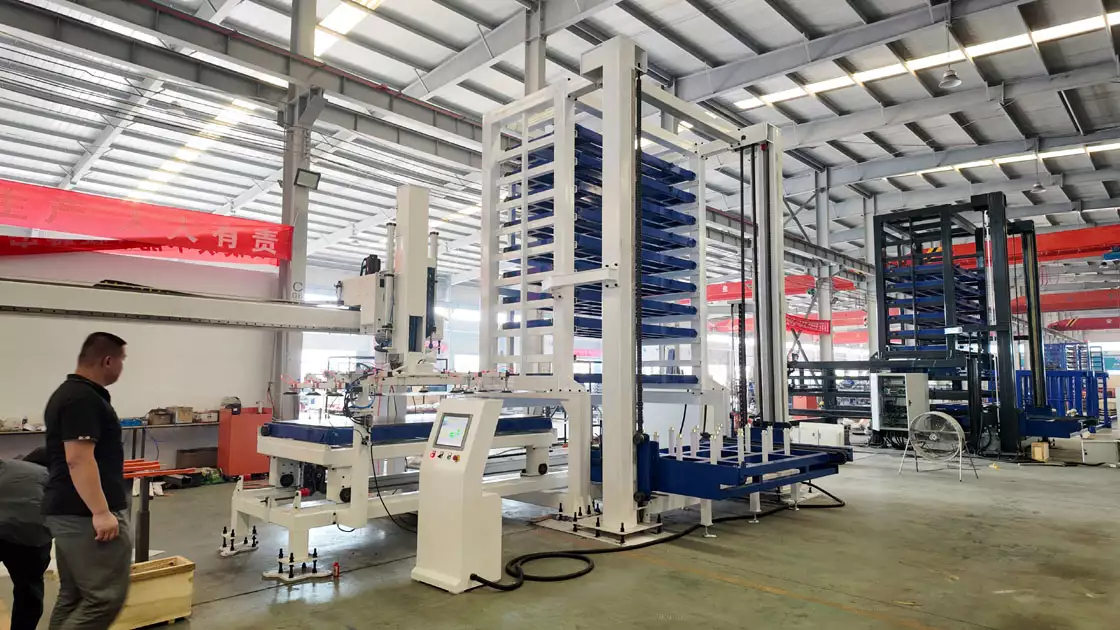
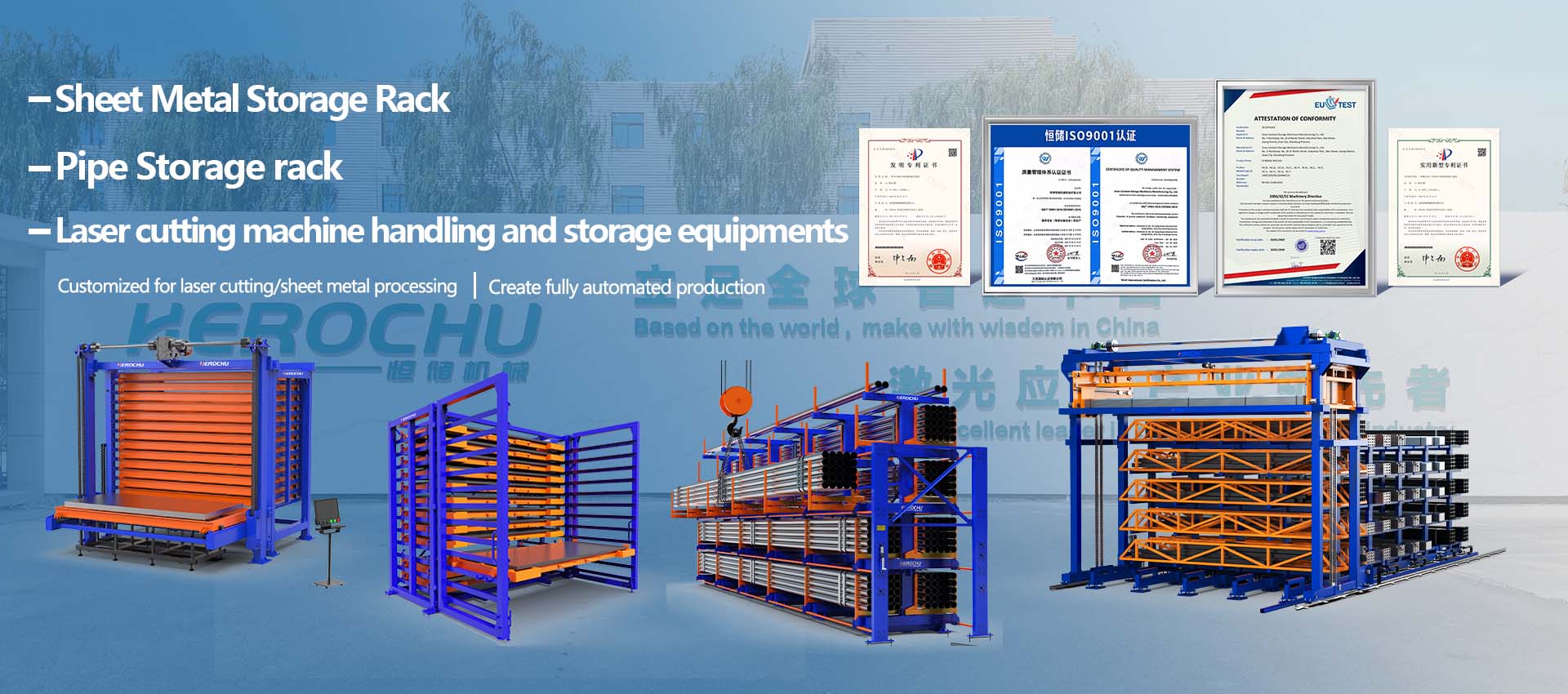
For a workshop that has outgrown pallet storage but does not want the cost and complexity of an automated tower, the roll-out sheet rack is the middle path: high-density storage with the simplicity of a drawer. The vertical design, the 5-ton drawer rating, and the compatibility with existing cranes and forklifts let a shop reorganize its material flow without changing its handling equipment. Herochu builds the series under CE and ISO 9001 certification, and the configuration is tailored at order time to the plate sizes, tonnages, and floor plan of each workshop.
Send Herochu your sheet dimensions and available floor space, and get a roll-out rack layout with the drawer count and capacity matched to your material.