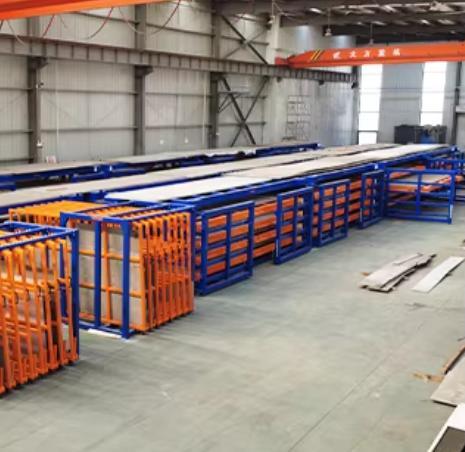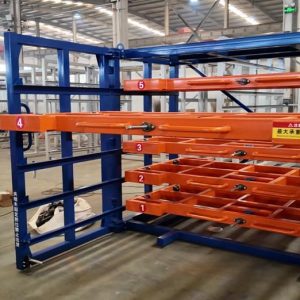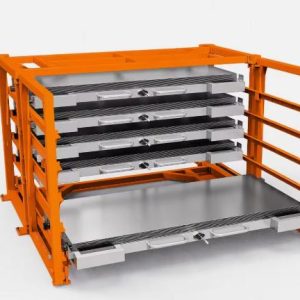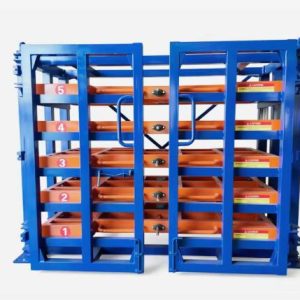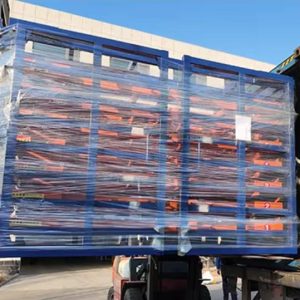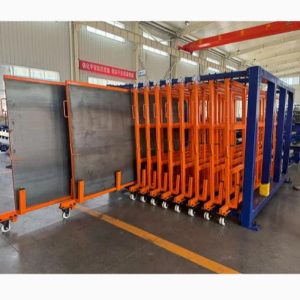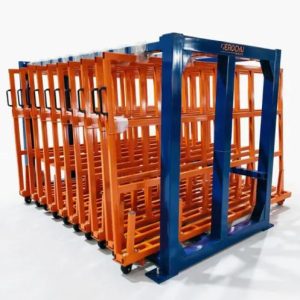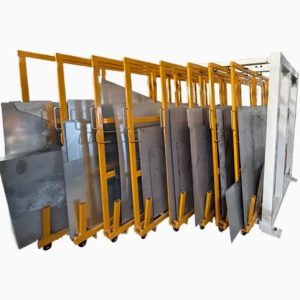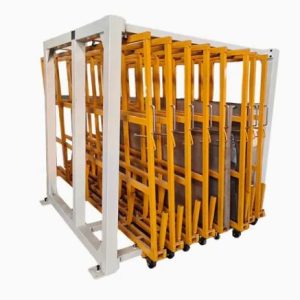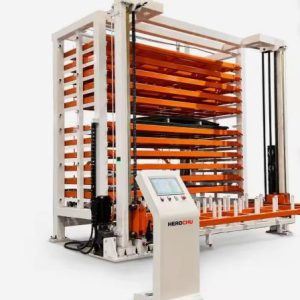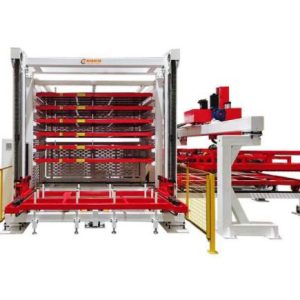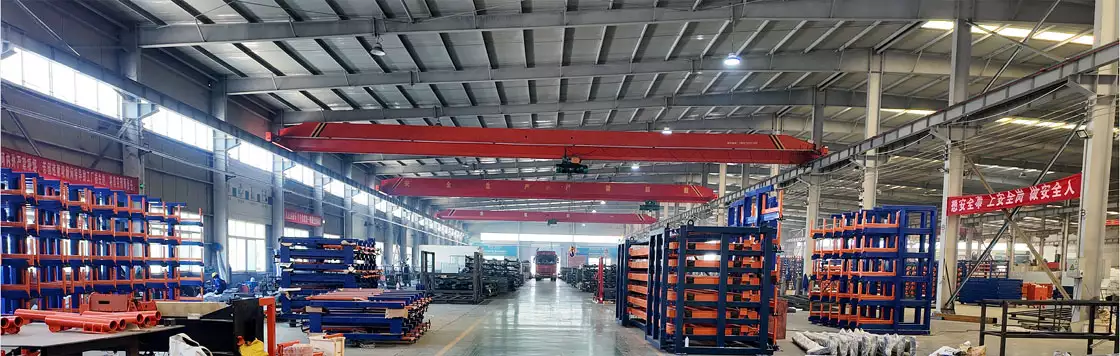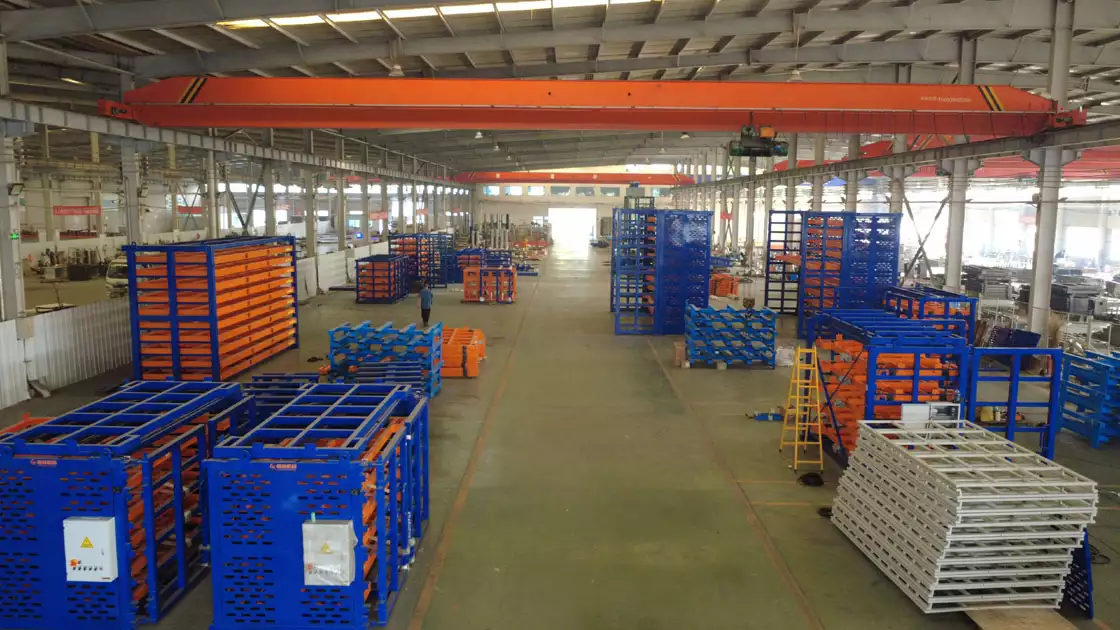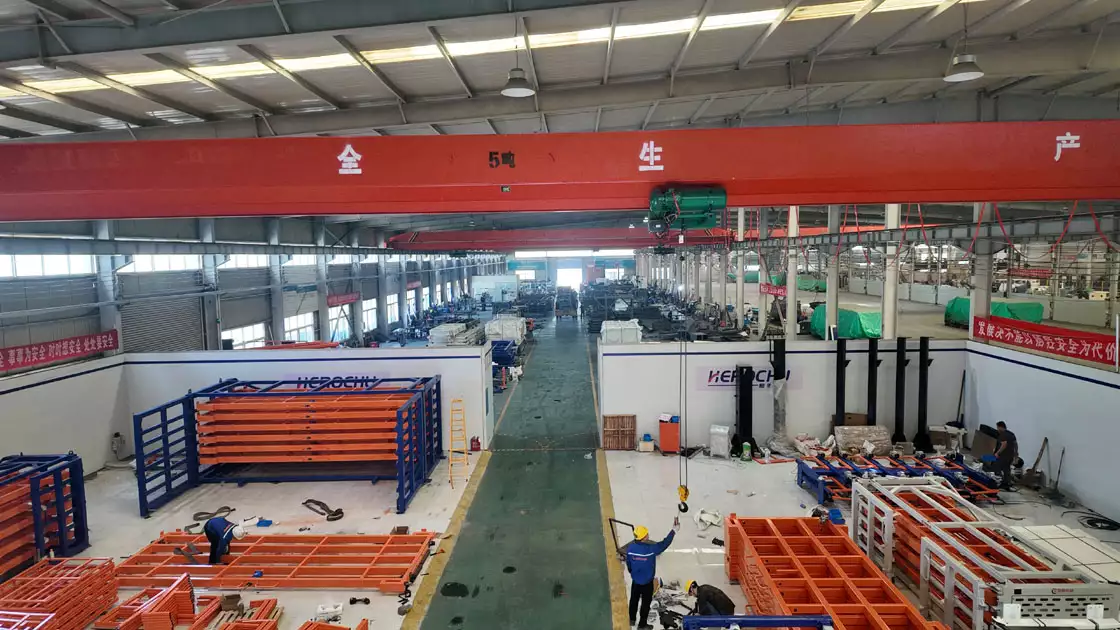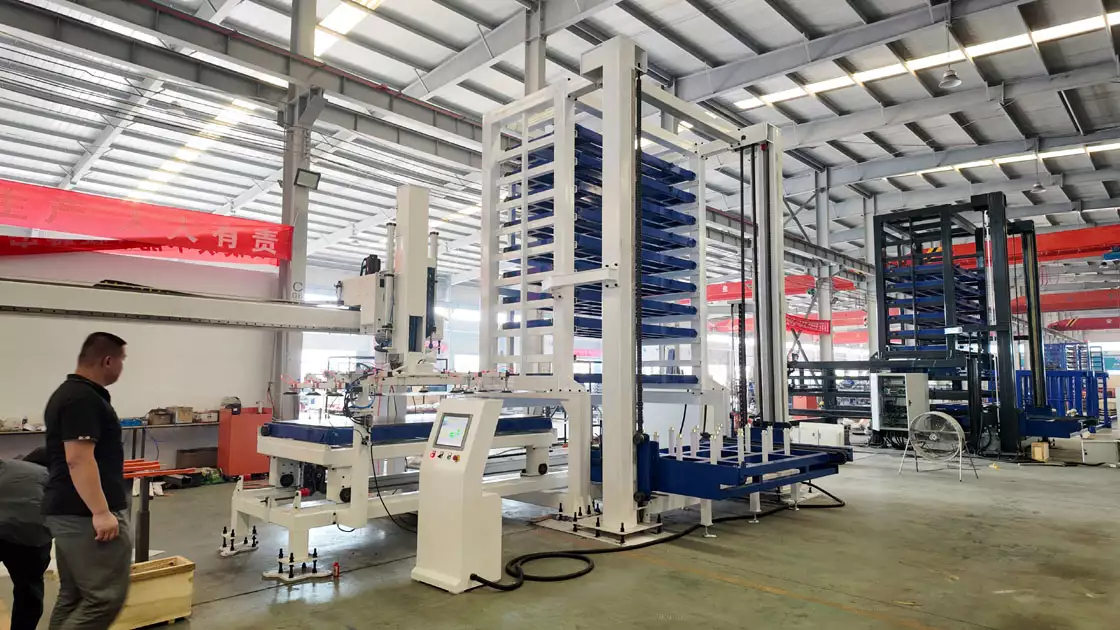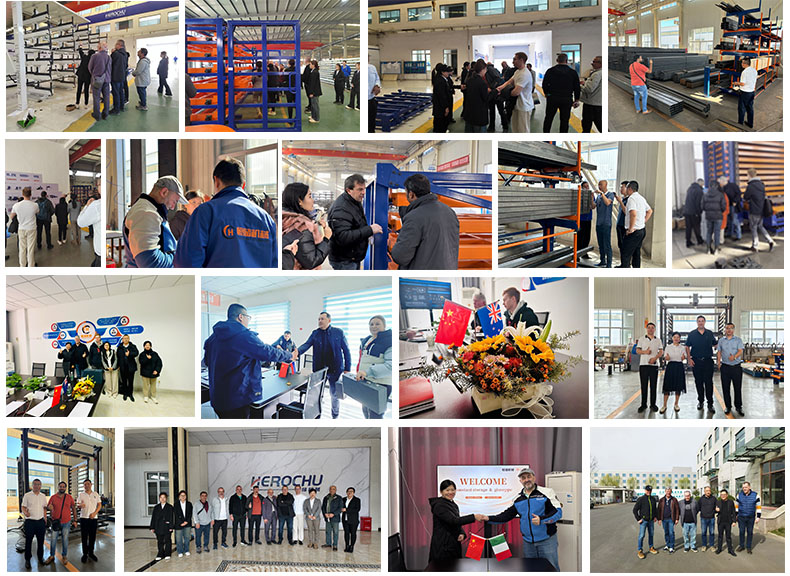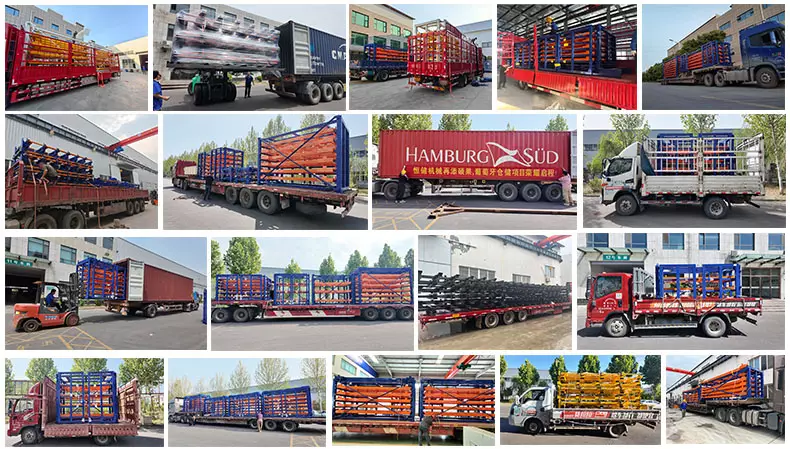
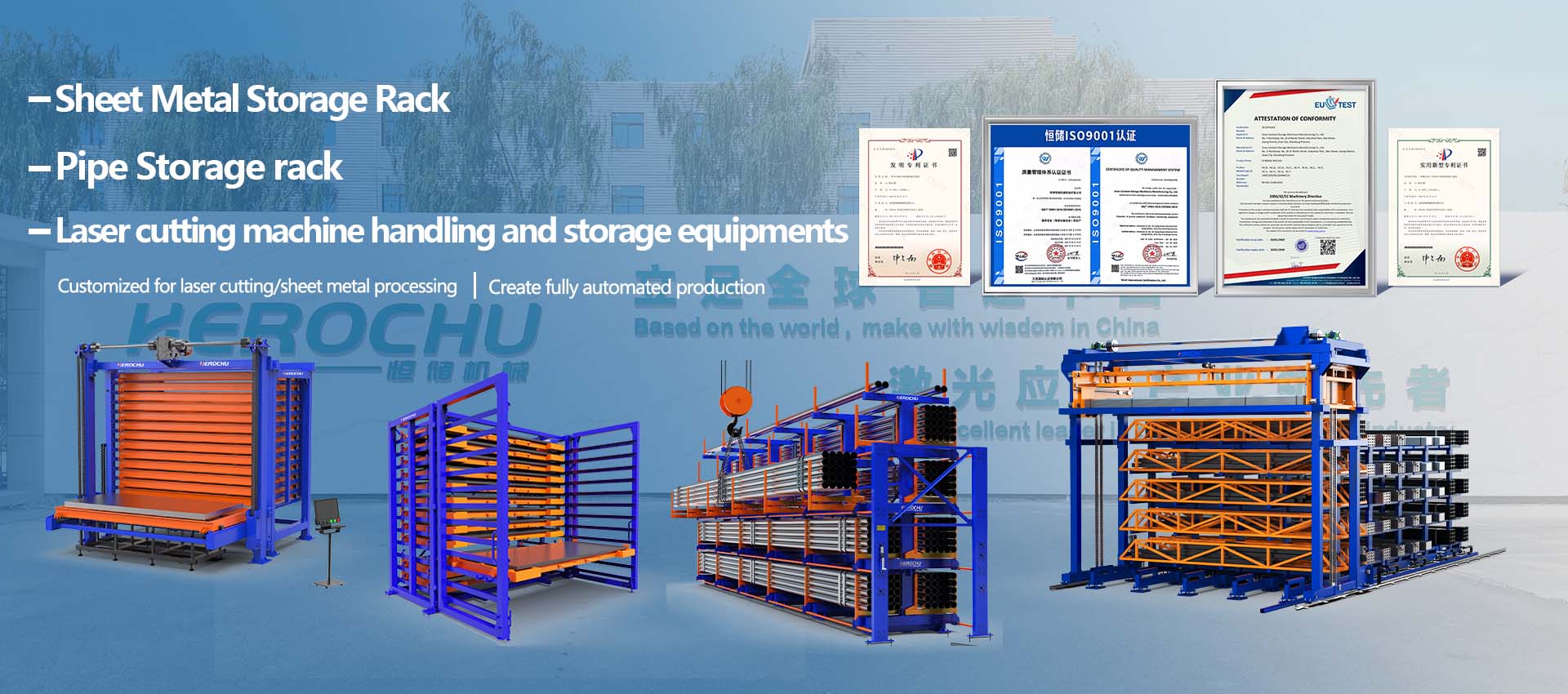
Large steel plate is unforgiving to store. A 6,000 × 2,000 mm sheet weighs thousands of kilograms, takes up a full forklift lane when laid on the floor, and cannot be stacked deep without risking damage to the sheets underneath. Herochu’s customizable heavy-duty drawer rack was built for exactly this material class: a modular drawer system that carries up to 5,000 kg per level, sized around the plate dimensions a shop actually cuts, and configurable from three to eight drawers to fit the space available.
A Frame That Adapts to the Plate, Not the Other Way Around
Most storage problems start when a standard rack is forced to hold non-standard material. Herochu approaches the layout in reverse. The rack is built from Q235B high-strength steel columns connected by dual-beam crossbeams, and the drawer tiers are positioned according to the plate sizes in the customer’s inventory sheet. If a department runs 4,000 × 2,000 mm plate in three thicknesses and 2,500 × 1,300 mm plate in two, the rack can carry one size family per drawer group, with clear space set to 120 mm or adjusted upward for thicker stacks.
The result is a rack whose footprint matches the plate, not the other way around. Drawer width, depth, and pitch are specified at order time, and Herochu supports custom drawers for irregular boards, oversized panels, and small-format sheet metal that would otherwise need separate racks or floor storage.
Five Standard Models, One Configurable System
The series covers the common plate sizes found in fabrication and processing plants:
| Model | Sheet Size (mm) | Layers | Max Load per Level (kg) |
|---|---|---|---|
| HC-B2513-63 | 2500 × 1300 | 6 (customizable) | 3,000 |
| HC-B3015-63 | 3000 × 1500 | 6 (customizable) | 3,000 |
| HC-B4015-63 | 4000 × 1500 | 6 (customizable) | 3,000 |
| HC-B4020-65 | 4000 × 2000 | 6 (customizable) | 5,000 |
| HC-B6020-65 | 6000 × 2000 | 6 (customizable) | 5,000 |
Six layers is the standard configuration, but the number of drawers can be set anywhere from three to eight, and shelf height and overall dimensions follow the building column spacing and crane clearance of the hall. A plant storing 5-ton bundles of large plate usually specifies the HC-B4020-65 or HC-B6020-65; shops with mixed inventories typically combine a 5-ton model for large plate with a 3-ton model for smaller blanks. Because the frame, crossbeams, and drawers are independent components, Herochu engineers can tune each rack to its location rather than forcing a one-size layout across the warehouse.
Carrying 5,000 kg per Drawer Without Flex
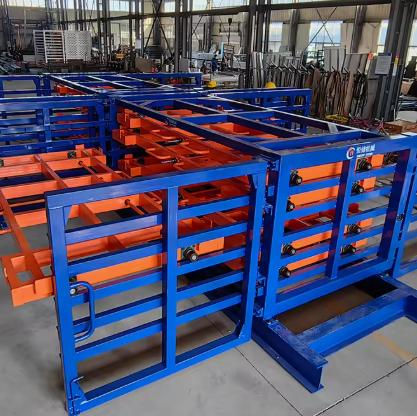
The load path on a drawer rack is easy to underestimate. When a 5,000 kg tray of 4 × 2 m plate rolls out, the weight transfers from the drawer to the crossbeam, then through the columns to the floor. If any link in that chain flexes, the drawer binds, the sheet shifts, and the operator ends up fighting the rack. Herochu addresses this with a dual-beam crossbeam design and thickened Q235B columns, which keep the frame square under full extension. The rack is rated to support up to 30,000 kg in total, so even a fully loaded unit stays stable, and the steel is protected against corrosion so the structure keeps its geometry after years in a cutting shop atmosphere.
Mechanical-assistance discharge is standard on the series. The manual crank option suits low-frequency retrieval, while the motorized version moves the heaviest drawers with a single button, which is the practical choice for 5-ton plate that has to move several times a day.
Herochu builds every drawer as a separate loading unit, which protects the operator as much as the material. A 5,000 kg load does not have to be positioned with millimeter precision on a shared shelf; it is placed on the tray, the tray rolls back, and the frame takes the rest. That tolerance is what makes the rack practical for daily crane work, where hook positioning is fast but rarely perfect.
Classification That Holds Up Under Daily Use
A rack is only as organized as the labels on it. Each Herochu drawer can be tagged by material grade, specification, and thickness, so an operator reading the aisle can locate the required plate without climbing, squatting, or shuffling pallets. Multiple independent drawers allow strict separation: steel in one bank, aluminum in another, offcuts and blanks in dedicated trays.
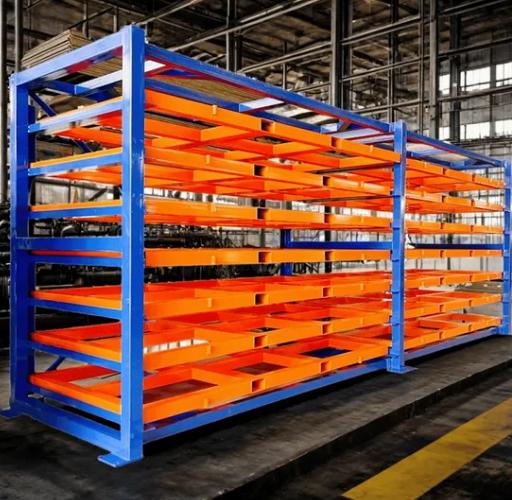
The classification layout also makes first-in, first-out rotation practical. Plate is loaded newest-first and retrieved oldest-first, which prevents long-stored sheets from rusting or becoming obsolete, improves inventory turnover, and reduces the dead stock that quietly accumulates in every fabrication shop. Drawer labels are written to the plant’s own material codes, so the rack matches the warehouse management system rather than introducing a second naming scheme. For plants that track material by heat number or batch, the drawer layout gives the same segregation as a dedicated shelving system without the floor area.
Working With the Handling Equipment Already in the Hall
A drawer rack earns its place when it cooperates with the machines around it. The vertical design means a forklift or overhead crane never enters the rack interior; it stops at the front face and picks the exposed sheet, so aisle widths stay at standard dimensions and existing handling equipment keeps working. Operators prepare material at the rack face, hand the sheet to the lift, and the next drawer can be staged while the crane travels. This human-machine workflow reduces material preparation time and lets one person manage plate that previously needed two operators and a pallet shuffle.
Herochu manufactures the series under CE and ISO 9001 certification, and every rack is delivered with the drawer count, height, and dimensions matched to the order. For facilities storing large steel plate in volume, the customizable 5-ton heavy-duty drawer rack turns a storage problem into a production advantage: the plate is flat, labeled, rated, and ready when the cutting line calls for it.
Talk to Herochu about the plate sizes, tonnages, and aisle widths in your plant, and get a drawer configuration drawn around them.