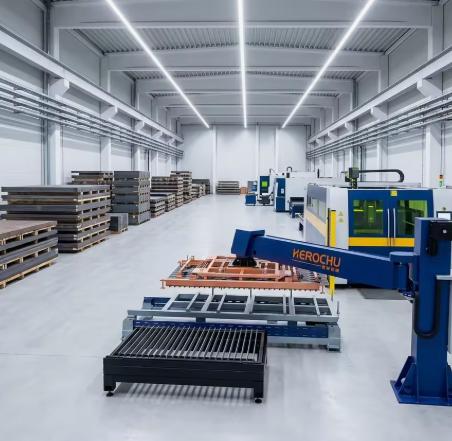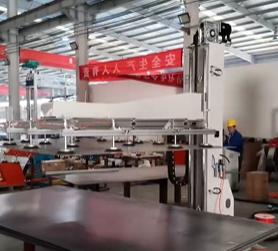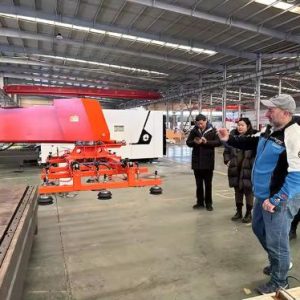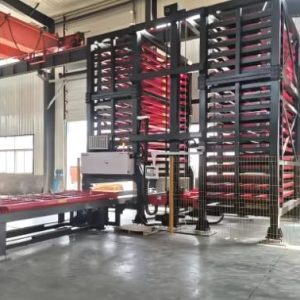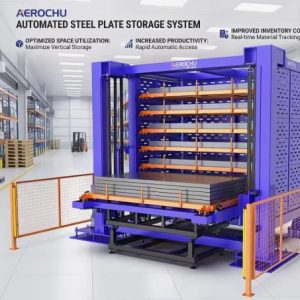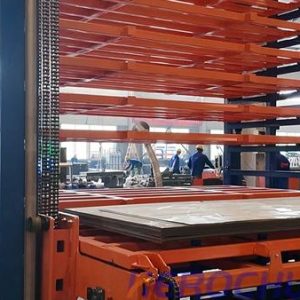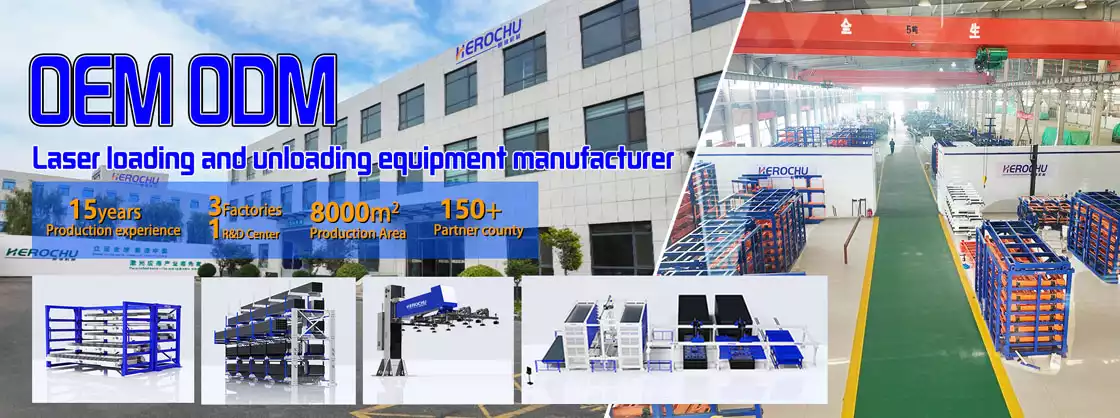
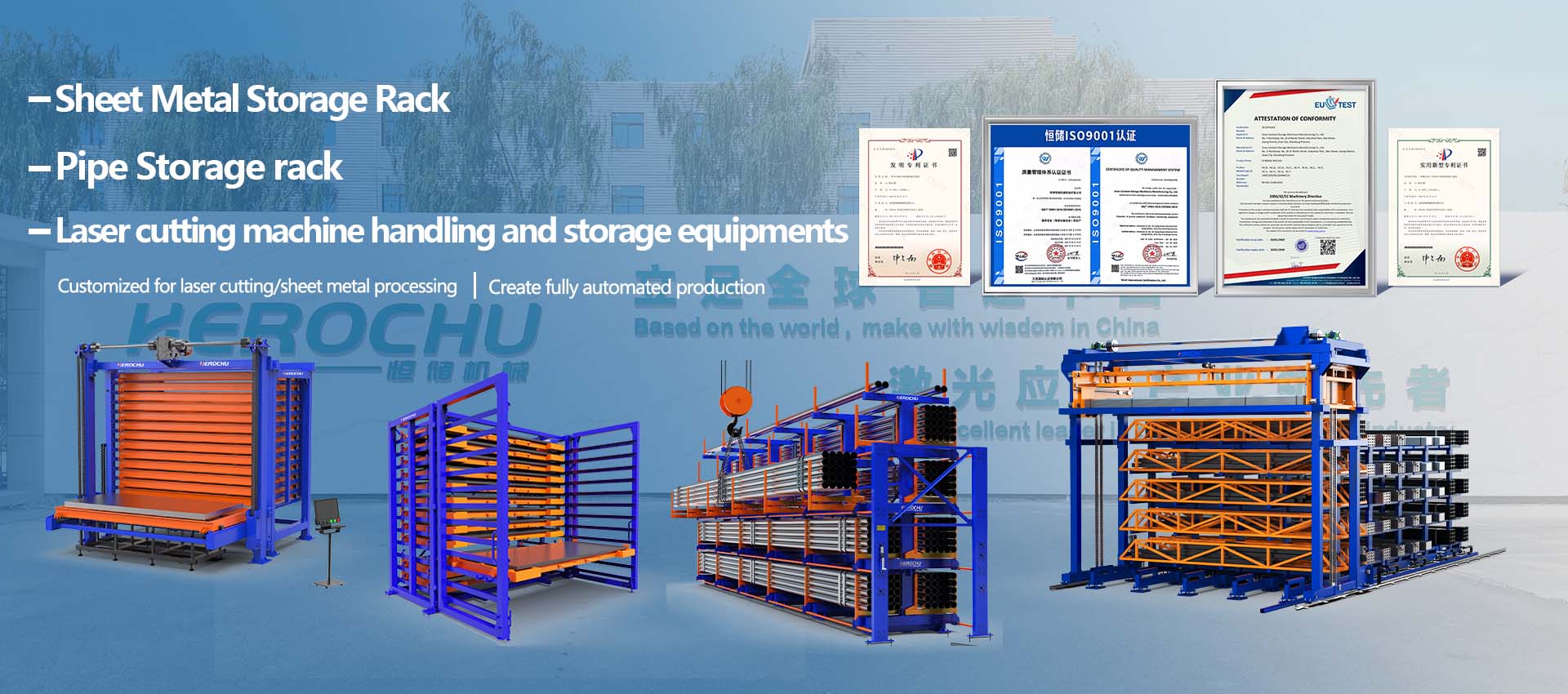
Moving raw sheet stock through a busy fabrication shop has traditionally demanded overhead cranes, forklifts, and two to three floor operators working in tight coordination. A sheet metal lifter replaces that fragmented routine with a single piece of equipment that picks, transports, and positions full-format sheets without the ergonomic hazards or process bottlenecks that manual workflows introduce. Herochu engineers sheet metal lifter systems for facilities that cut, punch, or bend steel and aluminum panels in continuous multi-shift production, where every minute of machine downtime multiplies across dozens of work orders.
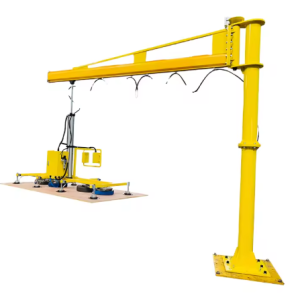
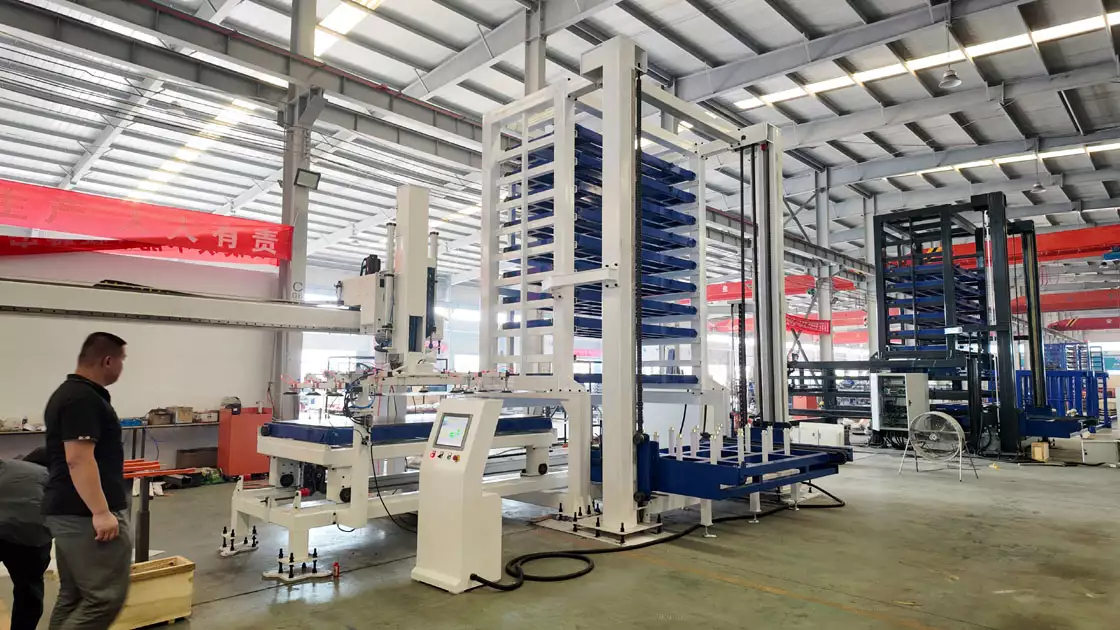
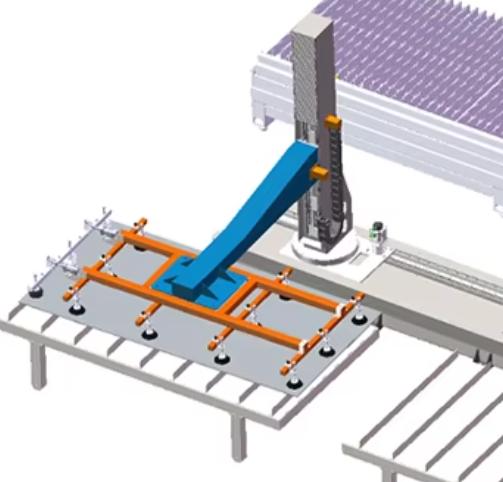
The mechanical architecture of a modern sheet metal lifter divides into three functional zones: the gripping head, the vertical lifting column or articulated arm, and the horizontal travel mechanism. The gripping head carries the direct interface with the workpiece. In vacuum-based variants from Herochu, multiple suction cups arranged in an adjustable grid create uniform holding force across sheets as large as 3,000 × 1,500 mm without leaving indentations or abrasion marks on coated or polished surfaces. For ferrous-only applications, electromagnetic heads offer an alternative with faster attachment and release cycles, though they demand consistent flatness and introduce residual magnetism concerns for downstream welding stations.
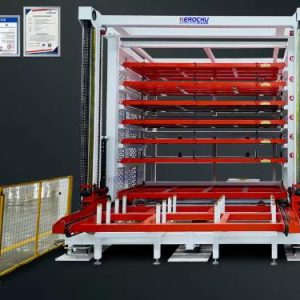
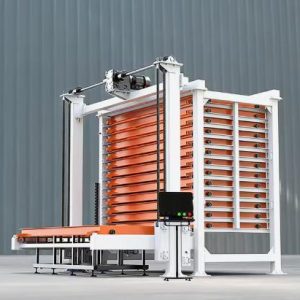
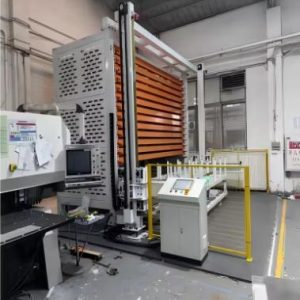
What distinguishes a properly integrated sheet metal lifter from a general-purpose hoist is the deliberate coupling with CNC cell timing. Herochu loading solutions connect directly to the laser cutting machine’s controller through I/O signals or fieldbus protocols, so the lifter begins its pick sequence the moment the previous nest completes. The outcome is a cycle-time compression that manufacturing engineers track closely: manual loading commonly consumes 15 to 20 minutes per sheet changeover, whereas an automated sheet metal lifter executes the same sequence in under three minutes. Across a double-shift operation running 40 sheet changes per day, that gap translates to more than 8 hours of recovered spindle time — effectively a full extra shift of cutting capacity per week.
Floor-level movement geometry influences installation decisions more than vertical lift capacity alone. Herochu deploys two primary travel configurations: overhead gantry rail and floor-mounted linear guide. The gantry approach frees floor space around the machine perimeter, which matters in crowded shops where material staging carts occupy every available square meter. Floor-rail systems, by contrast, offer simpler civil engineering requirements — no overhead steel reinforcement needed — and suit facilities with standard ceiling heights under six meters. Both designs share core safety interlocks, including emergency air-cut protection that instantly seals vacuum circuits during power loss, so a 300-kg steel sheet never drops even if mains power cuts mid-transfer.
Operator fatigue represents a cost that accounting rarely isolates but that production managers observe in injury reports and turnover rates. A single 3 mm hot-rolled sheet measuring 2,500 × 1,250 mm weighs roughly 74 kg — within the manual handling limit of two workers but far beyond what anyone should reposition forty times per shift without powered assistance. Herochu sheet metal lifter installations remove that cumulative strain from the workflow. The operator transitions from being the prime mover — wrestling panels off storage racks and feeding them into cutting beds — to monitoring an automated sequence from a control pendant with jog and auto-cycle buttons. The change reduces reportable musculoskeletal incidents and preserves an experienced workforce that fabrication shops are finding harder to recruit each year.
Material versatility affects which lifter configuration delivers the best return. Shops processing exclusively carbon steel in thicknesses above 3 mm can operate magnetic lifters with minimal setup variation. Facilities that mix stainless steel, aluminum, copper, and pre-finished materials need vacuum systems that adjust suction force by sheet weight and surface porosity. Herochu vacuum sheet metal lifters incorporate multi-zone valving that isolates individual suction cups independently, so the system maintains grip across perforated sheets, lightly textured mill finishes, and thin-gauge stock that flexes under localized pressure. The vacuum pump sizing calculation accounts for the worst-case leakage rate of the most porous material in the shop’s inventory, not an ideal laboratory surface.
Predictive maintenance firmware runs as a background layer across Herochu automated loading equipment. Instead of waiting for a vacuum pump bearing to seize or a linear guide block to develop play, the onboard controller logs operating hours per subcomponent and flags deviation from baseline parameters — pump motor current draw trending upward, cylinder extend times lengthening beyond nominal, suction build-up taking an extra 0.4 seconds to reach target pressure. Maintenance planners receive those alerts with enough lead time to swap wear parts during scheduled tool-change windows rather than reacting to an unplanned stoppage during a hot order. The data also feeds into the facility’s broader OEE tracking system, correlating lifter availability with overall cell performance.
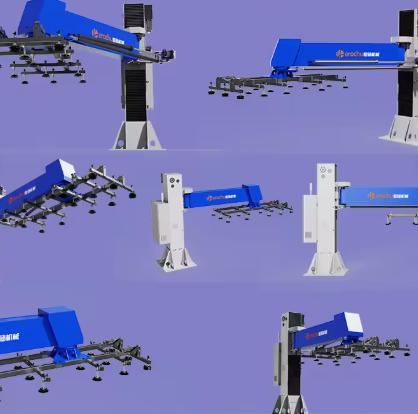
Selecting the correct sheet metal lifter configuration requires evaluating three operational variables that shops sometimes overlook during initial specification. The first is sheet stack height variability: if the facility sources material from multiple service centers with different palletizing practices, the lifter’s vertical stroke must accommodate the tallest stack in the inventory rather than the average. Herochu lifting columns are sized with 200 to 300 mm of additional stroke beyond the nominal requirement to absorb this variation without requiring pallet reconfiguration. The second variable is throughput cadence: a lifter rated for 40 cycles per hour will keep pace with a single laser cutting cell, but shops planning to feed two adjacent machines from a single pick station need to specify actuators, vacuum pumps, and linear guides rated for 60 to 80 cycles per hour to avoid becoming the rate-limiting step. The third is ambient contamination: facilities with heavy grinding, welding fume, or thermal spray operations near the loading zone benefit from sealed linear guides with positive-pressure bellows that prevent particulate ingress rather than relying on wiper seals alone.
Return on investment for a Herochu sheet metal lifter installation is calculated across four line items that together form a complete cost picture. Labor reallocation typically accounts for the largest single saving: removing one dedicated material handler per shift at a fully burdened rate produces a direct annual reduction that alone often covers the equipment lease or depreciation charge. Reduced material scrap from handling damage — dented corners, scratched surfaces, bent edges — compounds with each rejected sheet’s embedded processing cost, not just the raw material value. Machine utilization gains translate to deferred capital expenditure: if a laser cutting cell that was averaging 55 percent uptime due to loading delays jumps to 85 percent, the shop gains capacity equivalent to buying half of another machine. Finally, the reduction in recordable safety incidents and associated workers’ compensation premiums yields a softer but real financial return that facilities with high manual-handling injury rates track closely. When these four streams are totaled against the installed cost of the equipment, most Herochu installations achieve full payback within 14 to 20 months of commissioning.