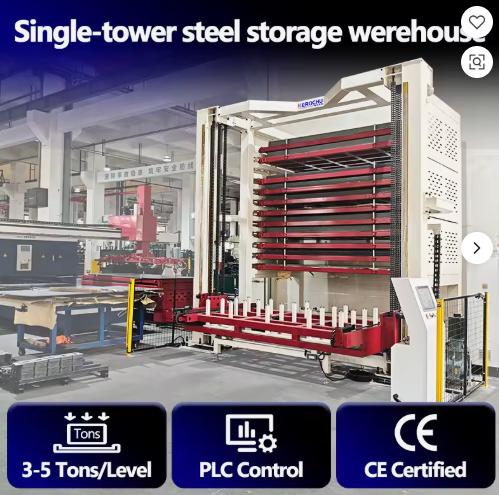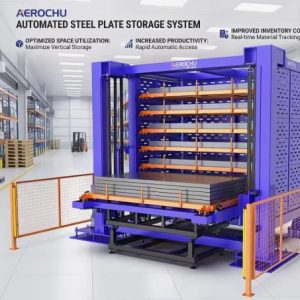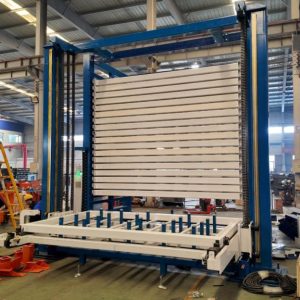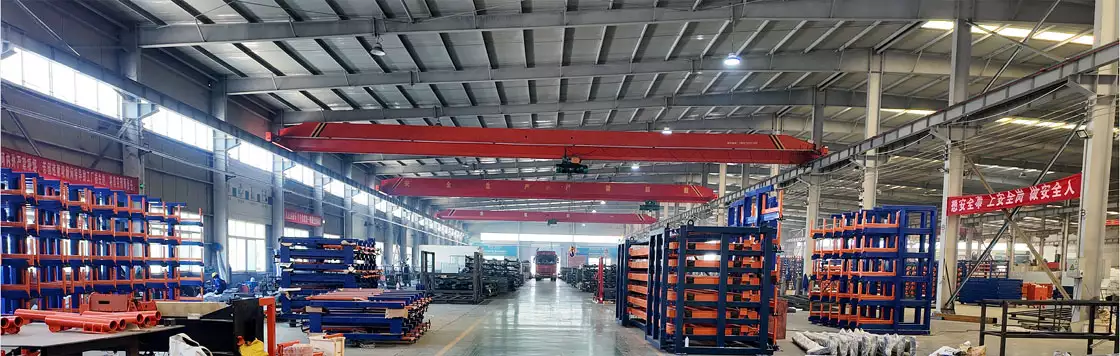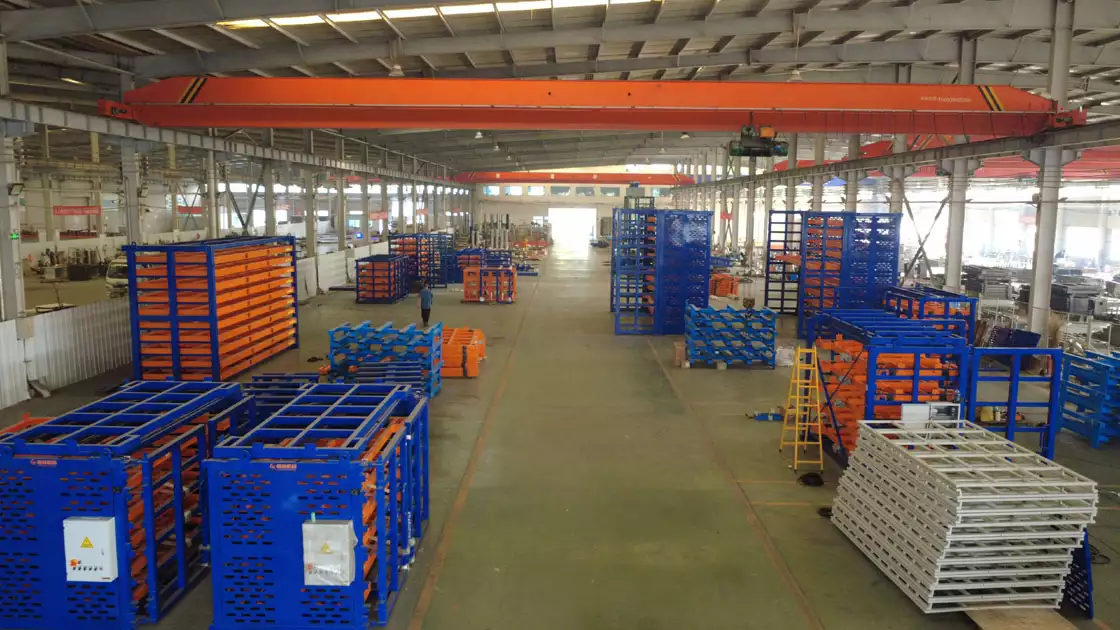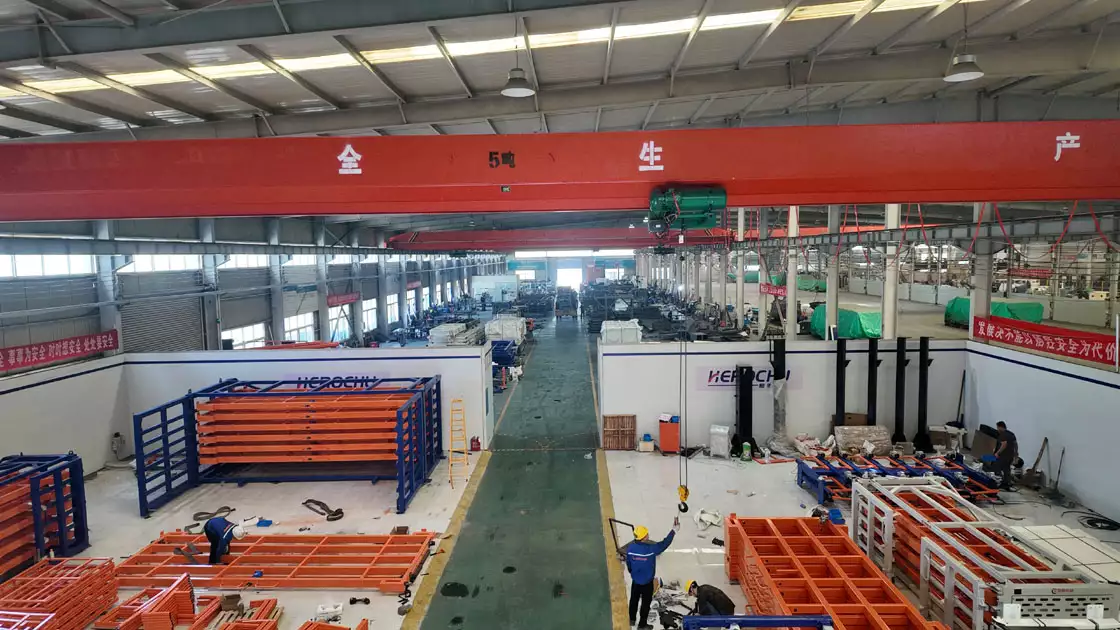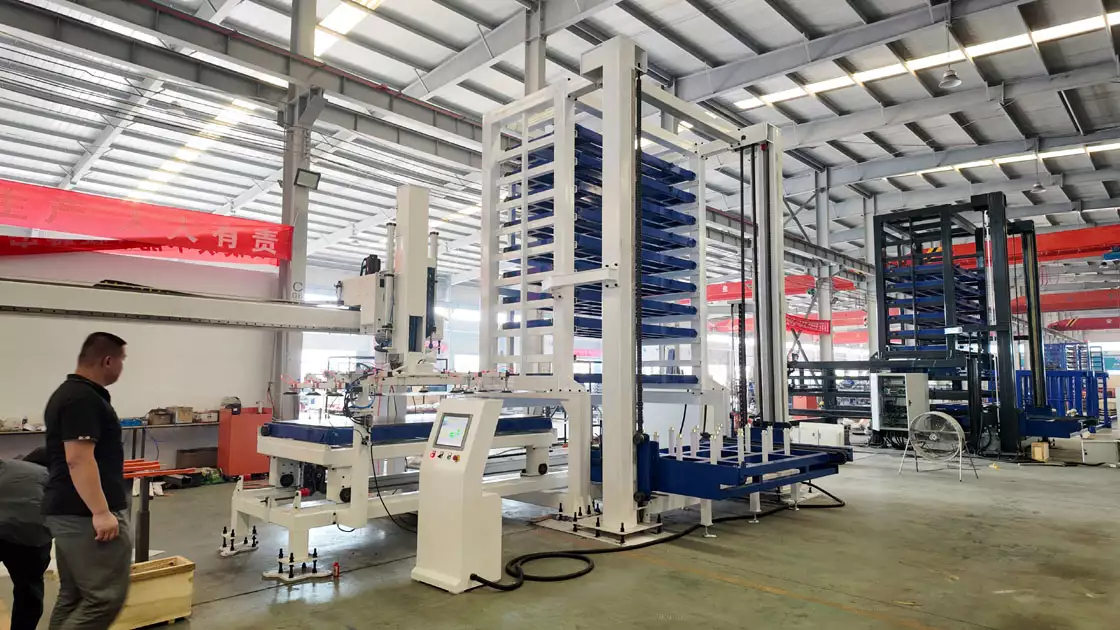
Steel service centres and heavy fabrication plants handle plate stock that ranges from 6 mm mild steel to 100 mm abrasion-resistant alloys. A single plate measuring 6 metres by 2 metres in 50 mm S355 structural steel weighs approximately 4.7 tonnes. Storing dozens of such plates demands a storage system engineered not just for weight capacity but for long-term structural stability under cyclic loading.
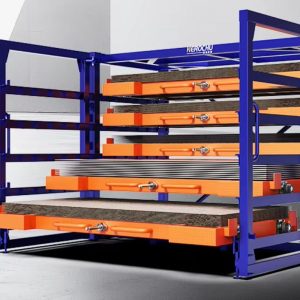
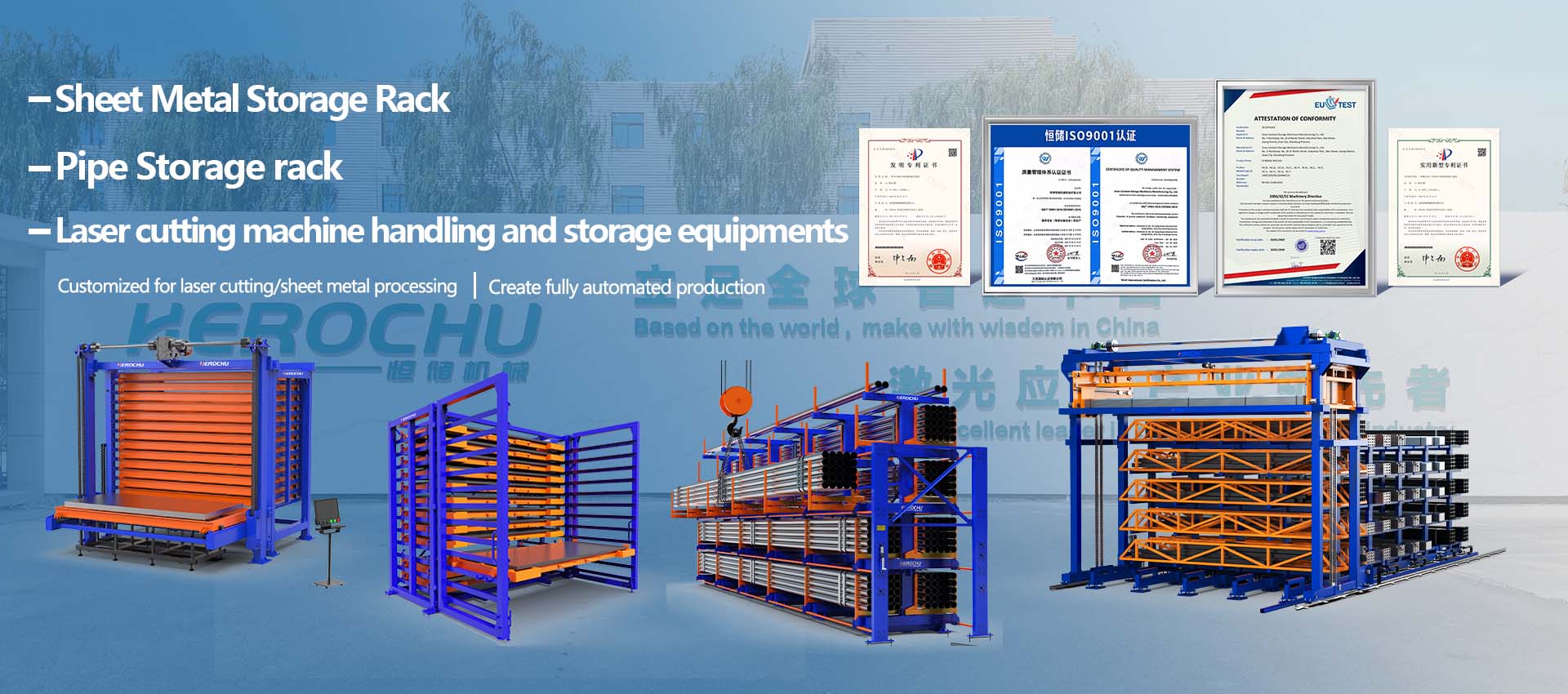
A Herochu heavy duty steel plate vertical tower rack addresses these demands through a frame architecture purpose-built for industrial plate storage. The design prioritises load distribution, material fatigue resistance, and operator safety across thousands of retrieval cycles per year.
Frame Engineering and Material Selection
The tower rack body uses Q235B structural steel for the main load-bearing columns and cross-members. This carbon structural steel grade offers a yield strength of 235 MPa and maintains consistent mechanical properties across the plate thicknesses used in the frame — typically 8 mm to 16 mm for primary structural elements. The material welds reliably with standard MIG and TIG processes, and the factory applies a corrosion-resistant coating after fabrication to protect against workshop humidity and incidental cutting-fluid exposure.
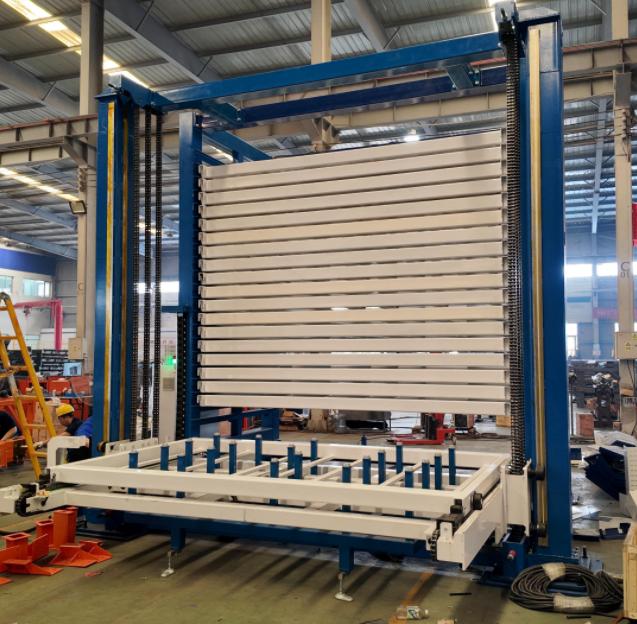
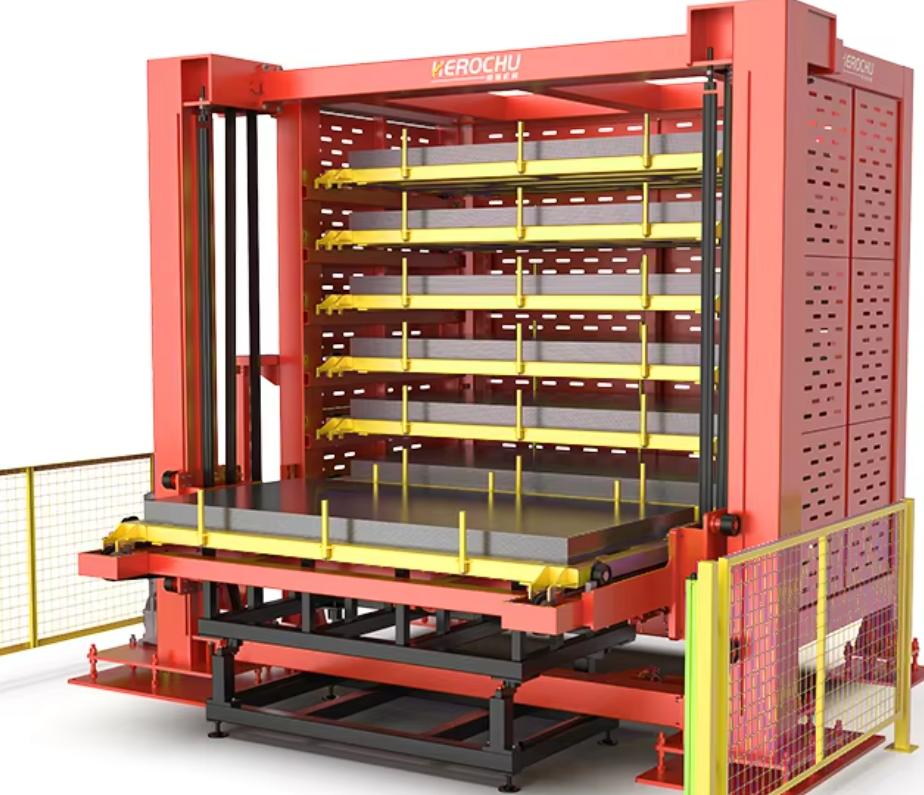
Herochu employs an integral bilateral frame configuration. Two parallel column rows connected by triangular oblique span beams form the primary load path. The oblique members convert vertical gravitational loads into axial compression and tension within the steel sections, avoiding the bending moments that would concentrate stress at bolted or welded joints in a simpler rectangular frame. This triangular bracing pattern — repeated at each level — distributes the weight of 13 fully loaded drawers across the entire structure rather than channelling it through isolated connection points.
Cold-rolled steel pipes form the secondary structural components. Cold rolling work-hardens the steel, increasing yield strength compared to hot-rolled sections of equivalent wall thickness. The higher strength-to-weight ratio allows the Herochu tower rack to achieve its load ratings without excessive frame mass, keeping the tower’s own weight manageable for floor-loading calculations during facility planning.
Drawer Construction and Load-Bearing Mechanics
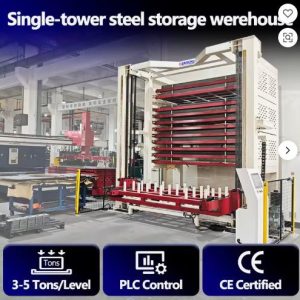
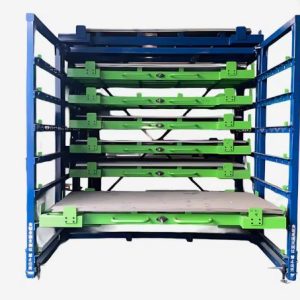
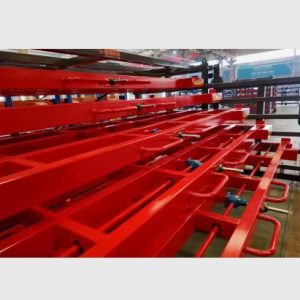
Each drawer within a Herochu heavy duty steel plate vertical tower rack carries a rated load of 3 to 5 tonnes as standard, with 10-tonne configurations engineered for thick-plate processors. The drawer chassis consists of a welded steel framework supporting a flat plate bed. Cross-ribs beneath the bed prevent sagging under concentrated loads — a 6-metre plate resting on its full surface distributes its weight differently from a 3-metre plate centred on the same drawer, and the rib pattern accommodates both loading scenarios.
Roller tracks at both ends of each drawer use hardened steel wheels running within channel guides. The rolling contact reduces the force needed to extend a loaded drawer to a fraction of what sliding contact would require. An operator or overhead crane can access a 5-tonne drawer with controlled, predictable motion. The roller axles and wheel surfaces receive blackening treatment — a chemical conversion process that produces a magnetite layer approximately 1–2 microns thick, which resists red rust formation without adding dimension to precision-fitted components.
A spring-loaded positioning device engages automatically when a drawer reaches its fully extended or fully retracted position. This mechanical interlock prevents unintended drawer movement during material loading and unloading, addressing a key safety concern when overhead cranes transfer heavy plates into the storage position.
Floor Anchoring and Seismic Considerations
A heavy duty steel plate vertical tower rack concentrates significant mass within a compact footprint. Herochu specifies anchor bolt patterns based on the tower height, drawer count, and maximum total load. The base frame includes pre-drilled mounting plates sized for M20 to M30 anchor bolts into a reinforced concrete pad. For installations in seismic zones, the engineering team calculates overturning moments and specifies supplementary anchoring or base-plate extensions as needed.
The bilateral frame design contributes to seismic performance: the triangulated structure resists lateral loads through axial member forces rather than relying on moment-resisting connections, which tend to accumulate plastic deformation under repeated cyclic loading.
Maintenance and Service Life
The Herochu heavy duty steel plate vertical tower rack is designed for a service life measured in decades rather than years. Chain drive components operate within sealed housings with scheduled lubrication intervals. Linear guide rails use hardened contact surfaces that resist wear even under the micro-movements caused by frequent draw cycles. Roller wheels are replaceable as individual units — a worn wheel can be swapped without removing the drawer assembly.
The factory in Jinan conducts full-load testing on every completed tower before crating. Drawers are loaded to rated capacity, cycled through extension and retraction, and inspected for binding, misalignment, or excessive deflection. The test data accompanies the shipment documentation, providing the end user with verified performance data rather than theoretical load ratings.
Deployment Scenarios
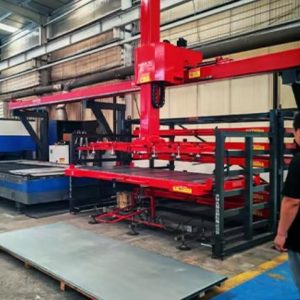
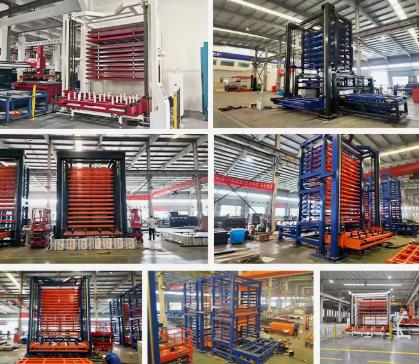
The Herochu heavy duty steel plate vertical tower rack serves facilities where plate inventory runs deep and turnover is high. Steel service centres use multi-tower installations to organise plate stock by grade and thickness, reducing crane travel distance and retrieval time. Shipyards store hull plate sections in towers adjacent to the cutting line, keeping material within the overhead crane’s reach envelope. Pressure vessel fabricators rely on the drawer-based organisation to segregate certified material heats for traceability compliance.
Heavy equipment manufacturers — producing bulldozer blades, excavator buckets, and mining machinery components — use the Herochu tower rack to manage thick-plate inventories in the 50 mm to 120 mm range. These plates are too heavy for manual handling and too valuable to leave exposed on the shop floor. The tower’s individual drawer access means a specific 80 mm Hardox 450 plate can be retrieved without disturbing the stack, and the positioning lock holds the drawer steady while an overhead crane transfers the plate to the cutting station.
In each deployment, the principle is the same: vertical concentration of heavy inventory eliminates the dispersed floor storage that slows material handling and consumes productive workshop area.
Cost Comparison with Horizontal Storage
The economic case for a Herochu heavy duty steel plate vertical tower rack becomes evident when comparing facility costs against storage density. A fabrication shop paying industrial rent allocates floor area to raw material storage that could otherwise house additional production equipment — a second laser cutter, an extra press brake, or an expanded welding bay.
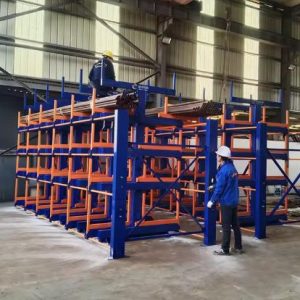
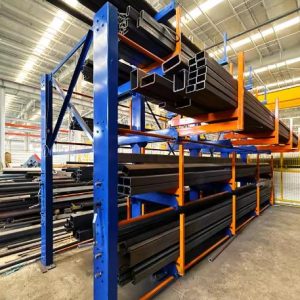
Stacking plates horizontally on floor-level pallets limits access to the top sheet only. Operators must restack to reach material buried three or four layers down, consuming crane time and creating safety hazards each time a stack is dismantled. Cantilever racks offer vertical organisation for long products like bar stock and tube, but plate storage in cantilever configurations wastes horizontal bay width and exposes plate edges to damage from incidental fork contact.
The Herochu tower rack’s drawer arrangement protects each plate within its own compartment. Plate surfaces do not rub against adjacent sheets during storage or retrieval, preserving surface finish on materials destined for visible or high-specification applications. For stainless steel and aluminium plate in particular, eliminating surface-to-surface contact prevents the scratching and galling that lead to costly rework or material rejection at incoming inspection.