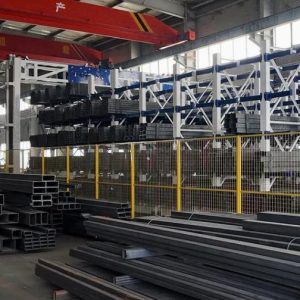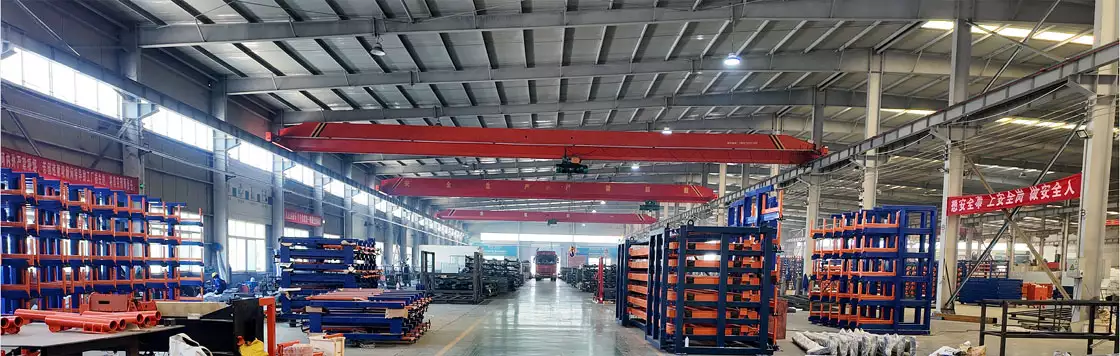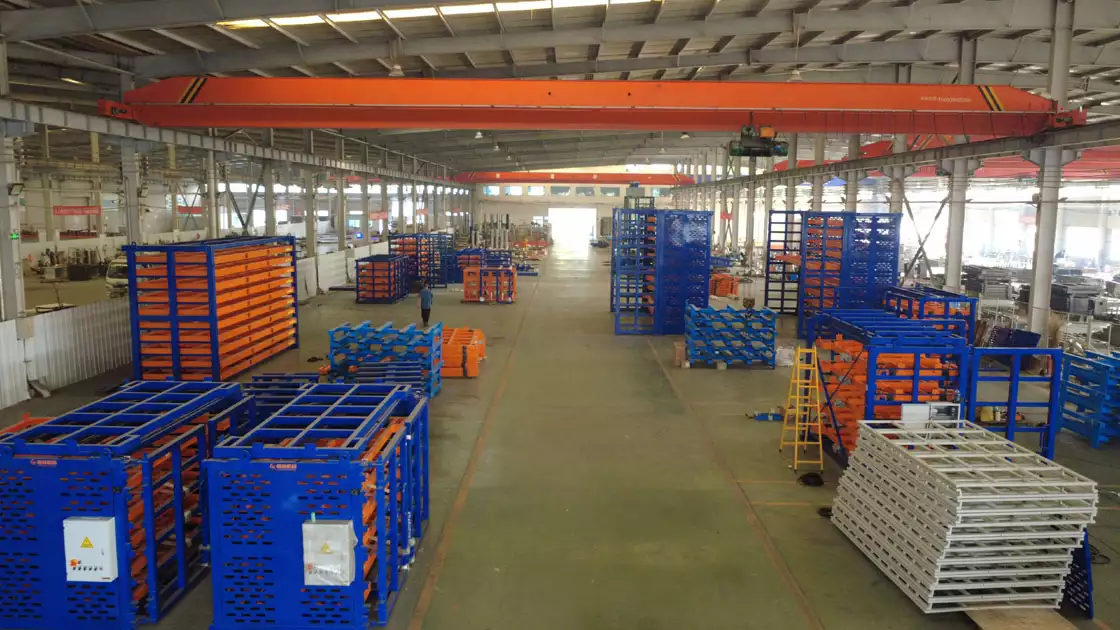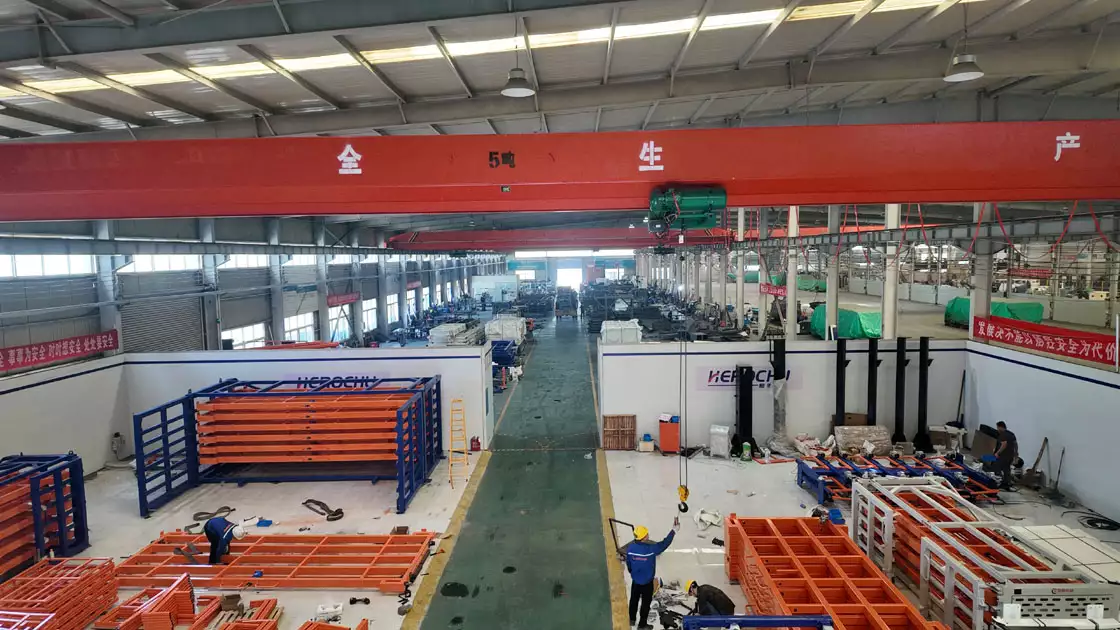
Long materials create long problems. A 12-meter structural steel beam, a bundle of 8-meter seamless pipe, or a rack of 6-meter aluminum extrusion takes up horizontal real estate that most warehouse layouts are not designed to provide. The instinctive solution — stacking on floor-level dunnage — consumes aisle after aisle of floor space and forces operators to climb over and around material piles to find specific heat numbers or diameter grades. Worse, bottom-layer stock sits under tonnes of stacked weight for months, accumulating ovality in thin-wall tube and surface corrosion where moisture traps between bundles.
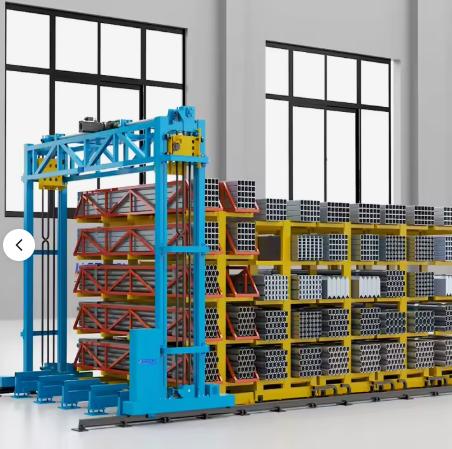
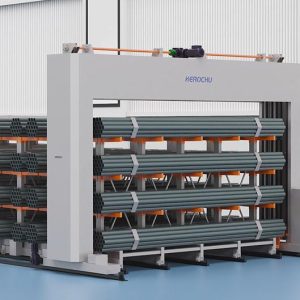
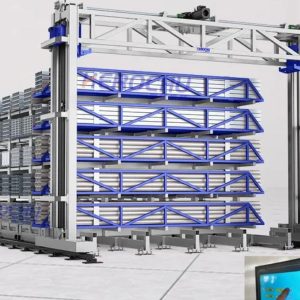
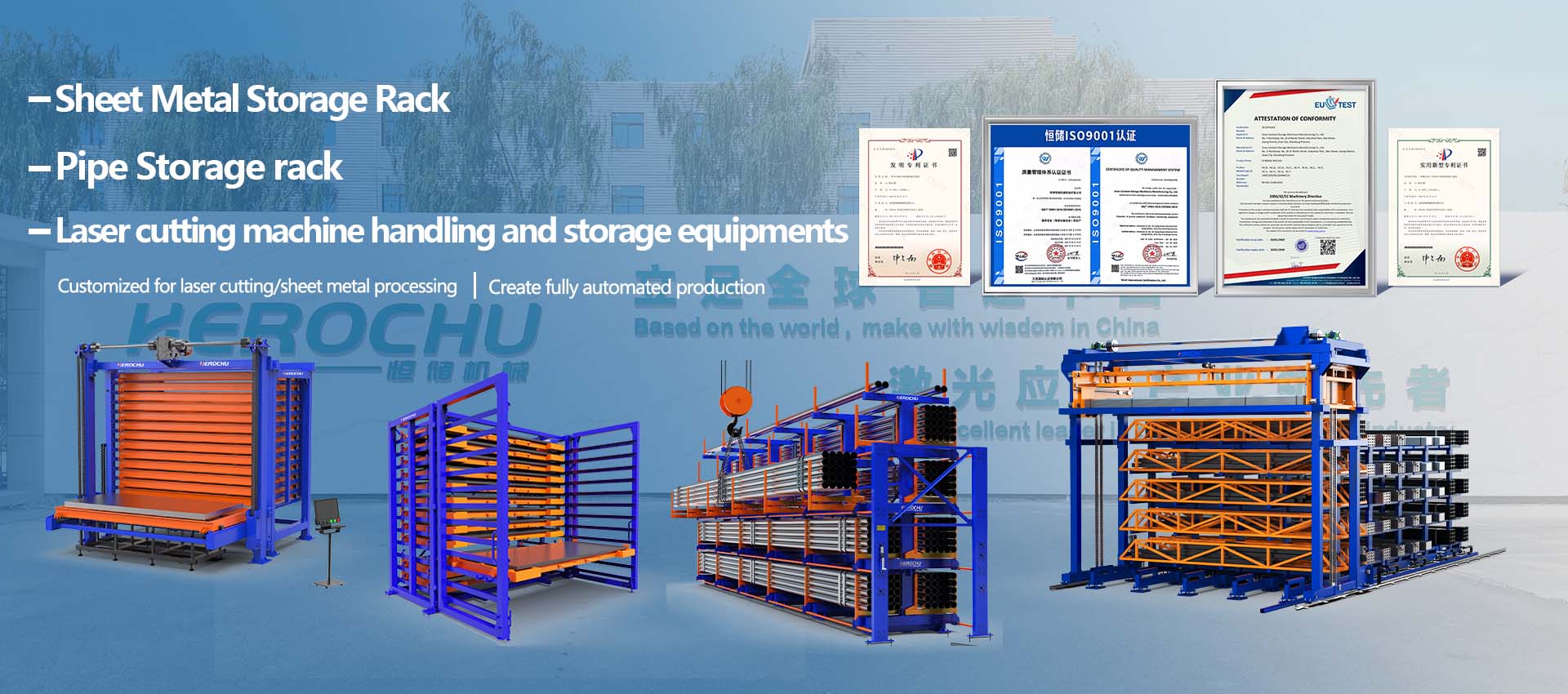
Herochu’s heavy duty long span pipe and tube cantilever racking system addresses long-material storage at the structural level. Rather than constraining inventory to standard bay widths, the system extends the clear span between support points to match the actual length of the stored goods. A single bay can accommodate material lengths up to 8,000 mm with full load rating on every arm level. The engineering challenge — maintaining deflection within acceptable limits across a column-free span — is solved through a combination of column depth, base anchorage, and arm geometry that distributes bending stress into the foundation rather than concentrating it in the upright.
The Physics of Long-Span Cantilever Storage
Every cantilever arm behaves as a beam fixed at one end and free at the other. When a bundle of pipe sits near the tip of a 1,200 mm arm, the bending moment at the arm-to-column connection is the product of the load weight and the lever arm distance. For a 3,000 kg bundle centered 900 mm from the column face, the connection sees a bending moment of approximately 26.5 kN·m — a value that governs bolt diameter, bracket plate thickness, and column web stiffening.
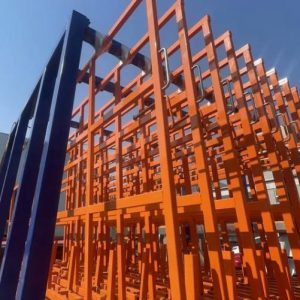
Herochu’s engineering team calculates these moments for every arm level in the rack configuration. The arm bracket is a welded assembly of 12 mm to 16 mm plate steel with full-penetration welds at the load-bearing joints. Each bracket captures the column flange on both sides, transferring the bending moment as a force couple into the column web through the bolt pattern. This detail — a double-shear bracket that wraps the column rather than bolting to a single face — is what distinguishes a properly engineered cantilever rack from a lighter-duty storage shelving system.
For long-span applications where bay width exceeds 1,500 mm, the column itself must resist buckling under the combined axial load of all loaded arm levels plus the bending stress induced by eccentric loading. Herochu sizes column sections accordingly, increasing the H-beam web thickness and flange width as total bay height and arm loading increase. The column base connection uses a minimum of four M20 or M24 anchor bolts per side, set into a reinforced concrete plinth or strip footing designed to the soil bearing capacity reported in the site geotechnical survey.
Span Configurations and Load Ratings
The long span pipe and tube cantilever racking system is offered in bay widths from 1,200 mm to 2,400 mm. Wider bays reduce the number of column lines per row, which increases the linear storage density — more running meters of pipe per meter of warehouse length. A 2,400 mm bay can support four arm levels loaded to 3,000 kg each before the column section needs to step up to the next profile size. For the heaviest applications, where single-layer material loading reaches 5,000 kg, Herochu specifies a reinforced column with internal web stiffeners at every arm bracket location and a base plate extended to 500 mm × 500 mm or larger.
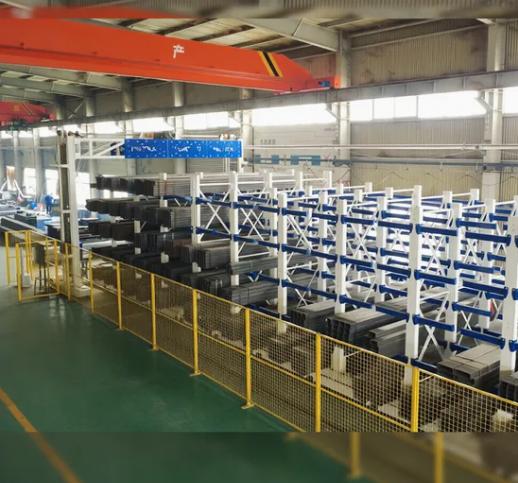
Arm length selection depends on the bundle width and the handling method. A single-sided rack storing pipe bundles 600 mm wide needs an arm of approximately 750 mm to provide full under-bundle support with a safety margin at the tip. A double-sided rack storing the same bundle width on both faces requires arms of 750 mm per side, producing a total rack depth of approximately 1,800 mm including the column section. The arm surface is flat by default, with optional bolt-on V-cradle inserts that center round stock and prevent rolling during seismic events or forklift impact.
Material length capacity is independent of bay width. A customer storing 8,000 mm pipe in a 1,500 mm bay uses three support points — two at the column lines and one intermediate support arm if required — distributing the pipe’s self-weight across multiple load-bearing contacts. For pipe longer than 8,000 mm, Herochu’s engineering team evaluates whether additional intermediate supports or a multi-bay continuous row configuration provides the necessary sag prevention.
Gantry Integration for Automated Long-Material Handling
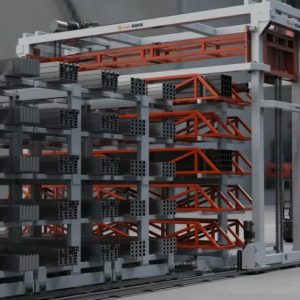
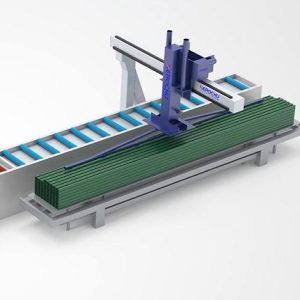
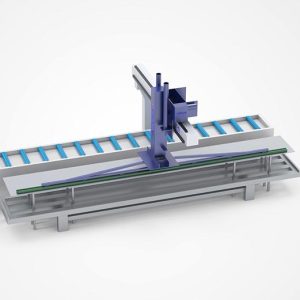
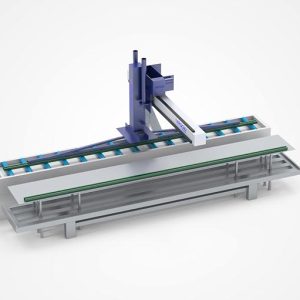
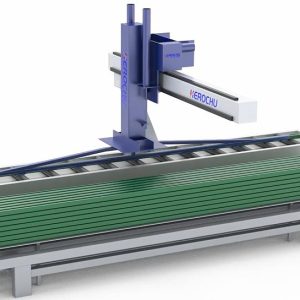
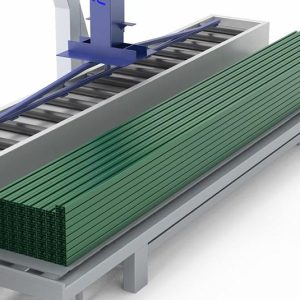
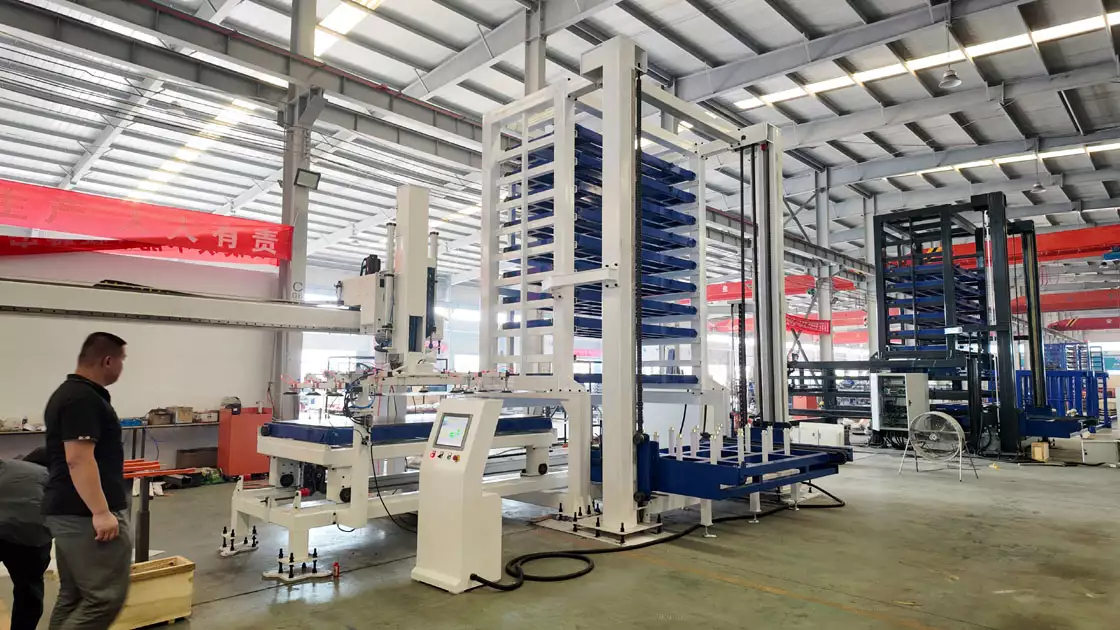
Long pipe bundles are heavy, awkward to rotate in a narrow aisle, and dangerous to handle manually. Herochu integrates the long span cantilever rack with an automated gantry system that travels on floor-mounted linear guide rails parallel to the rack row. The gantry carriage spans the full rack height, carrying a vertical hoist assembly that descends into the bay to retrieve or deposit bundles.
The gantry’s horizontal travel speed ranges from 5 to 30 meters per minute, adjustable through the PLC program to match the distance to the target bay and the payload mass. Lifting speed runs from 5 to 15 meters per minute, with a creep-speed mode that engages within 200 mm of the target elevation to ensure gentle bundle placement on the cantilever arms. Positioning repeatability of ±2 mm is maintained through a closed-loop servo drive system with absolute encoders on both the horizontal and vertical axes.
Power consumption for the gantry drive totals approximately 15 kW during peak acceleration, with steady-state travel drawing substantially less. The drive motors are inverter-duty rated and controlled through variable-frequency drives that provide soft-start and regenerative braking. Regenerated energy during deceleration is fed back to the DC bus, reducing net power draw over a complete duty cycle.
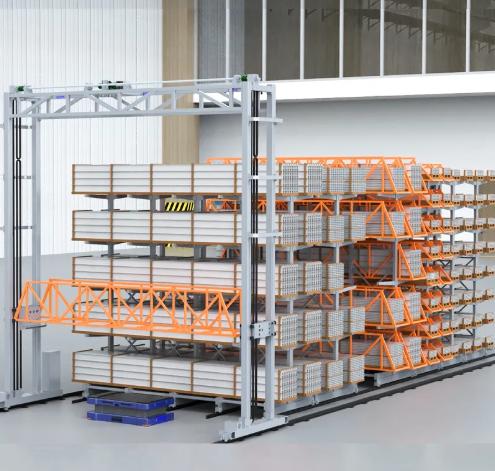
Three-Dimensional Material Library: The Herochu Storage Philosophy
The term “Three-Dimensional Material Library” describes the storage methodology Herochu applies across its automated racking product line. In a conventional flat-storage warehouse, inventory occupies two dimensions — length and width — and vertical space above head height goes unused. A three-dimensional library inverts this logic: materials are stored vertically in a dense grid of individually addressable positions, each defined by row, bay, and level coordinates.
The long span pipe and tube cantilever racking system is the physical backbone of this library. Each cantilever arm position becomes a uniquely indexed storage cell in the warehouse control system database. When the WMS receives an order for six lengths of 100 mm × 6 mm S355 structural hollow section, it queries the inventory map, identifies which cells contain that material, selects the cell closest to the outfeed station to minimize travel time, and dispatches the gantry to that coordinate. The operator at the loading station never needs to know where the material is stored — the system handles location logic autonomously.
This indexed approach eliminates the “where is it?” problem that plagues manual pipe yards. It also enables FIFO inventory rotation by recording the receipt date of each bundle at put-away and preferentially retrieving older stock when multiple cells contain the same SKU. For pipe distributors carrying traceable material with heat numbers and mill test certificates, the cell-level indexing links each stored bundle to its digital certificate in the ERP database, providing full chain-of-custody documentation from mill to customer.
Multi-Material Compatibility Across the Product Range
The same long span cantilever rack structure stores carbon steel pipe on Monday and aluminum extrusion on Tuesday without reconfiguration. Arm spacing, once set, remains constant; what changes is the product loaded onto each arm. Polyethylene arm caps snap onto the arm surface for coated, galvanized, or polished material that cannot tolerate steel-to-metal contact. V-cradle inserts self-center round stock, eliminating the need for dunnage or chocks. For flat or rectangular profiles — flat bar, plate offcuts, rectangular hollow sections — the standard flat arm surface provides full-width support without modification.
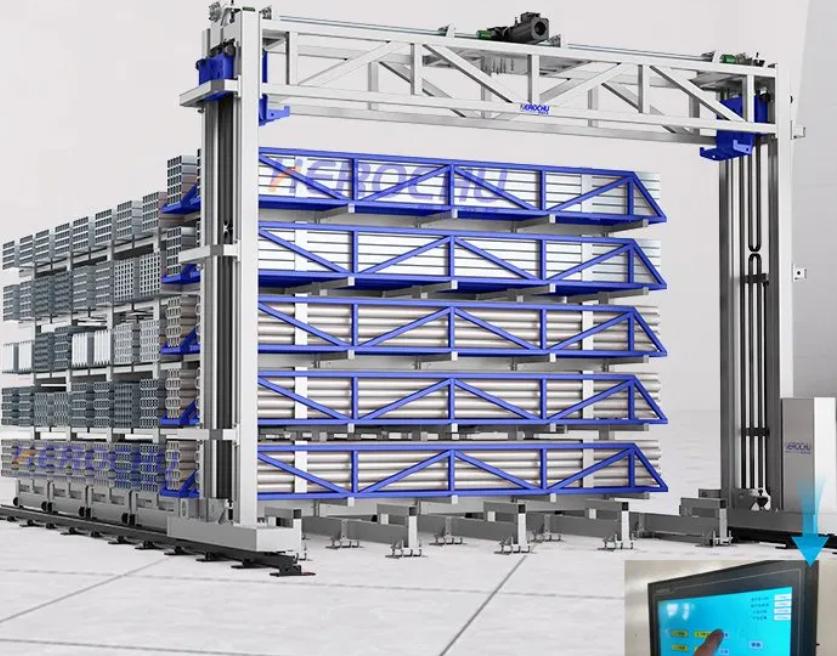
Herochu supplies the rack with a detailed load distribution diagram that maps the allowable load per arm as a function of arm length and load placement. A bundle centered on the arm root can carry a higher load than the same bundle placed near the arm tip, and the load plaque at each bay shows both values. Operators are trained to position heavy bundles as close to the column as the bundle width permits, maximizing the usable load capacity of each arm level.
Installation, Safety, and Long-Term Service
Each Herochu long span cantilever rack installation includes a site-specific structural calculation package prepared by the engineering department. This package covers column sizing, anchor bolt design, base plate bearing pressure on the concrete slab, and seismic load resistance where applicable. The calculations reference the governing design codes for the installation country — typically EN 1993-1-1 for European projects, GB 50017 for Chinese installations, and AISC 360 for North American projects.
Safety features built into the rack design include arm tip stop pins that prevent bundle roll-off, column protector bollards at aisle corners where forklift traffic passes, and load rating signage at every bay. For automated installations with gantry retrieval, the rack columns are fitted with laser retro-reflectors at known positions, providing absolute position reference points that the gantry’s on-board laser distance sensor reads to verify its location before each pick or place cycle.
Herochu provides on-site commissioning support that includes a full load test: each bay is loaded to 125% of its rated capacity and held for 24 hours while deflection measurements are recorded at each arm tip. The test report, signed by the commissioning engineer, becomes part of the permanent installation record.
Why Long Span Cantilever Racking Earns Its Place in the Warehouse
For any facility where pipe, tube, bar, or structural profiles exceed 3 meters in length, cantilever racking is not one option among several — it is the storage method that works at scale. Pallet racking cannot provide the clear span. Floor stacking cannot provide the density or the accessibility. Drive-in racking cannot handle variable-length loads. Herochu’s long span pipe and tube cantilever racking system bridges the gap between the physical length of the material and the operational need to store, locate, and retrieve it without handling damage or wasted motion.