Plasma cutting occupies a distinctive position in the metal fabrication landscape. Unlike laser cutting, which excels at thin to medium-gauge material processed at high speed with narrow kerf widths, plasma cutting handles the heavy end of the spectrum — plates measured in inches rather than millimeters, cut at speeds that make oxy-fuel torches look glacial by comparison. This capability comes with a corresponding material handling demand. The plates fed into plasma tables are heavy, often large in format, and frequently stored in bulk quantities to support long production runs.
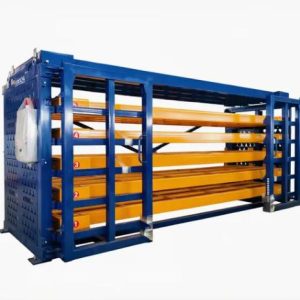
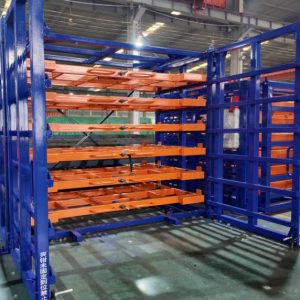
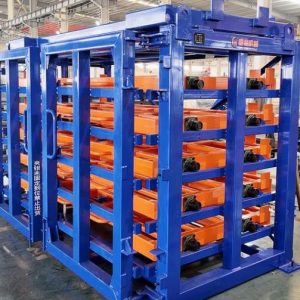
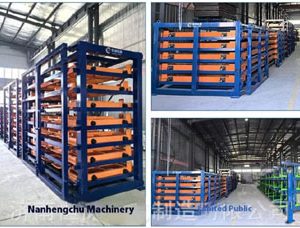
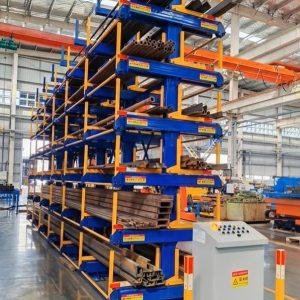
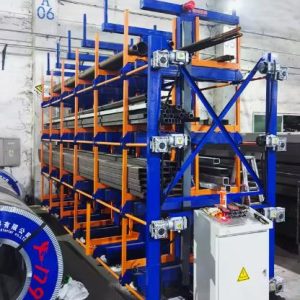
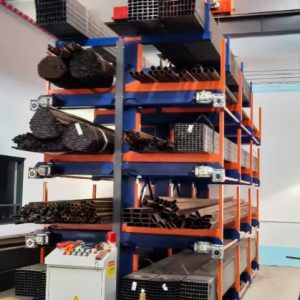
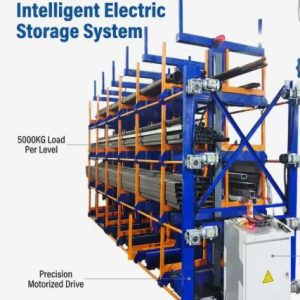
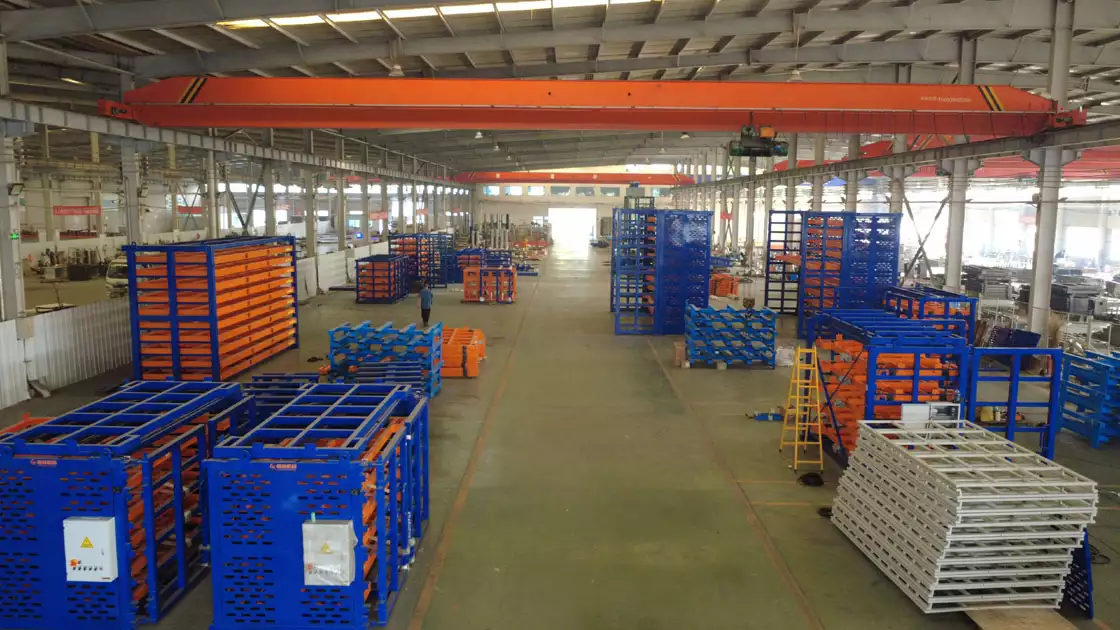
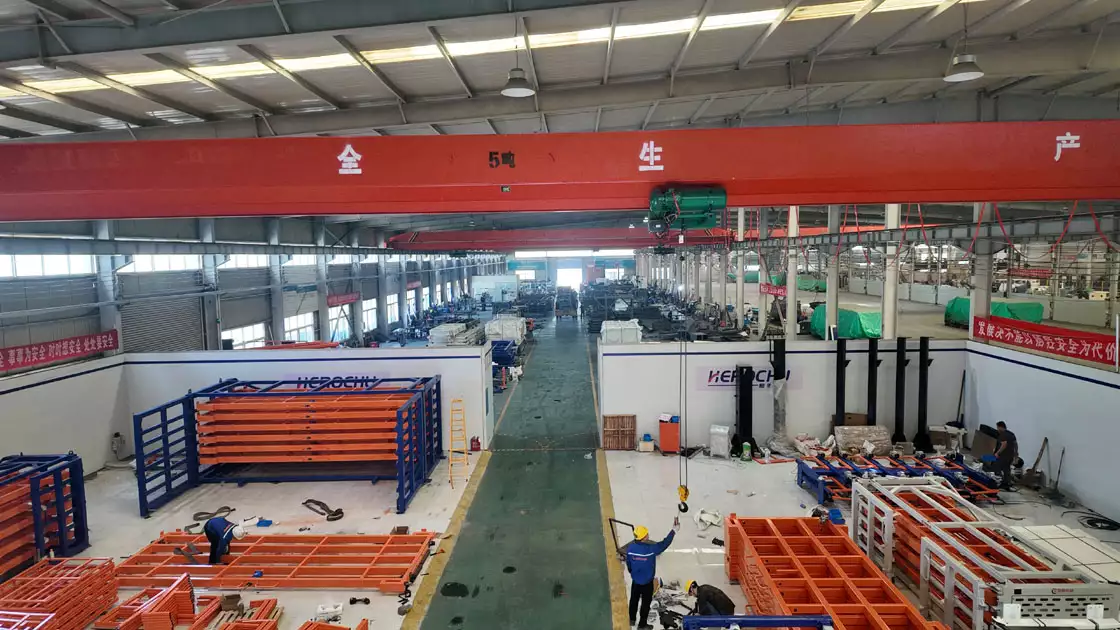
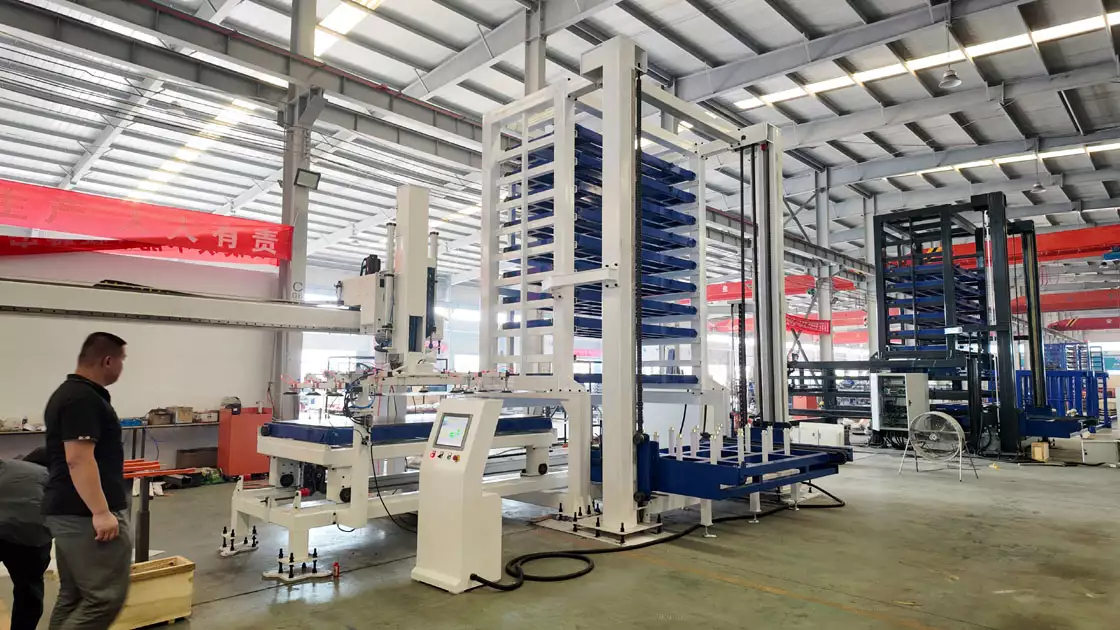
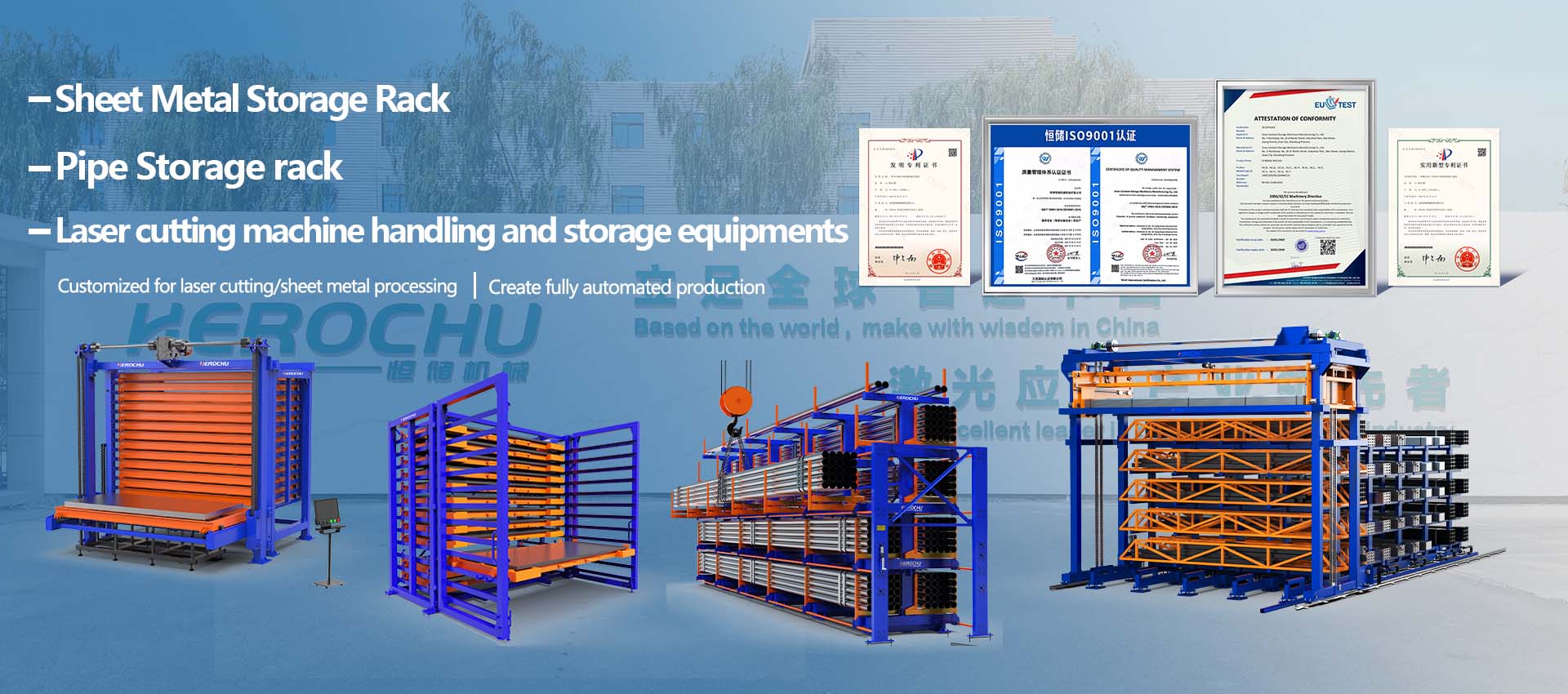
Herochu addresses the specific requirements of plasma cutting workstations with heavy-duty flat plate racking infrastructure engineered for the weight, dimensions, and handling methods characteristic of heavy fabrication. These systems borrow structural and mechanical principles from the company’s drawer-type storage product line but scale them to meet the demands of plate material that can exceed 6 metric tons per individual piece.
The Heavy Plate Material Handling Challenge
A plasma table processing 25-millimeter carbon steel plate at 6000-by-2000-millimeter dimensions handles material that weighs approximately 2,350 kilograms per sheet. Run a batch of ten such plates through the table, and the operator has moved over 23 metric tons of material between storage and machine in a single shift. Without mechanical assistance and organized staging, this volume of material movement becomes a bottleneck that determines the entire facility’s throughput.
The handling challenge extends beyond weight alone. Large-format plates are awkward to maneuver. A 6000-millimeter-long plate suspended from a single lift point tends to tilt unless the rigging is precisely balanced. Forklift handling of plates this size demands tines long enough to reach beneath the plate without the mast striking the sheet edge, and the forward tilt required to slide tines under a plate lying flat on the floor introduces a tip-over risk if the load is not centered on the tine carriage.
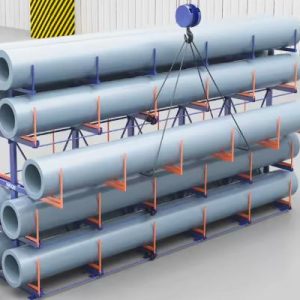
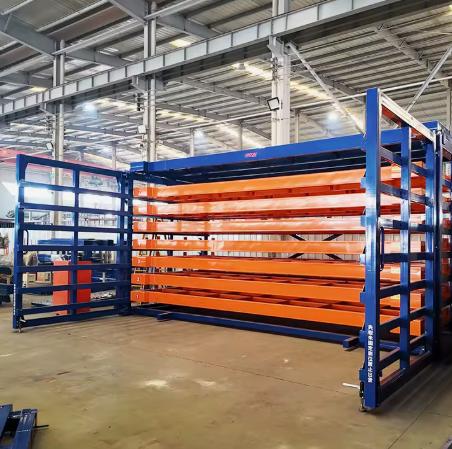
Herochu racking systems eliminate these handling difficulties by presenting each plate at a consistent height and orientation, supported on a drawer or cantilever arm that leaves the plate’s edge and top surface fully accessible for lifting equipment. The operator approaches the extended drawer with an overhead crane equipped with a spreader beam and magnetic or vacuum lifters, engages the plate from above, and transfers it directly to the plasma table — no sliding, no tilting, no forklift maneuvering in tight quarters.
Structural Engineering for Extreme Loads
The structural members in a Herochu heavy-duty plate rack differ in scale from those in lighter industrial shelving, but the engineering principles remain consistent. Q235B carbon steel provides the base material, selected for its combination of yield strength, elongation before fracture, and consistent welding performance. Where a standard-duty rack might use 3-millimeter wall thickness in its column sections, a heavy-plate configuration scales to proportionally heavier sections sized through structural analysis rather than catalog cross-referencing.
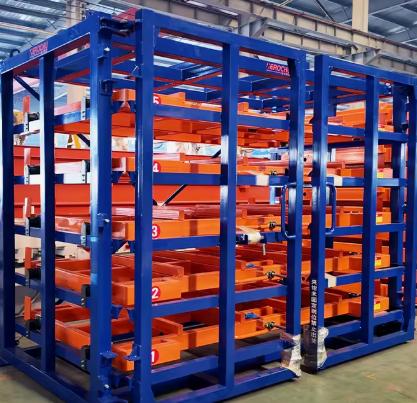
The dual-beam crossbar architecture that Herochu employs throughout its drawer racking product line takes on particular importance in heavy plate applications. A single-beam support under a 6-ton drawer would concentrate the bending moment at the beam-to-column connection, creating a stress concentration that could initiate fatigue cracking over thousands of load cycles. The dual-beam design splits the load between two parallel beams, each carrying approximately half the drawer weight, and the beam-to-column connections are designed with gusset plates and full-penetration welds to distribute stress across a larger cross-sectional area.
Drawer carriages for heavy-plate service incorporate roller bearings rated for the combined radial and thrust loads that occur during extension and retraction. The roller diameter, bearing type, and axle size are selected to provide adequate static load capacity for the parked drawer and adequate dynamic load capacity for the moving drawer. Bearing life calculations, based on the anticipated number of drawer cycles over the equipment’s design life, confirm that the selected bearings will not reach their fatigue limit before the rack structure itself reaches the end of its service interval.
Motor Sizing and Drive System Design
The electric motor that drives drawer extension in a heavy-plate Herochu rack must overcome two primary resistance forces: the rolling resistance of the drawer carriage bearings under load and the inertia of the drawer assembly as it accelerates from rest. For a 6-ton drawer, the rolling resistance is a function of the bearing type, the surface finish of the running rails, and the total weight on the bearing set. The inertial resistance depends on the drawer mass and the desired acceleration rate.
Motor sizing follows a straightforward but essential calculation sequence. The total torque required at the drive pinion or sprocket equals the sum of the rolling resistance torque and the acceleration torque, each multiplied by appropriate service factors to account for bearing degradation over time, rail surface condition, and minor misalignments that increase running friction. The motor is selected with sufficient continuous torque rating to handle the steady-state rolling resistance and sufficient peak torque capacity to accelerate the drawer from rest without exceeding the motor’s thermal limits.
The soft-start and soft-stop programming that Herochu builds into its drive controllers manages the acceleration profile to keep peak current draw within the motor and drive ratings. Rather than applying full voltage to the motor at start — which would produce a torque spike and potentially jerk the drawer into motion — the controller ramps the drive output over a programmed acceleration period. The result is smooth motion initiation without the sudden loading that shocks mechanical components and risks shifting unsecured plates on the drawer surface.
Travel speed selection for heavy-plate drawers reflects the trade-off between retrieval time and motion control. The 2.28-to-5.27-meter-per-minute range used across the Herochu product line keeps drawer extension time under two minutes for even the longest-drawer models. Faster speeds are technically achievable with larger motors but introduce control challenges: stopping distance increases with the square of speed, and the kinetic energy that must be dissipated by the braking system or absorbed by the end-stops grows with the same quadratic relationship. The selected speed range balances productivity with manageable stopping distances and acceptable structural loading during deceleration.
Integration with Plasma Table Workflows
A plasma cutting workstation represents a significant capital investment, and its economic return depends on keeping the plasma arc struck for as high a percentage of available operating hours as possible. Material staging infrastructure directly affects this utilization rate. Every minute the table sits idle while an operator retrieves the next plate is a minute of production capacity lost.
Herochu plate racking positioned adjacent to the plasma table creates a material buffer that decouples table operation from material retrieval. The operator loads the rack’s drawers with a full inventory of the plate sizes and grades required for the production schedule at the start of a shift or during planned material handling windows. When the plasma table completes a cutting program, the operator extends the drawer containing the next required plate, transfers it to the table with the overhead crane, and starts the next program. The material retrieval component of job changeover drops from the fifteen-plus minutes typical of remote warehouse retrieval to the two or three minutes required for drawer extension and lifter engagement.
The bottom drawer ground clearance of 355 millimeters serves a practical function in plasma table environments. Plasma cutting generates dross — the solidified metal that forms on the underside of the cut edge — and this material accumulates on the floor around the cutting table. Keeping the lowest stored plates 355 millimeters above the floor prevents dross accumulation on stored material and provides clearance for floor cleaning equipment to pass beneath the rack.
Material Protection in Heavy Fabrication Environments
Heavy fabrication shops subject stored material to environmental conditions more aggressive than those found in light-gauge sheet metal facilities. Plasma cutting produces metal fume, dross particles, and radiant heat that can affect nearby stored material. Grinding and weld preparation generate abrasive dust that settles on exposed surfaces. Shot blasting and painting operations create overspray and media carryover.
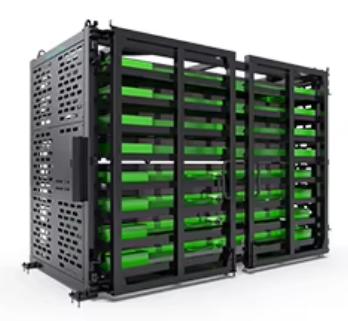
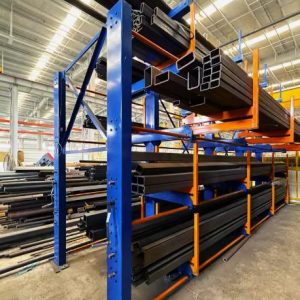
Herochu racking encloses stored plates within a structural frame that provides a degree of physical separation from these environmental contaminants. While the rack is not a sealed enclosure — that would complicate access — the compartment structure shields plates from direct exposure to the most aggressive workshop conditions. For shops that require additional protection, Herochu can supply optional compartment covers or specify surface treatments on the rack structure itself that resist corrosion in chemically aggressive atmospheres.
The lock-in and lock-out mechanism contributes to material protection indirectly. When drawers are locked in the closed position, plates cannot shift during incidental contact from passing forklifts or overhead crane loads traversing the bay. The mechanical lock maintains drawer position even if the rack experiences vibration from nearby heavy machinery, a common condition in fabrication shops where large presses, hammers, and rolling mills operate within the same building envelope.
Safety Systems and Operational Protocols
Heavy plate handling carries inherent safety risks that demand engineered controls. A plate weighing over 2 metric tons, suspended from an overhead crane and swinging through the workspace, possesses kinetic energy that no amount of operator vigilance can counteract once a load shift begins. The engineering response is to minimize the conditions under which suspended loads can become unstable and to provide positive mechanical restraints that prevent unexpected movement of stored material.
The Herochu drawer lock-out mechanism addresses one category of risk. When a drawer is extended and an operator positions a suspended plate above it for loading, the drawer must remain absolutely stationary. A drive system fault, a control error, or an inadvertent pendant button press that causes drawer retraction during this operation could pull the support from beneath a descending plate, potentially causing the suspended load to swing violently. The mechanical lock-out prevents drawer movement regardless of drive system status, providing a hard safety barrier that software interlocks supplement but do not replace.
Operational protocols for plate racking use should be developed as part of a facility’s broader safety management system. These protocols typically address drawer extension procedures (confirm the area is clear before initiating movement), loading procedures (engage the lock-out before positioning the suspended load), weight verification (confirm that the plate weight does not exceed the drawer’s rated capacity), and emergency procedures (what to do if a load becomes unstable during the transfer). Herochu provides operational guidance documentation that facilities can incorporate into their site-specific safety programs.
Lifecycle Economics
The financial case for dedicated heavy plate racking infrastructure rests on the cumulative costs of the alternatives. Floor stacking of heavy plate eliminates the capital cost of racking but imposes ongoing operational costs: floor space consumed, material damage from handling and environmental exposure, labor hours spent searching for and retrieving material, and reduced machine utilization from extended changeover times.
A simplified lifecycle cost comparison illustrates the trade-off. Consider a plasma cutting operation that processes 20 plates per shift, each weighing approximately 2 tons, across 250 operating days per year. At an average retrieval time of 10 minutes per plate using floor-stack methods versus 2 minutes using rack-based retrieval, the annual labor savings alone approach 650 hours — equivalent to over 16 weeks of full-time operator labor. When the value of recovered machine utilization, reduced material damage, and improved floor space efficiency are added to the calculation, the payback period for a Herochu racking installation typically falls within 12 to 24 months.
Beyond the direct financial return, organized plate storage supports broader operational improvements. FIFO inventory management becomes practical when every plate has a designated location. Quality control benefits from the reduction in surface damage that occurs during handling. Production scheduling gains reliability when material availability data is accurate. These secondary benefits, while harder to quantify than direct labor savings, contribute materially to the overall competitiveness of a fabrication operation.
Herochu heavy-duty flat plate racking infrastructure provides the physical foundation for these improvements. By engineering storage systems to the same standard as the plasma cutting equipment they support, Herochu enables fabrication facilities to operate at the throughput levels their cutting tables are capable of achieving. For shops where plate handling, not cutting speed, determines daily output, the racking system represents the highest-return investment available in the material flow chain.